2027 Online Creative Writing Degrees That Maximize Community College Credits

Co-Founder and Chief Data Scientist
If you already earned community college credits, the right online creative writing degree can turn them into a shorter, less expensive path to a bachelor's. College Board reported average public two-year tuition and fees of $4,050 for 2024-25, making transfer planning a major cost-saving strategy.
This guide is for students with an associate degree, partial credits, or dual-enrollment coursework who want a writing-focused bachelor's online. You'll learn how transfer policies work, which program features matter, what the degree can cost, and how to connect coursework with realistic career options.
Key Things You Should Know
- Transfer-friendly online bachelor's programs commonly allow up to 60 to 90 eligible credits, but major requirements, residency rules, and course equivalencies determine how many actually apply.
- Creative writing degrees fit students targeting writing, editing, publishing, content strategy, communications, or graduate study; they are less direct for students seeking licensed or highly technical careers.
- BLS data released in 2024 shows creative-writing-adjacent careers vary widely: technical writers had a median annual wage of about $91,670, while writers and authors were around $77,980, so career planning matters as much as degree choice.
How do online creative writing degrees maximize previously earned community college credits?
Online creative writing degrees maximize community college credits by applying lower-division coursework toward general education, electives, introductory literature, composition, and sometimes beginning creative writing requirements. The best fit is usually a bachelor's completion program or transfer-friendly online BA that lets students enter with an associate degree or a large block of credits.
The key term to understand is applicability. A school may "accept" many credits onto your transcript, but only credits that fit the degree plan reduce your remaining courses. For example, a 3-credit community college course in English composition is more likely to satisfy a general education writing requirement than a niche elective that has no equivalent in the bachelor's curriculum.
Most transfer-credit savings come from three policy areas. Review these before applying, because they determine whether your prior work shortens the degree or simply appears as extra credit.
- Block transfer or associate-degree pathways: Some universities treat an AA or AS as satisfying most lower-division general education requirements, especially when the community college and university have an articulation agreement.
- Maximum transferable credits: Transfer-friendly bachelor's programs often allow up to 90 credits from prior colleges, though many cap community college credits at around 60 to 64 because two-year institutions usually offer lower-division coursework.
- Residency requirements: Even generous programs usually require students to complete a minimum number of credits through the university, often including upper-division creative writing workshops and capstone courses.
A strong transfer evaluation should show exactly which requirements are already met, which courses remain, and whether any credits fall into "free elective" space. If a school cannot give you a clear degree audit before enrollment, treat that as a red flag rather than a minor administrative delay.
The following table summarizes how common community college credits usually apply to an online creative writing bachelor's degree. Use it to predict where your credits may help and where you may still need upper-division work.
| Community college coursework | Likely use in the bachelor's degree | What to verify |
| English composition I and II | General education writing requirements | Minimum grade, course equivalency, and whether both courses are required |
| Introduction to literature | Humanities or English major foundation | Whether it counts as a major course or only as general education |
| Creative writing, fiction, poetry, or scriptwriting | Lower-division major elective or free elective | Whether the online program requires its own workshop sequence |
| Associate of Arts degree | Potential block completion of general education | Whether the university honors the full associate pathway |
| Journalism, communications, or media courses | Electives, concentration support, or minor coursework | Whether they align with publishing, professional writing, or digital media options |
Students maximize credits best when they choose the university after comparing degree audits, not just admissions brochures. Two schools with the same transfer-credit maximum can produce very different time-to-degree outcomes.
Which accredited online creative writing programs best accept community college transfer credits?
The best online creative writing program for transfer students is not always the one with the most famous writing faculty. It is the accredited program that applies the largest number of your existing credits to the degree, offers the writing concentration you want, and provides a realistic course schedule for working adults.
Below are examples of regionally accredited U.S. institutions with online writing, English, or creative writing pathways that are often relevant for community college transfer students. Policies can change, so request an official transfer evaluation before committing.
| Institution | Relevant online degree pathway | Transfer-credit strength to check | Best fit |
| Southern New Hampshire University | BA in Creative Writing and English | Advertises acceptance of up to 90 transfer credits toward many bachelor's programs | Students who want multiple genre options and a high-transfer online format |
| University of Central Florida | Online BA in English, Creative Writing track | Strong Florida transfer pathways for AA graduates, subject to degree requirements | Florida community college students or students seeking a public university option |
| Central Washington University | Online English: Professional and Creative Writing options | Degree-completion structure can work well for students with lower-division credits | Students who want creative writing plus workplace writing preparation |
| Arizona State University Online | Online English or writing-focused humanities pathways | Community college transfer pathways and broad online course availability | Students who want a large public university with flexible online scheduling |
| National University | BA in Creative Writing or related writing pathways | Designed for adult learners with prior college credit, military credit, or transfer coursework | Students who need frequent starts and accelerated course pacing |
If your creative interests overlap with visual storytelling, publishing design, or brand communication, compare writing programs with a graphic design degree online. A design-focused program may be a better match if your portfolio goals center on visual media rather than fiction, poetry, screenwriting, or editorial work.
When comparing programs, ask admissions teams for the same three documents from every school. This keeps the comparison fair and prevents you from relying on vague transfer promises.
- Request an unofficial transfer review using all community college transcripts, including in-progress courses.
- Ask for a remaining-course map that separates general education, major, electives, and university residency requirements.
- Confirm whether the creative writing concentration can be completed fully online without campus residencies, synchronous workshops, or limited-seat courses that could delay graduation.
A program should not be treated as "best" until it is best for your transcript. For transfer students, the strongest evidence is a written degree audit showing fewer remaining credits, not a general statement that the school is transfer friendly.
What should students look for when choosing an accredited online creative writing degree?
Start with accreditation, then move to curriculum, transfer fit, faculty feedback, portfolio development, and cost. Creative writing is a portfolio-driven field, so the right degree should help you produce polished work while also building adaptable communication skills for employment.
Institutional accreditation is the baseline. In the U.S., regional institutional accreditation is especially important for federal financial aid, transferability, graduate school admission, and employer acceptance. Creative writing programs typically do not require a specialized programmatic accreditor, so students should focus on institutional accreditation and the quality of the English or writing department.
Use the following criteria to separate strong online programs from programs that simply sound convenient.
- Transfer transparency: The school should provide a course-by-course evaluation and show how each accepted credit applies to your degree.
- Workshop quality: Look for small writing workshops, structured peer critique, instructor feedback, revision cycles, and genre-specific courses.
- Portfolio or capstone: A final manuscript, publication project, editing portfolio, or professional writing portfolio helps translate coursework into job or graduate-school evidence.
- Career-relevant electives: Courses in editing, publishing, digital writing, rhetoric, technical communication, grant writing, or content strategy can broaden career options.
- Student support: Online writing students benefit from library access, writing centers, career coaching, tutoring, disability services, and internship guidance.
Do not choose a creative writing degree only because it appears easy. If you are comparing programs because you are wondering what's the easiest bachelor's degree to get, remember that a writing degree can be flexible, but it still requires heavy reading, drafting, critique, and revision. The better question is whether the workload matches your strengths and career goals.
Common red flags include unclear accreditation, no published curriculum, no upper-division workshops, no portfolio requirement, aggressive enrollment pressure, and transfer estimates that are not documented in writing. Another mistake is ignoring the difference between creative writing and professional writing: fiction-heavy programs can be excellent, but they may need career-focused electives if your goal is content, communications, or technical writing work.
How do online creative writing degrees compare to campus programs for flexibility and quality?
Online creative writing degrees are usually better for flexibility, while campus programs may offer more immediate community, live readings, literary events, and informal faculty interaction. Quality depends less on delivery format and more on accreditation, instructor feedback, workshop design, and whether students receive enough revision practice.
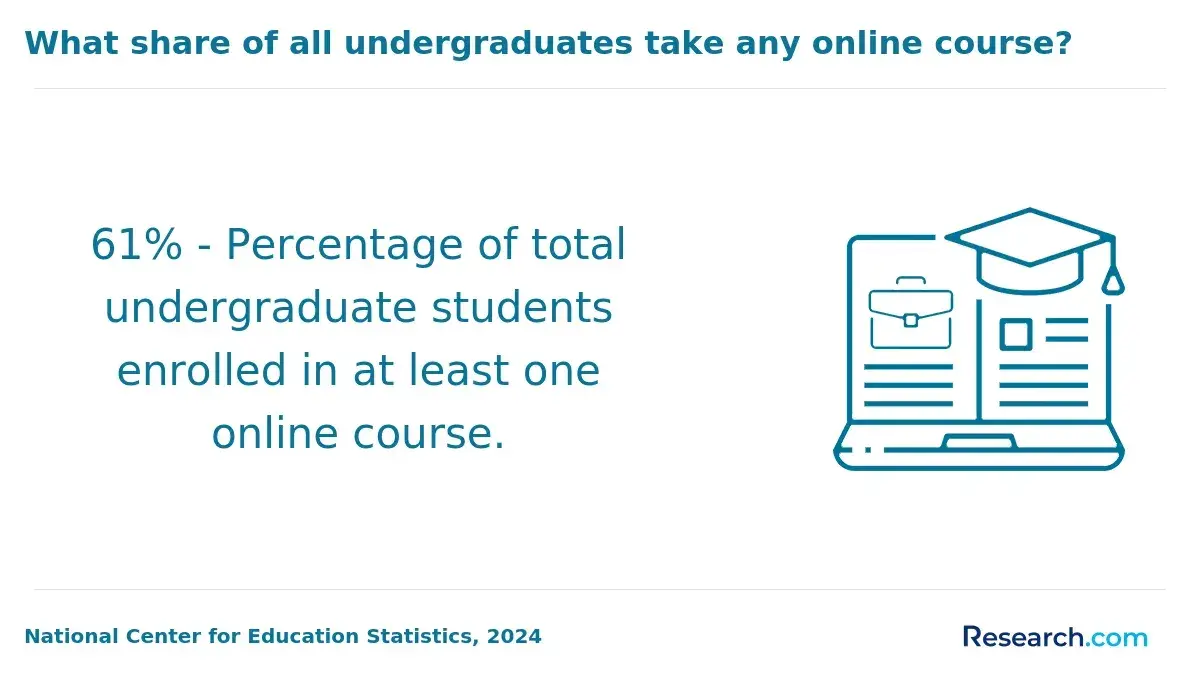
Online learning has become a mainstream option rather than a fringe format. NCES data released in 2024 showed that a large share of U.S. college students took at least one distance education course, which means employers and graduate schools are increasingly accustomed to online transcripts from accredited institutions. For creative writing students, the practical question is whether the program creates a real writing community online.
The table below compares the two formats for students trying to balance transfer credits, work, family obligations, and writing development.
| Factor | Online creative writing degree | Campus creative writing degree |
| Scheduling | Often asynchronous or evening-friendly, making it easier to study while working | More likely to require fixed daytime class meetings |
| Community | Built through discussion boards, video workshops, online readings, and peer groups | Built through in-person workshops, campus events, student publications, and faculty office hours |
| Transfer fit | Often designed for adult learners and degree-completion students | May be less flexible if major sequences are offered only once per year |
| Feedback quality | Can be strong when workshops require revision, instructor comments, and peer critique | Can be strong when class size is small and faculty are available for mentoring |
| Networking | May require more initiative through virtual internships, literary journals, and professional associations | May offer easier access to local readings, presses, internships, and campus publications |
Online is the better choice if you need location independence, have substantial transfer credits, or cannot attend daytime classes. Campus may be better if you want an immersive writing community, learn best through live discussion, or want access to local publishing internships tied to the university.
One current trend affecting both formats is the rise of generative AI. Strong programs now teach students how to use AI ethically for brainstorming, research organization, or revision support while protecting originality, voice, citation integrity, and human judgment. If a program does not address AI at all, ask how it prepares writers for workplaces where AI-assisted drafting and editing tools are already common.
What admission requirements and transfer policies apply to online creative writing majors?
Admission requirements for online creative writing bachelor's programs are usually similar to other undergraduate transfer programs. Most schools require official transcripts, a minimum college GPA, proof of high school completion if you have limited college credit, and an application. Some selective or upper-division writing tracks may ask for a writing sample, but many bachelor's programs admit students first and let them declare the major after meeting prerequisites.
Transfer policies are where students should spend the most time. A generous admissions offer does not always mean a generous degree plan. Before enrolling, confirm these policy details in writing.
- Minimum grade for transfer: Many schools require a C or better for a course to transfer, and some require higher grades for major courses.
- Age of credits: English and humanities credits often age well, but technology, media, or professional writing courses may be reviewed for currency.
- Quarter-to-semester conversion: If your community college used quarter credits, the university will convert them, which can affect whether a course fully satisfies a requirement.
- Duplicate coursework: Similar courses may not both count, even if both appear on your transcript.
- Upper-division requirements: Community college courses typically do not replace 300- or 400-level workshops, seminars, or capstones.
- Prior learning credit: Some adult-focused universities award credit for military training, standardized exams, professional certifications, or portfolios, but creative writing major credit is usually harder to earn this way.
Students with an completed AA degree should ask whether the university participates in a statewide transfer agreement. These agreements can be especially valuable because they may satisfy lower-division general education as a block, leaving more room for upper-division writing courses rather than repeated survey classes.
Admissions requirements can also vary by student type. First-time online students with few credits may need placement or general education advising, while transfer students with many credits should receive a degree-completion plan. International transcripts, military transcripts, AP or CLEP scores, and dual-enrollment credits may require separate evaluation processes.
The biggest mistake is enrolling before every transcript has been evaluated. If you send only one community college transcript and later discover that another transcript changes your transfer standing, your schedule and financial aid timeline may be affected.
What core courses and specializations are included in online creative writing curricula?
Online creative writing degrees usually combine literature study, writing workshops, craft analysis, revision practice, and professional communication. The purpose is not only to "write creatively," but to read deeply, understand genre conventions, critique work constructively, revise under deadlines, and build a portfolio.
Most bachelor's programs include a mix of the following course types. These categories help you evaluate whether a curriculum supports your preferred writing path.
- Foundation writing courses: Composition, introduction to creative writing, research writing, and rhetoric.
- Genre workshops: Fiction, poetry, creative nonfiction, screenwriting, playwriting, young adult writing, or speculative fiction.
- Literature and craft courses: American literature, world literature, contemporary fiction, poetry studies, literary theory, and close reading.
- Revision and portfolio courses: Advanced workshops, manuscript development, senior seminar, and capstone projects.
- Professional writing electives: Editing, publishing, technical writing, grant writing, digital storytelling, social media writing, and content strategy.
Specializations matter because creative writing graduates often compete in fields that value both creativity and applied communication. A fiction concentration can support graduate writing goals, while a publishing or professional writing concentration may be more practical for students seeking full-time writing-adjacent employment after graduation.
The table below shows how common specializations connect to student goals. It is not a promise of employment, but it can help you choose electives with a clear purpose.
| Specialization or emphasis | Typical coursework | Best matched goals |
| Fiction or poetry | Advanced workshops, contemporary literature, manuscript revision | MFA preparation, literary publication, teaching support, artistic portfolio development |
| Creative nonfiction | Memoir, essay writing, narrative journalism, research-based storytelling | Magazine writing, personal essays, narrative content, book-length nonfiction |
| Screenwriting or scriptwriting | Story structure, dialogue, film analysis, writing for media | Film, television, games, podcast scripts, digital media projects |
| Publishing and editing | Copyediting, literary magazines, book publishing, digital production | Editorial assistant roles, publishing support, content operations |
| Professional or technical writing | Technical communication, document design, usability, workplace writing | Technical writing, communications, documentation, UX writing support |
Students should look for at least one course that produces a career-facing artifact: an edited portfolio, a publication-ready manuscript, a grant proposal, a content strategy project, or technical documentation. A transcript shows completion, but a portfolio shows what you can actually do.
How long do online creative writing degrees take and what do they typically cost?
A traditional bachelor's degree requires about 120 semester credits, but transfer students may need far fewer if their community college credits apply cleanly. Students entering with an associate degree often have about two years of full-time upper-division work remaining, while students with partial credits may need three or more years depending on course load and transfer applicability.
Cost depends on tuition rate, transfer credits, fees, books, technology requirements, and whether the school charges online students in-state, out-of-state, or flat-rate tuition. College Board reported average public four-year in-state tuition and fees of $11,610 for 2024-25; this benchmark helps students evaluate whether an online program's annual tuition is unusually low, average, or high.
The table below compares common completion scenarios. Your actual timeline may differ if major courses are sequenced, offered only in certain terms, or require prerequisites.
| Starting point | Approximate credits remaining | Typical full-time timeline | Main cost factor |
| No prior college credit | About 120 credits | About four years | Total tuition exposure is highest because all lower- and upper-division credits are needed |
| One year of community college | About 90 credits | About three years | Savings depend on whether general education courses transfer cleanly |
| Completed associate degree | About 60 credits | About two years | Most savings come from completing lower-division work at community college rates |
| High-transfer adult learner | About 30 to 45 credits | About one to two years | University residency and upper-division major rules become the limiting factor |
Students searching for a bachelor degree online in 2 years should be careful with the word "accelerated." A two-year finish is realistic mainly when you already have transferable credits, can study consistently, and the remaining creative writing courses are available when needed.
To estimate your real cost, do not multiply tuition by the full 120 credits unless you are starting from zero. Instead, ask each school for a remaining-credit total and then calculate tuition only for those credits. Add online fees, graduation fees, books, software, and any required residency or workshop costs.
Financial aid may include federal grants, loans, employer tuition assistance, state aid, military benefits, scholarships, and community college transfer scholarships. The lowest tuition is not always the lowest total cost if a school accepts fewer credits or delays graduation by offering required workshops infrequently.
What careers can graduates of online creative writing programs pursue in the U.S.?
Creative writing graduates pursue careers that use writing, editing, storytelling, audience analysis, and revision. Few entry-level jobs are titled "creative writer," so students should translate the degree into marketable roles such as content writer, copywriter, editor, communications associate, technical writer, publishing assistant, grant writer, or social media content specialist.
The strongest career outcomes usually come from combining creative writing with applied skills. Employers often want candidates who can write clearly, meet deadlines, edit accurately, work with subject-matter experts, understand digital platforms, and adapt tone for different audiences.
The table below connects common roles with the work graduates may perform. Use it to identify which electives, internships, and portfolio samples would support your target path.
| Career path | Typical responsibilities | Helpful preparation during the degree |
| Content writer or copywriter | Write web pages, marketing copy, email campaigns, product descriptions, or brand stories | Digital writing, marketing basics, SEO writing, portfolio samples |
| Editor or editorial assistant | Review manuscripts, articles, reports, or digital content for clarity, style, structure, and accuracy | Copyediting, publishing, literary magazine work, style guide practice |
| Technical writer | Create manuals, procedures, help articles, documentation, and user-facing instructions | Technical communication, document design, basic software familiarity |
| Communications specialist | Prepare newsletters, press materials, internal messages, speeches, and organizational content | Professional writing, public relations, audience analysis, internships |
| Grant writer | Draft funding proposals, narratives, reports, and supporting documents for nonprofits or agencies | Research writing, nonprofit communication, budgeting awareness |
| Author or freelance writer | Develop books, essays, scripts, articles, or client writing projects | Genre workshops, publishing knowledge, platform building, business skills |
AI is changing entry-level writing work. Routine drafting may be partly automated, but employers still need people who can shape ideas, verify information, interview sources, maintain brand voice, edit AI-assisted text, and make ethical decisions. Students should graduate with samples that show original thinking, not just polished sentences.
This degree may not be the best standalone choice if your main goal is a licensed profession, a highly quantitative career, or a role that requires specialized technical credentials. In those cases, creative writing can still be valuable as a minor, double major, or portfolio-building complement.
What salary ranges and job outlook apply to creative writing-related careers?
Salary outcomes for creative writing graduates vary because the degree can lead to many different industries rather than one licensed occupation. Geography, portfolio quality, internships, technical skills, industry, and experience often matter as much as the major title.
BLS wage data released in 2024 shows that technical writers had a median annual wage of about $91,670. That figure is higher than many general writing roles because technical writers often combine writing ability with product knowledge, software documentation, engineering, healthcare, or compliance communication.
The table below summarizes several U.S. occupations that creative writing graduates may pursue with the right electives and experience. Use it as a labor-market reference, not as a guarantee of individual earnings.
| Occupation | Recent U.S. median annual wage | Job outlook context | How creative writing helps |
| Technical writer | About $91,670 | Demand is tied to technology, healthcare, engineering, and complex products | Clear explanations, audience awareness, structure, and revision |
| Writer or author | About $77,980 | Opportunities vary widely across publishing, media, entertainment, and freelance markets | Original voice, narrative skill, genre knowledge, persistence |
| Editor | About $75,260 | Traditional publishing is competitive, while digital content creates broader editing needs | Critique, close reading, style, grammar, and developmental feedback |
| Public relations specialist | About $69,780 | Organizations continue to need clear communication across digital channels | Messaging, storytelling, audience adaptation, concise writing |
Students evaluating return on investment should compare creative writing with other online degrees based on total remaining credits, not sticker price. For example, researching how much does it cost to get a business degree online can provide a useful benchmark if you are choosing between writing, marketing, communications, or business pathways.
To improve employability, build a portfolio before graduation. Include different writing types: a polished creative piece, a reported article or essay, a copywriting sample, an edited document, and a professional writing project. If you want technical writing, add documentation samples. If you want to publish, work on a student journal, literary magazine, or editorial project.
The most common salary mistake is assuming the degree alone determines pay. In writing fields, your samples, niche knowledge, network, internship experience, and ability to write for real audiences can be more important than the diploma title.
How can community college students plan a transfer pathway into online creative writing?
Community college students can plan a strong transfer pathway by choosing general education and English courses that align with the intended bachelor's program before applying. The earlier you match courses to the future university, the fewer credits you risk losing.
Follow these steps before your final community college semester. They help prevent the most expensive transfer mistakes.
- Choose a target online bachelor's program or a short list of programs before selecting your last community college electives.
- Ask your community college advisor for articulation agreements with universities offering online English, writing, or creative writing degrees.
- Prioritize transferable general education courses, especially composition, literature, humanities, social science, and quantitative reasoning requirements.
- Take lower-division creative writing only if the receiving university confirms it will count toward the major or electives.
- Keep syllabi for writing, literature, journalism, media, and communications courses in case the university needs them for equivalency review.
- Apply with all transcripts, including dual enrollment, previous colleges, AP, CLEP, military, or workforce training records.
- Compare written degree audits from multiple schools before paying deposits or registering for classes.
- Build a portfolio while still at community college by submitting to student publications, joining writing groups, or completing polished samples in multiple genres.
Students should also ask direct questions before enrolling. Good questions force schools to move from marketing language to specific answers.
- How many of my credits apply to the degree, not just to the transcript?
- Which remaining courses must be completed at your university?
- Can I finish the creative writing concentration fully online?
- How often are required upper-division workshops offered?
- Will my associate degree satisfy general education as a block?
- Are there transfer scholarships for community college graduates?
- What portfolio, internship, publication, or capstone opportunities are available online?
A smart transfer plan balances speed, cost, and academic fit. Finishing quickly is useful only if the program still gives you strong feedback, a credible portfolio, and career-relevant electives. If a cheaper or faster program weakens your writing samples, it may not be the best long-term value.
The safest approach is to treat transfer planning as a documentation process. Save emails, degree audits, catalog pages, and advisor notes. If policies change or a course is misapplied, written records can help you appeal the evaluation.
Other Things You Should Know About Creative Writing
Not exactly. Creative writing degrees emphasize original work, workshops, genre craft, and portfolio development. English degrees usually place more weight on literature, analysis, theory, and critical writing, though many English programs include creative writing tracks.
Before starting an online creative writing degree in 2027, it's beneficial to practice skills such as storytelling, grammar, and creative thinking. Additionally, familiarizing yourself with various literary forms and building a habit of regular reading and writing can provide a strong foundation.
Yes. Many students submit to literary journals, campus publications, magazines, contests, blogs, or independent platforms while enrolled. Check the course and program rules if a manuscript was created for class, especially when peer critique or collaborative editing was involved.
References
- Community college transfer processes discourage degree completion https://journalistsresource.org/education/community-college-transfer-bachelors-degree-barriers-research/
- Creative Writing AA https://flcc.edu/academics/programs/creative-writing-aa/
- How to choose the best online creative writing course step-by-step https://nationalcentreforwriting.org.uk/writing-hub/best-online-creative-writing-courses/
- Creative Writing Core Curriculum https://www.interlochen.org/creative-writing/academy/creative-writing-core-curriculum
- Online Master’s in Creative Writing Degree Programs: MA vs MFA Programs https://www.mastersincommunications.com/related-degrees/masters-in-creative-writing
- Choosing a Creative Writing Course https://www.nawe.co.uk/writing-in-education/writing-at-university/choosing-a-course.html
- How to Transfer Credits and Maximize What You’ve Already Done - ReUp Education https://reupeducation.com/blog/how-to-transfer-credits-and-maximize-what-youve-already-done/
- English Transfer Major | EICC https://eicc.edu/classes-programs/pathway/digital-visual-communication/english-transfer/default.aspx
- How Much Do Writing Courses Cost? https://blog.nobledesktop.com/learn/writing/how-much-is-a-writing-course
- Creative Writing BA(Hons) (Online) https://www.falmouth.ac.uk/study/online/undergraduate/creative-writing