2027 Online Creative Writing Degrees That Help Build Narrative Voice Skills

Co-Founder and Chief Data Scientist
Choosing an online creative writing degree is really a question about fit: which program will help you develop a recognizable narrative voice while staying affordable, credible, and career-relevant? The need is timely because the U.S. Bureau of Labor Statistics reported a May 2024 median annual wage of $72,270 for writers and authors, showing that strong writing can support professional paths beyond personal publication goals.
This guide is for aspiring authors, career changers, educators, and content professionals who want to compare degree options, costs, admissions, workshops, accreditation, and career outcomes before enrolling.
Key Things You Should Know
- Online creative writing degrees can develop narrative voice through repeated workshop critique, genre study, revision practice, and faculty mentoring rather than through lectures alone.
- Program costs vary widely; College Board's 2024 pricing data lists average published tuition and fees of $11,610 for in-state public four-year colleges and $43,350 for private nonprofit four-year colleges, before aid.
- Career outcomes are not limited to fiction: BLS May 2024 data reports median annual wages of $72,270 for writers and authors and $91,670 for technical writers, but job fit depends on portfolio quality, genre expertise, and marketable communication skills.
What is an online creative writing degree and how does it help develop narrative voice?
An online creative writing degree is a structured college program that teaches students how to write, revise, critique, and publish original work in genres such as fiction, nonfiction, poetry, screenwriting, playwriting, young adult literature, or hybrid forms. At the undergraduate level, it may appear as a creative writing major, an English degree with a creative writing concentration, or a liberal arts degree with writing electives. At the graduate level, it is often a master's in creative writing, MFA, or low-residency MFA.
Narrative voice is the distinctive personality, perspective, rhythm, diction, and emotional intelligence that make a story feel authored by a specific consciousness. It is not the same as grammar or style, although both contribute to it. Voice answers questions such as: Who is telling the story? What does that narrator notice? What do they hide? How do their sentences sound? What emotional distance do they keep from events?
Online programs help students build voice by making writing visible and repeatable. Students draft scenes, receive peer and instructor feedback, revise with intent, and read published work analytically. A good program does not tell students to "find their voice" in the abstract; it helps them identify craft choices that create voice on the page.
Students usually strengthen narrative voice through several connected practices. These are the program features most worth looking for if voice development is your main goal:
- Workshop-based critique: Students submit original writing and receive detailed feedback on character perspective, point of view, dialogue, tone, pacing, and emotional credibility.
- Close reading of published authors: Courses examine how different writers use sentence structure, diction, scene selection, and narrative distance to create a recognizable voice.
- Revision-focused assignments: Strong programs require multiple drafts so students learn how voice changes when they alter point of view, tense, structure, or narrator reliability.
- Genre-specific mentorship: Faculty guidance is especially valuable because the voice expectations for literary fiction, memoir, fantasy, romance, horror, and screenwriting can differ sharply.
- Portfolio development: Students graduate with polished writing samples that can support applications to MFA programs, publishing opportunities, freelance work, or writing-related jobs.
This degree is usually a better fit for students who want sustained feedback and a writing community than for students who only need a short skill refresh. If your goal is to complete one manuscript quickly, a certificate, writing conference, or private mentorship may be more efficient. If your goal is long-term craft development, teaching preparation, or a credential for writing-adjacent careers, a degree may be more useful.
How do online creative writing programs compare with campus-based options for building narrative voice?
Online and campus-based creative writing programs can both build narrative voice, but they do it through different learning environments. The stronger choice depends on how you write best, how much schedule flexibility you need, and whether you want daily in-person literary community or a wider digital network.
The table below compares the learning experience in ways that matter specifically for voice development. Use it to decide whether online delivery supports your writing habits or whether campus immersion would give you the accountability you need.
| Factor | Online creative writing degree | Campus-based creative writing degree | Decision point |
| Workshop format | Often asynchronous discussion boards, annotated drafts, video meetings, or small-group critique | Usually live classroom workshops with immediate discussion | Online works well if you value time to reflect before responding; campus may suit students who thrive in live debate. |
| Access to faculty | Office hours may happen by video, email, learning platform, or manuscript comments | Office hours and informal contact may be easier in person | Ask how often faculty provide line-level feedback, not just whether the program is online or on campus. |
| Writing community | Can include students from different regions, ages, jobs, and life experiences | Can offer readings, open mics, literary journals, and cohort events on campus | Online diversity can enrich voice; campus culture can strengthen belonging and accountability. |
| Schedule flexibility | Often better for working adults, caregivers, military students, and career changers | Better for students who can attend classes at fixed times | Choose the format that lets you write consistently, because voice develops through repetition. |
| Cost and relocation | May reduce housing, commuting, and relocation expenses | May require campus fees, travel, or living near the school | Total cost should include more than tuition. |
Online programs can be especially strong for voice because written critique is preserved. Students can return to instructor notes, compare draft versions, and track how specific decisions changed the narrator's sound. That archive can be more useful than a fleeting classroom comment.
Campus programs may be better for students who want immersion in a literary culture, direct networking with visiting writers, or access to performance-based forms such as theater and spoken word. The trade-off is that campus attendance may limit school choice by geography.
A hybrid or low-residency program can offer a middle path. These programs combine online coursework with short campus residencies, writing retreats, or intensive workshops. They can be useful for students who want deep faculty and peer connection without relocating for the full degree.
What types of online creative writing degrees are available and which focus on narrative voice?
Online creative writing degrees appear at several academic levels, and each level serves a different purpose. The right choice depends on whether you need foundational study, advanced craft mentorship, teaching preparation, or a flexible liberal arts credential.
The table below summarizes common online degree options and how strongly each typically supports narrative voice development. Program names vary by school, so review curriculum details rather than relying only on the degree title.
| Degree type | Typical student | Voice-development focus | Best fit |
| Associate degree with writing or English emphasis | Students starting college or testing interest in writing | Introductory composition, literature, and basic creative writing | Best for low-cost exploration before transferring to a bachelor's program. |
| Bachelor's in creative writing | Students seeking a full undergraduate writing foundation | Workshops across fiction, poetry, nonfiction, and genre writing | Best for students who want broad craft training and a portfolio. |
| Bachelor's in English with creative writing concentration | Students who want literature plus writing practice | Close reading, literary history, criticism, and selective workshops | Best for students considering editing, teaching, graduate school, or writing-adjacent careers. |
| Master's in creative writing | Students who want advanced writing practice but not necessarily an MFA | Graduate workshops, literature seminars, craft theory, and thesis work | Best for writers who want advanced study with flexibility in professional application. |
| MFA in creative writing | Writers seeking intensive craft mentorship and a terminal creative degree | Manuscript development, genre specialization, literary community, and thesis or book-length project | Best for serious writers pursuing publication, college teaching opportunities, or sustained artistic development. |
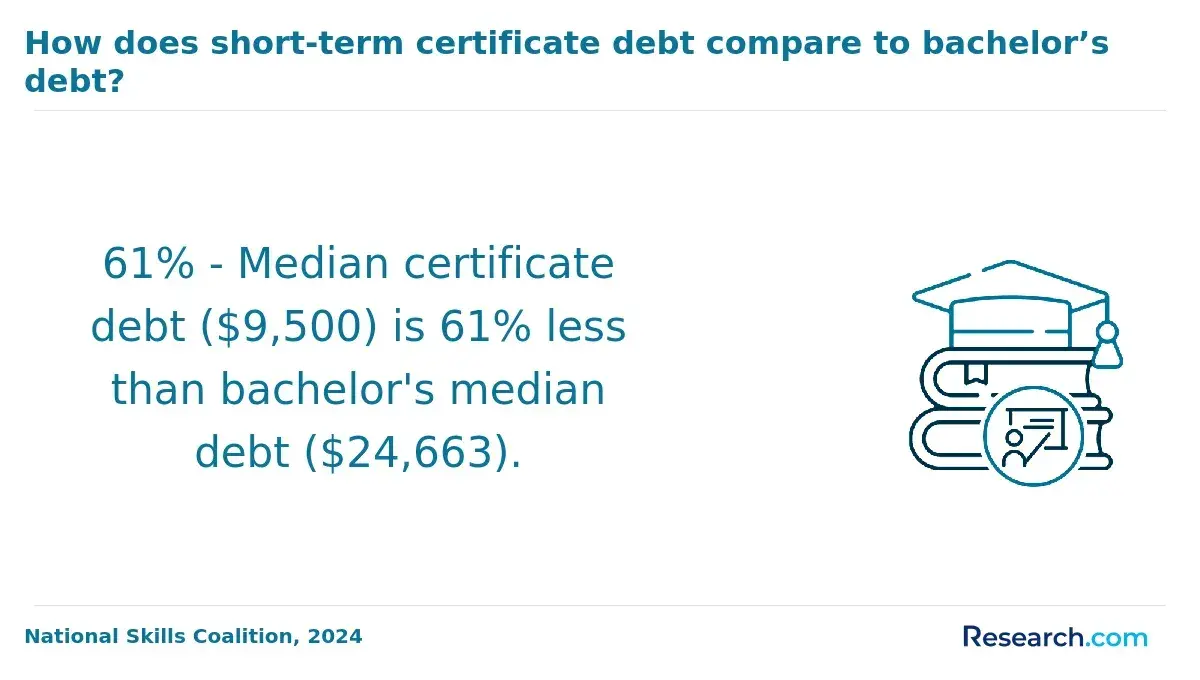
| Certificate in creative writing | Students who already have a degree or want targeted skill building | Focused workshops without the full general education or thesis structure | Best for short-term development, not for students who need a full academic credential. |
A bachelor's degree usually gives the broadest base for students who are still building academic and professional direction. It may include literature, editing, rhetoric, media writing, and general education courses that help writers understand audience and context. Students who want a broader customized path may also compare online interdisciplinary studies bachelor programs low cost, especially if they want to combine writing with psychology, film, education, business, or digital media.
An MFA is the most voice-intensive option because it normally centers on advanced workshops, close mentorship, and a thesis-length creative project. However, it is not automatically the best financial choice for every writer. Students who mainly want freelance content work, marketing communication roles, or technical writing may get better return from a bachelor's degree, certificate, or writing-related professional experience.
Certificates make sense when you already have a degree and need structure, deadlines, and critique. They are less useful if your target employer requires a bachelor's or master's degree, or if you want eligibility for certain teaching roles where degree level matters.
What courses and writing workshops typically strengthen narrative voice in online programs?
The strongest online creative writing programs use courses and workshops that connect craft theory to repeated practice. Narrative voice grows when students learn not only what makes a voice compelling, but also how to revise weak or inconsistent voice into a deliberate artistic choice.
Look for courses that require original drafting, peer critique, and revision. The following course areas are especially relevant if you want a program that builds voice rather than only general writing ability:
- Fiction workshop: Focuses on point of view, characterization, scene design, dialogue, setting, pacing, and narrative tension.
- Creative nonfiction or memoir: Helps students manage personal perspective, memory, ethical representation, reflection, and narrator credibility.
- Poetry workshop: Builds precision with sound, rhythm, image, compression, and line-level style, all of which can strengthen prose voice.
- Screenwriting or playwriting: Develops dialogue, subtext, scene economy, character motivation, and voice through action rather than exposition.
- Literary theory or contemporary literature: Gives students language for analyzing structure, identity, genre, and reader expectations.
- Editing and publishing: Shows how voice is shaped for audience, market, format, and editorial standards.
- Revision studio or manuscript seminar: Gives students extended time to rework a story collection, novel excerpt, memoir section, poetry manuscript, or script.
Workshop design matters as much as course titles. A voice-centered workshop should ask students to discuss more than whether they "liked" a piece. It should push them to identify where the narrator sounds most alive, where language becomes generic, where point of view slips, and where the emotional logic of the piece becomes unclear.
Online students should also look for courses that use digital tools thoughtfully. Annotated PDFs, shared documents, recorded mini-lectures, discussion boards, and video conferences can support careful critique. However, technology should not replace meaningful feedback. If a program relies mostly on automated quizzes or generic discussion posts, it may not provide enough craft mentorship.
Students can evaluate workshop quality by asking admissions advisors or faculty a few direct questions before enrolling:
- How many original creative pieces will students submit in each workshop?
- Will instructors provide line-level feedback, overall craft letters, or both?
- How are peer critiques structured and graded?
- Are workshops capped at a size that allows meaningful feedback?
- Can students specialize in fiction, nonfiction, poetry, screenwriting, genre fiction, or another form?
- Does the program require a final portfolio, thesis, capstone, or manuscript project?
A program that answers these questions clearly is usually easier to evaluate. Vague answers may signal that the creative writing curriculum is a small add-on rather than a central academic strength.
How do accredited online creative writing degrees ensure academic quality and faculty expertise?
Accreditation is the first quality filter for any online creative writing degree. In the United States, students should look for institutional accreditation from an agency recognized by the U.S. Department of Education or the Council for Higher Education Accreditation. Creative writing programs generally do not require a specialized programmatic accreditor in the same way that nursing, counseling, or education licensure programs may.
Accreditation matters because it can affect federal financial aid eligibility, transfer credit, graduate school recognition, and employer confidence. It does not guarantee that a program has excellent workshops, but it confirms that the institution meets baseline academic and administrative standards.
Faculty expertise is the second major quality factor. In creative writing, strong faculty are usually active writers, editors, scholars, screenwriters, poets, journalists, or publishing professionals. Their publication record is relevant, but students should also evaluate whether faculty teach in the genre the student wants to pursue.
The table below shows how to interpret common quality indicators. It separates baseline credibility from indicators that specifically matter for narrative voice development.
| Quality indicator | Why it matters | What to verify |
| Institutional accreditation | Supports aid eligibility, credit transfer, and academic recognition | Confirm the school's accreditor through official accreditation databases or the school's accreditation page. |
| Faculty publication and production history | Shows that instructors understand professional writing standards | Review faculty bios for books, scripts, essays, poems, journalism, editing, awards, or industry experience. |
| Genre coverage | Voice development is genre-specific | Check whether faculty and courses match your interest, such as literary fiction, memoir, speculative fiction, poetry, or screenwriting. |
| Workshop size | Smaller workshops often allow more detailed critique | Ask about enrollment caps for upper-level and graduate workshops. |
| Thesis or capstone support | Long-form revision helps students refine voice across a sustained project | Ask how thesis advisors are assigned and how often students receive feedback. |
| Student publication opportunities | Literary journals, readings, and magazines provide audience experience | Look for online journals, editorial practicums, contests, public readings, or publishing courses. |
Prospective students should be cautious with programs that advertise prestige but provide little information about faculty, workshops, or student work. They should also avoid assuming that "online" means lower quality. Many reputable universities offer online or low-residency writing degrees taught by the same or comparable faculty who teach campus courses.
One limitation to remember is that creative writing outcomes are difficult to measure with standard employment data. A strong program can improve craft and provide mentorship, but publication depends on factors outside the school's control, including genre market, persistence, revision quality, timing, and editorial fit.
What admissions requirements do online creative writing programs usually have for prospective students?
Admissions requirements vary by degree level. Undergraduate online programs often focus on academic readiness, while graduate creative writing programs usually place much more weight on the writing sample. For students whose main goal is narrative voice, the writing sample is not just a hurdle; it is the first evidence of fit between the applicant and the program's workshop culture.
The table below outlines common admissions expectations. Always confirm requirements with each school because selective MFA programs may ask for more extensive portfolios than general master's programs.
| Program level | Common requirements | What matters most for voice-focused applicants |
| Associate degree | High school diploma or equivalent, placement information, transcripts | Interest in writing and readiness for college-level composition |
| Bachelor's degree | High school transcript, transfer transcripts if applicable, application form, possible personal statement | Evidence of writing interest, strong reading habits, and fit with available creative writing courses |
| Graduate certificate | Bachelor's degree, statement of purpose, sometimes a writing sample | Clear goals and readiness for critique-based learning |
| Master's degree | Bachelor's degree, transcripts, statement, letters of recommendation, writing sample | A sample that shows control of point of view, scene, language, and revision potential |
| MFA | Bachelor's degree, substantial creative portfolio, statement, recommendations, sometimes interview | Portfolio strength, artistic direction, genre fit, and openness to intensive revision |
Applicants can improve their chances by preparing a writing sample that fits the program's expectations. A polished sample is usually better than a large but uneven manuscript. For fiction and nonfiction, select pages with a clear narrative situation, controlled point of view, and a voice that remains consistent under pressure. For poetry, choose poems that show range without feeling random.
Before applying, students should take several practical steps to reduce admissions and enrollment risk:
- Read the program's genre offerings and confirm that your preferred form is taught regularly, not only occasionally.
- Prepare a writing sample that has been revised several times and proofread carefully.
- Ask recommenders who can speak to your writing discipline, not just your personality.
- Use the statement of purpose to explain your craft goals, not only your love of writing.
- Confirm transfer credit rules, residency requirements, and whether online students can access the same writing resources as campus students.
Veterans and military-connected students should also ask about credit for prior learning, Yellow Ribbon participation, tuition assistance processing, and dedicated advising. Those comparing language-rich humanities options may find it useful to review best online Spanish degree programs for veterans when thinking about how language study, culture, and storytelling can support broader communication goals.
A common mistake is applying only to the most famous programs without checking faculty fit. A less famous program with the right mentor, manageable cost, and strong workshop structure may serve a student's voice development better than a prestigious program that does not support the student's genre.
How long do online creative writing degrees take and what do they cost to complete?
Completion time depends on degree level, enrollment status, transfer credits, and whether the program uses traditional semesters, accelerated terms, or a low-residency model. Online study can make scheduling easier, but it does not eliminate the time needed to draft, read, critique, and revise.
The table below gives typical completion ranges for online creative writing pathways. These are planning ranges, not guarantees, because course availability and transfer policies vary by school.
| Program type | Typical full-time timeline | Typical part-time timeline | Best for |
| Certificate | 6 to 12 months | 1 to 2 years | Focused skill development without a full degree |
| Associate degree | About 2 years | 3 or more years | Lower-cost start or transfer preparation |
| Bachelor's degree | About 4 years | 5 to 6 or more years | Students seeking a full undergraduate credential |
| Master's degree | 1 to 2 years | 2 to 3 years | Advanced study with professional flexibility |
| MFA | 2 to 3 years | 3 to 4 or more years | Intensive manuscript development and advanced craft mentorship |
Cost varies more than timeline. College Board's 2024 Trends in College Pricing reported average published tuition and fees of $11,610 for in-state students at public four-year institutions and $43,350 at private nonprofit four-year institutions. Published prices are not the same as net prices after grants and scholarships, but they show why students should compare total cost before committing.
For online creative writing degrees, the most important cost categories usually include tuition, online course fees, books, technology, residency travel if required, graduation fees, and the opportunity cost of reducing work hours. Students comparing writing degrees with other online majors can also use resources on affordable colleges for a business degree to understand how tuition, transfer credit, and public versus private pricing affect online degree planning.
When schools publish clear tuition figures, list them side by side and include all required fees. If you are still estimating, use a simple cost checklist like this:
- Tuition: Compare per-credit cost and total credits required for the degree.
- Fees: Add online learning fees, technology fees, portfolio fees, graduation fees, and any residency costs.
- Books and materials: Creative writing courses may require literary texts, craft books, subscriptions, or software.
- Transfer credits: More accepted credits can reduce both time and cost, especially for bachelor's completion students.
- Financial aid: Check grants, scholarships, assistantships, employer tuition benefits, military benefits, and payment plans.
- Net price: Focus on what you pay after aid, not only the advertised tuition rate.
Accelerated programs can reduce time to completion, but they may not be ideal for voice development if the pace leaves little room for revision. Creative writing is not only about finishing credits; it depends on feedback cycles. If you work full time or have caregiving responsibilities, a part-time program with strong mentorship may produce better writing than a faster program that overloads your schedule.
What creative writing careers rely most on strong narrative voice skills?
Strong narrative voice is most directly associated with authorship, but it also matters in careers where organizations need memorable, emotionally intelligent, audience-aware communication. The best career path depends on whether you want to publish creative work, work in media, support brands, teach, edit, or translate complex information into compelling language.
The table below connects narrative voice skills to common writing-related careers. It emphasizes responsibilities rather than promising that a creative writing degree alone will qualify a graduate for every role.
| Career path | How narrative voice is used | Common responsibilities | Additional preparation that may help |
| Author or novelist | Creates distinctive narrators, characters, atmosphere, and emotional perspective | Drafting manuscripts, revising, querying agents, working with editors, building readership | Publishing knowledge, genre awareness, platform building, persistence with revision |
| Memoirist or essayist | Balances personal perspective with reflection, structure, and reader trust | Writing essays, book proposals, long-form nonfiction, personal narratives | Ethics of representation, fact-checking, literary nonfiction study |
| Screenwriter or playwright | Develops character voice through dialogue, action, subtext, and scene rhythm | Writing scripts, revising scenes, pitching, collaborating with producers or directors | Film or theater study, script software, staged readings, portfolio work |
| Editor | Identifies inconsistent tone, weak characterization, unclear perspective, and audience mismatch | Reviewing manuscripts, editing structure and style, communicating revision guidance | Copyediting skills, publishing experience, subject-matter knowledge |
| Content strategist or brand writer | Adapts voice to a brand, audience, campaign, or platform | Writing web copy, campaigns, newsletters, social content, editorial calendars | SEO, analytics, marketing fundamentals, content management systems |
| Technical writer | Uses clear voice and audience awareness to make complex information understandable | Writing manuals, guides, knowledge base articles, documentation, process content | Technical subject knowledge, UX writing, documentation tools |
| Teacher or writing instructor | Helps students identify craft choices and revise for clarity, originality, and audience | Teaching writing, giving feedback, designing assignments, mentoring student writers | Teaching credential or graduate degree, depending on role and state requirements |
AI tools are changing writing jobs, but they have not removed the need for human voice. Employers increasingly expect writers to combine judgment, audience insight, editing skill, and ethical use of technology. Writers who can revise AI-assisted drafts into specific, credible, emotionally appropriate prose may be better positioned than writers who only produce generic first drafts.
Creative writing graduates should avoid assuming the degree alone is enough. A practical career strategy usually combines coursework with a portfolio, internships, publication attempts, freelance samples, campus or online literary journal work, and industry-specific skills such as SEO, grant writing, editing, teaching methods, or technical documentation.
Students should also decide whether they want writing to be their primary income source or a serious creative practice alongside another career. Both are legitimate outcomes. The degree is most useful when the student is honest about that goal before choosing courses and internships.
What salaries and job outlook can graduates with advanced narrative voice skills expect?
Salary outcomes for creative writing graduates vary widely because writing skills apply to many occupations, and creative publication income is unpredictable. The most reliable way to evaluate earning potential is to compare occupation-level labor data with the skills and portfolio each role requires.
The table below uses U.S. Bureau of Labor Statistics May 2024 wage data and 2023 to 2033 outlook categories for selected writing-related roles. These figures describe occupations, not guaranteed outcomes for degree holders.
| Occupation | May 2024 median annual wage | Projected employment change, 2023 to 2033 | How to interpret the data |
| Writers and authors | $72,270 | 5% growth | Creative voice helps, but income can vary sharply by publishing model, genre, contracts, and supplemental work. |
| Editors | $75,260 | 2% decline | Editing roles may be competitive, so applicants benefit from strong samples, copyediting skill, and publishing experience. |
| Technical writers | $91,670 | 4% growth | This path often rewards clear explanation, audience awareness, and subject-matter knowledge more than literary publication credits. |
| Public relations specialists | $69,780 | 6% growth | Voice matters in messaging, storytelling, and reputation work, but marketing and media relations skills are also important. |
| Producers and directors | $83,480 | 3% growth | Screenwriting voice can support this path, but production experience and collaboration are essential. |
The strongest financial case for an online creative writing degree usually comes from combining narrative skill with a practical specialization. For example, a student interested in fiction might also learn editing or publishing, while a student interested in digital storytelling might add SEO, UX writing, or multimedia production. Students interested in the technology side of authorship and automation can compare advanced options such as a PhD in AI online to understand how artificial intelligence is influencing writing tools, content systems, and research careers.
Job outlook should be interpreted carefully. A growth projection for an occupation does not mean every graduate will find work quickly, and a declining projection does not mean no jobs exist. Local market conditions, remote work competition, portfolio strength, internship experience, genre knowledge, and professional networks all affect outcomes.
Students who want stronger ROI should build career assets while enrolled. The most useful steps include publishing in student or external outlets, completing internships, creating a professional website, saving before-and-after revision samples, learning industry software, and asking faculty for feedback on career-ready portfolio pieces.
How can students choose a reputable online creative writing program that fits their goals?
Choosing a reputable online creative writing program requires more than scanning rankings or choosing the cheapest tuition. The best program is the one that matches your genre, budget, schedule, feedback needs, and career plan.
Use a structured evaluation process before applying. These steps can help you compare programs with fewer blind spots:
- Confirm accreditation first: Make sure the institution is properly accredited and eligible for the type of financial aid or credit transfer you may need.
- Match faculty to your genre: Review faculty bios and course rotations to see whether the program supports your writing form consistently.
- Inspect workshop structure: Ask about class size, critique expectations, instructor feedback, revision requirements, and portfolio development.
- Calculate total cost: Include tuition, fees, books, residency travel, technology, lost work time, and the effect of transfer credits.
- Review student support: Look for online library access, writing center support, career services, disability accommodations, veterans services, and advising.
- Check outcomes realistically: Ask where graduates work, whether students publish, and how the program supports professional writing skills without expecting guaranteed publication.
- Test the online environment: Attend an information session, request a sample course experience if available, and ask current students about feedback quality.
Red flags include unclear accreditation, vague faculty information, no meaningful workshop details, pressure-heavy admissions tactics, unusually broad promises about publication or income, and programs that treat creative writing as a self-paced content module rather than a feedback-driven craft.
Students should also be honest about the trade-offs they are willing to make. An affordable public university may be the best choice if minimizing debt is the priority. A selective low-residency MFA may be worth considering if mentorship and literary community are central. A certificate may be smarter if you already have a degree and need targeted critique. A broader English, communication, or interdisciplinary program may be better if you want writing skills for multiple career paths rather than a primarily artistic credential.
The final decision should connect three questions: What kind of voice do you want to build? What kind of feedback will help you build it? What credential and cost level make sense for your career and life? A program that answers all three is more likely to be a worthwhile investment.
Other Things You Should Know About Creative Writing
An MFA is not required to become a writer. While it offers advanced training and networking opportunities, individuals can build a successful writing career through bachelor's degrees, workshops, and hands-on experience. Mastering narrative voice skills can be achieved through various educational pathways, including 2027 online creative writing degrees.
Some programs are fully asynchronous, while others require live video workshops, readings, or residencies. If your schedule is tight, ask whether live attendance is mandatory and whether sessions are recorded.
Include your strongest revised work in the genre requested by the program. Choose pieces that show control of voice, point of view, language, structure, and emotional development rather than submitting everything you have written.
References
- Choosing a Creative Writing Course https://www.nawe.co.uk/writing-in-education/writing-at-university/choosing-a-course.html
- Create Your Best 2025 with These Top MFA Creative Writing Programs https://www.onlinemastersdegrees.org/best-programs/fine-arts-mfa/creative-writing/
- Four “Types” of Creative Writing “Careers” https://magazine.catapult.co/how-to/stories/the-four-types-of-creative-writing-careers
- How to choose the best online creative writing course step-by-step https://nationalcentreforwriting.org.uk/writing-hub/best-online-creative-writing-courses/
- 15 Inspiring Online Creative Writing Courses | Blog | Domestika https://www.domestika.org/en/blog/8475-15-inspiring-online-creative-writing-courses
- Creative Writing Degree | Online Creative Writing Degree https://www.creativewritingedu.org/degree-creative-writing/
- The eight graduate skills employers want https://www.unitemps.com/career-advice/the-eight-graduate-skills-employers-want/
- Creative Writing courses | UCLA Extension https://www.uclaextension.edu/writing/creative-writing/courses
- Creative Writing in Higher Education: A Literature Review of the Marketplace Relationship | IntechOpen https://www.intechopen.com/chapters/85480
- BA Hons Creative Writing Enrolment Form https://www.oca.ac.uk/courses/ba-creative-writing/