2027 Best Online Bachelor's in Creative Writing With Career Services

Co-Founder and Chief Data Scientist
Choosing an online bachelor's in creative writing is really a decision about time, cost, portfolio growth, and career support. The U.S. Bureau of Labor Statistics reports a 2024 median wage of $72,270 for writers and authors, but outcomes vary widely by industry, portfolio quality, and technical skills.
This guide is for prospective students comparing online creative writing degrees and wanting practical career services, not just flexible classes. You'll learn how programs work, what they cost, which career paths they support, and how to spot reputable options.
Key Things You Should Know
- The best online creative writing bachelor's programs combine regional accreditation, workshop-based writing courses, portfolio development, and career services such as internship support, résumé reviews, alumni access, and publishing guidance.
- Most bachelor's degrees require about 120 credits; College Board's 2024 pricing data shows published tuition and fees averaged $11,610 for in-state public four-year students and $43,350 for private nonprofit four-year students, before aid and online-specific fees.
- Creative writing graduates often compete for roles in writing, editing, communications, publishing, marketing, and technical content; BLS 2024 data places writers and authors at a median wage of $72,270, while technical writers had a higher median wage of $91,670.
What is an online bachelor's in creative writing and who is it best suited for?
An online bachelor's in creative writing is an undergraduate degree that teaches students how to write, revise, critique, and publish original work across genres such as fiction, poetry, creative nonfiction, screenwriting, digital storytelling, and professional writing. The degree is usually offered as a Bachelor of Arts, Bachelor of Fine Arts, or English major with a creative writing concentration.
The strongest programs do more than assign writing prompts. They build a sequence of literature study, craft analysis, peer workshops, editing practice, and portfolio development. In career-focused programs, students also learn how to write for audiences outside literary publishing, including nonprofits, media organizations, marketing teams, education companies, and digital content employers.
This degree tends to fit students who want structured feedback and time to build a serious writing portfolio. It can also fit working adults, parents, military-affiliated students, and transfer students who need flexible scheduling but still want faculty mentorship and access to writing communities.
It may not be the best fit for students who want a highly standardized career path with licensure or a direct job-to-degree pipeline. Creative writing careers are portfolio-driven, and many graduates combine writing with editing, communications, teaching support, marketing, UX content, grant writing, or freelance work. Students who mainly want a narrow job skill may be better served by a certificate in technical writing, digital marketing, journalism, or communications.
Use the table below to compare common student goals with the type of program structure that usually fits best.
| Student goal | Best-fit program feature | Why it matters |
| Publish fiction, poetry, or essays | Workshop-heavy curriculum with literary journal or reading series access | Students need repeated critique, revision practice, and exposure to publishing norms. |
| Work in marketing or content strategy | Creative writing plus professional writing, digital media, or communications electives | Employers often want audience awareness, SEO familiarity, editing ability, and brand voice skills. |
| Prepare for graduate study | Advanced genre workshops, thesis or capstone, and faculty mentorship | A strong portfolio is often more important than GPA alone for graduate writing programs. |
| Change careers while working | Asynchronous courses, generous transfer policy, and year-round terms | Flexible pacing helps adults finish without leaving employment. |
| Build freelance income | Courses in editing, publishing, contracts, grant writing, or entrepreneurship | Freelancers need business habits and client communication skills in addition to craft. |
How do online creative writing bachelor's programs compare to campus-based programs?
Online and campus-based creative writing programs can cover the same academic content, but the student experience differs. The biggest difference is not whether writing can be taught online; it is how feedback, community, deadlines, and career networking are delivered.
Online programs usually work best for students who are self-directed and comfortable sharing drafts through learning platforms, video meetings, discussion boards, or collaborative documents. Campus-based programs may provide more spontaneous interaction through readings, writing clubs, visiting author events, and in-person faculty conversations.
The table below summarizes the main trade-offs students should compare before choosing a format.
| Factor | Online bachelor's in creative writing | Campus-based bachelor's in creative writing |
| Schedule | Often asynchronous or evening-friendly, which helps working students | More fixed class times and campus attendance expectations |
| Workshop experience | Feedback may be written, recorded, or delivered by video conference | Feedback often happens in live classroom discussions |
| Community | Depends heavily on online forums, virtual readings, and cohort design | Can offer easier access to clubs, readings, and informal peer networks |
| Career services | May include virtual coaching, online job boards, résumé support, and alumni webinars | May include in-person fairs, campus employer events, and local internship networks |
| Cost structure | May reduce commuting or relocation costs, but fees vary | May involve housing, commuting, parking, and campus-based expenses |
Students should not assume online means easier or less rigorous. A strong online workshop can be demanding because written peer critiques often require close reading and careful revision notes. Likewise, a campus program is not automatically better if its workshops are overcrowded or if career services are weak.
A practical way to compare formats is to ask how often students receive faculty feedback, whether workshops are capped at a reasonable size, how online students join readings or publications, and whether career services are available outside standard business hours.
What accreditation should online bachelor's in creative writing programs have?
The most important accreditation for an online bachelor's in creative writing is institutional accreditation from an accreditor recognized by the U.S. Department of Education or the Council for Higher Education Accreditation. For most students, this is the baseline requirement for federal financial aid eligibility, transfer credit acceptance, and graduate school consideration.
Creative writing itself does not typically require specialized programmatic accreditation in the way nursing, education licensure, architecture, or social work may. That means students should focus first on whether the college or university is properly accredited, financially transparent, and academically reputable.
Before applying, students should verify accreditation directly rather than relying only on marketing language. These checks can prevent problems with transfer credits, employer recognition, or graduate admissions later.
- Search the institution in the U.S. Department of Education's Database of Accredited Postsecondary Institutions and Programs.
- Confirm that the accreditor listed applies to the institution offering the online degree, not only to a separate campus or discontinued entity.
- Ask admissions whether online students earn the same diploma as campus students and whether the transcript identifies the delivery format.
- Check whether credits are semester-based or competency-based, especially if you may transfer later.
- Review student complaint history, graduation rates, and transfer policies before committing.
Red flags include vague claims such as "internationally accredited" without a recognized U.S. accreditor, pressure to enroll immediately, unclear tuition disclosures, limited faculty information, or refusal to explain transfer-credit evaluation in writing.
What courses and concentrations are typically offered in online creative writing majors?
Online creative writing majors usually combine literature, writing craft, genre workshops, revision, and professional preparation. A well-designed curriculum should help students read like writers, write for different audiences, accept critique, revise deeply, and build a portfolio that can be used for jobs, graduate applications, or publication submissions.
Common courses often include the following areas, though names vary by school and degree type.
- Introductory creative writing, which exposes students to fiction, poetry, nonfiction, and basic workshop practice.
- Fiction writing, with attention to character, plot, point of view, dialogue, scene structure, and revision.
- Poetry writing, focused on imagery, line, form, sound, metaphor, and contemporary poetic practice.
- Creative nonfiction, including memoir, personal essay, literary journalism, and research-based narrative.
- Screenwriting or dramatic writing, covering scripts, scenes, visual storytelling, and dialogue.
- Literary studies, which helps students understand genre, form, tradition, and cultural context.
- Editing and publishing, including copyediting, literary magazine production, submissions, and publishing ethics.
- Professional writing or digital writing, which may cover web content, grant writing, business communication, or multimedia storytelling.
- Senior seminar, thesis, or capstone portfolio, where students revise a substantial body of work.
Students planning to pursue graduate study should look for advanced workshops and a thesis-style capstone. Those comparing future graduate pathways can also review best online MFA programs to understand how undergraduate portfolio choices may affect later applications.
Concentrations are not always available, but when they are, they can make the degree more career-aligned. The table below shows common concentration options and the type of student they may serve.
| Concentration | Best for | Career relevance |
| Fiction | Students focused on short stories, novels, or genre fiction | Supports portfolio development, publishing submissions, and graduate applications. |
| Poetry | Students who want intensive study of poetic craft and form | Useful for literary publishing, teaching support roles, editing, and arts organizations. |
| Creative nonfiction | Students interested in essays, memoir, profiles, or narrative journalism | Connects well with magazines, content writing, nonprofit storytelling, and publishing. |
| Screenwriting | Students interested in film, television, games, or scripts | May support media writing, story development, and entertainment-adjacent roles. |
| Professional or digital writing | Students who want broader employment flexibility | Builds skills for content strategy, marketing, UX writing, grants, and communications. |
What are the typical admissions requirements for online creative writing bachelor's programs?
Admissions requirements vary by school, but most online bachelor's programs in creative writing use standard undergraduate admissions criteria. Selective programs may ask for a writing sample, while many general-admission programs allow students to begin the major after completing foundational English or composition courses.
Applicants should expect to provide several common materials. Transfer students should pay special attention to credit evaluation because it can change both cost and time to graduation.
- High school diploma, GED, or equivalent credential.
- Official high school transcripts and, if applicable, college transcripts.
- Minimum GPA requirement, which varies by institution and may be flexible for adult learners.
- Application form and fee, though some online programs waive the fee during certain periods.
- Personal statement or admissions essay, especially for programs with a writing-focused review.
- Writing sample, portfolio, or creative work sample for more selective tracks.
- English placement, prior composition credit, or writing assessment for students without recent coursework.
- FAFSA submission if the student wants to be considered for federal financial aid.
Students with previous college credit should ask for an unofficial transfer review before enrolling. A program with lower tuition can become more expensive if it accepts fewer credits, while a higher-tuition school may be more affordable overall if it brings the student closer to graduation.
Another common mistake is submitting only polished creative work without showing range. If a writing sample is required, follow the prompt exactly, choose work that fits the genre requested, and proofread the submission as carefully as a professional application.
How long does it take to complete an online bachelor's in creative writing and what does it cost?
A typical online bachelor's in creative writing requires about 120 credits and takes four years of full-time study for first-time students. Transfer students may finish faster if previous credits apply to general education, electives, or major requirements. Part-time students often need five to six years, depending on course load and term availability.
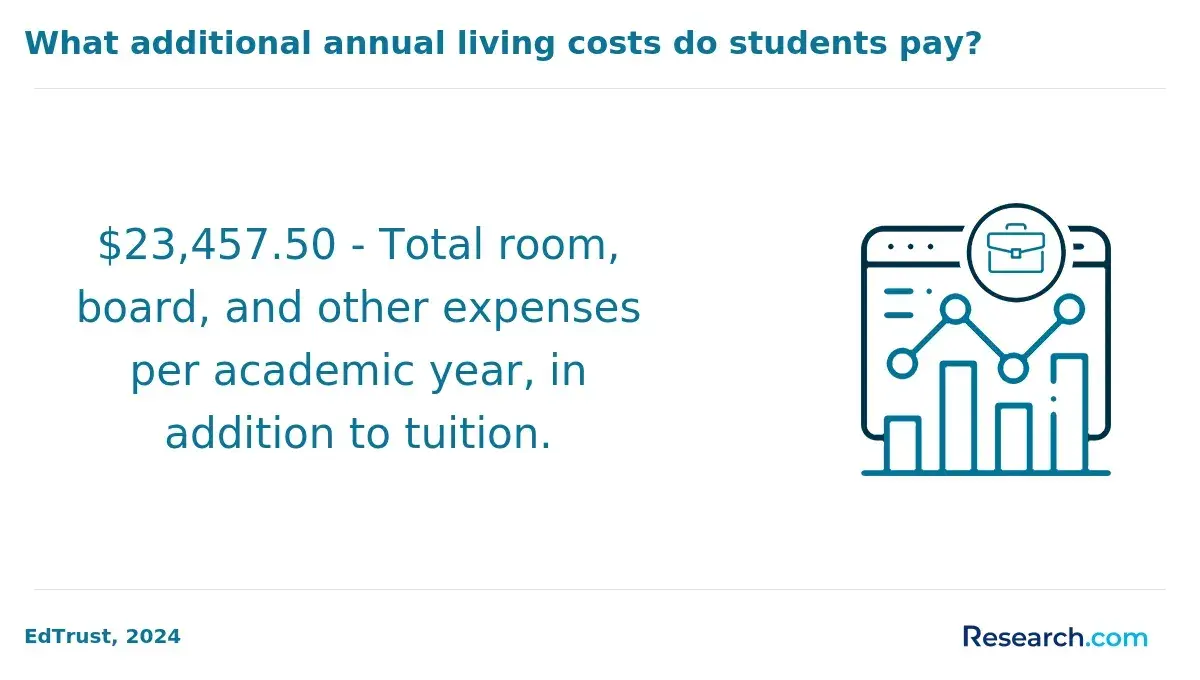
Cost depends on tuition, fees, transfer credits, books, technology, residency status, and whether the school charges online students the same rate as campus students. College Board's 2024 pricing data shows average published tuition and fees of $11,610 for in-state public four-year students and $43,350 for private nonprofit four-year students. For online students, the useful takeaway is that sticker price is only the starting point; net price after grants, scholarships, employer aid, and transfer credit is more important.
The table below summarizes the major cost and timeline variables students should compare across programs.
| Factor | How it affects cost or time | What to ask the school |
| Transfer credits | Accepted credits can reduce the number of courses needed to graduate. | How many credits will apply to my degree, and which requirements will they satisfy? |
| Tuition model | Per-credit, per-term, and flat-rate tuition models can produce different totals. | What is the total estimated tuition for my remaining credits? |
| Online fees | Technology, distance learning, proctoring, or course fees can raise the final bill. | Are all mandatory fees included in the published online tuition estimate? |
| Course availability | Limited workshop offerings may slow progress if required courses are not offered often. | How often are required major courses offered online? |
| Full-time or part-time pace | Part-time study may be easier to manage but can extend the timeline. | What course load do most working students take each term? |
| Prior learning credit | Some adult learners may receive credit for exams, military training, or professional learning. | Do you award credit for CLEP, DSST, military transcripts, or prior learning assessment? |
To control costs, students should compare net price rather than tuition alone. A practical cost review should include several steps before enrollment.
- Request a written degree plan showing remaining credits, estimated tuition, and mandatory fees.
- Compare financial aid packages after grants and scholarships, not just published tuition.
- Ask whether online students qualify for the same institutional scholarships as campus students.
- Confirm textbook and software expectations for writing, editing, and media courses.
- Check whether summer or accelerated terms cost more or affect financial aid eligibility.
The fastest option is not always the best option. Accelerated programs can work well for experienced writers and transfer students, but first-time students may benefit from a steadier pace that leaves time for reading, revision, internships, and portfolio development.
What career paths can a bachelor's in creative writing lead to?
A bachelor's in creative writing can lead to careers where storytelling, editing, audience analysis, and persuasive communication matter. The degree is not limited to becoming a novelist or poet, and many graduates use it as a flexible writing foundation for communications, publishing, education, marketing, media, nonprofits, and technology-adjacent content roles.
Students should think in terms of skill clusters rather than a single job title. Employers often want writing ability paired with editing, research, digital publishing tools, content management systems, collaboration, and subject-matter curiosity.
The table below outlines common career directions and the kind of work associated with each path.
| Career path | Typical responsibilities | Helpful add-on skills |
| Writer or author | Create original books, essays, scripts, stories, articles, or commissioned content. | Revision discipline, publishing knowledge, platform building, research. |
| Editor or assistant editor | Review manuscripts or content for clarity, structure, accuracy, tone, and style. | Copyediting, style guides, fact-checking, project management. |
| Content writer or content strategist | Write web pages, blogs, guides, campaigns, newsletters, and brand content. | SEO, analytics, content management systems, audience research. |
| Technical writer | Translate complex information into manuals, help articles, guides, and documentation. | Information architecture, product knowledge, interviewing experts. |
| Grant writer | Prepare proposals, narratives, and reports for nonprofit or public funding. | Budget literacy, research, compliance awareness, outcomes writing. |
| Communications specialist | Create press releases, internal messages, public-facing stories, and campaign materials. | Media relations, social media, stakeholder communication. |
| Publishing assistant | Support acquisitions, editorial workflows, production, publicity, or literary magazine operations. | Administrative organization, proofreading, publishing software. |
| Writing tutor or education support specialist | Help students improve writing, revision, reading, and academic communication. | Tutoring methods, patience, grammar knowledge, feedback skills. |
Creative writing can also pair well with visual media, photography, game writing, and digital storytelling. Military-affiliated students exploring creative media options may find related pathways in photography programs online for veterans, especially if they want to combine writing with documentary, editorial, or multimedia work.
Students who want the strongest employment flexibility should build a portfolio with more than one type of writing. A balanced portfolio might include a polished creative sample, an edited article, a web content sample, a grant-style narrative, and a professional writing project completed for a real or simulated client.
What salary ranges and job outlook can creative writing graduates expect?
Salary outcomes for creative writing graduates vary because the degree can lead to many different roles. Industry, location, experience, portfolio strength, internships, technical skills, and freelance versus salaried work all affect earnings. Students should treat wage data as a labor-market benchmark, not as a promise of individual outcomes.
BLS 2024 wage data shows that writers and authors had a median annual wage of $72,270, while technical writers had a median wage of $91,670. The difference matters because technical writing often requires the ability to explain specialized products, systems, or procedures, not just strong prose. Students who enjoy clarity, structure, and research may find technical communication a practical complement to creative writing.
The table below compares several writing-related occupations using national labor-market categories. These categories do not map perfectly to every creative writing graduate, but they help students understand where writing skills appear in the U.S. job market.
| Occupation | 2024 median annual wage | Career note |
| Writers and authors | $72,270 | Includes many forms of original writing; income can vary widely for freelancers. |
| Technical writers | $91,670 | Often rewards writers who can learn complex products and communicate clearly. |
| Editors | $77,770 | Editing roles may require subject knowledge, style guide fluency, and experience. |
| Public relations specialists | $69,780 | Writing is central, but the role also requires media awareness and strategic messaging. |
| News analysts, reporters, and journalists | $60,280 | Portfolio, reporting skills, multimedia ability, and local market conditions matter. |
Job outlook also differs by role. BLS employment projections for writers and authors show modest growth, while some traditional journalism and editing roles face more pressure from changing media economics. At the same time, organizations continue to need clear communication across websites, documentation, fundraising, training, and customer education.
AI is changing the writing labor market. Generative AI can produce drafts, summaries, and variations quickly, but employers still need people who can judge accuracy, voice, ethics, originality, audience fit, and brand risk. Students who want to stay competitive should learn how to use AI tools responsibly while strengthening skills that are harder to automate: interviewing, storytelling judgment, editing, research verification, and strategic communication. Writers interested in the technical side of automation may compare creative writing with online AI degree programs to see whether a more technology-centered path fits their goals.
What career services do top online creative writing programs provide for students and alumni?
Career services are especially important in creative writing because many opportunities depend on portfolio quality, networking, internships, and the ability to translate writing skills into employer language. The best online programs make career support accessible to remote students, not just students who can visit campus.
Students should look for career services that are specific enough to support writing careers. A general job board is useful, but it is not enough by itself.
- Portfolio reviews that help students present creative, editorial, professional, and digital writing samples for different audiences.
- Résumé and cover letter coaching that translates workshop, editing, publishing, tutoring, and freelance experience into workplace skills.
- Internship support with publishers, magazines, nonprofits, marketing agencies, schools, libraries, arts organizations, or media teams.
- Virtual career coaching with appointment times available for working adults and students in different time zones.
- Alumni networking through panels, mentorship programs, readings, online communities, or industry-specific events.
- Publishing and submissions guidance, including how to evaluate literary journals, contests, agents, small presses, and rights issues.
- Freelance preparation covering pitches, client communication, rates, contracts, invoicing, and scope management.
- Access to writing centers, literary magazines, student publications, or editorial boards that online students can join remotely.
Strong career services also help students avoid common mistakes. One mistake is waiting until the final semester to think about work samples. Another is treating creative writing as separate from employability. Students should start collecting polished samples, publication credits, internship work, and faculty feedback early.
Before enrolling, ask the career center how many services are available to online students after graduation. Alumni access matters because writing careers often develop gradually through internships, freelance assignments, graduate study, and role changes rather than one immediate job placement.
How can students choose a reputable online creative writing program that fits their goals?
The best online bachelor's in creative writing for one student may not be the best for another. A student who wants an MFA later should prioritize advanced workshops and mentorship, while a student seeking employment flexibility may need professional writing, digital content, internships, and career coaching. The right program should match the student's writing goals, budget, schedule, and risk tolerance.
Use a structured comparison process rather than relying only on rankings or advertising. The following steps can help narrow the list to programs that are academically credible and personally practical.
- Verify institutional accreditation using an official accreditation database before discussing price or admissions.
- Identify your primary goal: literary portfolio, graduate study, publishing, content work, teaching support, communications, or career change.
- Review the curriculum to confirm that required courses match your goal, not just your general interest in writing.
- Ask for a transfer-credit estimate and total remaining cost in writing.
- Evaluate faculty fit by reviewing instructor publications, professional experience, genres, and advising availability.
- Check workshop size, feedback expectations, and whether online students participate in readings, journals, or writing communities.
- Ask career services for examples of support available to online students and alumni.
- Compare capstone or portfolio requirements to the samples you will need for jobs or graduate applications.
- Review withdrawal, refund, and satisfactory academic progress policies before enrolling.
- Speak with current students or alumni if the program can connect you with them.
The table below highlights common selection mistakes and better ways to evaluate programs.
| Common mistake | Why it can hurt students | Better approach |
| Choosing only the lowest tuition | Low tuition may not save money if few credits transfer or required courses are hard to schedule. | Compare total remaining cost and time to completion. |
| Ignoring career services | Students may graduate with writing skills but no clear portfolio or job-search strategy. | Ask for specific online-student services and alumni access. |
| Assuming all writing programs are the same | Some emphasize literature, others genre workshops, professional writing, or digital media. | Match curriculum to your intended career or graduate-school path. |
| Overlooking faculty and workshop access | Limited feedback can weaken portfolio development. | Ask about workshop caps, faculty response expectations, and mentorship options. |
| Relying only on rankings | Rankings may not reflect your transfer credits, budget, genre interests, or schedule. | Create a personal scorecard based on accreditation, cost, curriculum, services, and fit. |
Students drawn to AI-assisted storytelling, computational creativity, or research-heavy technology careers may also explore online AI PhD programs, but that path serves a very different purpose than a creative writing bachelor's. For most undergraduate writers, the smarter near-term goal is to choose an accredited program that produces a strong portfolio, practical writing samples, and clear career support.
Other Things You Should Know About Creative Writing
Yes, genre fiction can often count in a creative writing program. Online bachelor's programs in creative writing recognize diverse literary forms, including genre fiction like science fiction, fantasy, and mystery, as valid areas of study. Many programs encourage exploration and mastery of various genres to enrich students' creative flexibility and marketability.
Usually not at the start. Most coursework can be completed with standard word processing tools provided by the school. Specialized software for screenwriting, editing, or publishing may be useful later if required by a course or career goal.
Yes, many students do, especially in asynchronous programs. However, writing workshops require steady reading, critique, and revision time, so working students should start with a manageable course load and adjust after the first term.
References
- Self-Guided Writing Courses To Make You a Better Writer https://writinggales.com/2025/08/27/self-guided-writing-courses-to-make-you-a-better-writer/
- What should a good creative writing program do? - The Writer https://www.writermag.com/improve-your-writing/writing-education/really-paying-enroll-creative-writing-program/
- Creative Writing BA(Hons) (Online) https://www.falmouth.ac.uk/study/online/undergraduate/creative-writing
- Choosing a Creative Writing Course https://www.nawe.co.uk/writing-in-education/writing-at-university/choosing-a-course.html
- Best Online Creative Writing Degrees 2026 https://www.onlineu.com/degrees/creative-writing
- Create Your Best 2025 with These Top MFA Creative Writing Programs https://www.onlinemastersdegrees.org/best-programs/fine-arts-mfa/creative-writing/
- How to choose the best online creative writing course step-by-step https://nationalcentreforwriting.org.uk/writing-hub/best-online-creative-writing-courses/
- Creative Writing: Exciting Career Paths https://www.creativewritingacademy.uk/blog/creative-writing--exciting-career-paths
- Best Writing Bootcamps https://blog.nobledesktop.com/learn/writing/which-writing-bootcamp-is-best