2027 What Can You Do With a Creative Writing Degree

Co-Founder and Chief Data Scientist
A creative writing degree is a serious career decision, not just a passion project. In May 2024, the U.S. Bureau of Labor Statistics reported a median annual wage of about $76,270 for writers and authors, showing that writing skills can connect to paid professional paths.
This guide is for students comparing majors, adults considering a career shift, and writers weighing college costs against outcomes. You will learn where the degree can lead, what programs include, how salaries vary, and how to choose a program that fits your goals.
Key Things You Should Know
- A creative writing degree can lead to roles in publishing, editing, content marketing, communications, technical writing, grant writing, entertainment, education, and freelance work; the strongest outcomes usually come from pairing writing talent with a marketable niche.
- Recent BLS May 2024 wage data places writers and authors at a median annual wage of about $76,270, while technical writers are higher at about $91,670, making specialization an important salary factor.
- College Board's 2024 pricing data shows published tuition and fees averaging about $11,610 for in-state public four-year colleges and $43,350 for private nonprofit four-year colleges, so program cost and debt should be compared against realistic career plans.
What can you do with a creative writing degree after graduation?
A creative writing degree teaches students to produce original written work, revise deeply, analyze literature, workshop with peers, and understand how stories, voice, structure, audience, and genre work. Depending on the school, the degree may be a Bachelor of Arts, Bachelor of Fine Arts, Master of Arts, Master of Fine Arts, certificate, or concentration within English.
After graduation, the most direct path is writing, editing, or publishing, but many graduates use the degree more broadly. Employers often value the ability to write clearly, interpret feedback, manage deadlines, adapt tone for different audiences, and develop persuasive narratives. Those skills are useful in media, marketing, nonprofit communications, public relations, education, business, and digital content roles.
The best way to think about the degree is as a foundation rather than a single-job credential. It is rarely a license-to-practice degree like nursing or accounting. Instead, its value depends on the portfolio you build, the internships you complete, the industry knowledge you add, and the professional writing samples you can show employers.
Common post-graduation routes fall into several practical categories. These options differ in stability, creative control, income predictability, and how much additional training may be needed.
| Path after graduation | Typical work | Best fit | Key trade-off |
| Publishing and editorial | Manuscript review, copyediting, acquisitions support, literary agency assistance | Students who enjoy books, revision, and close reading | Entry-level competition can be high, especially in major publishing markets |
| Content and marketing | Blog posts, brand storytelling, email campaigns, website copy, social media writing | Writers who can adapt voice to business goals | Creative work is often shaped by analytics, clients, and deadlines |
| Technical and professional writing | Documentation, manuals, help content, process guides, proposals | Writers comfortable explaining complex information clearly | May require subject knowledge in software, engineering, healthcare, or finance |
| Entertainment and media | Screenwriting, podcast scripts, narrative design, production writing | Students interested in collaborative storytelling | Work can be project-based and location-dependent |
| Graduate study and teaching | MFA work, teaching assistantships, community college or university teaching preparation | Writers seeking advanced craft study or academic paths | Graduate credentials do not automatically lead to tenure-track work |
Students who want the strongest return should avoid treating the degree as only a set of classroom assignments. A stronger plan includes published clips, internships, campus media experience, editing work, a professional website, and writing samples matched to target jobs.
What jobs can creative writing majors get in and beyond publishing?
Creative writing majors can work in and beyond publishing because writing is a transferable skill. The major is especially useful when paired with editing accuracy, digital literacy, audience research, subject-matter knowledge, or visual communication. A student interested in brand storytelling, for example, may strengthen employability by combining writing with design coursework or a graphic design bachelor degree.
The table below compares common roles that creative writing majors often consider. It focuses on what the work actually involves, because job titles can sound similar while requiring different daily tasks.
| Job role | Typical responsibilities | Helpful preparation | Entry point |
| Copywriter | Writes ads, landing pages, product descriptions, email campaigns, and brand copy | Marketing basics, portfolio samples, SEO familiarity | Agency intern, junior copywriter, content assistant |
| Editor | Reviews structure, grammar, tone, accuracy, style, and publication readiness | Editing courses, style guides, publication experience | Editorial assistant, copyeditor, proofreader |
| Content strategist | Plans content calendars, audience messaging, user journeys, and performance goals | Analytics, UX writing, content management systems | Content coordinator, marketing associate |
| Technical writer | Explains complex products, software, policies, or procedures for users | Technical subject knowledge, documentation tools, plain-language writing | Documentation assistant, junior technical writer |
| Grant writer | Develops funding proposals, need statements, narratives, and reports | Nonprofit knowledge, research skills, budgeting awareness | Development assistant, proposal coordinator |
| Scriptwriter or narrative designer | Creates dialogue, scenes, branching stories, podcasts, video scripts, or game narratives | Screenwriting, collaboration, production awareness | Writer assistant, production assistant, game writing intern |
| Communications specialist | Writes press materials, internal updates, speeches, web copy, and stakeholder messages | Public relations, organizational writing, media awareness | Communications assistant, PR coordinator |
Creative writing graduates should also consider roles that are not labeled "writer." Many employers hire for communication, editorial judgment, and narrative skill under broader titles. This matters because searching only for "creative writer" can hide realistic entry-level opportunities.
Before applying, build a targeted portfolio rather than sending the same samples everywhere. A publishing employer may want book reviews or edited manuscripts, while a marketing employer may prefer web copy, campaign writing, and measurable results.
- For publishing jobs, include polished fiction, nonfiction, book reviews, editorial notes, or literary magazine work.
- For business writing jobs, include website copy, email samples, case studies, social captions, or product descriptions.
- For technical writing jobs, include instructions, process documentation, knowledge-base articles, or examples that simplify complex information.
- For nonprofit roles, include grant-style narratives, donor communications, advocacy writing, or impact stories.
A common mistake is assuming that a published poem or short story will be enough for every employer. Creative samples matter, but many employers need proof that you can write for their audience, follow guidelines, accept edits, and meet deadlines.
How much do creative writing graduates typically earn and what affects salary?
Creative writing salaries vary widely because graduates enter different industries. A novelist, freelance copywriter, technical writer, nonprofit grant writer, and corporate communications specialist may all have writing-related backgrounds, but their pay structures, benefits, and job stability can be very different.
The most useful salary comparison is by occupation, not by degree title. The table below uses recent U.S. labor market wage data to show how related writing careers can differ.
| Occupation | Recent U.S. median annual wage | What the figure means for students |
| Writers and authors | About $76,270 | This broad category includes many types of professional writing, so actual earnings depend heavily on industry and employment type. |
| Technical writers | About $91,670 | Technical subject knowledge can raise earning potential because employers pay for clear explanations of complex products or systems. |
| Editors | About $75,260 | Editing can be stable in some organizations, but media disruption and outsourcing can affect openings. |
| Public relations specialists | About $69,780 | Writing is central, but the role also requires media judgment, stakeholder communication, and campaign planning. |
| Market research analysts | About $76,950 | Creative writers who add analytics and consumer insight skills may qualify for adjacent content strategy roles. |
Salary is affected by several factors that students can influence. The biggest are industry, location, portfolio quality, technical specialization, internships, professional network, and whether the job is salaried, contract-based, or freelance.
Students interested in higher-paying writing-adjacent roles should consider building skills in technology, business communication, data interpretation, or AI-assisted workflows. For example, a writer who studies prompt design, AI evaluation, and content governance may find different opportunities than one focused only on traditional literary publication; students exploring that direction can compare writing careers with an applied artificial intelligence degree.
Freelance income deserves special caution. Some freelancers earn strong incomes, but early freelance work can be inconsistent and may not include health insurance, retirement contributions, paid leave, or employer-funded professional development. When comparing freelance and salaried paths, look at total compensation, not just project rates.
To improve salary prospects, students should take a practical sequence of steps before graduation. This is especially important because writing employers often ask for evidence of ability rather than relying only on the diploma.
- Choose a target writing market, such as publishing, technical documentation, marketing, nonprofit communication, or entertainment.
- Create three to five portfolio samples that match that market's style, audience, and business needs.
- Complete at least one internship, campus publication role, freelance project, or faculty-supervised writing project.
- Learn the tools used in the field, such as content management systems, editing software, documentation platforms, analytics tools, or screenplay software.
- Track outcomes where possible, such as increased newsletter opens, improved documentation clarity, accepted grant proposals, or published work.
What types of creative writing degree programs are available at U.S. colleges?
U.S. colleges offer creative writing at several academic levels. The right choice depends on whether you want a first college degree, a focused writing credential, graduate-level craft training, or preparation for teaching and publishing careers.
The table below compares common program types. It can help you avoid overpaying for a credential that is either too broad or more advanced than your immediate goal requires.
| Program type | Typical student | Common focus | Decision point |
| Certificate in creative writing | Adult learners, career changers, or students testing the field | Workshops, genre writing, revision, portfolio development | Good for skill-building, but usually not a substitute for a bachelor's degree when one is required |
| Associate degree with writing emphasis | Students starting at community college or planning transfer | General education, composition, literature, introductory creative writing | Often cost-effective if credits transfer cleanly to a four-year school |
| Bachelor of Arts in English with creative writing concentration | Students wanting broad liberal arts preparation | Literature, critical analysis, workshops, electives | Flexible for many careers, but students may need internships or minors for career focus |
| Bachelor of Fine Arts in creative writing | Students seeking intensive studio-style writing practice | Workshops, portfolio, genre study, thesis or capstone | More specialized, which can be ideal for serious writers but less broad than some BA programs |
| Master of Arts in creative writing or English | Students seeking graduate study with academic flexibility | Literary study, writing, research, pedagogy depending on program | May suit teaching, editing, or further doctoral study better than pure studio practice |
| Master of Fine Arts in creative writing | Writers pursuing advanced craft, publication, or college teaching possibilities | Graduate workshops, manuscript development, thesis, teaching assistantships | Can be valuable for craft and network, but should be weighed carefully against cost and career goals |
Some students are better served by combining creative writing with another major or minor. Business, marketing, communication, digital media, computer science, education, and design can all make writing skills more marketable. A student aiming for brand strategy or entrepreneurship might compare creative writing with a bachelor of business administration online to understand which curriculum better matches their career target.
A creative writing degree may be a strong fit if you want rigorous feedback, time to develop a portfolio, mentorship from writers, exposure to literature, and a structured writing community. It may be a weaker fit if your main goal is quick job placement in a clearly licensed occupation, if you dislike revision, or if you are unwilling to build career-specific samples beyond classroom assignments.
How do online creative writing degrees compare with campus-based programs?
Online and campus-based creative writing programs can both be legitimate if they are offered by accredited institutions and include meaningful faculty feedback. The better option depends on your schedule, learning style, need for community, access to internships, and how much face-to-face workshop experience you want.
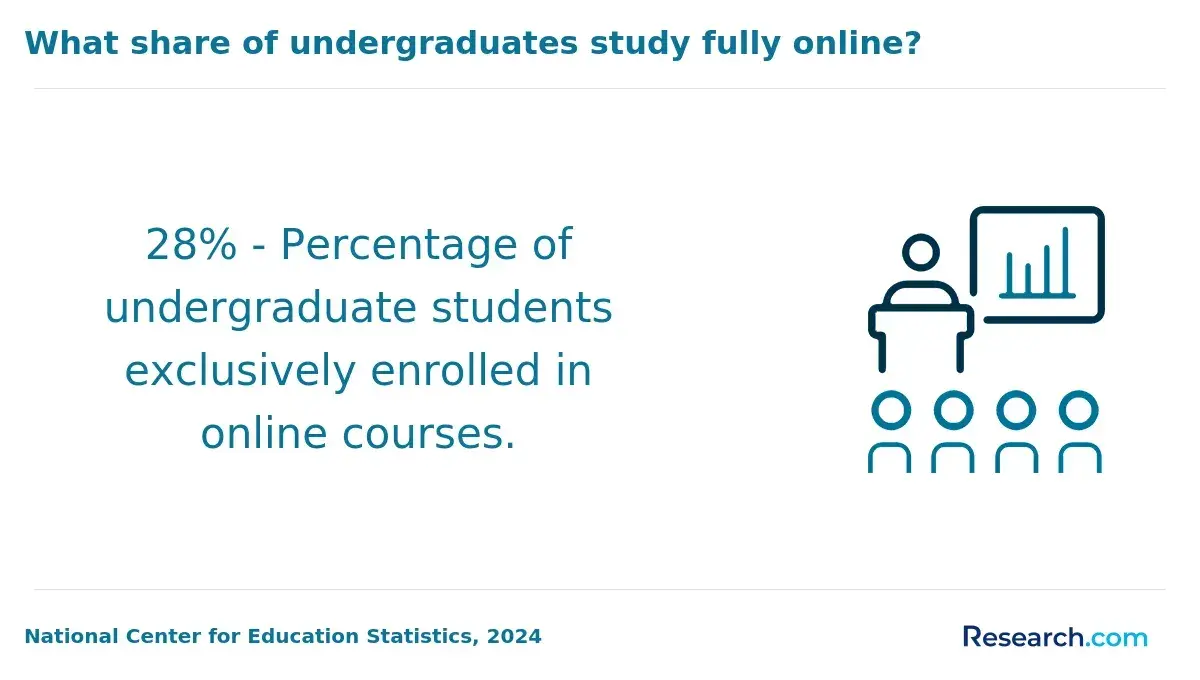
Online learning has become mainstream in U.S. higher education, and writing programs are well-suited to digital delivery because workshops, drafts, annotations, and peer comments can happen asynchronously. Still, students should examine how interaction actually works rather than assuming all online workshops are equally engaging.
The table below compares online and campus formats in the areas that most affect student experience and outcomes.
| Factor | Online creative writing degree | Campus-based creative writing degree |
| Schedule | Often better for working adults, parents, military students, or learners far from campus | Often better for students who can attend set classes and campus events |
| Workshop experience | May use discussion boards, video meetings, shared documents, and recorded feedback | Often includes live discussion, readings, campus journals, and in-person peer networks |
| Cost | Can reduce relocation and commuting costs, though tuition varies widely | May include housing, campus fees, transportation, and local cost-of-living expenses |
| Networking | Requires intentional participation in virtual readings, faculty office hours, and online communities | May provide easier access to campus publications, visiting writers, and student organizations |
| Internships | Can be completed locally or remotely if the program supports placement flexibility | May benefit from school relationships with nearby publishers, media groups, nonprofits, or arts organizations |
An online program may make sense if you already work, need flexibility, or want to avoid relocation. A campus program may make more sense if you learn best in live discussion, want a residential arts community, or need structured access to campus publications and events.
Before enrolling online, ask practical questions that reveal whether the program is interactive or mostly self-directed. These questions can prevent disappointment later.
- Are writing workshops synchronous, asynchronous, or a mix of both?
- How many students are typically in each workshop?
- Do faculty provide line-level feedback, conference-style feedback, or general discussion comments?
- Can online students work on the campus literary journal or participate in readings?
- Does the program help online students find internships, publication opportunities, or portfolio reviewers?
A red flag is an online program that promises a fast creative career but cannot explain faculty qualifications, workshop structure, student support, or graduate outcomes. Flexibility is valuable, but it should not replace mentorship and feedback.
What courses and specializations are usually included in a creative writing major?
Creative writing programs usually combine writing workshops, literature courses, craft study, revision, and electives. Workshops are central because students submit original work, receive peer and instructor feedback, and revise with attention to craft and audience.
The curriculum can vary, but most programs include several recurring areas. Understanding these areas helps you compare whether a program emphasizes literary craft, professional writing, publishing, digital media, or teaching preparation.
| Course area | What students learn | Why it matters |
| Fiction writing | Character, plot, scene, dialogue, point of view, pacing, and revision | Builds story skills used in fiction, games, scripts, and brand storytelling |
| Poetry | Image, line, sound, form, metaphor, compression, and voice | Strengthens precision, rhythm, and attention to language |
| Creative nonfiction | Memoir, personal essay, literary journalism, research, ethics, and narrative structure | Prepares students for essays, long-form content, narrative journalism, and nonfiction books |
| Screenwriting or playwriting | Scene structure, dialogue, visual storytelling, dramatic conflict, and format | Useful for film, television, theater, video, podcasts, and games |
| Literature and craft | Close reading, genre history, literary movements, and author techniques | Helps writers understand how published work is built and revised |
| Editing and publishing | Copyediting, literary magazines, book production, small presses, submissions, and professional standards | Connects creative work to real publication processes |
| Professional or digital writing | Web writing, UX writing, content strategy, social media, technical communication, and audience adaptation | Helps students translate writing skills into job-ready samples |
Specializations are useful when they match a student's career plan. A student who wants to write novels may prioritize fiction workshops and thesis mentorship. A student who wants a stable communications job may look for professional writing, editing, digital publishing, and internship requirements.
Students should leave the program with more than creative drafts. A strong portfolio usually includes a mix of polished creative work and practical writing samples that show range.
- A revised creative manuscript, such as short stories, poems, essays, chapters, or scripts.
- At least one edited or publication-ready piece that shows attention to revision and style.
- A professional writing sample, such as web copy, a feature article, a grant narrative, or technical documentation.
- A short author bio, resume, and portfolio website or organized digital folder.
Because AI writing tools are now common in workplaces, students should also learn ethical and effective use of generative AI. That does not mean replacing human voice. It means understanding drafting assistance, fact-checking limits, originality concerns, disclosure policies, and how to revise machine-generated text into accurate, audience-specific work.
What are typical admission requirements for undergraduate and graduate creative writing degrees?
Admission requirements depend on degree level. Undergraduate programs usually focus on high school preparation and general college readiness, while BFA, MFA, and some selective programs place heavy weight on a writing portfolio.
The table below summarizes typical requirements. Always confirm requirements with each school because deadlines, portfolio formats, test policies, and recommendation expectations vary.
| Program level | Common admission requirements | What matters most |
| Certificate | Application form, transcript, statement of interest, sometimes a writing sample | Fit with course level and writing goals |
| Associate degree | High school diploma or equivalent, placement information, application | Transfer planning and general education requirements |
| BA in English or creative writing | High school transcript, application essay, recommendations, optional test scores at many schools | Academic readiness and interest in reading and writing |
| BFA in creative writing | College application plus creative portfolio, statement, and sometimes interview | Quality and promise of writing sample |
| MA or MFA | Bachelor's degree, creative writing sample, statement of purpose, recommendations, transcript, resume or CV | Portfolio strength, faculty fit, and readiness for graduate-level critique |
The portfolio is often the most important part of selective creative writing admissions. It should show your strongest current work, not necessarily your entire range. Follow length, genre, and formatting instructions exactly.
Applicants can strengthen their materials by preparing deliberately. The steps below are practical because creative writing admissions often reward focus, revision, and fit more than flashy claims.
- Read the program's portfolio instructions before choosing samples.
- Select work that is polished, revised, and representative of the genre you want to study.
- Ask a teacher, mentor, editor, or trusted writer to review your submission before the deadline.
- Use the personal statement to explain your writing goals, influences, and reasons for choosing that program.
- For graduate programs, name faculty, genres, or program features that genuinely match your work.
A common mistake is submitting too many pieces or ignoring the requested format. Admissions committees are evaluating craft, potential, and your ability to follow professional instructions. More pages do not necessarily make a stronger application.
How long does a creative writing degree take and what does it cost to complete?
The time required depends on degree level, enrollment status, transfer credits, and whether the program includes a thesis, residency, internship, or capstone. A full-time bachelor's degree typically takes about four years, while an MFA often takes two to three years. Part-time study can make the program more manageable but usually extends the timeline.
Cost varies even more than time. College Board's 2024 pricing data reported average published tuition and fees of about $11,610 for in-state students at public four-year colleges and about $43,350 at private nonprofit four-year colleges. These are sticker prices, so students should compare net price after grants and scholarships rather than tuition alone.
The table below shows common time and cost considerations by credential type. It is meant to help with planning, not to predict what any one school will charge.
| Credential | Typical completion time | Main cost drivers | Best cost-control strategy |
| Certificate | Several months to one year | Per-course tuition, fees, noncredit versus credit status | Confirm whether credits apply to a future degree |
| Associate degree | About two years full time | Community college tuition, books, transfer planning | Use transfer agreements to avoid repeating credits |
| Bachelor's degree | About four years full time | Tuition, fees, housing, books, lost work time, transfer credit limits | Compare net price and complete transferable general education credits efficiently |
| MA or MFA | About two to three years full time | Graduate tuition, residency requirements, thesis costs, reduced work hours | Prioritize funded offers, assistantships, and programs with clear career support |
Students should also compare opportunity cost. If a program requires leaving full-time work or relocating to a high-cost city, the true cost is higher than tuition. Online, part-time, and low-residency formats may reduce disruption, but students should make sure they still provide strong feedback and networking.
Creative writing students considering business-oriented writing careers may compare costs with an online business administration degree, especially if they want roles in marketing management, entrepreneurship, operations communication, or corporate leadership. The better investment depends on whether the student wants writing craft as the core skill or business training as the core credential.
To estimate affordability more accurately, use a full-cost checklist before enrolling. This can prevent the common mistake of choosing the lowest tuition while missing fees, residency costs, or weak transfer policies.
- Check the school's net price calculator for undergraduate study or request a graduate cost estimate.
- Ask how many transfer credits will apply to the major, not just to general electives.
- Compare required fees, technology costs, residency travel, books, and housing.
- Review scholarship renewal rules, assistantship workload, and satisfactory academic progress requirements.
- Estimate likely debt payments against conservative entry-level income, not best-case freelance earnings.
How can you choose an accredited, reputable creative writing program in the U.S.?
Accreditation is the first filter. In the U.S., students should look for institutional accreditation from an accreditor recognized by the U.S. Department of Education or the Council for Higher Education Accreditation. Creative writing itself is not typically licensed like nursing or teaching, so institutional accreditation, faculty quality, curriculum, and outcomes matter most.
A reputable creative writing program should provide clear evidence of academic quality and student support. Rankings can be useful, but they should not replace direct review of the curriculum, faculty, cost, and graduate outcomes.
The table below lists program quality signals and red flags. Use it to compare schools side by side before applying or depositing.
| What to check | Positive signal | Red flag |
| Accreditation | Institutional accreditation is clearly listed and verifiable | Vague claims such as "internationally recognized" without recognized accreditation |
| Faculty | Faculty publish, edit, teach actively, or have relevant industry experience | No clear faculty bios or instructors with little connection to writing fields |
| Workshop model | Small classes, regular feedback, revision expectations, and genre-specific mentorship | Large classes with little individualized critique |
| Career support | Internships, literary journals, alumni examples, portfolio help, and employer connections | Promises of publication or employment without transparent evidence |
| Cost transparency | Clear tuition, fees, aid options, residency costs, and refund policies | Pressure to enroll quickly before receiving full cost information |
| Student work | Visible journals, readings, publications, capstones, or thesis examples | No examples of student writing culture or outcomes |
Once a school passes the accreditation screen, focus on fit. A strong program for poetry may not be the best program for screenwriting or technical communication. Faculty expertise and course rotation matter because a catalog may list courses that are not offered every year.
Ask admissions staff and program faculty direct questions. Their answers should be specific, consistent, and easy to verify.
- Which accreditor recognizes the institution, and where can I verify it?
- How often are genre-specific workshops offered?
- Who teaches online and campus courses: full-time faculty, adjuncts, visiting writers, or a mix?
- What portfolio, publication, internship, or capstone support is available?
- What recent career paths have graduates pursued?
- How does the program handle AI use, academic integrity, and originality in writing assignments?
One mistake to avoid is choosing a program only because a famous writer teaches there. Faculty reputation can matter, but students also need access, feedback, affordability, course availability, and a curriculum aligned with their career goals.
What is the long-term job outlook for careers related to creative writing?
The long-term outlook for creative writing graduates is mixed but not discouraging. Traditional publishing and editing remain competitive, while digital content, technical communication, public relations, UX writing, grant writing, and AI-related content governance create additional paths for strong writers.
BLS employment projections released in 2024 estimated about 5% growth for writers and authors from 2023 to 2033, which is close to the average for all occupations. That suggests continued demand, but not unlimited demand; graduates still need strong portfolios, adaptability, and industry-specific skills.
The table below summarizes outlook differences across related roles. It shows why students should think beyond a single title when planning their career.
| Career area | Outlook pattern | What it means for creative writing students |
| Writers and authors | Moderate growth with strong competition for literary and entertainment work | Build multiple income paths and learn professional publishing norms |
| Editors | Pressure from media consolidation and digital workflow changes | Combine editing with content management, subject expertise, or digital production |
| Technical writing | Steady demand in software, manufacturing, science, and regulated industries | Add technical literacy and documentation tools to writing strengths |
| Public relations and communications | Ongoing need for clear messaging across organizations | Develop strategic communication, media writing, and crisis communication skills |
| Content marketing and UX writing | Demand tied to digital products, search, customer experience, and brand communication | Learn analytics, user research basics, SEO, accessibility, and content systems |
AI is changing writing work, but it is not eliminating the need for human judgment. Employers increasingly need people who can evaluate AI-generated drafts, check facts, preserve brand voice, handle sensitive topics, and understand audience trust. Writers who refuse to learn new tools may be at a disadvantage, while writers who rely on AI without verification can damage credibility.
For long-term resilience, creative writing students should build a career plan that includes both craft and employability. The following steps can help turn a writing degree into a flexible professional path.
- Choose a primary market, such as publishing, technical writing, marketing, nonprofit communication, education, or entertainment.
- Add one complementary skill area, such as design, analytics, AI literacy, teaching, coding basics, grant research, or business communication.
- Publish or present work in credible venues, including campus journals, local publications, professional blogs, competitions, or internships.
- Build relationships with faculty, editors, alumni, internship supervisors, and writing communities before graduation.
- Keep revising your portfolio every semester so it reflects your target roles, not just completed assignments.
The degree is most likely to be worth it for students who actively build a portfolio and connect writing to a field. It is less likely to pay off for students who expect the credential alone to create a clear job path.
Other Things You Should Know About Creative Writing
Creative writing can complement majors like literature, communications, or film studies, enhancing analytical skills and storytelling abilities. This combination can open diverse career paths in 2027, such as content creation, publishing, and media, providing a broader skill set attractive to potential employers.
Internships are not always required, but they are strongly useful. They help students turn classroom writing into professional samples, learn deadlines, understand workplace expectations, and build references for entry-level jobs.
In most cases, students retain ownership of their original creative work, but policies can vary for school publications, funded projects, collaborative media, or work created during employment. Review the program's intellectual property and publication policies if this is a concern.
References
- 8 Exciting Jobs for Creative Writing Majors - TCK Publishing https://www.tckpublishing.com/jobs-for-creative-writing-majors/
- Online Master’s in Creative Writing Degree Programs: MA vs MFA Programs https://www.mastersincommunications.com/related-degrees/masters-in-creative-writing
- Creative Writing Careers: Exploring Future Prospects for Aspiring Writers https://blog.writetheworld.org/creative-writing-careers-exploring-future-prospects-for-aspiring-writers
- Choosing an online MA or MFA in Writing https://talk.collegeconfidential.com/t/choosing-an-online-ma-or-mfa-in-writing/3593107
- Creative Writing Degree | Online Creative Writing Degree https://www.creativewritingedu.org/degree-creative-writing/
- The MFA Checklist: Keys to Choosing Graduate Writing Programs - Dronile Hiraldo https://dronilehiraldo.com/choosing-a-graduate-writing-program/
- Creative Writing Programs: Finding the Right Fit for Your Learning | Writers.com https://writers.com/creative-writing-programs