
2027 Best Careers to Pursue With a Sports Management Master’s Degree

Co-Founder and Chief Data Scientist
A master’s in sports management is usually pursued by people who want to move beyond loving sports and into the business, operations, marketing, analytics, legal, or leadership side of the industry. The degree can be useful, but it is not automatically the best choice for every sports career. Your return depends on the role you want, the program’s industry connections, your work experience, and how well you use internships, networking, and project-based learning while enrolled.
This guide explains the strongest career options for graduates with a sports management master’s degree for 2027, including salary ranges, entry-level paths, advancement strategies, in-demand skills, hiring industries, and factors to weigh before choosing a program. It also covers practical ways to evaluate cost, career fit, and long-term value so you can decide whether this graduate degree supports your goals.
Quick Answer: What can you do with a sports management master’s degree in 2027?
A master’s in sports management can prepare graduates for roles in sports marketing, event operations, facility management, athlete representation, college athletics, sponsorship, analytics, sports media, and sports administration. Entry-level master’s graduates may commonly see starting salaries in the $40,000 to $70,000 range, although compensation varies widely by employer, location, role, and prior experience. The degree is most valuable when it is paired with internships, industry contacts, business skills, and measurable project experience.
What to know before choosing this career path
- A sports management master’s degree can lead to several different career tracks, including marketing, event management, analytics, facility operations, sponsorship sales, athlete services, and athletics administration.
- Relationships matter in this field. Internships, alumni networks, conferences, volunteer roles, and informational interviews can be as important as coursework when competing for jobs.
- Starting pay is not uniform across the industry. Entry-level positions may range from $40,000 to $70,000 annually, but salary depends heavily on the specific position, organization size, location, experience, and sector.
- The sports business changes quickly. Professionals who keep building skills in analytics, digital marketing, fan engagement, sponsorship strategy, and operations technology are better positioned for advancement.
- Many roles require strong communication, negotiation, leadership, and teamwork skills because sports management professionals often coordinate people, budgets, events, partners, and high-pressure timelines.
- Best careers for sports management master’s graduates
- Common entry-level paths in sports management
- How to move up in the sports industry
- How the master’s degree supports job readiness
- What drives long-term career success
- Skills employers want most
- Industries that hire sports management graduates
- How to choose a sports management master’s program
- How short courses and extra training can help
- When an MBA can strengthen a sports career
- Typical starting salary with a sports management master’s
- How to think about degree ROI
- Is the degree worth it for advancement?
- Job growth outlook for sports management
- How business management skills fit sports leadership
- Why global perspective matters in sports business
- How advanced business degrees may support senior roles
- How financial strategy applies to sports organizations
- How entrepreneurship can expand sports career options
- How digital transformation is changing sports management
- How multidisciplinary thinking improves sports decisions Digital strategy Innovation Advanced study Outlook Additional considerations
What are the best careers to pursue with a master’s in sports management for 2027?
The best career for a sports management master’s graduate depends on whether you prefer revenue generation, operations, athlete services, analytics, communications, compliance, or leadership. The degree typically combines business, marketing, finance, law, management, and sport-specific coursework. Students who are still planning their undergraduate route may also compare options such as an affordable online bachelor’s degree before applying to graduate programs.
Below are common sports management careers and the salary ranges stated for each role. These ranges should be treated as broad guideposts, not guarantees, because compensation can vary significantly by employer, market, seniority, and performance-based incentives.
| Career path | Annual salary range | Best fit for candidates who enjoy | Typical responsibilities |
| Sports Marketing Manager | $40,000 - $135,000 | Brand strategy, campaigns, fan engagement, and sponsorship activation | Plans and manages marketing campaigns for teams, leagues, events, or sports brands across advertising, social media, promotions, partnerships, and audience growth. |
| Event Coordinator | $30,000 - $70,000 | Logistics, schedules, vendor coordination, and live-event problem-solving | Organizes sporting events from planning through execution, including timelines, staffing, ticketing support, venue coordination, and on-site operations. |
| Sports Agent | $40,000 - $1,000,000 | Negotiation, relationship management, athlete advocacy, and career planning | Represents athletes in contract discussions, endorsement opportunities, professional planning, and other career decisions. |
| Sponsorship Manager | $45,000 - $120,000 | Sales, partnerships, proposal development, and revenue growth | Builds and manages sponsorship relationships for teams, leagues, facilities, tournaments, and events. |
| Athletic Director | $75,000 - $250,000 | Leadership, budgeting, compliance, fundraising, and department-wide strategy | Leads an athletic department at a college or university and oversees staff, teams, budgets, facilities, fundraising, and institutional goals. |
| College Athletics Administrator | $35,000 - $100,000 | Higher education, student-athlete support, compliance, fundraising, or operations | Works in athletic departments in areas such as compliance, development, academic support, operations, or team administration. |
| Sports Information Director | $30,000 - $70,000 | Media relations, writing, public relations, statistics, and communications | Handles public-facing communication for teams or athletic departments, including press releases, media requests, game notes, records, and public relations. |
| Sports Facility Manager | $40,000 - $100,000 | Venue operations, safety, staffing, maintenance, and event readiness | Manages day-to-day operations of stadiums, arenas, training centers, and other athletic facilities. Readers comparing management roles can also review how to become a sports manager. |
| Sports Analytics Manager | $50,000 - $150,000 | Data, performance metrics, business intelligence, and decision support | Uses data to improve player evaluation, team strategy, fan engagement, ticketing, operations, and broader business decisions. |
| Sports Law Attorney | $60,000 - $200,000 | Legal research, contracts, disputes, regulations, and athlete representation | Focuses on sports-related legal matters such as contracts, disputes, antitrust issues, compliance, and representation. |
How to choose among these careers
If you want a visible, fast-paced role, event management or sports communications may fit. If you prefer revenue and relationship building, sponsorship or marketing may be stronger options. If you are drawn to numbers and strategic decision-making, analytics may offer a better match. If you want authority over programs, budgets, and staff, athletic administration may be the longer-term target.
What are the typical career paths for entry-level sports management professionals?
Most sports management careers do not begin in a senior title, even for graduate degree holders. Many professionals enter through assistant roles, internships, operations jobs, seasonal positions, graduate assistantships, or volunteer work that gives them direct exposure to teams, venues, events, or athletic departments.
| Entry path | What it helps you learn | When it makes sense |
| Assistant positions | Daily operations, reporting, stakeholder communication, project coordination, and how senior managers make decisions | Best for graduates who want structured workplace training and a clearer path inside one organization. |
| Internships | Applied experience in marketing, events, athlete relations, communications, operations, or ticketing | Best for students who need industry experience before full-time employment. Some accelerated online degree programs may also include internship opportunities. |
| Volunteer roles | Event logistics, guest services, crowd flow, game-day operations, and frontline communication | Best for building local contacts, especially when paid sports experience is limited. |
| Seasonal or game-day jobs | Real-time problem-solving, customer service, venue operations, and team coordination | Best for candidates trying to break into professional teams, facilities, tournaments, or live events. |
The main goal at the entry level is to build proof. Employers want to see that you can handle deadlines, communicate clearly, work under pressure, support revenue or operations goals, and represent the organization professionally.
How can sports management professionals advance their careers?
Advancement in sports management usually comes from combining graduate education with documented performance, specialized skills, professional relationships, and leadership experience. The field can be competitive and is not always the easiest academic or career route; readers comparing academic difficulty may find context in this guide to the easiest college majors.
Build credible specialization
General sports enthusiasm is not enough. Professionals often move faster when they become known for a useful niche such as sponsorship sales, digital campaigns, NIL-related operations, analytics, facility scheduling, compliance, fundraising, or event execution.
Use certifications selectively
Certifications can help when they align with your target role, but they should not replace experience. Examples include:
- Certified Sports Professional (CSP)
- Certified in Sports Management (CSM)
- Certified Special Events Professional (CSEP)
Some professionals also add credentials outside sports management. For example, those interested in athlete wellness may compare nutrition-related pathways; sports nutrition can be one of the career options connected to a nutrition master’s degree, and nutrition training may complement a sports management background in certain settings.
Keep learning after graduation
Sports business changes through media rights, sponsorship models, fan behavior, analytics, technology, and regulation. Useful professional development may include:
- Industry conferences, workshops, and association events
- Online courses, webinars, and software training
- An MBA with a sports focus or another business-oriented graduate credential
Network with purpose
Networking is most effective when it is specific. Instead of asking for a job immediately, ask professionals how they entered the field, which skills matter in their role, what hiring managers expect, and what mistakes early-career candidates make.
- Join relevant professional organizations.
- Attend industry events and alumni gatherings.
- Seek mentors and offer support to newer students or peers.
- Maintain relationships after internships and volunteer assignments end.
Document outcomes
A strong portfolio can make your experience easier for employers to evaluate. Include project summaries, campaign results when available, event plans, sample reports, sponsorship decks, media materials, supervisor feedback, awards, and leadership examples.
The following preserved visual highlights team value information connected to the business environment sports management professionals operate within.
How does a master’s degree in sports management prepare you for the job market?
The sports industry is expected to grow 7.3% in the next three to five years. A sports management master’s degree can help graduates compete for roles in this environment by combining business training with industry-specific applications. Students comparing costs may also review affordable online master’s programs before committing to a program.
| What the degree may provide | Why it matters in hiring |
| Specialized industry knowledge | Courses in sports marketing, finance, law, management, analytics, and operations help students understand how sports organizations function as businesses. |
| Applied skill development | Graduate work can strengthen critical thinking, problem-solving, negotiation, leadership, communication, and project management. |
| Role-specific preparation | Students may focus on areas such as event management, athlete representation, sports law, sponsorship, analytics, or college athletics. |
| A stronger applicant profile | A master’s degree may help candidates stand out for competitive roles, especially when paired with relevant experience. |
| Broader career options | The degree can support jobs across professional sports, college athletics, recreation, media, agencies, technology, and nonprofits. |
| Industry relationships | Faculty, alumni, internships, guest speakers, and cohort networks can create career leads that are difficult to access alone. |
| Transferable business skills | Skills in management, communication, budgeting, analytics, and strategy can also apply outside the sports sector. |
What the degree cannot do by itself
A master’s degree does not guarantee a front-office job, a high salary, or immediate entry into professional sports. Employers still look for relevant experience, initiative, references, practical software skills, and evidence that you understand the realities of the sports business.
What are the key factors for career success in sports management?
Success in sports management depends on more than having a credential. Professionals need to understand the sports ecosystem, including teams, leagues, governing bodies, sponsors, fans, media partners, athletes, schools, venues, and revenue models. The more clearly you understand how these groups interact, the better your decisions become.
- Industry literacy: Know the trends, pressures, and business models affecting the specific sport or sector you want to enter.
- Continuous learning: Stay current through conferences, workshops, mentorship, and relevant credentials. Professionals interested in wellness-related roles can also compare the best online nutrition certification options.
- Work ethic: Sports jobs often involve nights, weekends, travel, event deadlines, and last-minute changes. Reliability matters.
- Relationship building: Strong ties with coaches, athletes, sponsors, media contacts, alumni, vendors, and colleagues can open opportunities and improve execution.
- Communication skills: Writing, presenting, listening, conflict resolution, and negotiation are central to most roles. Related marketing-focused programs, including affordable online social media marketing degree programs, can also support digital communication skills.
- Ethical judgment: Sports organizations rely on trust. Transparency, fairness, confidentiality, and compliance awareness are essential.
What skills are most in-demand by employers in sports management?
Employers typically look for a mix of business capability, technical fluency, people skills, and sports-specific understanding. The strongest candidates can connect fan behavior, revenue goals, operational constraints, and data-informed decision-making.
Anticipating continued growth in women's sports, over 85% of sports management professionals predict double-digit revenue growth over the next 3 to 5 years. That kind of growth expectation increases the need for professionals who can identify audiences, build partnerships, develop campaigns, and support sustainable revenue.
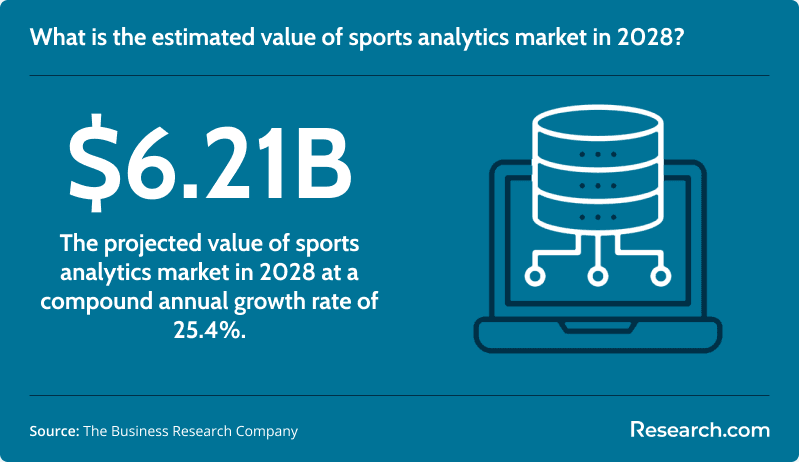
The sports analytics market is expected to grow $6.21 billion in 2028 at a compound annual growth rate of 25.4%. Because of this, data literacy is increasingly valuable for roles involving player performance, ticketing, sponsorship value, fan engagement, operations, and business strategy.
| Skill area | Examples | Why employers value it |
| Business and finance | Budgeting, financial management, revenue analysis, pricing, sales strategy | Sports organizations need staff who understand both mission and margins. |
| Marketing and fan engagement | Campaign planning, sponsorship activation, social media, email marketing, audience segmentation | Teams, leagues, events, and brands compete for attention and loyalty. |
| Data and analytics | Dashboard interpretation, performance metrics, CRM data, reporting, business intelligence | Better decisions depend on usable data, not just instinct. |
| Technology tools | CRM software, project management platforms, social media tools, communication systems | Digital tools improve coordination, reporting, and audience management. |
| Leadership and communication | Team management, presentations, negotiation, writing, conflict resolution | Sports work is highly collaborative and often time-sensitive. |
| Organization and execution | Scheduling, vendor coordination, risk planning, event checklists, deadline management | Live events and athletic operations leave little room for disorganization. |
Soft skills remain central. As one overview of sports management skills notes, communication, leadership, collaboration, and problem-solving are critical because the industry depends on coordinated work across many stakeholders.
What industries hire graduates with a sports management degree?
Sports management graduates work in more than professional teams. Many build careers in college athletics, recreation, agencies, facilities, media, technology, nonprofits, and youth sports. The best sector depends on whether you want a revenue-focused, operations-focused, community-focused, or leadership-oriented role.
| Hiring area | Common employers or settings | Possible work focus |
| Professional Sports | Professional sports teams; leagues | Marketing, sponsorship, operations, ticketing, analytics, communications, and team administration |
| College Athletics | Universities and colleges; athletic departments; NCAA | Compliance, development, student-athlete support, media relations, facilities, and department administration |
| High School Sports | High school athletic departments | Athletic administration, scheduling, compliance, event support, and student programming |
| Recreational Sports | Community sports organizations; fitness centers; youth sports leagues | Program management, facility use, customer service, registration, coaching support, and community engagement |
| Sports Marketing Agencies | Agencies focused on sports marketing and sponsorship | Brand partnerships, campaign development, athlete marketing, sponsorship sales, and activation |
| Sports Media | Sports broadcasting networks; sports journalism | Content coordination, communications, statistics, production support, and audience engagement |
| Sports Technology | Esports organizations; sports data analytics companies | Analytics, product support, digital operations, esports management, and technology-enabled fan engagement |
| Non-profit Organizations | Youth sports development organizations; charitable foundations supporting sports initiatives | Program delivery, fundraising, partnerships, community outreach, and impact reporting |
What factors should you consider when choosing a master’s program in sports management?
Choosing the right program should start with your target role, not the school’s marketing copy. A program designed for athletic administration may not be ideal for sports analytics, and a research-heavy program may not be the best fit if you need internships and employer connections.
| Program factor | What to check | Why it matters |
| Accreditation and institutional quality | Confirm the school’s recognized accreditation and review program reputation in the sports industry. | Accreditation can affect transferability, employer confidence, and financial aid eligibility. |
| Curriculum fit | Look for courses in your area of interest, such as analytics, marketing, law, finance, events, or college athletics. | The strongest program is the one that builds skills for your intended career path. |
| Internships and applied learning | Ask whether internships, consulting projects, practicums, or capstones are built into the degree. | Hands-on experience can be decisive in a competitive hiring market. |
| Industry connections | Review alumni outcomes, guest speakers, employer partnerships, and career services. | Sports hiring often depends on referrals, timing, and network access. |
| Format and pace | Compare full-time, part-time, online, hybrid, and accelerated options. Some students may consider 1 year master’s programs online. | Program pace affects cost, workload, internship access, and how quickly you can return to or advance in the workforce. |
| Total cost | Evaluate tuition, fees, travel, books, lost income, and technology requirements. | The lowest tuition is not always the best value, but high cost must be justified by outcomes and fit. |
How can additional learning opportunities boost your sports management career?
Short courses, certificates, workshops, and targeted training can help sports professionals update skills without committing to another full degree. This is especially useful for topics that change quickly, such as sports analytics tools, CRM systems, digital marketing platforms, sponsorship measurement, esports operations, and fan engagement strategy.
Working adults who need flexible learning may also compare accelerated online degree programs for working adults. The best option is one that directly fills a skill gap you can use in your current job or in the role you want next.
Can complementary MBA programs accelerate sports management careers?
An MBA can be useful for sports professionals who want broader training in finance, strategy, leadership, operations, and organizational management. It may be especially relevant for candidates aiming at executive leadership, revenue strategy, entrepreneurship, or roles outside traditional athletic departments. Cost-conscious students can compare options such as an affordable online MBA to determine whether additional business education is realistic.
What is the average starting salary for a sports management professional with a master's degree?
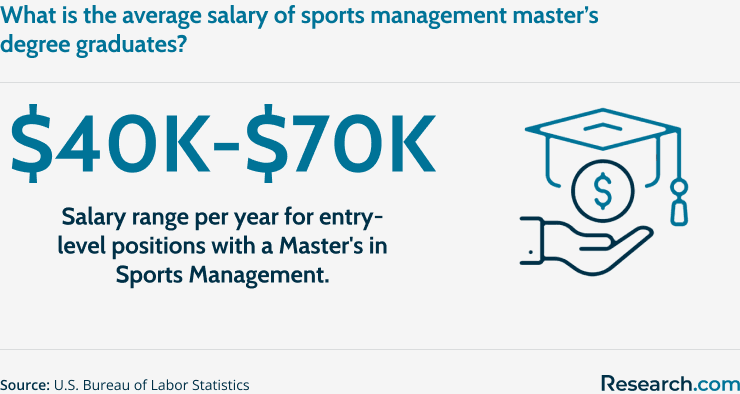
For entry-level roles, a sports management professional with a master’s degree can generally expect a starting salary range of $40,000 to $70,000 per year. This is not a guaranteed average for every graduate; actual pay depends on the role, sector, location, employer, and previous experience.
Major salary variables include:
- Specific role: Pay differs across positions such as Sports Marketing Manager, Event Coordinator, Athletic Director, and Sports Analytics Manager.
- Industry segment: Professional sports, college athletics, recreational sports, agencies, nonprofits, and technology employers may compensate differently.
- Experience level: Candidates with internships, graduate assistantships, sales experience, analytics projects, or event portfolios may compete differently from those with only classroom experience.
- Location: Cost of living and market size can influence salary offers.
- Employer type: Large professional organizations, smaller colleges, community programs, and nonprofit employers often have different pay structures.
What Is the Return on Investment of a Sports Management Master’s Degree?
The ROI of a sports management master’s degree depends on total cost, career goals, lost income while studying, the strength of the program’s network, and whether the degree helps you access roles you could not reasonably reach otherwise. Graduates who move into strategic leadership or management roles may see salary growth over time, but the payoff is not automatic.
To evaluate ROI, compare the full cost of attendance against realistic salary ranges for your target roles. Consider whether you can keep working while enrolled, whether the program offers internships or employer access, and whether lower-cost options can provide similar career value. Some professionals also explore business credentials, including fast-track online MBA programs, when their target roles require broader management training.
Is a sports management master’s degree worth it for career advancement?
A sports management master’s degree can be worth it when it helps you gain specialized knowledge, build industry contacts, complete applied projects, and qualify for roles that require or prefer graduate education. It can also strengthen your credibility if you are moving into sports from another field.
It may not be worth the cost if you already have strong industry experience, if the program lacks internships or employer connections, or if your target job values sales results, operations experience, or technical skills more than another degree. Some students interested in managing people across industries may also compare alternatives such as an online master’s in human resources.
| The degree may be a strong fit if... | You may want another route if... |
| You need structured access to sports industry knowledge, alumni, internships, and career services. | You already have extensive sports experience and need only a targeted certificate or promotion strategy. |
| Your target roles are in athletic administration, sports marketing leadership, facility management, analytics, or sponsorship strategy. | Your main goal is a role where employers prioritize sales numbers, portfolio work, or technical certifications over graduate credentials. |
| You can manage the cost without excessive financial risk. | The program’s cost is high and the school cannot show meaningful industry connections or applied learning opportunities. |
| You plan to use the degree actively through networking, projects, internships, and mentorship. | You expect the degree alone to secure a high-paying sports job immediately after graduation. |
What are the job growth prospects in the sports management industry?
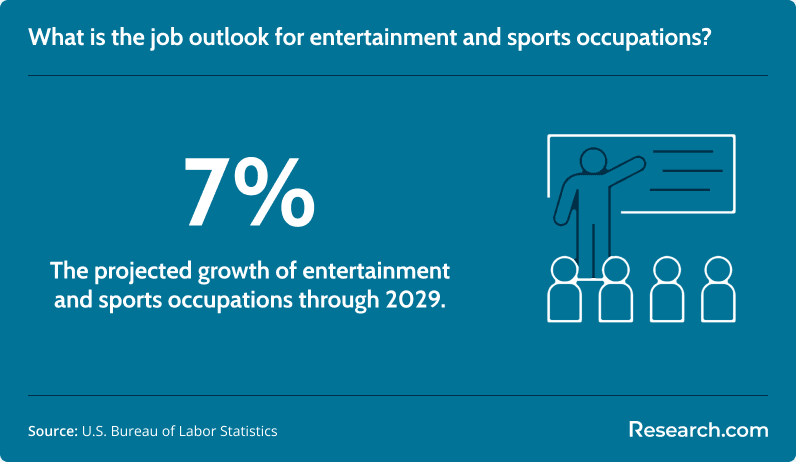
The sports management industry outlook is generally positive, although competition for desirable roles remains strong. The Bureau of Labor Statistics (BLS) projects that employment in entertainment and sports occupations is expected to grow 7% through 2029, which is faster than the average for all occupations.
Demand is supported by several areas of activity:
- Sports marketing and sales: Sponsorships, fan engagement, ticketing, partnerships, and digital campaigns continue to require skilled professionals.
- Event management: Sporting events need staff who can manage planning, logistics, vendors, safety, staffing, and attendee experience.
- Sports analytics: Teams and organizations increasingly use data to guide performance, operations, pricing, and business strategy.
- Esports: This growing sector creates opportunities in team management, marketing, events, content, and partnerships.
Current trends shaping sports management careers
- Globalization of sports: Leagues, clubs, sponsors, and events increasingly operate across borders, creating demand for professionals who understand international audiences and partnerships.
- Technology adoption: Data platforms, AI-enabled analysis, digital media tools, and fan engagement technologies are changing how organizations operate.
- Fan experience as a business priority: Sports organizations are investing in more interactive, personalized, and measurable fan engagement.
- Growth in women’s sports: The expectation of double-digit revenue growth from over 85% of sports management professionals signals expanding opportunities in sponsorship, media, events, and audience development.
Even with positive outlook indicators, the field is competitive. Graduates with strong internships, measurable results, technical fluency, and credible networks usually have an advantage. Students who want to work more directly with athletes’ mental performance and well-being may also compare sports psychology master’s programs.
How can business management skills complement a master's in sports management?
Business management skills help sports professionals move from execution to strategy. Financial analysis, operations planning, leadership, human resources, sales, and organizational strategy are especially useful for managers who oversee budgets, staff, sponsorships, facilities, or revenue goals. Students who want a broader business credential may compare the best online MBA programs alongside sports-focused graduate degrees.
How can global perspectives enhance your sports management career?
Sports is increasingly international. Professionals who understand cultural differences, global fan bases, international sponsorship structures, and cross-border media opportunities may be better prepared for roles with leagues, brands, events, and organizations that operate beyond one local market. Executive-focused learners may also compare options such as an affordable online executive MBA when global strategy is part of their career plan.
Can Advanced Business Degrees Strengthen Your Sports Management Career?
Advanced business degrees may help sports professionals who are pursuing senior leadership, consulting, research, teaching, or executive strategy roles. A DBA, for example, may be more relevant for professionals interested in applied business research and high-level decision-making than for candidates seeking their first sports job. Those considering this path can review online DBA program options to compare flexibility and cost.
How can advanced financial strategies support sports management success?
Financial strategy is central to sports management because teams, venues, events, and athletic departments must manage budgets, contracts, sponsorship value, staffing costs, risk, and long-term investments. Strong finance skills can improve contract analysis, event budgeting, facility planning, and resource allocation. Students who want more finance-focused preparation may consider a fast track finance degree as a complementary path.
How can entrepreneurial innovation elevate your sports management career?
Entrepreneurial thinking helps sports professionals identify new revenue streams, launch programs, improve fan experiences, build partnerships, and test new digital models. This can be useful in startups, esports, youth sports, athlete branding, sports technology, and community-based ventures. A fast-track business administration degree may support professionals who want broader training in agile business models and market strategy.
How can digital transformation drive exceptional outcomes in sports management?
Digital transformation is changing how sports organizations sell tickets, manage fans, measure sponsorships, analyze performance, deliver content, and coordinate operations. Professionals who understand analytics, cloud-based collaboration, CRM systems, AI-supported analysis, and digital marketing can contribute to faster and more informed decision-making. Those seeking to combine digital strategy with business leadership may explore accelerated options such as the fastest MBA programs.
How can a multidisciplinary approach enhance strategic decisions in sports management?
Sports management decisions often require more than one discipline. A facility project may involve finance, operations, safety, marketing, sponsorship, law, and community relations. A player or athlete brand strategy may involve analytics, media, negotiation, compliance, and entrepreneurship. Professionals who can connect multiple viewpoints are often better equipped to solve complex problems. Readers interested in venture creation can also explore what you can do with a degree in entrepreneurship.
Common mistakes to avoid when pursuing sports management careers
| Mistake | Why it can hurt you | Better approach |
| Choosing a program based only on the school name | A recognizable name does not always mean strong sports industry placement or applied learning. | Ask about internships, alumni roles, employer partners, and recent graduate outcomes. |
| Ignoring accreditation and institutional quality | Poor program quality can limit credibility and create problems with transfer credits or aid. | Verify accreditation and review the school’s academic and career support resources. |
| Focusing only on tuition | Fees, travel, lost income, and weak career services can change the real cost and value. | Calculate total cost and compare it with realistic career outcomes. |
| Assuming the degree guarantees a high-paying job | Sports careers are competitive, and many desirable roles require experience and networking. | Build a portfolio through internships, assistantships, projects, and measurable work. |
| Waiting until graduation to network | Many opportunities come through relationships built before a job opens. | Start networking during the first term through faculty, alumni, events, and internships. |
| Choosing no specialization | Employers may struggle to see where you fit if your experience is too general. | Develop a clear focus, such as analytics, sponsorship, event operations, compliance, or marketing. |
Questions to ask before enrolling in a sports management master’s program
- What specific sports management roles do recent graduates hold?
- Does the program require or strongly support internships, practicums, consulting projects, or capstones?
- Which teams, leagues, agencies, athletic departments, venues, or sports companies have hired or hosted students?
- How does the curriculum support my intended career path?
- Can I study while working, and how flexible are course schedules?
- What is the total cost, including fees and required travel?
- How active is the alumni network in the sports industry?
- What career services are available specifically for sports management students?
- Will I graduate with a portfolio, project examples, or measurable work outcomes?
- Are there faculty members with current or recent sports industry experience?
References
- Altman Solon (2024). 2024 Global Sports Survey.
- PricewaterhouseCoopers (2024). Global Sports Survey 2024.
- Sports Business Journal (2024). Global sports execs present increased confidence in sports market growth.
- The Business Research Company. (2024). Sports analytics - Global market report.
- Straits Research. (2025). Sports Sponsorship Market Share, Trends & Forecast 2033. https://straitsresearch.com/report/sports-sponsorship-market
Key Insights
- A master’s in sports management is most useful when it connects directly to a clear career goal, such as sports marketing, facility management, athletics administration, sponsorship, event operations, analytics, or athlete representation.
- Entry-level master’s graduates may generally expect starting salaries in the $40,000 to $70,000 range, but role, employer, location, experience, and sector can significantly change compensation.
- The Bureau of Labor Statistics (BLS) projects that employment in entertainment and sports occupations is expected to grow 7% through 2029, but competition for high-profile roles remains strong.
- The sports analytics market is expected to grow $6.21 billion in 2028 at a compound annual growth rate of 25.4%, making data literacy increasingly valuable across performance and business roles.
- Sports executives are cautiously optimistic about the market this year, predicting 7.3% growth over the next 3-5 years, up from 6.6% last year. While growth is expected across all revenue streams, media rights are projected to grow at a slower pace compared to previous forecasts.
- Women’s sports is a major area to watch: over 85% of sports management professionals predict double-digit revenue growth over the next 3 to 5 years.
- The strongest programs offer more than coursework. Look for accreditation, internships, employer relationships, alumni access, applied projects, and career support tied to your target role.
- The degree is not a shortcut. To get value from it, build a portfolio, network early, develop a specialization, and choose a program whose cost is reasonable compared with realistic career outcomes.
Other Things You Should Know About the Best Careers to Pursue with a Sports Management Master's Degree
Employers usually expect a bachelor’s degree, strong Excel or SQL skills, and experience with data visualization tools such as Tableau or Power BI. For analytics roles, internships and coursework in statistics, forecasting, and performance metrics often matter as much as the master’s degree itself.
In 2027, certifications like the Certified Sports Event Executive (CSEE) and the Sports Management Specialist (SMS) can complement a master's in sports management, enhancing skills and career prospects. These certifications provide specialized knowledge and credibility needed for leadership roles in sports management.


