
2027 Vet Careers: Guide to Career Paths, Options & Salary

Co-Founder and Chief Data Scientist
Veterinary careers are not limited to treating cats and dogs in a neighborhood clinic. The field includes emergency medicine, livestock health, public health, food safety, biomedical research, wildlife conservation, animal nutrition, hospital leadership, and specialty care. For students, career changers, and working professionals, the main decision is not simply “Should I become a vet?” It is “Which veterinary path fits my goals, budget, timeline, strengths, and tolerance for clinical pressure?”
This guide explains the major veterinary career options, what each role does, the education usually required, salary and job outlook information from cited sources, and the trade-offs you should weigh before choosing a program or job path. It also covers veterinary school admissions, technician versus technologist roles, online and accelerated education options, specialization pathways, accreditation checks, financial aid considerations, workplace stress, and practical steps for entering the field.
Quick Answer: What are the best veterinary careers to consider?
The strongest veterinary career path depends on how much education you are willing to complete and what kind of work you want to do. A veterinarian role requires a Doctor of Veterinary Medicine degree and state licensure, while veterinary technicians and technologists can enter the field through accredited associate or bachelor’s programs. If you want faster entry, veterinary assistant roles may require only a high school diploma or GED plus training. If you want higher specialization and earning potential, fields such as emergency medicine, cardiology, surgery, pathology, research, or veterinary leadership may be better long-term options.
Key Things You Should Know About Vet Careers
- Veterinary work is broad. Professionals in this field may work in private practice, laboratories, farms, zoos, government agencies, public health, animal welfare, biotechnology, and food production. Common focus areas include small animal care, large animal medicine, exotic animal care, veterinary pathology, and specialty medicine.
- Veterinarians have strong salary potential, but earnings vary widely. According to the U.S. Bureau of Labor Statistics (BLS), veterinarians earn an average annual salary of $136,300. Pay can change by specialty, location, practice type, and experience. Board-certified specialists, such as veterinary surgeons and radiologists, can earn significantly higher salaries.
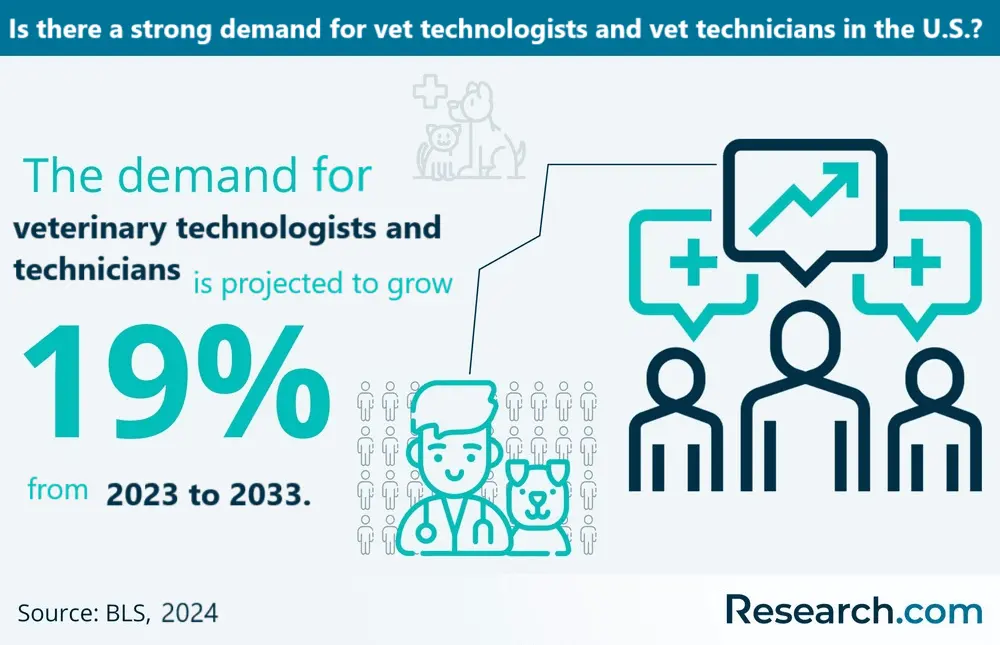
- Demand is growing. The veterinary profession is projected to grow 19% from 2023 to 2033, much faster than the average for other occupations. Demand is tied to pet ownership, medical advances, animal welfare needs, and food safety concerns.
- Work settings are very different from one role to another. A small animal veterinarian may spend most days in an exam room, while a large animal veterinarian may travel to farms. Researchers may work in high-tech laboratories, and wildlife veterinarians may work in conservation settings.
- Specialization can improve career options. Board certification in areas such as dermatology, ophthalmology, internal medicine, surgery, or cardiology usually requires residency training and a board exam, but it can lead to more advanced roles and higher compensation.
- Top Veterinary Jobs to Start Your Career for 2027
- Is a Vet Career Right for You?
- Advantages of Veterinary Careers
- Disadvantages of Veterinary Careers
- How to Choose the Best Veterinary Career Path
- Veterinary School Admission Requirements
- Veterinary Technician vs. Veterinary Technologist
- Accelerated Learning Options for Working Professionals
- Online Education as a Foundation for Veterinary Careers
- Veterinary Medicine Specializations
- Advanced Online Degrees for Veterinary Professionals
- Short-Term Programs for Entry-Level Veterinary Roles
- How Long It Takes to Become a Veterinarian
- Advanced Academic Training in Veterinary Careers
- Accelerated Credentials for Veterinary Career Entry
- How to Transition From a Non-Veterinary Job
- Emerging Trends in Veterinary Innovation
- Continuous Education for Veterinary Career Growth
- How to Check Accreditation and Program Quality
- Financial Aid Options for Aspiring Veterinarians
- How Veterinarians Can Manage Stress and Protect Well-Being
Top Veterinary Jobs to Start Your Career for 2027
The veterinary field includes licensed clinical roles, technical support positions, research careers, and administrative leadership jobs. The table below gives a fast comparison before the detailed role breakdown.
| Career | Typical minimum education | Salary information cited in this guide | Best fit for |
| Veterinarian | DVM or VMD plus licensure | $136,300 average annual salary | Students who want to diagnose, treat, prescribe, and perform surgery |
| Associate Veterinarian | DVM or VMD plus licensure | About $98,223 per year | New or practicing veterinarians building clinical experience |
| Veterinary Assistant | High school diploma or GED; training often provided | $37,310 average annual salary | People seeking faster entry into animal care support roles |
| Veterinary Technician | Accredited associate degree in veterinary technology | $44,040 average annual salary | Hands-on clinical support under veterinarian supervision |
| Veterinary Technologist | Bachelor’s degree in veterinary technology or related field | $44,040 average annual salary | Advanced clinical, laboratory, research, or teaching support |
| Emergency Room Veterinarian | DVM or VMD plus licensure; internship recommended | $189,657 per year, or $91.18 an hour | Veterinarians who can work under urgent, high-pressure conditions |
| Veterinary Practice Manager | Bachelor’s degree preferred; experience may substitute in some settings | $58,674 per year | Professionals interested in clinic operations, staffing, and finance |
| Veterinary Cardiologist | DVM or VMD, internship, residency, board certification | $197,000-$404,000 depending on the state; national average $357,482 per year | Veterinarians who want advanced specialty practice in heart disease |
| Animal Nutritionist | Bachelor’s degree for entry-level roles; graduate degree often preferred | $70,122 per year | People interested in diet, feed, performance, research, or food production |
| Veterinary Medical Director | DVM or VMD, licensure, extensive clinical experience | $125,475 per year | Experienced veterinarians who want medical leadership roles |
1. Veterinarian
A veterinarian is a licensed animal doctor who evaluates health problems, diagnoses disease, treats injuries, prescribes medication, performs procedures, and helps prevent illness in animals. Veterinarians may care for household pets, livestock, exotic species, wildlife, or laboratory animals. Workplaces include private clinics, animal hospitals, research facilities, zoos, government agencies, and food production settings.
What veterinarians do
- Examine animals and identify likely causes of illness or injury.
- Perform surgeries such as spays, neuters, wound repairs, and emergency procedures.
- Prescribe medication, administer vaccines, and treat acute and chronic conditions.
- Order and interpret diagnostic tools such as bloodwork, X-rays, ultrasounds, and other tests.
- Guide pet owners, farmers, and caretakers on nutrition, behavior, preventive care, and disease control.
- Address public health issues connected to animal-borne disease and food safety.
- Maintain medical records and follow legal, ethical, and professional standards.
Salary, outlook, and education
- Average annual salary: According to the U.S. Bureau of Labor Statistics (BLS), veterinarians earn an average salary of $136,300 per year, or $65.53 per hour. Salary depends on practice area, experience, location, and specialty. Some specialists earn over $150,000 annually, which makes this one of the medical careers with strong pay potential.
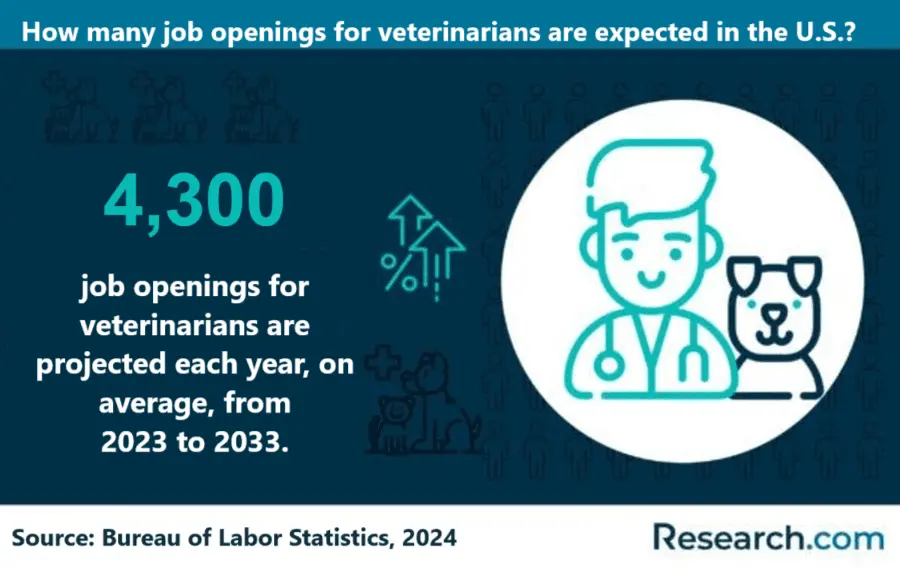
- Job growth: Employment for veterinarians is projected to grow 19% from 2023 to 2033, with about 4,300 openings projected each year, on average, over the decade.
- Minimum education: Veterinarians need a Doctor of Veterinary Medicine degree from an accredited veterinary school. They must also pass the North American Veterinary Licensing Examination (NAVLE) and meet state licensing rules. Specialists usually complete residencies and board certification.
2. Associate Veterinarian
An associate veterinarian is a licensed veterinarian who works within a clinic, animal hospital, or specialty practice, often alongside a senior veterinarian, practice owner, or medical director. This role is common for new DVM graduates and for veterinarians who want clinical practice without immediately owning or leading a hospital.
What associate veterinarians do
- Perform physical exams, diagnose conditions, and build treatment plans.
- Handle preventive care, vaccinations, medication, and client education.
- Assist with or perform procedures such as spays, neuters, wound care, and other surgeries.
- Review diagnostic results, including bloodwork, imaging, and ultrasound findings.
- Work with veterinary technicians, assistants, and front-office staff to keep patient care organized.
- Record medical findings accurately and comply with state and professional regulations.
Salary, outlook, and education
- Average annual salary: Payscale reports an average associate veterinarian salary of around $98,223 per year.
- Job growth: Employment for all veterinarians, including associate veterinarians, is expected to grow 19% from 2023 to 2033.
- Minimum education: A Doctor of Veterinary Medicine degree from an accredited veterinary school and a passing NAVLE score are required. Some employers prefer internships, specialty exposure, or training in dentistry, surgery, or emergency care.
3. Veterinary Assistant
A veterinary assistant supports veterinarians and veterinary technicians by helping with animal handling, sanitation, feeding, basic patient comfort, and clinic workflow. This is often the fastest route into veterinary work because many assistants learn on the job, although certificates can help candidates compete for openings.
What veterinary assistants do
- Help prepare animals, rooms, and equipment for exams or procedures.
- Safely restrain animals during treatment while protecting staff and patients.
- Feed, bathe, exercise, and monitor animals staying in a clinic or hospital.
- Clean kennels, exam rooms, surgical tools, and care areas.
- Restock supplies and assist with inventory.
- Support scheduling, patient records, and basic client communication.
- Observe behavior and comfort before and after procedures.
Salary, outlook, and education
- Average annual salary: According to the BLS, veterinary assistants earn an average annual salary of $37,310.
- Job growth: Employment of veterinary assistants and laboratory animal caretakers is projected to grow 19% from 2023 to 2033, with about 25,800 openings projected each year, on average, over the decade.
- Minimum education: A high school diploma or GED is usually required. Some employers prefer a veterinary assisting certificate or the Approved Veterinary Assistant (AVA) credential.
4. Veterinary Technician
A veterinary technician is a trained clinical team member who performs medical support duties under veterinarian supervision. Vet techs are central to animal hospitals because they help with diagnostics, anesthesia monitoring, surgery support, patient care, and owner education.
What veterinary technicians do
- Run diagnostic tests such as bloodwork, urinalysis, X-rays, and laboratory procedures.
- Administer vaccines, medications, IV fluids, and other treatments under supervision.
- Assist in surgery, monitor anesthesia, and support post-operative recovery.
- Handle and restrain animals during examinations and procedures.
- Provide dental cleanings and basic oral health support where permitted.
- Teach owners about preventive care, nutrition, and recovery instructions.
- Document treatments and follow veterinary regulations.
Salary, outlook, and education
- Average annual salary: According to the BLS, veterinary technicians earn an average annual salary of $44,040.
- Job growth: The veterinary technician field is projected to grow by 19% from 2023 to 2033, with about 15,400 openings projected each year, on average, over the decade.
- Minimum education: Most candidates complete an Associate’s Degree in Veterinary Technology from an accredited program. If you are comparing associate degree options in healthcare and want animal-centered work, veterinary technology may be worth considering, but it still requires science, clinical skills, and licensing preparation.
- Licensure: Vet techs generally need to pass the Veterinary Technician National Examination (VTNE) to become a Licensed, Certified, or Registered Veterinary Technician, depending on the state. Additional specialty credentials are available in areas such as anesthesia, dentistry, and emergency care.
5. Veterinary Technologist
A veterinary technologist performs many of the same clinical functions as a veterinary technician but typically has a bachelor’s degree and may qualify for broader responsibilities in research, teaching, diagnostic labs, public health, biomedical settings, or specialty hospitals.
What veterinary technologists do
- Conduct more advanced laboratory testing, including tissue analysis, microbiology, and genetic testing.
- Support complex procedures, advanced imaging, specialized surgery, and critical care.
- Administer and monitor anesthesia for higher-risk cases.
- Collect research samples, analyze results, and follow laboratory protocols.
- Contribute to public health, food safety, and disease prevention work.
- Train veterinary technicians, students, or laboratory staff.
- Prepare detailed medical and laboratory reports for veterinarians and research teams.
Salary, outlook, and education
- Average annual salary: According to the BLS, veterinary technologists earn an average annual salary of $44,040.
- Job growth: The veterinary technologist field is projected to grow by 19% from 2023 to 2033, with about 15,400 openings projected each year, on average, over the decade.
- Minimum education: A bachelor’s degree in veterinary technology or a related field from an accredited institution is typical. Most states require the VTNE. Some technologists add specialized medical certifications in areas such as research, anesthesia, or diagnostic imaging.
6. Emergency Room Veterinarian
An emergency room veterinarian treats animals with urgent, severe, or life-threatening conditions. These cases may involve trauma, poisoning, respiratory distress, shock, severe infections, or sudden complications. ER veterinarians work in emergency hospitals, specialty centers, and 24-hour animal hospitals where decisions often need to be made quickly.
What emergency veterinarians do
- Evaluate emergency cases and prioritize treatment based on severity.
- Stabilize critical patients with oxygen, IV fluids, medication, CPR, and other interventions.
- Perform emergency procedures and life-saving surgeries when necessary.
- Monitor intensive care patients and adjust care plans as conditions change.
- Coordinate with technicians, specialists, and referring veterinarians.
- Explain diagnoses, treatment options, prognosis, and costs to distressed owners.
- Maintain accurate emergency medical records and follow emergency care standards.
Salary, outlook, and education
- Average annual salary: ZipRecruiter reports that the average salary for an ER vet is $189,657 per year, or $91.18 an hour.
- Job growth: Employment for all veterinarians, including ER vets, is expected to grow 19% from 2023 to 2033.
- Minimum education: ER veterinarians need a Doctor of Veterinary Medicine degree, state licensure, and a passing NAVLE score. A one-year internship in emergency and critical care is highly recommended. Board certification in Veterinary Emergency and Critical Care (DACVECC) is optional but may improve opportunities and pay.
7. Veterinary Practice Manager
A veterinary practice manager runs the business side of a veterinary clinic or animal hospital. This person may not provide medical care, but the role directly affects patient flow, staffing, finances, client experience, inventory, compliance, and operational efficiency.
What veterinary practice managers do
- Supervise receptionists, veterinary assistants, technicians, and administrative staff.
- Manage budgeting, payroll, billing, expense control, and financial reporting.
- Oversee inventory for medications, supplies, and equipment.
- Improve client service and resolve customer concerns.
- Support marketing, social media, advertising, and community outreach.
- Monitor compliance with state, federal, OSHA, and veterinary practice requirements.
- Handle hiring, onboarding, training, performance reviews, and human resources tasks.
- Improve scheduling, communication, workflow, and technology adoption.
Salary, outlook, and education
- Average annual salary: Payscale reports an average veterinary practice manager salary of $58,674 per year.
- Job growth: According to BLS, employment of all medical and heath services managers, including veterinary practice managers, is projected to grow 29% from 2023 to 2033.
- Minimum education: A bachelor’s degree in business administration, veterinary practice management, or a related field is preferred but not always required. Some managers enter with an associate degree and veterinary or healthcare administration experience. The Certified Veterinary Practice Manager (CVPM) credential from the Veterinary Hospital Managers Association (VHMA) may strengthen career prospects.
8. Veterinary Cardiologist
A veterinary cardiologist is a board-certified specialist who diagnoses and treats heart and cardiovascular conditions in animals. These conditions may include heart murmurs, arrhythmias, congestive heart failure, and congenital heart defects. Cardiologists use advanced tools such as echocardiograms, electrocardiograms, and cardiac catheterization.
What veterinary cardiologists do
- Diagnose and manage heart disease and cardiovascular disorders.
- Perform and interpret echocardiograms, ECGs, radiographs, and blood pressure testing.
- Design medication, nutrition, monitoring, and surgery-related care plans.
- Perform procedures such as pacemaker implantation and balloon valvuloplasty.
- Coordinate with primary veterinarians, surgeons, and internal medicine specialists.
- Educate owners on long-term cardiac care and prevention.
- Contribute to research and clinical advances in veterinary cardiology.
Salary, outlook, and education
- Average annual salary: According to ZipRecruiter, veterinary cardiologists earn an average salary of $197,000-$404,000 depending on the state. The national average is $357,482 per year.
- Job growth: Employment for all veterinarians, including veterinary cardiologists is expected to grow 19% from 2023 to 2033.
- Minimum education: Veterinary cardiologists need a Doctor of Veterinary Medicine degree, a one-year internship in general veterinary medicine, a three-year residency in veterinary cardiology approved by the American College of Veterinary Internal Medicine (ACVIM) or a similar accrediting body, and a passing score on the Veterinary Cardiology Board Examination to become a Diplomate of ACVIM (Cardiology).
9. Animal Nutritionist
An animal nutritionist studies diet, feed formulation, nutrient needs, and animal health outcomes. This career may involve pets, livestock, zoo animals, wildlife, feed companies, farms, research organizations, or academic institutions. It is a strong option for people interested in science and animal health but not necessarily in clinical veterinary practice.
What animal nutritionists do
- Create nutrition plans based on species, age, health status, activity level, and performance needs.
- Research feed formulations and dietary strategies that support health and productivity.
- Work with veterinarians, farmers, pet food companies, and researchers.
- Study nutritional deficiencies and diet-related diseases.
- Check that diets align with scientific guidance and industry requirements.
- Test ingredients, supplements, and feeding strategies in laboratory or field settings.
- Educate owners, farmers, zookeepers, and animal care teams on feeding practices.
Salary, outlook, and education
- Average annual salary: Payscale reports that animal nutritionists earn an average salary of $70,122 per year. Those in research, academia, or corporate roles can earn over $100,000.
- Job growth: According to BLS, the overall employment of agricultural and food scientists, including animal nutritionists, is projected to grow 8% from 2023 to 2033.
- Minimum education: A bachelor’s degree in animal science, nutrition, or a related field is required for entry-level roles. A master’s degree or Ph.D. in animal nutrition, veterinary nutrition, or agricultural science is often preferred for research, academic, or senior-level positions. Some professionals pursue certifications from organizations such as the American College of Veterinary Nutrition (ACVN).
10. Veterinary Medical Director
A veterinary medical director is a senior veterinarian who leads clinical quality, medical policy, staff development, compliance, and hospital-level decision-making. This role combines veterinary expertise with management, mentoring, operations, and strategy.
What veterinary medical directors do
- Set and monitor medical standards for patient care.
- Create and enforce clinical protocols, hospital policies, and medical guidelines.
- Supervise and mentor veterinarians, technicians, assistants, and support teams.
- Participate in hiring, training, and performance evaluation.
- Oversee compliance with veterinary regulations and controlled substance policies.
- Work with practice managers on business strategy, workflow, and client satisfaction.
- Evaluate new developments in veterinary medicine and implement appropriate best practices.
- Communicate between clinical staff, clients, ownership, and administration.
Salary, outlook, and education
- Average annual salary: Payscale reports that veterinary medical directors earn an average salary of $125,475 per year.
- Job growth: The employment of all medical and heath services managers, including veterinary medical directors, is projected to grow 29% from 2023 to 2033.
- Minimum education: A Doctor of Veterinary Medicine degree, state license, NAVLE passage, and several years of clinical experience are expected. Many employers prefer 5–10 years of experience. Leadership training, a Veterinary Medical Director certification, or an MBA can be helpful. If you are comparing management-focused graduate options, review how concentrations can affect outcomes in guides such as highest-paid MBA concentrations.
Is a Vet Career Right for You?
A veterinary career can be deeply meaningful, but it is not an easy path. It requires scientific ability, emotional resilience, physical stamina, strong communication, and a willingness to keep learning throughout your career.
You may be a strong fit if you:
- Care about animals and science. Veterinary work depends on biology, anatomy, pharmacology, diagnostics, pathology, and preventive medicine.
- Like solving complex problems. Animals cannot explain their symptoms, so veterinary professionals rely on observation, testing, owner interviews, and clinical reasoning.
- Can handle physical and emotional demands. The work may involve long shifts, standing, lifting, restraining animals, treating severe injuries, and discussing euthanasia with grieving owners.
- Are willing to keep learning. Medical tools, treatments, regulations, and client expectations change over time.
- Want career variety. Veterinary training can lead to clinical practice, public health, food safety, research, academia, wildlife medicine, animal welfare, and business leadership.
You may want to consider another path if you:
- Want a low-stress career with predictable hours.
- Are uncomfortable with blood, illness, injury, or end-of-life decisions.
- Do not want to invest years in science-heavy education.
- Prefer work with limited client interaction.
- Need a faster or lower-cost path than a DVM program can provide.
If you are uncertain, do not rely on interest alone. Shadow a veterinarian, volunteer at an animal shelter, work as a veterinary assistant, or spend time in more than one setting, such as a clinic, farm, lab, or wildlife center.
Advantages of Veterinary Careers
Veterinary careers offer strong mission value, multiple work settings, and a growing labor market. The best advantages depend on the role you choose.
| Advantage | What it means in practice | Who benefits most |
| Impact on animal and public health | Veterinary professionals treat animals, prevent disease, support animal welfare, and contribute to food safety and zoonotic disease control. | People motivated by service, medicine, and public health |
| Wide career variety | Options include clinical practice, research, public health, nutrition, pharmaceuticals, government, conservation, and management. | Students who want flexibility after training |
| Strong job demand | The veterinary profession is expected to grow 19% from 2023 to 2033. | Applicants seeking a field with projected employment growth |
| Competitive salary potential | Veterinarians earn an average annual salary of $136,300, and specialists in fields such as surgery or emergency medicine can earn over $150,000 to $200,000 annually. | Professionals prepared for advanced education and specialization |
| Long-term learning and advancement | Certifications, residencies, board specialties, research roles, and leadership positions can expand career options. | People who want a career that does not remain static |
| Emotional rewards | Helping animals recover, supporting owners, and contributing to conservation or public health can be highly fulfilling. | People who value purpose-driven work |
Disadvantages of Veterinary Careers
The same features that make veterinary work meaningful can also make it difficult. Before choosing this path, weigh the financial, physical, and emotional realities carefully.
| Challenge | Why it matters | How to reduce the risk |
| High education costs and debt | Becoming a veterinarian requires a Doctor of Veterinary Medicine degree, which can cost $150,000 to $300,000+ in tuition alone. | Compare total cost, scholarships, loan repayment options, in-state tuition, and expected career path before enrolling. |
| Physically demanding work | Veterinary staff may stand for long periods, lift animals, restrain patients, and perform hands-on procedures. | Use proper lifting techniques, team handling, safety protocols, and ergonomic equipment. |
| Emotional strain | Severe illness, euthanasia, client grief, and ethical dilemmas can contribute to compassion fatigue. | Seek mentoring, peer support, boundaries, counseling resources, and workplaces with sustainable staffing. |
| High-pressure decisions | Emergency and busy clinical roles require rapid decisions involving medical risk, cost, and owner communication. | Build clinical confidence through supervised experience, internships, protocols, and team training. |
| Workplace hazards | Bites, scratches, zoonotic diseases, chemicals, and radiation exposure are occupational risks. | Follow safety training, vaccination guidance, personal protective equipment rules, and exposure protocols. |
| Lower earnings than many human medicine roles | Veterinary education is extensive, but veterinarians typically earn less than physicians and surgeons in human healthcare. | Evaluate debt-to-income carefully and consider specialty, corporate, research, leadership, or underserved-area opportunities. |
How to Choose the Best Veterinary Career Path
The right veterinary career is the one that fits your preferred work setting, education timeline, financial situation, strengths, and emotional tolerance. Veterinary medicine is demanding, and it is not one of the easy degree paths for students who are not committed to animal health and science.
Start with these decision questions
- Do you want to diagnose and prescribe? If yes, you need the veterinarian route. If not, technician, technologist, assistant, nutrition, management, or research roles may fit better.
- How many years can you spend in training? Veterinary assistants may enter quickly, vet techs often complete a two-year associate degree, technologists usually complete a bachelor’s degree, and veterinarians generally need eight years before licensure.
- Which work environment suits you? Clinics, farms, emergency hospitals, labs, universities, zoos, shelters, government agencies, and corporate employers feel very different day to day.
- How do you handle emotional pressure? Clinical practice often involves client grief, euthanasia, urgent cases, and financial conversations.
- Do you prefer people-facing or research-focused work? Private practice requires frequent client communication. Laboratory, pathology, nutrition, and public health roles may involve less owner interaction.
- What is your financial plan? Compare tuition, fees, living expenses, loan options, lost income while studying, and realistic salary ranges.
Career path comparison
| If your priority is... | Consider... | Think twice if... |
| Fast entry into animal care | Veterinary assistant | You want to perform advanced medical tasks or earn veterinarian-level pay. |
| Hands-on clinical care without a DVM | Veterinary technician | You do not want licensing exams, science coursework, or supervised medical duties. |
| Research, labs, or advanced technical roles | Veterinary technologist | You prefer a shorter associate-level program. |
| Full medical authority | Veterinarian | You cannot commit to veterinary school, licensing, and possible debt. |
| Urgent, high-intensity medicine | Emergency veterinarian | You need predictable hours or low-stress work. |
| Specialty expertise and higher compensation potential | Cardiology, surgery, oncology, pathology, or emergency and critical care | You do not want internships, residencies, and board exams. |
| Business leadership | Veterinary practice manager or medical director | You dislike staffing, budgets, operations, and conflict resolution. |
| Animal science without clinical practice | Animal nutritionist | You want to diagnose, prescribe, or perform surgery. |
Practical ways to test your fit
- Shadow veterinarians in at least two settings, such as small animal practice and emergency care.
- Volunteer with shelters, farms, wildlife rehabilitation centers, or rescue organizations.
- Work as a veterinary assistant before committing to a DVM or vet tech program.
- Interview technicians, practice managers, specialists, and recent veterinary graduates.
- Track what energizes you: patient care, surgery, client communication, diagnostics, research, operations, or fieldwork.
Veterinary School Admission Requirements
Veterinary school admission is competitive. Requirements vary by institution, but most programs look for strong science preparation, animal and veterinary experience, persuasive recommendations, and evidence that applicants understand the realities of the profession.
Common requirements
| Requirement | What applicants usually need | How to strengthen your application |
| Bachelor’s degree and prerequisites | Most veterinary schools require a bachelor’s degree, although some may consider applicants with at least three years of undergraduate coursework. Common prerequisites include biology, microbiology, genetics, general chemistry, organic chemistry, biochemistry, physics, statistics or calculus, and sometimes animal science or zoology. | Complete prerequisite courses early and confirm each school’s required course list. |
| Competitive GPA | A strong GPA, typically 3.5 or higher, is important. Some top schools may expect stronger science grades. | Prioritize science coursework, retake weak prerequisites only when it will help, and show academic consistency. |
| Veterinary and animal experience | Schools value clinical shadowing, clinic work, shelter volunteering, farm work, zoo experience, wildlife rehabilitation, and research exposure. | Get experience across more than one animal type or care setting when possible. |
| GRE policies | Some veterinary schools require the GRE, while others have removed standardized testing requirements. | Check each program’s current policy before investing time or money in test preparation. |
| Letters of recommendation | Programs often request two to three letters from a supervising veterinarian, professor or advisor, and sometimes an employer or research mentor. | Choose recommenders who know your work ethic, judgment, communication, and maturity. |
| Personal statement or essay | Applicants explain why they want to become veterinarians, what experiences prepared them, and what career goals they have. | Use specific examples instead of generic statements about loving animals. |
| Interview | Many schools conduct virtual or in-person interviews to evaluate communication, ethics, problem-solving, and professional readiness. | Practice discussing clinical scenarios, teamwork, client communication, and ethical trade-offs. |
| International student requirements | Non-U.S. applicants may need English proficiency documentation, such as TOEFL scores, and may need to satisfy additional coursework requirements. | Contact each school early because requirements can differ significantly. |
Veterinary Technician vs. Veterinary Technologist: What Is the Difference?
Veterinary technicians and veterinary technologists both support veterinarians in animal care, diagnostics, procedures, anesthesia monitoring, and client education. The main difference is education level and the types of roles that may become available afterward.
| Category | Veterinary Technician | Veterinary Technologist |
| Typical education | Two-year associate degree in veterinary technology from an accredited program | Four-year bachelor’s degree in veterinary technology or a related field |
| Common work settings | Private clinics, animal hospitals, emergency practices, and specialty practices | Research labs, universities, government agencies, specialty hospitals, and diagnostic laboratories |
| Core duties | Diagnostics, medication administration, anesthesia monitoring, surgery support, dental care, and owner education | Similar duties, often with more emphasis on advanced diagnostics, research support, teaching, and laboratory work |
| Career growth | Can specialize in fields such as dentistry, anesthesia, or emergency care with additional credentials | May have broader options in biomedical research, zoo and wildlife medicine, public health, and veterinary education |
| Salary information | Average salary for both roles is around $44,040 per year | Average salary for both roles is around $44,040 per year, though technologists in research or specialty hospitals may earn more |
Can Working Professionals Access Accelerated Learning Pathways in Veterinary Medicine?
Working adults can sometimes use flexible or accelerated study options to move toward veterinary-related careers, especially support roles. However, veterinary medicine is clinical, so classroom speed cannot replace supervised hands-on experience. Combined pre-veterinary tracks, part-time science coursework, online prerequisites, and structured degree-completion options may help adults keep working while preparing for vet tech programs, veterinary school prerequisites, or animal health roles. If time flexibility matters, compare options such as accelerated degree programs for working adults, but verify whether the coursework meets the requirements of your intended veterinary school, licensing board, or employer.
Can Online Education Serve as an Effective Foundation for a Veterinary Career?
Online education can help with general education, prerequisite science, business, public health, and some veterinary-related theory courses. It cannot fully replace in-person clinical training for roles that require animal handling, lab work, surgery assistance, externships, or licensure. Students considering online options should confirm accreditation, transferability, lab requirements, and whether the program supports their intended pathway. Flexible programs listed among online college degree options may be useful for completing foundational coursework, but “easy” should not be confused with “sufficient for veterinary licensure.”
Veterinary Medicine Specializations
Veterinary specializations allow licensed veterinarians to focus on a defined area of medicine. Many require internships, residencies, and board certification through organizations such as the American College of Veterinary Internal Medicine (ACVIM) or the American College of Veterinary Surgeons (ACVS).
Common veterinary specialties
- Small animal medicine: Focuses on dogs, cats, and other companion animals through diagnostics, preventive care, treatment, and surgery.
- Large animal and equine medicine: Centers on livestock and horses, often including farm calls, herd health, reproduction, and preventive care.
- Veterinary surgery: Covers soft tissue, orthopedic, and neurological procedures and usually requires residency training and board certification.
- Veterinary oncology: Diagnoses and treats cancer using chemotherapy, radiation therapy, surgery, and long-term care planning.
- Veterinary dermatology: Treats skin, coat, allergy, parasite, infection, and autoimmune skin conditions.
- Veterinary cardiology: Manages heart and circulatory disease using echocardiograms, ECGs, and other advanced diagnostics.
- Veterinary neurology: Treats brain, spinal cord, and nervous system disorders such as seizures, paralysis, and trauma.
- Veterinary emergency and critical care: Provides urgent treatment for trauma, shock, poisoning, and critical illness in 24-hour hospitals or emergency clinics.
- Veterinary anesthesiology and pain management: Plans anesthesia and manages pain for surgery, critical care, oncology, and complex cases.
- Veterinary ophthalmology: Diagnoses and treats eye disease and may perform cataract surgery, corneal transplants, and glaucoma treatment.
- Veterinary pathology: Identifies disease through bloodwork, biopsies, necropsies, and diagnostic laboratory work.
- Veterinary public health and epidemiology: Works on zoonotic disease, food safety, disease surveillance, and animal-to-human transmission, often in government or public health settings.
- Zoological and wildlife medicine: Provides care for zoo animals, wildlife, exotic species, and conservation populations.
- Veterinary sports medicine and rehabilitation: Treats athletic and working animals using rehabilitation, hydrotherapy, physical therapy, and regenerative approaches.
The following table summarizes high-paying veterinary careers and specializations using the annual salary ranges provided in the source article.
| Vet Specialization | Annual Salary Range |
| Veterinary Surgeons | $150,000–$300,000+ |
| Veterinary Cardiologists | $150,000–$250,000 |
| Emergency & Critical Care Veterinarians | $120,000–$200,000 |
| Veterinary Pathologists & Researchers | $100,000–$180,000 |
| Corporate & Pharmaceutical Veterinarians | $120,000–$200,000 |
Can Advanced Online Degrees Boost Your Veterinary Career?
Advanced online degrees can be useful for veterinary professionals who want to move into research, public health, education, administration, data-informed practice management, or leadership. They are usually not a substitute for clinical licensure requirements, but they can add specialized knowledge to an existing veterinary, technician, science, or management background. If you need a flexible graduate path, compare options such as the fastest online master’s degree programs while checking accreditation, workload, faculty expertise, and whether the degree aligns with your intended role.
Can Short-Term Educational Programs Jumpstart Your Veterinary Career?
Short-term programs may help candidates enter support roles, especially veterinary assisting, animal care, shelter work, or administrative support. They are not the same as veterinary school or an accredited veterinary technology degree, but they can help you gain exposure, build basic skills, and decide whether to continue. Some students explore online associate degree options as a bridge into animal health support roles, but clinical requirements and licensing rules must be verified before enrollment.
How Long Does It Take to Become a Veterinarian?
Becoming a licensed veterinarian usually takes 8 years of education and training before optional specialization. The path is longer for those who pursue internships, residencies, and board certification.
| Stage | Typical length | What happens |
| Undergraduate education | 4 Years | Students complete a bachelor’s degree or at least three years of undergraduate coursework with required science prerequisites. Common majors include biology, animal science, and pre-veterinary studies. |
| Veterinary school | 4 Years | Students earn a Doctor of Veterinary Medicine degree and complete classroom, laboratory, and clinical training in areas such as surgery, pharmacology, and animal diseases. The final year commonly includes clinical rotations. |
| Licensing exam | Immediately after veterinary school | Graduates must pass the North American Veterinary Licensing Examination (NAVLE) to practice in the U.S. Some states have additional licensing requirements. |
| Optional internship | 1 Year, If Needed | Some graduates complete an internship to gain additional experience in areas such as surgery or emergency medicine. |
| Optional residency and specialization | 3–4 Additional Years, Optional | Veterinarians who specialize in fields such as surgery, cardiology, or oncology complete residency training and board certification exams. |
Total timeline
- General Practice Veterinarian: 8 years, including 4 years undergraduate study and 4 years veterinary school.
- Specialist Veterinarian: 11–12+ years, including internship and residency training.
How Can Advanced Academic Training Redefine Your Veterinary Career?
Advanced academic training can help veterinarians and animal health professionals move into leadership, research, public health, policy, academia, analytics, or specialized non-clinical roles. Master’s or doctoral study may be especially useful for professionals who want to address broader problems such as disease surveillance, food safety, animal welfare systems, biotechnology, or hospital management. When comparing graduate programs, look beyond prestige and ask whether the curriculum builds skills that employers actually need. Research.com resources on the highest-paid master’s degrees can help you think about graduate education from an ROI perspective.
How Can Accelerated Credentials Boost Your Entry Into Veterinary Medicine?
Accelerated credentials can help career changers or working adults move into entry-level veterinary support work faster, but they must be matched to the correct goal. A short credential may support veterinary assisting or animal care roles, while licensed veterinary technician work usually requires an accredited veterinary technology program and the VTNE. If speed matters, compare programs such as the fastest online associate’s degree options, but confirm clinical requirements, transfer credit policies, employer recognition, and state licensing rules first.
How to Transition From a Non-Veterinary Job to a Vet Career
Changing into veterinary work is possible, but the right strategy depends on whether you want to become a veterinarian, technician, assistant, practice manager, nutritionist, researcher, or sales professional. Do not start with a degree search. Start with the role you want.
- Choose your target role. Decide whether you want full clinical authority as a veterinarian or a shorter pathway into veterinary assisting, veterinary technology, hospital operations, nutrition, research, wildlife work, or veterinary sales.
- Get animal experience before applying to programs. Volunteer at shelters, shadow veterinarians, work in a clinic, help with wildlife rehabilitation, or gain farm and livestock exposure. This confirms fit and strengthens applications.
- Map the education requirement. Veterinary assistants may enter with training or a certificate. Veterinary technicians typically need a two-year associate degree in veterinary technology and must pass the VTNE exam. Veterinarians need prerequisite coursework, veterinary school, and licensure.
- Use your previous career strategically. Business experience can support practice management. Science backgrounds may help with research, nutrition, or prerequisites. Sales and pharmaceutical experience may translate to veterinary industry roles.
- Apply only to programs that match licensing or career requirements. Check accreditation, clinical placements, exam preparation, graduation outcomes, and whether credits transfer.
- Build a professional network. Connect with veterinarians, vet techs, practice managers, faculty, alumni, and professional groups such as the AVMA. Mentorship can help you avoid expensive mistakes.
Emerging Trends Driving Veterinary Innovation
Veterinary medicine is changing through advances in diagnostics, telemedicine, data analytics, practice management technology, and specialized care. These tools can improve access, efficiency, and decision-making, but they do not remove the need for clinical judgment and hands-on training. Students and professionals should look for programs and employers that teach technology as part of patient care rather than as a replacement for it. If you are comparing flexible undergraduate routes into animal health, resources on the shortest bachelor degree pathways may help you think about time-to-completion and career planning.
How Can Continuous Education Advance Your Veterinary Career?
Veterinary professionals need continuing education because treatments, diagnostic tools, regulations, client expectations, and workplace technology continue to evolve. Continuing education may include specialty certifications, clinical workshops, conferences, online graduate coursework, leadership training, or structured mentoring. For professionals seeking a compact graduate option, online 1 year master’s programs may be worth reviewing, especially for roles in leadership, public health, education, or administration.
How to Verify Accreditation and Quality of Online Veterinary Programs
Accreditation is one of the most important checks before enrolling in any veterinary-related program. This is especially true for online or hybrid programs because clinical skills, lab work, externships, and licensing preparation may not be fully online.
Program quality checklist
- Confirm accreditation. Make sure the school and program are recognized by the appropriate accrediting body for your intended credential.
- Check licensing alignment. Ask whether graduates are eligible for the VTNE, state licensure, certification, or veterinary school prerequisites, depending on your goal.
- Review clinical requirements. Online coursework may still require in-person labs, externships, animal handling, or supervised clinical practice.
- Evaluate faculty experience. Look for instructors with relevant veterinary, clinical, research, or industry backgrounds.
- Ask about outcomes. Request information on completion rates, exam pass rates, employment support, and graduate roles when available.
- Compare total costs. Tuition is only one part of the price. Include fees, books, equipment, travel, housing for clinical placements, and exam costs.
- Look for student support. Advising, tutoring, clinical placement help, career services, and technical support matter for online learners.
If you are trying to reduce upfront costs while comparing accredited schools, Research.com’s list of online colleges without application fee can be a useful starting point, but it should not replace program-level accreditation checks.
Financial Aid Options for Aspiring Veterinarians
Veterinary education can be expensive, so cost planning should begin before you enroll. The goal is not only to get admitted; it is to graduate with a debt level that makes sense for your expected role.
Ways to manage veterinary education costs
- File for federal aid when eligible. Federal aid may include loans, grants, or work-study depending on the program and student status.
- Search for veterinary scholarships. Look for awards tied to animal health, veterinary medicine, agriculture, public health, food safety, or underserved communities.
- Ask schools about institutional aid. Some programs provide scholarships, assistantships, or emergency grants.
- Consider work-study or clinic employment. Relevant employment can offset costs while building experience.
- Review loan repayment or forgiveness programs. Some graduates may qualify for repayment assistance when they commit to under-resourced areas.
- Compare total program cost, not just tuition. Include fees, equipment, insurance, transportation, clinical placement costs, and lost income.
- Evaluate alternative routes. If a DVM is not financially realistic right now, consider veterinary assistant, vet tech, practice management, or animal science roles while continuing to build experience.
Students comparing flexible and cost-conscious academic options can also review Research.com resources on online degrees that may lead to strong-paying careers, but veterinary licensure requirements should always be checked separately.
How Veterinarians Can Manage Stress and Sustain Mental Well-Being
Veterinary work can involve emergencies, difficult medical decisions, long shifts, client conflict, financial pressure, and grief. Stress management is not optional; it is part of building a sustainable career.
Practical stress-management strategies
- Choose workplaces carefully. Ask about scheduling, staffing levels, mentorship, emergency protocols, and how leadership handles difficult clients.
- Use peer support. Regular case discussions, debriefs, and mentorship can reduce isolation.
- Set boundaries around availability. On-call expectations, after-hours messages, and overtime should be clear before accepting a role.
- Develop communication skills. Clear conversations about prognosis, treatment choices, and costs can reduce conflict.
- Use mental health resources early. Counseling, employee assistance programs, and professional support should not be reserved only for crisis points.
- Build recovery into your schedule. Sleep, exercise, time away from work, and social connection are protective factors.
For learners comparing affordable online education options that may support career mobility, Research.com’s guide to online colleges can help with cost research, though veterinary-specific accreditation and clinical requirements must still be verified.
Common Mistakes to Avoid When Choosing a Veterinary Career
| Mistake | Why it can hurt you | Better approach |
| Choosing a program without checking accreditation | You may not qualify for licensure, certification, transfer credit, or employer recognition. | Verify institutional and programmatic accreditation before applying. |
| Focusing only on tuition | Fees, supplies, travel, clinical placements, exams, and lost income can change the true cost. | Build a full cost-of-attendance estimate. |
| Assuming online coursework is enough for clinical roles | Veterinary careers often require hands-on animal handling, labs, externships, and supervised practice. | Ask exactly which requirements are online and which are in person. |
| Entering veterinary school without clinical exposure | You may discover too late that the stress, hours, or emotional demands are not a fit. | Shadow, volunteer, or work in a clinic before committing. |
| Ignoring debt-to-income reality | A dream job can become financially stressful if loan payments are not manageable. | Compare expected salary, debt, repayment options, and specialty plans. |
| Assuming all veterinary careers require a DVM | You may overlook technician, technologist, assistant, nutrition, research, and management roles. | Match the credential to the actual work you want to do. |
| Relying only on rankings | A highly ranked school may not be the best fit for your cost, location, specialty, or support needs. | Compare accreditation, outcomes, clinical training, faculty, cost, and career services. |
Questions to Ask Before Enrolling in a Veterinary Program
- Is the program accredited for the credential or license I want?
- Will graduates be eligible for the NAVLE, VTNE, state licensure, or certification required for my role?
- What clinical placements, labs, externships, or in-person requirements are included?
- What is the total cost, including fees, equipment, travel, exams, and living expenses?
- What are the program’s completion, employment, and exam pass outcomes?
- How much faculty and advising support do students receive?
- Can previous credits transfer into the program?
- Does the program support my intended specialty, species focus, or work setting?
- What financial aid, scholarships, work-study, or repayment options are available?
- What happens if I need to study part time or pause enrollment?
References
- Cosgrove, N. (2025, February 4). 15 Interesting Veterinarian Statistics & Facts to Know in 2025. PangoVet.
- Payscale. (2025). Average Animal Nutritionist Salary in 2025. Payscale.com.
- Payscale. (2025). Average Associate Veterinarian Salary in 2025. Payscale.com.
- Payscale. (2025). Average Veterinary Medical Director Salary in 2025. Payscale.com.
- Payscale. (2025). Average Veterinary Practice Manager Salary in 2025. Payscale.com.
- United States Bureau of Labor Statistics. (2024, April 3). May 2023 National Occupational Employment and Wage Estimates: United States. BLS.
- United States Bureau of Labor Statistics. (2024, August 29). Occupational Outlook Handbook: Agricultural and Food Scientists. BLS.
- United States Bureau of Labor Statistics. (2024, August 29). Occupational Outlook Handbook: Medical and Health Services Managers. BLS.
- United States Bureau of Labor Statistics. (2024, August 29). Occupational Outlook Handbook: Veterinarians. BLS.
- United States Bureau of Labor Statistics. (2024, August 29). Occupational Outlook Handbook: Veterinary Assistants and Laboratory Animal Caretakers. BLS.
- United States Bureau of Labor Statistics. (2024, August 29). Occupational Outlook Handbook: Veterinary Technologists and Technicians. BLS.
- ZipRecruiter. (2025, February 8). Emergency Veterinarian Salary. ZipRecruiter.com.
- ZipRecruiter. (2025, February 8). Veterinary Cardiologist Salary by State. ZipRecruiter.com.
Key Insights
- Veterinary careers range from fast-entry support roles to highly specialized medical careers requiring 11–12+ years of training.
- The DVM route is best for people who want full medical authority to diagnose, prescribe, perform surgery, and lead patient care. It also requires the largest time and financial commitment.
- Veterinary assistants, technicians, and technologists provide practical alternatives for people who want animal care roles without completing veterinary school.
- Specialization can expand earning potential and career options, but it usually requires internships, residencies, and board certification.
- Before choosing a program, verify accreditation, licensing eligibility, clinical requirements, total cost, and graduate outcomes.
- Online and accelerated programs can help with prerequisites, general education, business, or support-role preparation, but they cannot replace required hands-on veterinary training.
- Veterinary work is rewarding but emotionally demanding. Shadowing, volunteering, or working in a clinic before enrolling is one of the best ways to confirm your fit.
- Important field indicators include 47 U.S. states reporting veterinarian shortages as of 2023, total enrollment of 15,157 students in U.S. veterinary colleges for the 2022–2023 academic year, 32 colleges of veterinary medicine in the U.S. today, 46 AVMA-recognized veterinary specialties in the U.S., $147 billion spent by Americans on vet care and pet products in 2023, an estimated 69.1 million households owning dogs and 46.5 million Americans owning cats in 2023, California employing more veterinarians than any other state, and Urban Honolulu, Hawaii being the metropolitan area with the highest-paid veterinarians.
Other Things You Should Know About Vet Careers
In 2027, aspiring veterinarians need to complete a Doctor of Veterinary Medicine (DVM) degree from an accredited institution. After graduation, they must pass the North American Veterinary Licensing Examination (NAVLE) to obtain a license to practice. Additional state-specific requirements may apply.
In 2027, the most in-demand veterinary careers continue to include roles in small animal practice, critical care, and emergency veterinary services. Growth is expected in areas like telemedicine for pets, veterinary tech startups, and precision animal healthcare, reflecting technological advancements and healthcare trends.
In 2027, some of the highest-paying veterinary careers include specialized fields like Veterinary Anesthesiologists, Veterinary Surgeons, and Zoo Veterinarians. Furthermore, veterinary business consultants and pharmaceutical researchers in veterinary medicine also command high salaries due to their specialized skills and impact on animal healthcare outcomes.


