
2027 Best Accounting Schools in Rhode Island – How to Become a CPA in RI

Co-Founder and Chief Data Scientist
Choosing an accounting school in Rhode Island is not just about finding the nearest campus or the lowest tuition. The better question is whether a program can help you qualify for entry-level accounting work, prepare for CPA licensure, build practical software and analytics skills, and connect with employers in Rhode Island’s healthcare, education, manufacturing, government, tourism, and professional services sectors.
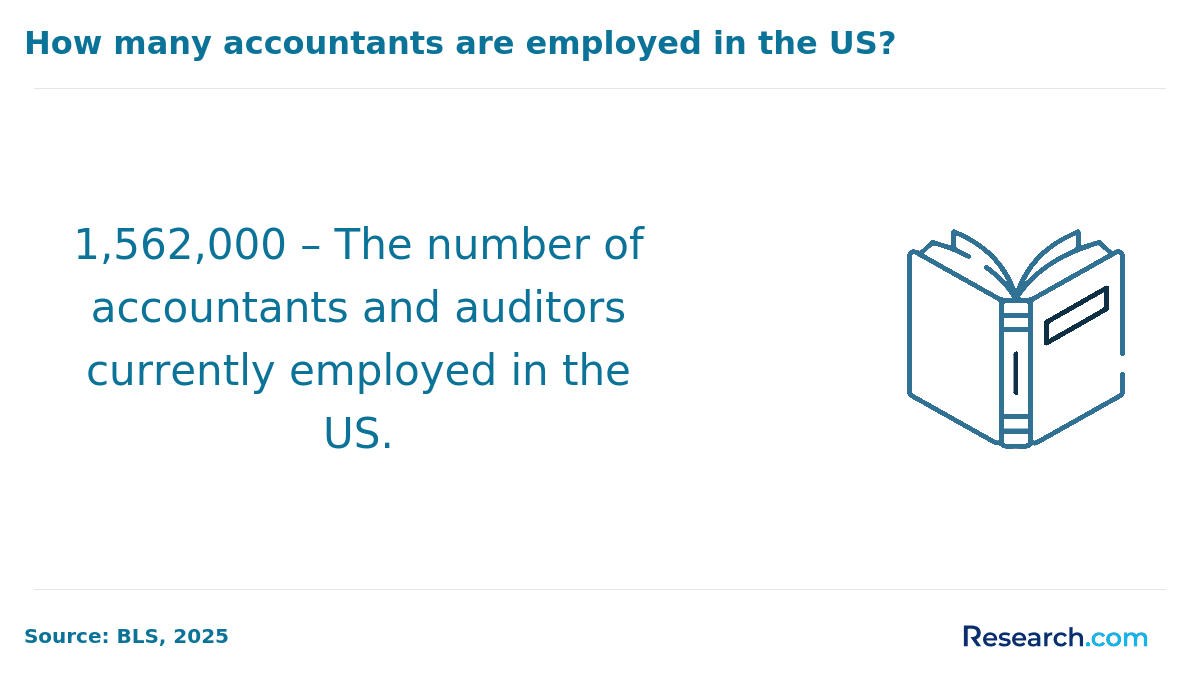
Rhode Island employed 6,690 accountants and auditors according to BLS data cited for 2024, and accounting remains a practical career path for students who want stable business skills that transfer across industries. Some roles may be accessible with a certificate or associate degree, but a bachelor’s degree is typically the baseline credential for accountant positions, while CPA licensure usually requires additional education and supervised experience.
This guide explains how to compare accounting schools in Rhode Island, what degree level to choose, how the CPA pathway works, what programs may cost, and which factors matter most before enrolling. It is designed for first-time college students, transfer students, working adults, career changers, and accounting graduates deciding whether to continue into a master’s program or CPA track.
Best Accounting Schools in Rhode Island Table of Contents
- Is accounting a good job in Rhode Island?
- What are the steps to becoming an accountant in Rhode Island?
- Accounting Program Length in Rhode Island
- Tuition and Costs of Accounting Schools in Rhode Island
- Rhode Island Schools Offering Accounting Programs for 2027
- What to Look for in Accounting Schools in Rhode Island
- How can additional certifications enhance your accounting career?
- How can networking and professional development support my accounting career in Rhode Island?
- What Other Career Paths Are Available to Accounting Students in Rhode Island?
- Emerging Trends in Accounting and How Rhode Island Schools are Adapting
- Is an Affordable Online Master's in Accounting Worth the Investment?
- How Can a Forensic Science Degree Complement My Accounting Skills?
- What Are the Specific CPA Exam Requirements in Rhode Island?
- Career Pathways and Long-Term Opportunities in Accounting
- What Cross-Industry Skills Can Expand My Career Opportunities?
- Could My Accounting Experience Pave the Way for a Teaching Career?
- How Can Interdisciplinary Urban Planning Insights Enhance My Accounting Expertise?
- How Can Healthcare Accounting Specialization Enhance My Career Prospects?
- How Can Internship and Hands-On Experience Accelerate Career Growth in Accounting?
- How Can Accounting Expertise Complement a Career in Education?
- What Are the Financial Prospects and Compensation Trends for Accountants in Rhode Island?
Quick Answer: What Is the Best Accounting Path in Rhode Island?
For most students, the strongest accounting path in Rhode Island is a bachelor’s degree in accounting followed by enough additional coursework to reach the 150 semester hours required for CPA licensure. Students who want a faster or lower-cost entry point can begin with a certificate or associate degree, especially for bookkeeping, payroll, or accounting assistant roles, but those credentials may not be enough for advancement into CPA, audit, tax, controller, or senior accounting positions.
| Goal | Best Starting Option | When This Makes Sense |
| Enter the workforce quickly | Certificate or associate degree | You want bookkeeping, payroll, accounts payable, or entry-level support roles before committing to a four-year degree. |
| Qualify for accountant roles | Bachelor’s degree in accounting | You want broader job options in corporate accounting, tax, audit, government, nonprofit finance, or financial reporting. |
| Become a CPA | Bachelor’s degree plus additional credits or master’s degree | You want the CPA credential and are prepared to meet education, exam, ethics, experience, and renewal requirements. |
| Specialize or advance | Master’s degree or graduate certificate | You already have a foundation in accounting or business and want deeper training in analytics, tax, finance, or compliance. |
Is accounting a good job in Rhode Island?
Accounting can be a strong career choice in Rhode Island if you want a business role with clear education pathways, transferable skills, and demand across multiple industries. Accountants prepare and interpret financial records, support tax compliance, help organizations manage budgets, and provide the financial information leaders use to make decisions.
Rhode Island’s economy includes healthcare, education, manufacturing, tourism, government, and professional services, all of which need accounting talent. The career is especially attractive for students who are comfortable with detail, deadlines, technology, rules, and quantitative analysis.
- Salary potential: The Rhode Island Department of Labor and Training reports a median entry-level wage of $31.97 per hour and a median experienced wage of $57.06 per hour for accountants in 2024. Actual pay depends on education, CPA status, industry, location, experience, and job function.
- Local openings: As of early 2025, there were 164 advertised accountant job openings, and tax preparation remained the most requested skill in those postings, according to EmployRI, 2025.
- Advancement routes: Rhode Island has employers in professional, scientific, and technical services, educational services, and management of companies and enterprises, which can support career movement into audit, tax, financial reporting, internal controls, management accounting, and finance leadership.
- Cost-of-living context: Rhode Island’s cost of living index was 110.5 according to TimeTrex, 2025. That means salary should be evaluated alongside commuting costs, housing, program debt, and whether you expect to work in Providence, a smaller city, remotely, or out of state.
What are the steps to becoming an accountant in Rhode Island?
The simplest route into accounting is to earn a bachelor’s degree in accounting and apply for staff accountant, tax associate, audit associate, payroll, accounts payable, or financial reporting roles. Students who are not ready for a bachelor’s program may begin with an associate degree or one of the bookkeeping certificate programs that build job-ready fundamentals.
If your goal is CPA licensure, plan earlier. CPA requirements are more specific than general accountant job requirements, and the Rhode Island Board of Accountancy oversees licensing in the state.
- Confirm your eligibility in Rhode Island: CPA applicants must meet Rhode Island’s connection requirements, which can include being a resident, being employed in the state, or operating a business in Rhode Island.
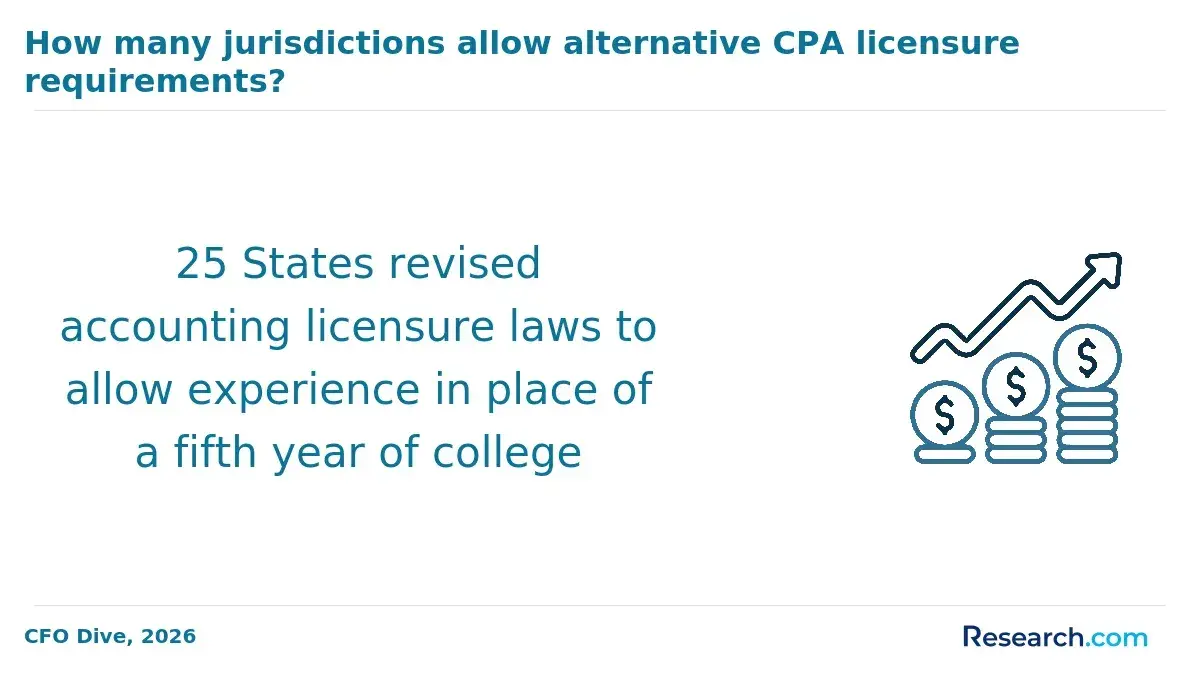
- Complete the required education: Rhode Island CPA licensure requires 150 semester hours of education. A bachelor’s degree usually includes 120 credits, so many candidates add a 30-credit master’s degree or use an accelerated bachelor’s-to-master’s option if available.
- Build supervised experience: Candidates must complete at least one year, equal to 1,820 hours, of work experience under a licensed CPA. Experience may come from public practice, government, or academia, depending on board rules.
- Pass the Uniform CPA Exam: The Uniform CPA Exam is administered through NASBA and includes Auditing and Attestation, Business Environment and Concepts, Financial Accounting and Reporting, and Regulation. A score of at least 75 is required on each section.
- Complete the ethics requirement: First-time CPA license applicants must pass the ethics exam from the American Institute of Certified Public Accountants with a score of 90 or higher.
- Submit your license application: After finishing the education, examination, ethics, and experience components, you can apply through the Rhode Island Board of Accountancy.
- Keep the license active: Rhode Island CPAs renew every three years and must complete no less than 120 hours of continuing education that meets board requirements during the three-year period before renewal.
| Step | What to Verify Before You Enroll or Apply |
| Education | Will the credits count toward the 150 semester hours required for CPA licensure? |
| Accounting coursework | Does the curriculum cover audit, tax, financial accounting, regulation, accounting systems, and analytics? |
| Experience | Can the school or employer help you find supervised CPA-qualified experience? |
| Exam preparation | Does the program map coursework to CPA Exam topics or offer review support? |
| Licensure maintenance | Are you prepared for continuing education after becoming licensed? |
Accounting Program Length in Rhode Island
Program length depends on your starting point and whether you plan to become a CPA. A certificate or associate program can help you enter support roles sooner, while a bachelor’s degree is the more common requirement for accountant positions. Students who complete a bachelor’s degree typically spend four years in school before applying for many accounting roles.
The CPA route usually takes longer. You may be able to begin the CPA exam process after reaching a minimum of 120 semester hours, but you still need 150 semester hours for licensure. Many candidates use a 30-credit master’s program to fill the gap. A master’s degree in accounting online or on campus can take one to two years, depending on full-time or part-time enrollment. From the first semester of college to licensure, a typical CPA timeline can take five to six years.
| Credential | Typical Purpose | Best Fit |
| Accounting certificate | Introduces accounting, bookkeeping, and business basics | Students seeking a faster, lower-commitment pathway into office or accounting support work |
| Associate degree | Builds foundational accounting and business knowledge | Students who may work first, transfer later, or reduce the cost of a bachelor’s degree |
| Bachelor’s degree | Prepares students for accountant, tax, audit, and finance-related roles | Students seeking the standard credential for many accounting jobs |
| Master’s degree | Adds advanced coursework and can help reach CPA credit requirements | CPA candidates and professionals seeking specialization or advancement |
Tuition and Costs of Accounting Schools in Rhode Island
Accounting school costs in Rhode Island vary by institution, degree level, residency status, delivery format, and fees. Public institutions may charge different tuition rates for in-state, regional, and out-of-state students. Private colleges may have a single listed tuition rate but may also offer institutional aid that changes the net price.
Students should compare total cost, not tuition alone. Add required fees, books, accounting software, transportation, parking, housing, exam preparation, CPA Exam costs, and the opportunity cost of reducing work hours. If flexibility is important, an accredited online accounting degree may reduce commuting and relocation expenses, though students should still confirm accreditation and CPA eligibility. Students should also complete the Free Application for Federal Student Aid to be considered for federal aid and other forms of financial assistance.
Rhode Island also has cost-saving options for eligible students. The Rhode Island Promise program allows eligible students to attend the Community College of Rhode Island for free if they maintain a 2.5 GPA and satisfy other requirements, according to CCRI, 2025. For students pursuing a bachelor’s degree, Providence College lists a Bachelor of Science in Accountancy program with estimated tuition of $63,600 for the 2024-2025 academic year. The University of Rhode Island’s Master of Science in Accounting program lists costs of $16,712 for in-state students and $32,156 for out-of-state students for the 2024-2025 year. These amounts refer to base tuition and may not include additional fees.
| Type of Program | School | Estimated Tuition |
| Certificate or Associate’s Degree in Accounting | Community College of Rhode Island | In-state: $9,248 Regional: $13,872 Out-of-state: $26,172 |
| Bachelor’s Degree in Accounting | Providence College | $60,710 |
| Bachelor’s Degree in Accounting | University of Rhode Island | In-state: $84,696 Out-of-state: $201,072 Regional: $148,224 |
| Master’s Degree in Accounting | University of Rhode Island | In-state: $30,804 Out-of-state: $59,808 Regional: $46,208 |
| Master’s Degree in Accounting | Bryant University | $36,720 |
Rhode Island Schools Offering Accounting Programs for 2027
Rhode Island students can choose from certificate, bachelor’s, and master’s-level accounting programs. The right choice depends on your current education level, budget, transfer plans, preferred schedule, and whether you want to qualify for CPA licensure.
Providence College
Providence College offers a Bachelor of Science in Accountancy that prepares students for careers in public accounting, private accounting, financial management, financial analysis, and related business roles. The curriculum is designed to develop accounting knowledge, technical skills, and familiarity with major CPA Exam subject areas. Students who plan to become CPAs should remember that a 120-credit bachelor’s program alone may not satisfy the 150-hour licensure requirement, so additional graduate coursework may be needed.
- Program Length: 4 years
- Cost per Credit: $505
- Required Credits to Graduate: 120
- Accreditation: Accreditation Council for Business Schools and Programs (ACBSP), Association to Advance Collegiate Schools of Business (AACSB)
Roger Williams University
Roger Williams University offers accounting as both a major and a minor. The major requires a larger accounting course sequence, while the minor can complement another field such as finance, business, or analytics. The program emphasizes practical application, interpretation of financial information, and the use of accounting knowledge in business decision-making.
- Program Length: 4 years
- Cost per Credit: $1,693
- Required Credits to Graduate: 120
- Accreditation: Association to Advance Collegiate Schools of Business (AACSB)
University of Rhode Island
The University of Rhode Island offers a Master of Science in Accounting for students who want advanced accounting study or need additional credits for the CPA pathway. The program is distinct from other graduate business options, including the URI finance curriculum, because the MS in Accounting holds separate AACSB accreditation.
- Program Length: 2 years
- Cost per Credit: $1,026 (In-state), $1,993 (Regional), $1,540 (Out-of-state)
- Required Credits to Graduate: 30
- Accreditation: Association to Advance Collegiate Schools of Business (AACSB)
Bryant University
Bryant University offers a 30-credit Master of Science in Accounting with specialization options in Analytics and Tax. Full-time students can complete the program in two semesters, making it a focused option for students who already have undergraduate preparation and want to satisfy additional credit requirements for CPA candidacy.
- Program Length: 1 year
- Cost per Credit: $1,224
- Required Credits to Graduate: 30
- Accreditation: Association to Advance Collegiate Schools of Business (AACSB)
Community College of Rhode Island
The Community College of Rhode Island is Rhode Island’s largest public higher education institution, with more than 16,000 students across four campuses. Its Business Administration-Accounting Certificate includes 28 credits of introductory accounting and business coursework. Graduates may use the credential to pursue entry-level work or apply completed credits toward further study, such as an associate degree in business.
- Program Length: 2 years
- Cost per Credit: $330 (In-state), $495 (Regional), $934 (Out-of-state)
- Required Credits to Graduate: 28
- Accreditation: Accreditation Council for Business Schools and Programs (ACBSP)
What to Look for in Accounting Schools in Rhode Island
A good accounting program should match your career target, not just your schedule. Before applying, compare schools on accreditation, CPA alignment, employer connections, affordability, transfer policies, and hands-on learning.
- Accreditation: Prioritize institutions and business programs with recognized accreditation, such as AACSB or ACBSP when applicable. Accreditation can affect credit transfer, graduate admission, employer perception, and CPA planning.
- CPA readiness: If licensure is your goal, ask whether the program’s courses count toward the 150 semester hours required in Rhode Island and whether advisors help students plan CPA eligibility.
- Curriculum quality: Look for required coursework in financial accounting, managerial accounting, audit, tax, accounting information systems, analytics, ethics, and business law. Electives in fraud, tax, analytics, or finance can make the degree more targeted.
- Internships and employer access: Programs with local accounting firm, corporate, nonprofit, and government connections can help students turn coursework into experience. Students can also review jobs available with an accounting degree to understand how different credentials connect to career options. EmployRI, 2025 reports strong accounting employment in Professional, Scientific, and Technical Services with 1,742 positions and Management of Companies and Enterprises with 693 positions.
- Technology exposure: Accounting work increasingly involves enterprise systems, spreadsheets, tax software, audit tools, automation, dashboards, and data analytics. Ask what software students use in class.
- Location and format: Campus proximity matters if you commute, but online or hybrid formats may be better for working adults. Confirm whether online courses provide the same advising, tutoring, career services, and internship access.
- Net price: Compare the total cost after grants, scholarships, transfer credits, employer tuition assistance, and expected borrowing. A higher tuition school may be affordable after aid, while a lower tuition program may cost more if credits do not transfer or delay graduation.
| Question to Ask | Why It Matters |
| Does this program meet CPA education planning needs in Rhode Island? | Not every accounting degree automatically satisfies licensure expectations. |
| How many accounting credits will transfer? | Transfer loss can raise costs and extend time to graduation. |
| Are internships built into the program or optional? | Experience can improve job readiness and help satisfy long-term CPA career planning. |
| What career outcomes do recent graduates report? | Job titles, employers, and graduate school placements reveal whether the program fits your goal. |
| What support exists for CPA Exam preparation? | CPA candidates need a structured plan for coursework, exam timing, and review. |
How can additional certifications enhance your accounting career?
Additional credentials can help accounting professionals move beyond general bookkeeping or staff accounting work into more specialized roles. A graduate certificate in accounting and finance may be useful for professionals who already have a degree but want focused training without committing immediately to a full master’s program.
Certificates can strengthen skills in areas such as tax preparation, financial analysis, forensic accounting, audit support, and compliance. They may also help career changers fill prerequisite gaps before entering a graduate accounting program.
For working adults, online certificate options can be practical because they allow students to keep working while adding targeted coursework. Before enrolling, confirm whether credits can transfer into a master’s degree, whether the certificate contributes to CPA education requirements, and whether the school has accounting-specific advising.
In Rhode Island, specialization can be especially useful because employers in healthcare, education, manufacturing, government, and professional services need accountants who understand industry-specific regulations, billing systems, internal controls, and reporting requirements.
How can networking and professional development support my accounting career in Rhode Island?
Accounting hiring is not based only on grades. Relationships, internships, referrals, professional association involvement, and continuing education often influence who learns about openings early and who is trusted with more complex work.
- Professional associations: Organizations such as the Rhode Island Society of CPAs can connect students and professionals with events, seminars, mentorship, continuing education, and local accounting contacts.
- Alumni networks: Schools such as the University of Rhode Island and Bryant University may have graduates working in public accounting, corporate finance, government, and consulting. Alumni connections can help students find internships and entry-level leads.
- Conferences and workshops: Business, accounting, tax, and finance events can expose students to regulatory updates, accounting technology, and employer expectations.
- Internships and co-ops: Practical experience helps students apply classroom concepts, build references, and decide whether they prefer tax, audit, corporate accounting, nonprofit finance, or government work.
- LinkedIn and virtual networking: A professional online profile, accounting group participation, and consistent outreach can help students identify Rhode Island employers and remote accounting roles.
- Campus speaker events: Guest lectures and employer panels can provide direct insight into day-to-day accounting work and hiring expectations.
What Other Career Paths Are Available to Accounting Students in Rhode Island?
An accounting background can support more than one career direction. Some graduates move into finance, budgeting, compliance, business operations, data analysis, government, nonprofit administration, or entrepreneurship. Others combine accounting with education, law, healthcare administration, or fraud investigation.
If you are considering a shift into teaching, review the elementary school teacher requirements in Rhode Island to understand how educator preparation differs from accounting preparation. Accounting skills can be valuable in education administration or business education, but classroom teaching generally requires separate credentialing.
Emerging Trends in Accounting and How Rhode Island Schools Are Adapting
Accounting is changing because employers expect graduates to work with digital systems, interpret data, understand compliance risks, and communicate findings clearly. Rhode Island programs that update coursework around technology, ethics, analytics, and industry applications can better prepare students for current accounting work.
- Automation and AI: Routine data entry and reconciliation tasks are increasingly supported by software, which raises the value of accountants who can review outputs, identify errors, interpret results, and advise decision-makers.
- Data analytics: Employers increasingly want accountants who can work with large datasets, dashboards, spreadsheets, and business intelligence tools.
- Cloud-based accounting systems: Remote and hybrid work have made cloud platforms, virtual collaboration, and secure document sharing more important.
- Regulatory complexity: Tax, audit, financial reporting, and compliance rules continue to evolve, making continuing education and ethics training central to the profession.
- Sustainability and risk reporting: Organizations are paying more attention to environmental costs, governance, internal controls, and nonfinancial risk measures.
Students who need flexibility can also compare online accounting programs. The key is to verify accreditation, CPA alignment, faculty access, software training, and career services rather than assuming every online option offers the same value.
Is an Affordable Online Master's in Accounting Worth the Investment?
An affordable online master’s in accounting can be worth considering if it helps you reach 150 semester hours for CPA licensure, adds advanced technical skills, and fits your work schedule without creating excessive debt. The degree is less compelling if you do not need graduate credits, do not plan to pursue CPA licensure, or can achieve your goal through lower-cost undergraduate coursework or a certificate.
Before enrolling, compare tuition, accreditation, CPA advising, graduate outcomes, course delivery, faculty access, and whether credits apply to licensure. Students seeking lower-cost options can review the cheapest online masters in accounting to compare affordability against program quality and career fit.
How Can a Forensic Science Degree Complement My Accounting Skills?
Forensic accounting blends accounting, investigation, documentation, and legal awareness. Professionals in this area may help identify fraud, trace funds, support litigation, review compliance failures, or analyze suspicious transactions.
A forensic science degree in Rhode Island can complement accounting training when a student wants stronger investigative methods, evidence handling awareness, and analytical discipline. This combination is most relevant for students interested in fraud examination, litigation support, insurance investigations, compliance, or public-sector financial oversight.
What Are the Specific CPA Exam Requirements in Rhode Island?
Rhode Island CPA candidates must plan for education, examination, ethics, experience, and licensure application requirements. The CPA Exam evaluates knowledge across auditing, financial accounting and reporting, regulation, and business concepts. Candidates should confirm eligibility rules, application steps, fees, testing windows, retake procedures, and deadlines directly with the Rhode Island Board of Accountancy before making academic decisions.
Students who want a broader explanation of the credential can review what a CPA is and how it differs from general accounting roles.
Career Pathways and Long-Term Opportunities in Accounting
Accounting careers often begin with staff roles in tax, audit, accounts payable, payroll, bookkeeping, or financial reporting. With experience, professionals may move into senior accountant, internal auditor, tax manager, controller, finance manager, compliance analyst, forensic accountant, consultant, or chief financial officer roles.
Students who want a broader business education can compare accounting programs with the best business schools in Rhode Island. This is especially useful for students who want accounting knowledge plus leadership, analytics, entrepreneurship, or management training.
Long-term advancement usually depends on more than the degree. CPA licensure, strong Excel and analytics skills, communication ability, industry knowledge, and continuing education can all affect promotion opportunities.
What Cross-Industry Skills Can Expand My Career Opportunities?
Accounting skills become more valuable when paired with industry knowledge. Healthcare, education, government, legal services, construction, real estate, manufacturing, and technology organizations all have different reporting requirements, cost structures, and compliance risks.
For example, understanding healthcare operations can help accountants work with billing systems, reimbursement, staffing budgets, and clinical department costs. Students curious about healthcare career structures can explore how to become a nurse practitioner in Rhode Island to better understand one major employment sector where financial and operational planning matter.
Could My Accounting Experience Pave the Way for a Teaching Career?
Accounting experience can support a move into education, especially in business, finance, mathematics, career and technical education, tutoring, or adjunct teaching. However, Rhode Island classroom teaching typically requires education-specific preparation, student teaching or equivalent experience, and state-approved credentials.
If you are thinking about a formal teaching transition, review what degree you need to be a teacher in Rhode Island and compare those requirements with your accounting background. Tutoring, corporate training, or teaching accounting workshops can also help you test whether instruction is a good fit.
How Can Interdisciplinary Urban Planning Insights Enhance My Accounting Expertise?
Urban planning knowledge can strengthen accounting work connected to public budgets, infrastructure projects, grants, zoning-driven development, capital planning, and long-term community investment. Accountants who understand how public projects are funded and evaluated may be better prepared for roles in municipal finance, consulting, real estate development, or public-sector auditing.
Students interested in this crossover can review how to become an urban planner in Rhode Island to understand the planning side of public and private development work.
How Can Healthcare Accounting Specialization Enhance My Career Prospects?
Healthcare accounting can be a practical specialization in Rhode Island because medical organizations need professionals who understand billing, coding, reimbursement, revenue cycle management, internal controls, and regulatory compliance. Accountants in this area may work for hospitals, physician groups, outpatient clinics, insurers, or healthcare service companies.
Students interested in healthcare finance may benefit from learning the basics of coding and billing processes. A guide on how to be a medical coder in Rhode Island can help explain one part of the healthcare revenue cycle that accounting teams often interact with.
How Can Internship and Hands-On Experience Accelerate Career Growth in Accounting?
Internships help accounting students move from theory to practice. They provide exposure to client deadlines, reconciliations, tax documentation, audit procedures, accounting software, internal controls, and workplace communication. They also give employers a low-risk way to evaluate future hires.
Students should treat internships as career tests. A tax internship may reveal whether seasonal deadline pressure fits your style. An audit internship may show whether travel, client communication, and documentation appeal to you. A corporate accounting internship may point toward budgeting, reporting, or operations finance.
Students who enjoy documentation, rules, and analytical review may also compare accounting with legal support work by exploring how to become a paralegal in Rhode Island.
How Can Accounting Expertise Complement a Career in Education?
Accounting knowledge can be useful in schools, colleges, nonprofit education organizations, and district offices. Budgeting, grant tracking, payroll, procurement, and performance measurement all require financial literacy. Accountants who move into education may contribute as teachers, administrators, finance officers, curriculum developers, or trainers.
If your interest is classroom instruction, especially in math or business-related subjects, review how to become a high school math teacher in Rhode Island to understand the credentialing steps beyond accounting expertise.
Common Mistakes to Avoid When Choosing an Accounting Program
- Choosing only by tuition: Low tuition is important, but weak advising, lost transfer credits, limited accounting courses, or poor CPA planning can increase total cost.
- Ignoring accreditation: Accreditation can affect transferability, graduate admission, employer confidence, and professional preparation.
- Assuming every accounting degree leads to CPA eligibility: CPA licensure has specific education, exam, experience, ethics, and renewal requirements.
- Overlooking internships: Accounting is skill-based. Employers often value candidates who have handled real documents, deadlines, and software.
- Skipping cost-of-living calculations: Tuition is only one expense. Housing, transportation, parking, lost wages, and exam preparation can change affordability.
- Relying only on rankings: A highly ranked school may not be the best match if it lacks the schedule, price, location, or specialization you need.
- Waiting too long to plan CPA credits: Students who decide late may need extra semesters to reach 150 semester hours.
Gaining the Support You Need to Become an Accounting Professional
A strong accounting education should give you technical knowledge, ethical judgment, software exposure, career guidance, and a realistic plan for employment or CPA licensure. Rhode Island students can begin with a certificate, transfer from community college, complete a bachelor’s degree, or continue into graduate study depending on their goals and budget.
Students with business, finance, or related backgrounds may also strengthen their credentials through accounting coursework or a graduate certificate in finance. The best path is the one that connects your current education to your target role while controlling cost and meeting any licensing requirements.
What Are the Financial Prospects and Compensation Trends for Accountants in Rhode Island?
Accounting compensation in Rhode Island can improve with experience, industry specialization, CPA licensure, supervisory responsibility, and technical skills. Entry-level workers may begin in bookkeeping, tax preparation, payroll, or staff accounting roles, while experienced professionals may move into audit, tax management, financial reporting, controllership, consulting, or leadership positions.
Students should avoid treating any salary figure as a guarantee. Instead, compare local wage data with your expected debt, likely job title, CPA plans, and cost of living. For a deeper look at the licensing route, review CPA requirements in Rhode Island.
Key Insights
- A bachelor’s degree is the main entry point for accounting careers: Certificates and associate degrees can lead to support roles, but a bachelor’s degree is usually the stronger choice for long-term accounting mobility.
- CPA planning should start early: Rhode Island CPA licensure requires 150 semester hours, supervised experience, CPA Exam passage, an ethics exam, and continuing education after licensure.
- Cost comparisons should include more than tuition: Fees, transfer credits, commuting, housing, aid, exam preparation, and time to graduation all affect the real price of an accounting education.
- Accreditation matters: AACSB and ACBSP accreditation can signal program quality and may influence transfer, graduate study, and employer confidence.
- Internships can change career outcomes: Practical experience helps students identify the right accounting specialty and become more competitive for entry-level roles.
- Technology is reshaping accounting work: Students should look for programs that teach accounting software, analytics, cloud tools, ethics, and compliance, not only traditional debits and credits.
- The best school depends on your goal: A low-cost certificate may fit a fast workforce entry plan, while a bachelor’s-plus-master’s route may be better for students committed to CPA licensure.
References:
- Accounting Education Foundation – CPA Career Pathways Accounting Education Foundation. (2026). CPA career pathways and job outlook. https://www.accounting-education.org/
- Bureau of Labor Statistics – Accountants & Auditors Occupational Data U.S. Bureau of Labor Statistics. (2025). Accountants and auditors: Occupational outlook handbook. https://www.bls.gov/ooh/business-and-financial/accountants-and-auditors.htm
- CPA Exam & Education – NASBA Candidate Info ThisWayToCPA (AICPA & NASBA). (2026). State contact information and guidance. https://www.thiswaytocpa.com/licensure/state-requirements/RI/
- Full Application for CPA Exam – Rhode Island Board of Accountancy Rhode Island Board of Accountancy. (2025). Full application for Rhode Island candidate by exam [PDF]. https://dbr.ri.gov/sites/g/files/xkgbur696/files/documents/divisions/accountancy/FullApplicationCandidateByExam.pdfPDF tracking version
- Justia U.S. Law. (2024). 2024 Rhode Island general laws § 5-3.1-5: Certified public accountants. https://law.justia.com/codes/rhode-island/title-5/chapter-5-3-1/section-5-3-1-5/
- NASBA CPA Exam Guide National Association of State Boards of Accountancy. (2026). CPA Exam candidate guide & requirements. https://nasba.org/exams/cpaexam/examfaq/Justia tracking versionJustia tracking version
- Rhode Island Department of Business Regulation, Board of Accountancy. (2026). Board of accountancy: Apply-Initial-Reciprocity-Practice unit. https://dbr.ri.gov/building-design-fire-professionals-board-accountancy/board-accountancy
- Rhode Island Board of Accountancy – FAQ Rhode Island Board of Accountancy. (n.d.). Frequently asked questions. https://dbr.ri.gov/sites/g/files/xkgbur696/files/documents/divisions/accountancy/BOA-Frequently-Asked-Questions.pdf
- Rhode Island Society of CPAs – Become a CPA Rhode Island Society of CPAs. (2026). Become a CPA in Rhode Island. https://www.riscpa.org/careers/become-a-cpaFAQ tracking versionBoard tracking versionhttps://www.bls.gov/Board tracking version
Related Articles for Nearby States
- 2027 Best Accounting Schools in Massachusetts – How to Become a CPA in MA
- 2027 Best Accounting Schools in Connecticut – How to Become a CPA in CT
- 2027 Accounting Schools in New Jersey – How to Become a CPA in NJ
- 2027 Best Accounting Schools in Vermont – How to Become a CPA in VT
- 2027 Best Accounting Schools in New Hampshire – How to Become a CPA in NH
- 2027 Accounting Schools in Pennsylvania – How to Become a CPA in PA
- 2027 Best Accounting Schools in Delaware – How to Become a CPA in DE
- 2027 Best Accounting Schools in Maine – How to Become a CPA in ME
- 2027 Best Accounting Schools in Maryland – How to Become a CPA in MD
- 2027 Best Accounting Schools in Virginia – How to Become a CPA in VA
Other Things You Should Know About the Best Accounting Schools in Rhode Island
When choosing the best accounting school in Rhode Island for a CPA path in 2027, consider accreditation, curriculum, CPA exam pass rates, and connections to local firms. Look for schools offering both traditional and online courses, and evaluate their career support services and internship opportunities.
To become an accountant in Rhode Island, you need to attain at least a bachelor’s degree in accounting or a related field. For those aspiring to become CPAs, additional steps include completing 150 semester hours of education, gaining one year of work experience under a licensed CPA, passing the Uniform CPA Exam, passing the Ethics exam, and applying for a CPA license.
The cost varies depending on the program and residency status. For instance, the estimated tuition for a bachelor’s degree at Providence College is $60,710, while a master’s degree at the University of Rhode Island costs $30,804 for in-state students and $59,808 for out-of-state students. Financial aid and scholarships can help reduce these costs.
Yes, there are online accounting programs available in Rhode Island. These programs offer flexibility and can be more affordable than traditional on-campus programs. It is important to ensure that the online program is accredited and meets industry standards.
When choosing an accounting school, consider the program’s reputation, curriculum, accreditation, internship and job placement opportunities, resources and facilities, and the school’s location. These factors will help ensure that you receive a quality education that aligns with your career goals.
Accountants in Rhode Island can work in various settings, including public accounting firms, private companies, government agencies, and non-profit organizations. Specializations such as tax preparation, auditing, and financial analysis are in demand.
While it is not necessary to become a CPA to work as an accountant, obtaining a CPA license offers more opportunities, higher salaries, and greater career advancement potential. Many employers prefer or require CPA certification for higher-level positions.
Accounting students in Rhode Island can apply for financial aid through the Free Application for Federal Student Aid (FAFSA), as well as various scholarships and grants offered by universities and private organizations. Programs like Rhode Island Promise also provide financial assistance for eligible students at the Community College of Rhode Island.


