2027 Best Nursing Schools in Albuquerque, NM – Accredited Nursing Degree Programs

Co-Founder and Chief Data Scientist
Choosing a nursing school in Albuquerque is not just about finding the closest campus. It affects your licensure eligibility, clinical training, debt level, schedule, and long-term career options in registered nursing, practical nursing, advanced practice, leadership, education, or research. In 2024, New Mexico had approximately 21,800 nurses (U.S. Bureau of Labor Statistics, 2024a), and more than 11,500 worked in Albuquerque (U.S. Bureau of Labor Statistics, 2024b). That concentration makes the city one of the most important places in the state for nursing education, clinical placements, and healthcare employment.
This guide is for future nurses comparing entry-level programs, licensed practical nurses planning an RN pathway, registered nurses considering BSN, MSN, DNP, or certificate options, and working healthcare professionals who need flexible study formats. It explains how Albuquerque, NM nursing schools differ by credential, timeline, delivery format, affordability, accreditation, and career purpose. It also shows how to evaluate programs instead of relying only on rankings or marketing claims. If you are still exploring the field, you may also want to review what is involved in earning a nursing degree at any education level.
Quick answer: The best nursing school in Albuquerque depends on your starting point. New students often compare nursing assistant, practical nursing, ADN, and BSN options. LPNs may benefit from LPN-to-RN bridge programs. RNs who already hold licensure may consider RN-to-BSN, MSN, DNP, or post-master’s certificates. Before enrolling, verify accreditation, New Mexico Board of Nursing approval, NCLEX preparation, clinical placement support, total cost, transfer credit rules, and whether the program format fits your work schedule.
Best Nursing Schools in Albuquerque, NM: Table of Contents
- Albuquerque’s Nursing Workforce and Education Landscape
- Reasons to Build a Nursing Career in Albuquerque
- Top Entry-Level Nursing Programs in Albuquerque
- Bridge Nursing Programs in Albuquerque for 2027
- Affordable Advanced Nursing Degree Options
- Certification and Licensure Preparation
- How Bridge Programs Support Career Advancement
- Online LPN-to-RN Bridge Options
- Affordable Online Nurse Practitioner Programs
- MSN-to-DNP Pathways
- Affordable Online LPN Programs
- Why Accreditation Matters in Nursing
- Advanced Nursing Programs in Albuquerque
- Local Resources for Nursing Career Growth
- Trends Shaping Nursing Education
- Online and Flexible Nursing Education Options
Albuquerque’s Nursing Workforce and Education Landscape
Albuquerque is central to New Mexico’s healthcare workforce because many of the state’s hospitals, clinics, specialty practices, and academic health resources are located in or near the city. New Mexico, like many states, has continued to report unmet nursing needs, including around 6,000 nursing positions available statewide in 2024. Employers such as the University of New Mexico Hospital have used benefits such as 100% paid health insurance, dependent scholarships, tuition reimbursement, and continuing education credits to recruit and retain healthcare workers. The Bureau of Labor Statistics projected a 13% growth rate for healthcare occupations from 2024 to 2034, which is much faster than the average for all occupations and supports the broader case for continued healthcare hiring. The source referenced for that projection is https://www.bls.gov/news.release/ecopro.t01.htm.
The demand is not limited to bedside RN roles. By 2030, the state will need around 2,750 new registered nurses (RNs) and 680 nurse practitioners (NPs), according to the Bureau of Health Workforce (2024). That equals approximately 5.2% additional RN jobs and 36.7% new NP jobs in the state. Nurse midwives stand out among specialties because they had a 2.87 location quotient score. In 2024, only 65 nurse midwives were recorded as working in the city, representing 81.3% of the statewide nurse midwife population of 80. Annual openings for nurse midwives are expected to average 10 through the decade.
For students, these figures mean Albuquerque nursing schools serve two related needs: preparing new nurses for entry-level licensure and helping working nurses move into advanced practice, leadership, education, or specialty care. Short-term projections also show pressure on the system. By 2024, the state was expected to need around 740 new nurses, including 170 APRNs. That makes program choice important because the right pathway can shorten time to licensure, improve clinical readiness, and support progression into higher-responsibility roles.
| Starting point | Common Albuquerque pathway | Best fit | Main caution |
| No healthcare background | Nursing assistant, practical nursing, ADN, or BSN | Students entering nursing for the first time | Confirm licensure eligibility and clinical placement support before enrolling |
| LPN or LVN | LPN-to-RN or LVN-to-ADN bridge | Practical nurses who want RN licensure and broader job options | Check prerequisite GPA, seat limits, transfer credit rules, and NCLEX-RN preparation |
| Current RN | RN-to-BSN, MSN, DNP, or post-master’s certificate | Licensed nurses seeking leadership, advanced practice, education, or specialization | Make sure the program’s accreditation and clinical requirements match your goal |
| Non-nursing bachelor’s degree holder | Accelerated BSN | Career changers who can manage an intensive schedule | Accelerated does not mean easy; evaluate workload, clinical hours, and total cost |
How to Start Your Nursing Career Through Albuquerque, NM Nursing Schools
The pathway to becoming a nurse in Albuquerque follows a sequence of education, clinical training, examination, state licensure, and continuing professional development. The exact route depends on whether you want to begin as a nursing assistant, LPN, RN, or advanced practice nurse.
- Choose the right entry credential: New students may begin with a Bachelor of Science in Nursing (BSN), Associate Degree in Nursing (ADN), licensed practical nursing (LPN) program, or nursing assistant pathway. Some students compare LPN programs online accredited by recognized organizations, then later use an LPN-to-RN route to pursue an ADN or BSN.
- Complete supervised clinical training: Nursing education must include hands-on learning. Clinical rotations, simulation labs, and internships help students apply classroom concepts in Albuquerque healthcare settings.
- Prepare for the correct licensure exam: RN candidates prepare for the NCLEX-RN exam, while practical nursing students prepare for the applicable practical nursing licensure exam.
- Apply through the state board: Graduates must meet requirements set by the New Mexico Board of Nursing before they can practice in the state.
- Target employers strategically: Albuquerque offers hospitals, long-term care facilities, outpatient clinics, community health organizations, behavioral health providers, and specialty practices.
- Plan for continuing education: Nurses need continuing education (CE) credits to maintain licensure and stay current with evidence-based care, technology, ethics, and patient safety practices.
- Consider specialization later: After gaining experience, nurses may pursue APRN, nurse practitioner, nurse-midwifery, leadership, research, or education pathways. Flexible nurse practitioner online programs may help working nurses reduce relocation and commuting barriers.
Reasons to Build a Nursing Career in Albuquerque
Nursing in Albuquerque can appeal to students who want clinical variety, community impact, and access to major healthcare employers without leaving New Mexico. Nurses in the city may work with culturally diverse communities, rural and underserved populations, and interdisciplinary teams across hospital, outpatient, public health, long-term care, behavioral health, maternal health, and specialty settings. That range can help early-career nurses explore specialties and help experienced nurses build advanced competencies.
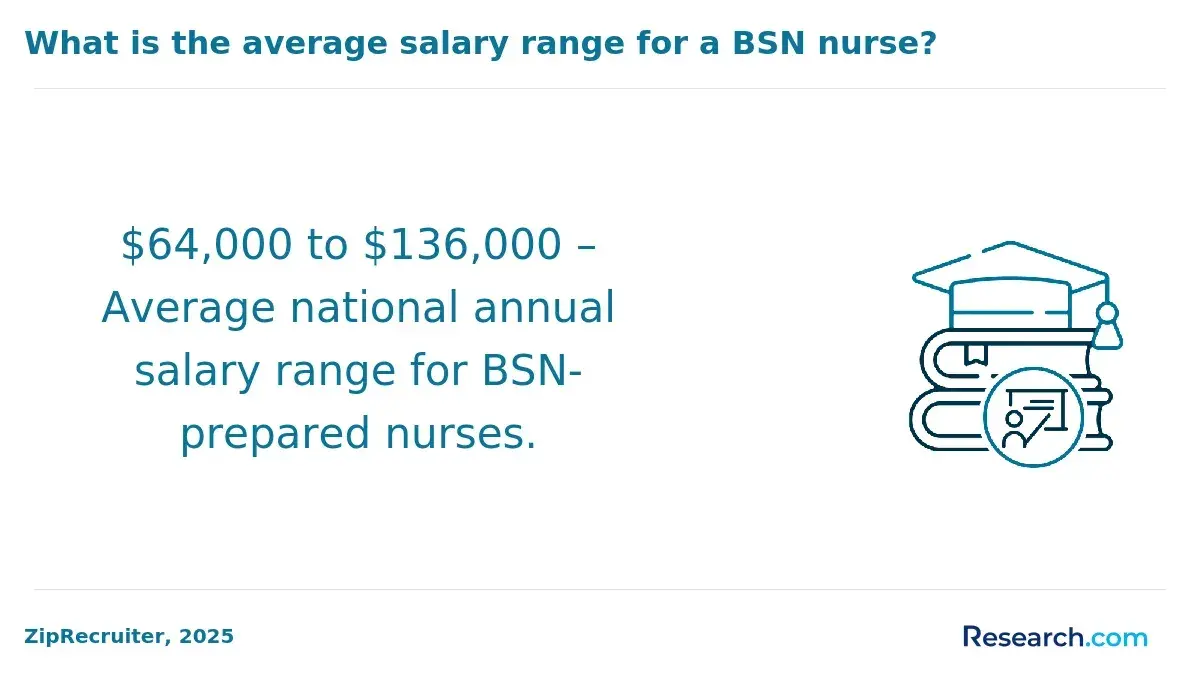
The financial case also matters. In 2024, the median annual income in the state was $58,500 (RentCafe, 2024). RNs earned an average annual salary of $89,300, while NPs earned $132,600 on average (U.S. Bureau of Labor Statistics, 2024). RentCafe reported that Albuquerque’s cost of living was 3% lower than the state average and 8% lower than the national average in 2024. Salary data should always be reviewed by role, employer, shift, specialty, experience, and source methodology. One cited comparison states that the state’s RN salary in 2024 is approximately 35% higher than the national average of $138,800 per year (Indeed, 2024); because salary sources can define roles and samples differently, applicants should verify salary expectations with local employers before making financial decisions.
| Why Albuquerque may make sense | What it means for students | Question to ask before enrolling |
| Large local nursing workforce | More exposure to hospitals, clinics, and clinical partners | Where does the program place students for clinical rotations? |
| Need for RNs and APRNs | Multiple education levels can lead to relevant healthcare roles | Does the program publish licensure pass rates and job placement support? |
| Lower reported cost of living | May help working students manage housing and commuting costs | What is the total cost after fees, books, uniforms, testing, and transportation? |
| Diverse patient communities | Students can build cultural humility and population health skills | Does the curriculum include community health, rural health, and underserved care? |
Top Entry-Level Nursing Programs in Albuquerque
Entry-level nursing programs are designed for students who do not yet hold RN licensure. The most common RN routes are ADN and BSN programs, but practical nursing and nursing assistant programs may be better for students who need a shorter, lower-commitment starting point. A nursing assistant certificate can help students test the healthcare environment before committing to a longer degree. An LPN pathway can lead to employment sooner, but students who want RN roles usually need a later bridge program.
| Credential | Typical goal | Who should consider it | Trade-off |
| Nursing Assistant | Direct patient care support | Students who want a fast introduction to healthcare | Limited scope compared with LPN or RN roles |
| Practical Nursing | LPN licensure | Students seeking a practical nursing role before advancing | May require a bridge program for RN advancement |
| ADN | RN licensure preparation | Students seeking a direct RN route with a shorter degree structure | Some employers prefer or encourage BSN completion |
| BSN | RN licensure plus broader professional preparation | Students who want a four-year nursing foundation or later graduate study | Often requires more time and financial planning |
1. University of New Mexico — On-Campus BSN
The University of New Mexico offers an on-campus BSN through its College of Nursing. The program combines classroom instruction, simulation-based learning, and clinical preparation. Students use the Simulation Center to practice nursing judgment and patient care skills before entering more complex clinical environments. The program also reflects New Mexico’s diverse population, which can be valuable for students preparing to serve patients across cultural, geographic, and socioeconomic backgrounds.
2. Pima Medical Institute — On-Campus ADN
Pima Medical Institute offers an ADN program for students preparing for registered nursing practice. Coursework includes anatomy, physiology, growth and development, pharmacology, nursing theory, and patient care across the lifespan. The program emphasizes applied training, laboratory work, and practical skill development, making it a candidate for students who want an RN-focused associate degree pathway.
3. Carrington College — On-Campus ADN
Carrington College offers an ADN program that prepares students for registered nursing responsibilities in patient care settings. The curriculum is built around practical nursing knowledge, technical skills, and professional readiness. The ADN can be completed in just two years, and flexible learning options are available across six Carrington College campuses. Students comparing ADN programs should confirm campus availability, clinical placement expectations, program costs, and NCLEX-RN preparation outcomes.
4. Brookline College — Practical Nursing
Brookline College’s practical nursing program is a diploma pathway for students pursuing licensed practical nurse roles. The curriculum covers anatomy, physiology, pharmacology, nursing theory, and core patient care skills. The program can be completed in 48 weeks and prepares students for the NCLEX-PN license examination. It is offered at Brookline College’s Albuquerque, NM campus. Graduates of the PN program may also qualify for a $3,500 scholarship toward Brookline College’s online Bachelor of Science in Nursing (RN to BSN) program.
5. Central New Mexico Community College — On-Campus Nursing Assistant
Central New Mexico Community College offers a nursing assistant program focused on direct patient care. Students may earn a certificate that can support roles such as orderly or personal care aide. The program can be completed in one semester. Certified nursing assistants often work closely with nurses in hospitals, long-term care facilities, homes, and rehabilitation centers. CNM also administers the state nursing assistant certification exam at its Main Campus and offers faculty-led review sessions to help students prepare.
Bridge Nursing Programs in Albuquerque for 2027
Bridge programs are designed for students who already have healthcare education, licensure, or a prior degree and want to move to the next credential without starting over. In nursing, this can include LPN-to-RN, LVN-to-ADN, RN-to-BSN, accelerated BSN, ADN-to-MSN, MSN-to-DNP, and post-master’s certificate routes. The main advantage is efficiency. The main risk is assuming every bridge program has the same prerequisites, clinical requirements, transfer credit policies, or licensure outcomes.
| Bridge pathway | Best for | Possible outcome | What to verify |
| LPN-to-RN | Licensed practical nurses | Eligibility to pursue RN licensure after meeting program and exam requirements | Prerequisites, minimum GPA, clinical schedule, NCLEX-RN preparation |
| Accelerated BSN | Students with a non-nursing bachelor’s degree | BSN and RN licensure preparation | Program intensity, transfer credit policy, clinical placement expectations |
| RN-to-BSN | Licensed RNs without a BSN | BSN completion | Online format, employer tuition support, leadership and evidence-based practice content |
| MSN or DNP bridge | Experienced nurses seeking advanced roles | Advanced practice, leadership, education, or systems-focused preparation | Accreditation, certification alignment, practicum requirements, state authorization |
1. Central New Mexico Community College — LPN-to-RN
Central New Mexico Community College offers an LPN to RN Mobility Option through Coordinated Program Entry (CPE). This Associate of Applied Science (AAS) pathway is for LPNs who want to become RNs. It is fully accredited by the ACEN and requires a minimum GPA of 2.0 for general coursework and 2.75 for prerequisites. No entrance exam is required. Seats are limited, and the option is available every term. Students complete classroom and clinical learning that emphasizes communication, critical thinking, and compassionate patient care. Graduates may sit for the NCLEX-RN exam and may later pursue a Bachelor of Science in Nursing.
2. University of New Mexico — On-Campus Accelerated BSN
The University of New Mexico offers an Accelerated Second Degree BSN option for students who already hold a bachelor’s degree and want to enter nursing more quickly. The pathway recognizes prior academic preparation while moving students into an accredited nursing curriculum. ABSN students at the Albuquerque Health Sciences Center location have access to UNM campus resources, simulation learning, and nursing faculty support. Because accelerated nursing programs are intensive, applicants should evaluate time demands, prerequisite readiness, and financial planning before enrolling.
3. Brookline College — On-Campus Accelerated BSN
Brookline College offers an accelerated Second Degree BSN for students with a non-nursing bachelor’s degree. The program can be completed in 16 months and uses a transfer credit policy designed for career changers. Graduates are prepared to pursue the NCLEX-RN certification exam and begin registered nursing careers.
4. Carrington College — Online RN-to-BSN
Carrington College offers an online RN-to-BSN post-licensure program for registered nurses. The program develops leadership, critical thinking, research, and education skills for nurses working in inpatient and outpatient environments. The BSN is conferred by Carrington’s Sacramento campus and can be completed in 15 months. This option may fit RNs who need a flexible format while continuing to work.
5. Carrington College — LVN-to-ADN
Carrington College offers a nursing bridge program for licensed vocational nurses or licensed practical nurses who want to move toward registered nursing. The LVN-to-ADN pathway is intended to build on existing practical or vocational nursing preparation and support transition into RN-level education and responsibilities.
Affordable Advanced Nursing Degree Options
Advanced nursing education can open doors to nurse practitioner, nurse-midwifery, clinical leadership, education, research, and systems improvement roles, but cost should be evaluated carefully. Tuition alone does not show the full price. Students should also account for fees, clinical travel, books, technology, lost work hours, certification exam costs, and whether part-time study affects completion time. Working nurses who need flexibility may compare online or hybrid options, including agnp online programs, when adult-gerontology practice aligns with their goals.
Certification and Licensure Preparation
Strong Albuquerque nursing programs do more than deliver coursework. They help students prepare for licensure exams, specialty certification requirements, clinical judgment, documentation, ethical practice, and safe patient care. Look for evidence of exam preparation, simulation access, tutoring, remediation support, faculty advising, and clinical evaluations tied to real competencies. Nurses considering specialty credentials can use Research.com’s guide to nursing certifications to compare options by career goal.
How Bridge Programs Support Career Advancement
Bridge programs can reduce repetition by recognizing prior nursing education, licensure, or degree completion. They are especially useful when a nurse needs a new credential for promotion, specialty eligibility, graduate admission, or broader employment options. For example, some nurses compare ADN to NP programs when they want to move from associate-level RN preparation toward advanced practice. The best bridge program is not always the fastest one; it is the one that matches licensure rules, certification goals, clinical placement needs, and financial limits.
Online LPN-to-RN Bridge Options: What to Know Before You Enroll
An online LPN-to-RN bridge can help licensed practical nurses move toward RN preparation while keeping some flexibility for work and family obligations. However, nursing cannot be completed entirely through screens. Even online bridge programs typically require in-person clinical experiences, skills checks, labs, or approved placements. Students comparing accelerated options should ask how clinical sites are arranged, whether the program is approved for New Mexico residents, and how it supports NCLEX-RN readiness. For a closer look at short-format options, review this guide to an online LPN to RN program pathway.
Affordable Online Nurse Practitioner Programs
Nurse practitioner programs are for licensed nurses who want advanced clinical preparation and a larger role in assessment, diagnosis, treatment planning, patient education, and care coordination. Affordability is important, but it should not outweigh accreditation, certification exam alignment, faculty quality, clinical placement support, and state authorization. Students comparing affordable online nurse practitioner programs should confirm that the concentration matches their intended population focus, such as family practice, adult-gerontology, psychiatric mental health, acute care, or nurse-midwifery.
MSN-to-DNP Pathways
An MSN-to-DNP pathway is intended for nurses who already hold a master’s degree and want doctoral-level preparation in clinical leadership, evidence-based practice, quality improvement, systems thinking, or advanced practice. Program formats vary by clinical hours, scholarly project requirements, online or hybrid structure, and pace. Before choosing a program, compare accreditation, practicum expectations, faculty mentorship, project support, and total cost. Nurses prioritizing affordability can explore cheap online MSN to DNP programs while still verifying quality and fit.
Affordable Online LPN Programs
Affordable practical nursing programs can be a realistic starting point for students who want to enter nursing without immediately committing to a longer RN degree. Online components may make didactic coursework more manageable, but students should expect in-person skills and clinical requirements. Before applying, confirm state approval, accreditation status, clinical location requirements, NCLEX-PN preparation, and whether credits can later transfer into an RN bridge. Students comparing cost-conscious options can review the most affordable LPN programs online.
Why Accreditation Matters in Nursing
Accreditation is one of the first details nursing students should verify. It can affect licensure eligibility, transfer credits, graduate admissions, employer recognition, and access to federal financial aid. In nursing, students should distinguish between institutional accreditation, programmatic accreditation, and state board approval. A school can be legitimate while a specific program still may not meet the requirements you need for your intended license or certification. Nurses exploring advanced practice should also understand how accreditation affects program credibility, including when comparing a nurse practitioner easiest program with more selective or specialized options.
| Accreditation or approval item | Why it matters | What to ask the school |
| Institutional accreditation | Supports general academic legitimacy and financial aid eligibility | Which agency accredits the institution? |
| Nursing program accreditation | Signals that the nursing curriculum meets professional education standards | Is the specific nursing program accredited, and by whom? |
| New Mexico Board of Nursing approval | May affect eligibility to pursue licensure in New Mexico | Does this program meet New Mexico licensure requirements? |
| State authorization for online study | Important for students taking online programs across state lines | Can New Mexico residents enroll and complete required clinicals? |
Advanced Nursing Programs in Albuquerque
Advanced nursing programs are best for nurses who already understand the profession and want to move into broader responsibility. The right option depends on whether you want to become an advanced practice registered nurse, strengthen leadership credentials, teach, conduct research, or add a new population-focus specialty. Below are advanced programs in Albuquerque identified by the Research.com team.
1. University of New Mexico — On-Campus Post-Bachelor’s DNP
The University of New Mexico offers a post-baccalaureate DNP through its College of Nursing. The program is designed for graduate nursing students preparing for advanced clinical, leadership, and healthcare systems responsibilities. It emphasizes complex health needs in New Mexico, including underserved and rural communities. The post-BSN DNP includes five advanced nursing concentrations, including adult-gerontology acute care nurse practitioner and family nurse practitioner options.
2. University of New Mexico — Online Post-Master’s DNP
The University of New Mexico offers an online post-master’s DNP for nurses who already hold a master’s degree. The program develops advanced clinical reasoning, leadership, healthcare systems thinking, and evidence-based practice capabilities. Lasting two years, this nursing school online option may fit experienced nurses who need doctoral education without a fully campus-based schedule.
3. University of New Mexico — Hybrid MSN
The University of New Mexico’s Albuquerque campus offers a two-year MSN through its College of Nursing. The program prepares nurses for roles as healthcare providers, community advocates, educators, and leaders. Concentrations include family nurse practitioner, nurse-midwifery, and psychiatric mental health nurse practitioner. The hybrid format combines synchronous evidence-based online education with hands-on simulation experiences.
4. University of New Mexico — Online Post-Master’s Certificate
The University of New Mexico’s College of Nursing offers a Post-Master’s Certificate Program for nurses who already hold a master’s degree in nursing and want to add a specialty. Concentrations include Adult-Gerontology Acute Care Nurse Practitioner, Family Nurse Practitioner, and Nurse-Midwifery. The program uses hybrid and online learning options, small cohorts, individualized attention, and a gap analysis to shape each student’s curriculum. Graduates receive a Post-Master’s Certificate listing the concentration and may pursue national certification exams.
5. University of New Mexico — Online Ph.D. in Nursing
The University of New Mexico offers a primarily online Ph.D. in Nursing. This research-focused pathway prepares nurse scientists to study nursing problems that affect healthcare providers, policymakers, patients, and communities. Students engage in research intended to improve health and address practical problems locally, nationally, and globally. Because the program is primarily online, it can reach students from varied locations, including underserved areas internationally.
Local Resources for Nursing Career Growth
Nursing students in Albuquerque can strengthen their career prospects by using the city’s healthcare employers, professional organizations, community programs, and academic networks. These resources matter because nursing hiring often depends on more than grades. Clinical performance, references, specialty exposure, professionalism, and community engagement can influence early job opportunities.
- Use clinical placements intentionally
- Seek strong performance during rotations at organizations such as the University of New Mexico Hospital and Presbyterian Healthcare Services.
- Use rotations in pediatrics, oncology, geriatrics, mental health, maternity care, or community health to identify specialties before graduation.
- Connect with professional nursing groups
- Consider membership in organizations such as the New Mexico Nurses Association (NMNA) for mentorship, professional updates, and networking.
- Attend local events connected to national organizations such as the American Nurses Association (ANA) when they align with your goals.
- Build experience through community health
- Volunteer with clinics or outreach programs that serve underserved populations in Albuquerque.
- Participate in health fairs, vaccination efforts, or prevention campaigns to practice communication and public health skills.
- Pursue continuing education and credentials
- Use school-based or employer-supported training to explore specialties such as critical care, behavioral health, population health, or care coordination.
- Attend workshops and conferences to stay current on patient safety, technology, evidence-based practice, and scope-of-practice issues.
- Develop a professional network early
- Stay connected with alumni from programs at the University of New Mexico, Central New Mexico Community College, and other local schools.
- Use LinkedIn and employer recruiting events to identify openings, residency programs, and specialty pathways.
- Look for research and quality improvement opportunities
- Ask faculty about research projects, evidence-based practice initiatives, or quality improvement work.
- Presenting findings at nursing conferences can help students and working nurses build visibility in the profession.
Financial Aid and Cost-Control Strategies for Albuquerque Nursing Students
Nursing education can be expensive, but the lowest tuition is not always the lowest total cost. Students should compare tuition, fees, required supplies, uniforms, background checks, immunizations, clinical travel, testing fees, books, technology, and lost income from reduced work hours. Public institutions, community colleges, employer tuition assistance, scholarships, grants, and loan repayment programs can all change the real price of a program.
Students considering advanced degrees may also compare online master’s programs, especially if they need to keep working while studying. If graduate affordability is a priority, review the cheapest online nursing master's programs and compare them against accreditation, clinical placement support, and career alignment rather than cost alone.
In addition to school aid, nursing students in Albuquerque may examine state-specific support such as the New Mexico Health Professional Loan Repayment Program. This initiative supports nurses who work in underserved areas by helping repay educational loans. Students should confirm current eligibility requirements directly before relying on any funding program.
| Cost factor | Why students overlook it | Better way to evaluate it |
| Clinical transportation | Students focus on tuition and forget commuting costs | Ask where clinical sites are and whether evening or weekend rotations are required |
| Testing and licensure fees | They may not appear in tuition estimates | Budget for exam preparation, application fees, and licensing expenses |
| Lost wages | Intensive programs may reduce work availability | Compare full-time, part-time, online, and hybrid schedules |
| Transfer credit limits | Students assume prior credits will apply | Request a written transfer evaluation before enrolling |
Trends Shaping Nursing Education
Nursing education is changing as healthcare delivery becomes more technology-driven, team-based, data-informed, and community-focused. Albuquerque nursing students should expect programs to place more emphasis on practical judgment, communication, simulation, telehealth awareness, and care for diverse populations.
- Simulation and technology: Simulation labs, virtual scenarios, and telehealth-related training help students practice decision-making before they encounter high-risk clinical situations.
- Interprofessional education: Nurses increasingly train with or alongside other healthcare professionals so they can communicate clearly within team-based care models.
- Mental health preparation: More programs are emphasizing psychiatric-mental health content as behavioral health needs affect hospital, outpatient, community, and primary care settings.
- Online and hybrid flexibility: More students need programs that fit work and family obligations. Entry-level students may also compare the easiest LPN program to get into while still checking approval, clinical quality, and licensure outcomes.
- Genomics and precision medicine: Nurses increasingly need basic understanding of genetic information and personalized treatment considerations.
- Population health: Programs are giving greater attention to public health, prevention, community-based care, and social factors that affect patient outcomes.
- Lifelong learning: Continuing education is not optional in modern nursing. New medications, technologies, regulations, and practice standards require ongoing learning after graduation.
Online and Flexible Nursing Education Options
Online and hybrid nursing programs can be valuable for Albuquerque students and working nurses, but they should be evaluated carefully. Didactic coursework may be online, while clinical practice, labs, simulations, or intensives may still require in-person attendance. The best format depends on your discipline, time management, proximity to clinical sites, employer flexibility, and comfort with remote learning tools.
Working RNs who want graduate-level preparation may compare RN to MSN online programs to move toward leadership, education, advanced clinical study, or specialization. These pathways may reduce time away from the workforce, but students should confirm accreditation, faculty expertise, practicum support, and whether the curriculum fits their career direction.
Some healthcare employers offer tuition support or reimbursement for nurses who pursue higher credentials. Before enrolling, ask your employer whether reimbursement applies to online programs, whether the school must meet specific accreditation standards, and whether you must commit to continued employment after receiving support.
How to Choose Among the Best Albuquerque, NM Nursing Schools
The best school is the one that matches your licensure goal, learning needs, finances, and schedule. A highly regarded program may still be a poor fit if clinical sites are too far away, prerequisite rules delay admission, or the format conflicts with work. Students interested in specialty pathways can also explore the best specialty career choices for nurses that schools offer to understand where advanced education may lead.
| Decision factor | Why it matters | Question to ask |
| Licensure alignment | Not every program automatically meets every state’s requirements | Does this program meet New Mexico Board of Nursing requirements for my intended license? |
| Accreditation | Affects credibility, financial aid, transfer, and graduate study | Is the institution and the nursing program properly accredited? |
| Clinical placements | Nursing competence depends on supervised hands-on experience | Does the school arrange placements, or must students find their own? |
| NCLEX support | Licensure exam preparation is critical for RN and LPN candidates | What structured exam preparation, remediation, and advising are available? |
| Total cost | Tuition is only one part of the investment | What is the full estimated cost through graduation and licensure? |
| Schedule flexibility | Work, caregiving, and commuting can affect completion | Are courses, labs, and clinicals offered at times I can realistically attend? |
| Career services | Students need help moving from school to employment | Does the program connect students with local employers, residencies, or alumni? |
Common Mistakes to Avoid When Comparing Nursing Schools in Albuquerque
- Choosing based only on tuition: A cheaper program may cost more if clinical travel, repeated courses, fees, or delayed completion add expenses.
- Ignoring accreditation and state approval: Always verify programmatic accreditation and New Mexico Board of Nursing approval before applying.
- Assuming online means fully remote: Nursing programs usually require in-person clinical training, labs, skills assessments, or campus visits.
- Overlooking prerequisites: Science courses, GPA minimums, immunization requirements, background checks, and application deadlines can delay admission.
- Relying only on rankings: Rankings can be useful, but they do not replace a fit-based review of cost, schedule, clinical access, and licensure outcomes.
- Assuming salary outcomes are guaranteed: Pay depends on license, employer, specialty, experience, shift, location, and labor market conditions.
- Not planning the next credential: If you start with NA, LPN, or ADN education, check whether credits can support later BSN, MSN, or DNP goals.
Key Insights
- Albuquerque is a major nursing education and employment center in New Mexico, with more than 11,500 nurses employed in the city in 2024.
- The right nursing program depends on your starting point: new students may choose NA, LPN, ADN, or BSN pathways, while current nurses may need bridge, MSN, DNP, or certificate options.
- Demand exists across RN and advanced practice roles, but students should connect career goals to licensure requirements, certification standards, and clinical preparation.
- Accreditation, New Mexico Board of Nursing approval, NCLEX preparation, and clinical placement support are non-negotiable evaluation points.
- Online and hybrid programs can improve flexibility, but nursing education still requires hands-on clinical learning.
- Affordability should be judged by total cost, not tuition alone. Include fees, transportation, supplies, exams, lost work time, and transfer credit policies.
- Bridge programs can accelerate advancement, but only when prerequisites, accreditation, clinical requirements, and career outcomes match your plan.
References:
- NurseJournal. (2025). The Top 20 Highest-Paying Nursing Specialties. https://nursejournal.org/articles/best-nursing-specialities-for-the-future/
- U.S. Bureau of Labor Statistics. (2025). Occupational Outlook Handbook: Registered Nurses. https://www.bls.gov/ooh/healthcare/registered-nurses.htm
- NCSBN. (2025). 2024 National Nursing Workforce Study. https://www.ncsbn.org/workforce
- Nightingale College. (2025). Nursing Shortage: 2026 US Statistics. https://nightingale.edu
- College Ave. (2025). BSN Nurse Salary: What Graduates Can Expect to Earn. https://www.collegeave.com
- NSI Nursing Solutions. (2025). 2025 NSI National Health Care Retention Report. https://nsi.com
- Bureau of Health Workforce. (2024). Nurse Practitioner Shortage Fact Sheet. Health Workforce Data Analysis. https://bhw.hrsa.gov/data-reporting/research/nurse-practitioner-shortage
- U.S. Bureau of Labor Statistics. (2024). Occupational employment and wages, May 2024. https://www.bls.gov/oes/current/oes291141.htm
- U.S. Bureau of Labor Statistics. (2024a). Employment data for nurses in New Mexico. https://www.bls.gov/oes/current/oes292021.htm
- U.S. Bureau of Labor Statistics. (2024b). Occupational employment and wages in Albuquerque, NM. https://www.bls.gov/oes/current/oes_nm.htm
- Indeed. (2024). Nurse salaries in New Mexico. https://www.indeed.com/salaries/Nurse-Salaries-in-New-Mexico
- RentCafe. (2024). Cost of living comparison. https://www.rentcafe.com/cost-of-living/
Other Things You Should Know About Nursing Schools in Albuquerque, NM
Yes, many nursing schools in Albuquerque hold regional accreditation and program-specific accreditation from organizations like the CCNE or ACEN. Accreditation ensures that programs meet high educational standards and are recognized by employers and licensing boards.
In 2027, the top-ranked nursing schools in Albuquerque are the University of New Mexico College of Nursing, which is renowned for its comprehensive Bachelor of Science in Nursing (BSN) program, and Central New Mexico Community College, known for its Associate Degree in Nursing (ADN), offering excellent clinical practice opportunities and strong academic support.