2027 Do Online Architecture Programs Offer Weekly Start Dates? Enrollment Calendar & Start Options

Co-Founder and Chief Data Scientist
The real question for many prospective architecture students is not simply whether a program is online. It is whether the enrollment calendar fits the way they actually live and work. Weekly, monthly, rolling, and term-based start dates can change how quickly a student begins classes, how financial aid is timed, how transfer credits are reviewed, and how manageable the first studio courses feel.
This guide explains how start dates work in online architecture programs, what can delay enrollment, and how to compare flexible calendars without overlooking admissions, accreditation, financial aid, transfer credit, and long-term completion requirements. The issue matters because 48% of online architecture learners now prefer programs offering varied start options to avoid long waits and start when ready.
Flexible enrollment is especially relevant for working adults, career changers, military-affiliated learners, international students, and professionals who cannot wait for a traditional fall or spring semester. Weekly start dates can be useful, but they are not automatically better. The best choice depends on whether the program’s course sequence, support services, studio format, and professional outcomes align with the student’s goals.
Key Things to Know About Online Architecture Program Enrollment
- Many online architecture programs offer weekly or rolling start dates, allowing students to begin coursework at multiple points throughout the year instead of fixed semesters.
- These flexible calendars differ from traditional terms by enabling continuous enrollment, which benefits working adults and career changers seeking adaptable schedules.
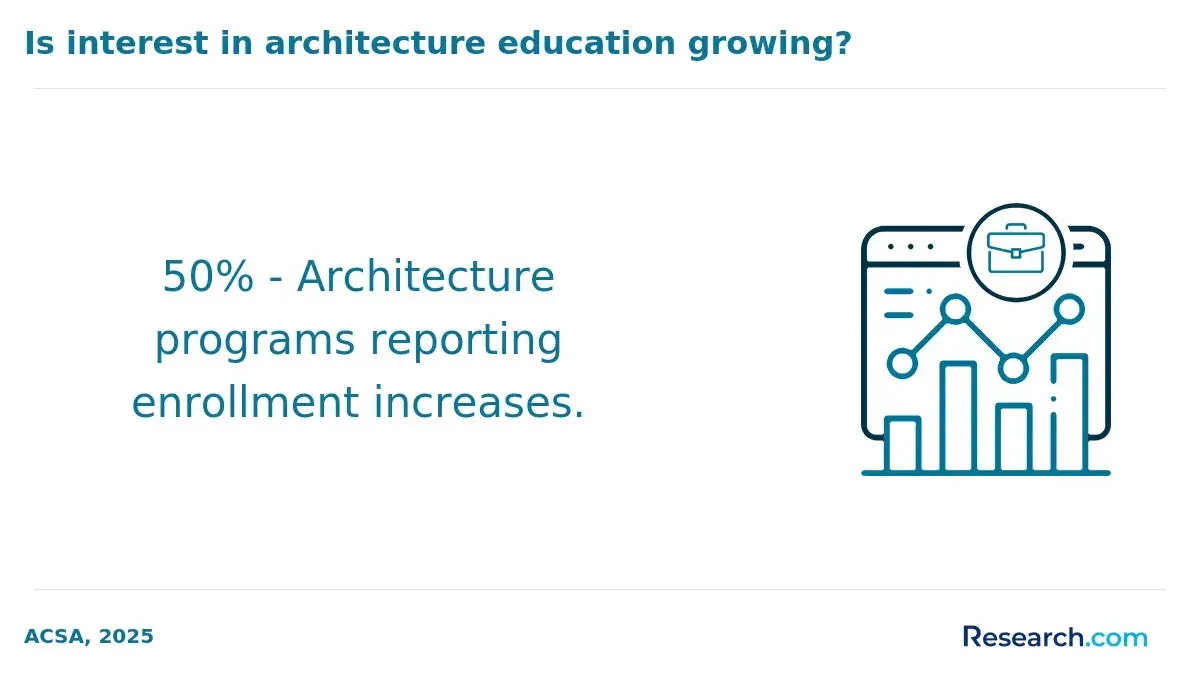
- With over 59% growth in architecture program enrollment, programs increasingly adopt flexible start options to meet rising demand and diverse student needs.
Do Online Architecture Programs Offer Weekly Start Dates?
Yes, some online architecture programs offer weekly start dates, but this is not universal. Many schools still use semester, quarter, or monthly calendars because architecture courses often rely on sequenced design studios, technical prerequisites, critiques, and project milestones. A weekly start option usually works best when the curriculum is modular and the early courses can be taken independently.
Weekly or rolling enrollment differs from a traditional academic calendar. Instead of waiting for one of two or three major start dates each year, students may begin when an upcoming course module opens and their admissions file is complete. This can reduce idle time, especially for applicants who already have transcripts, prerequisites, funding, and technology requirements in order.
Institutions like the Savannah College of Art and Design (SCAD) and Southern New Hampshire University (SNHU) support multiple start dates, which can shorten the wait between admission and coursework. However, students should confirm whether “multiple start dates” means weekly, monthly, or simply several terms per year. They should also ask whether all courses start that often or only selected general education and introductory classes.
The National Center for Education Statistics (NCES) reports that over 50% of online degree providers (2024) have incorporated multiple start dates or rolling enrollment, with the arts and design sectors—including architecture—showing significant adoption of these options. That flexibility can help students begin sooner, but it does not remove the need to verify accreditation, studio requirements, software access, and whether the program supports the student’s intended professional path.
Students comparing flexible architecture pathways should look closely at whether a degree in architecture online offers weekly starts for core architecture courses or only for general education courses.
For a cross-field comparison of flexible graduate scheduling, students may also review an MSW degree option that uses similar enrollment flexibility.
What Does the Enrollment Calendar Look Like for Online Architecture Programs?
An online architecture program’s enrollment calendar may look very different from a campus-based calendar. Some programs follow a standard fall, spring, and summer schedule. Others offer several shorter terms each year, monthly starts, or rolling access to selected courses. According to the National Center for Education Statistics, 24.7% of higher education students were enrolled exclusively online, reflecting the demand for calendars that serve students who cannot attend on a conventional schedule.
Prospective students should evaluate the calendar at the course level, not just the program level. A school may advertise frequent start dates while offering required studios or advanced technical courses only a few times per year.
- Semester or quarter starts: These calendars are more predictable and may provide stronger cohort structure, but students who miss a deadline may wait months to begin.
- Monthly start dates: Monthly entry points offer more flexibility than a traditional term while still giving schools time to group students, staff courses, and schedule critiques.
- Weekly start dates: Weekly starts can be convenient for students who are ready now, but they usually depend on modular courses and may not apply to every architecture requirement.
- Rolling admission with fixed course starts: In this model, a student can apply at almost any time, but actual class entry still depends on the next available course section.
- Modular course designs: Modular courses divide the curriculum into shorter units, which can help motivated students maintain momentum. In architecture, however, studios and project-based courses may still require structured deadlines and instructor feedback cycles.
- Year-round enrollment: Year-round access can help part-time students and working professionals avoid long breaks, but students should confirm whether year-round availability includes design studios, electives, and prerequisite chains.
A practical way to compare calendars is to ask three questions before applying: When is the next start date for my first course? When is the next start date for the first required studio? What happens if I need to pause for one term?
Students exploring flexible online education in other fields may also compare scheduling models through a fast track social work degree online.
Do Admission Requirements Delay Start Dates for Online Architecture Programs?
Yes. Flexible start dates do not guarantee immediate enrollment. Even when an online architecture program advertises weekly or rolling starts, admissions steps can delay the actual date a student begins classes. Admission reviews typically take between two to six weeks, according to multiple higher education studies, and architecture programs may need additional time to evaluate design preparation, prerequisites, and transfer work.
The most common mistake is assuming that “apply anytime” means “start anytime.” In practice, a student usually must be fully admitted, financially cleared, advised, and registered before accessing coursework.
- Transcript verification: Schools must confirm prior academic records before final admission or course placement. Delays are common when applicants attended multiple colleges or submit incomplete documents.
- Prerequisite completion: Architecture programs may require mathematics, design, drafting, visual communication, or general education foundations. Applicants missing required preparation may need to complete bridge or prerequisite coursework before starting core architecture classes.
- Portfolio or design review: Some programs may ask applicants to submit samples of creative or technical work. If required, this review can affect admission status and course placement.
- Transfer credit evaluation: Transfer students often need course-by-course review, especially for studio, design, or technical courses. Schools may request syllabi, project descriptions, or catalog information before awarding credit.
- Standardized test requirements: Though less common in continuing education, some programs may require scores from standardized tests. Waiting for official score reporting can push enrollment to a later start date.
- Enrollment model limitations: Weekly starts are easier for introductory online courses than for sequential studios. Even admitted students may need to wait for the next appropriate course in the sequence.
Applicants who want the earliest possible start should request official transcripts before applying, ask whether unofficial transcripts can support a preliminary review, and confirm the deadline for financial aid, advising, and registration. They should also ask whether the advertised start date applies to new students in their exact program track.
Do Online Architecture Programs Offer Immediate Enrollment for Transfer Students?
Some online architecture programs can move transfer students into classes quickly, but true immediate enrollment is uncommon when architecture-specific credits are involved. Transfer students usually need more review than first-time applicants because the school must determine which prior courses meet degree requirements and which must be repeated.
- Transfer credit evaluation: Institutions require official transcripts and may request course syllabi, studio descriptions, project documentation, or catalog information. This assessment process usually takes from a few days to several weeks, which can delay registration.
- Studio course alignment: Architecture studios are often sequential. Even if a student has prior design coursework, the receiving school may need to verify that the content, rigor, and learning outcomes match its own studio sequence.
- Application review and prerequisites: Admissions teams verify whether the student has completed required foundational coursework. Missing prerequisites may move the student into preparatory courses instead of advanced architecture classes.
- Program enrollment policies: Fixed-start programs may require transfer students to wait for the next term. Rolling or weekly-start programs can reduce that wait, especially for general education, introductory design, or technology courses.
- Advising and degree planning: Fast transfer enrollment usually depends on strong advising. Students should receive a written degree plan showing accepted credits, remaining requirements, expected course sequence, and any courses that are offered only in certain terms.
A transfer student should not commit based only on a verbal estimate of accepted credits. Before enrolling, ask for the official transfer evaluation, the projected graduation timeline, and any limits on how many credits may be applied to the degree.
One recent graduate described the process as manageable but not instant. Submitting transcripts was straightforward, but the uncertainty came from waiting to learn which credits would count and whether prerequisites had been satisfied. After about two weeks, the student received confirmation of accepted credits and could register for classes. Weekly start dates helped the student align coursework with work obligations, but the key factor was the school completing the credit review in time.
Does Financial Aid Processing Affect Start Dates for Online Architecture Programs?
Yes. Financial aid processing can affect when a student actually starts an online architecture program, especially if the school requires tuition payment, payment plan approval, or aid clearance before registration. On average, verification steps extend aid processing, with about 66% of online learners requiring some form of financial assistance, according to the Education Data Initiative 2024.
Students who need aid should treat the financial aid timeline as part of the enrollment calendar. A weekly start date is useful only if funding is ready in time for that start.
- FAFSA and institutional aid review: Students using federal aid, institutional grants, scholarships, or loans may need to submit additional documentation before the school finalizes eligibility.
- Verification delays: Aid approval can range from several days to multiple weeks depending on the institution, the accuracy of the application, and whether the student is selected for verification.
- Scholarship timing: Some scholarships have fixed review cycles that do not match weekly or monthly starts. Students relying on scholarships should confirm award dates before choosing a start date.
- Tuition payment deadlines: Even if admission is complete, a student may not be able to access courses until tuition is paid, aid is certified, or a payment plan is approved.
- Rolling and weekly start dates: Flexible starts can help students begin soon after funding clears instead of waiting for the next semester. This is especially helpful for students balancing work, caregiving, or relocation.
To avoid delays, students should complete aid documents as early as possible, monitor the school portal for missing items, and ask the financial aid office whether pending aid is enough to hold a seat in the next available start date.
Do International Students Have Different Start Date Options for Online Architecture Programs?
International students may have different start date options because their applications often require additional review. Recent data from the National Center for Education Statistics highlights a nearly 15% growth in international enrollment in these fields over five years, which makes clear enrollment guidance increasingly important for architecture and design programs.
For fully online students studying from outside the United States, visa requirements may be different from those for students entering the country. However, international applicants may still face earlier deadlines because of credential evaluation, English-language documentation, tuition payment rules, technology access, and time zone planning. If a program includes campus residencies, in-person intensives, internships, or other U.S.-based requirements, immigration and travel timelines may become more important.
- Visa and regulatory requirements: Enrollment deadlines for international applicants can be tied to visa processing timelines and institutional compliance procedures, especially when any in-person component is required.
- Credential verification: Universities often need extra time to authenticate foreign transcripts, translate documents, evaluate grading systems, and determine degree equivalency.
- Time zone challenges: Architecture programs may include live critiques, studio meetings, or group presentations. International students should confirm whether synchronous sessions are required and whether recordings or alternate critique times are available.
- Technology and software access: Students should verify that required design software, hardware, file-sharing tools, and learning platforms are accessible in their country before the first week begins.
- Flexible admissions models: Rolling admissions or multiple annual start dates can help international students choose a start that matches document readiness, funding, work schedules, and time zone constraints.
One international student described start-date planning as “a balancing act between visas, document delays, and course schedules.” The student submitted transcripts well in advance so the university could confirm credentials before registration. The more difficult adjustment was participating in live studio sessions scheduled in another time zone. Multiple start dates helped the student choose a term that matched both academic readiness and personal circumstances.
Do Online Architecture Programs Allow Late Registration?
Some online architecture programs allow late registration, but policies vary widely. Late registration is usually easier in flexible, modular programs than in studio-heavy courses where students begin projects, critiques, and group work during the first week. Even when late entry is allowed, it may require advisor approval and may not be available for every course.
- Institutional policies: Many schools set a firm add/drop deadline. After that date, students may need approval from the registrar, department chair, instructor, or advisor.
- Coursework and participation: Architecture courses often build from early assignments. A late registrant may miss software setup, design briefs, critique expectations, or team formation.
- Studio limitations: Late entry can be especially difficult in studio courses because feedback cycles and project milestones start immediately. Missing the first critique can affect the quality of later work.
- Flexible start dates: Rolling or weekly-start programs may reduce the need for late registration by allowing a student to begin with the next available course section instead of entering after a course has already started.
- Financial aid and billing: Late registration can affect aid disbursement, payment deadlines, refunds, and course access. Students should confirm the financial impact before adding a class late.
- Academic risk: Starting late may save time initially but create pressure during the first assignments. Students should ask whether make-up work, recorded sessions, and instructor support are available.
The safer option is usually to begin with the next available start date rather than enter a studio course after core instructions have already been given. If late registration is the only option, students should contact the instructor before registering and ask exactly what has been missed.
Do Weekly Start Dates Shorten the Time to Complete an Online Architecture Degree?
Weekly start dates can shorten the time it takes to begin an online architecture degree, but they do not automatically shorten the time it takes to graduate. The total timeline depends on course sequencing, credit load, transfer credits, prerequisite requirements, studio availability, and whether the student attends full time or part time. Accelerated online learning formats have contributed to a record high 61.1% six-year completion rate for the 2018 student cohort, but individual completion time still depends on program design and student circumstances.
The distinction matters: faster enrollment is not the same as faster completion. A student may start next week but still need to follow a prescribed sequence of design studios and technical courses.
- Accelerated course sequencing: Some programs allow students to take courses back-to-back without waiting for a traditional semester. This can help students maintain momentum, especially in general education and introductory courses.
- Prerequisite chains: Architecture programs often require courses to be taken in order. If Studio I is required before Studio II, and Studio II is offered only at certain times, weekly starts may not speed up that part of the degree.
- Modular or self-paced formats: Modular courses can help motivated students complete some requirements faster. However, design feedback, critiques, and portfolio development still require meaningful time and faculty interaction.
- Continuous enrollment: Weekly start dates can reduce gaps between courses and help adult learners keep a steady academic rhythm while balancing work or family responsibilities.
- Transfer credit impact: Accepted credits may shorten the path more than weekly starts do. Transfer students should prioritize a clear credit evaluation and degree plan.
- Completion limitations: Core requirements, including practicum or internships, must often be completed in real-world settings, restricting the possibility of dramatically faster degree completion. These experiential components may also matter for professional licensing or career preparation.
Students should ask for a sample completion plan based on their intended credit load. A full-time student, a part-time student, and a transfer student may all see different outcomes even within the same program.
For comparison, some mft online programs also use flexible starts while still requiring structured field or clinical components that shape the overall completion timeline.
How Do Schools Prepare Students for Their First Week of Online Architecture Classes?
Strong onboarding is essential in online architecture programs because students must be ready for both academic work and technical production. The first week may involve design software, file submissions, studio expectations, critique formats, discussion boards, and project briefs. Good preparation reduces confusion and helps students use the flexibility of online learning without falling behind.
- Orientation modules: Programs often begin with required online orientations that explain the learning platform, course navigation, assignment submission, academic policies, and communication expectations.
- Technology setup assistance: Students may receive hardware and software checklists, installation guides, and help desk support for tools such as CAD software. Offering thorough technical onboarding addresses a key cause of early disengagement, which 68% of design field students attribute to success improvements (source: EduCause 2024).
- Software readiness checks: Architecture students should confirm that their computer meets program requirements before classes start. They should also test file uploads, cloud storage, rendering tools, and any required collaboration platforms.
- Academic advising: Advisors typically help students confirm course selections, review prerequisites, understand degree sequencing, and plan a realistic workload.
- Learning platform navigation: Students may receive tutorials on discussion boards, critique spaces, video conferencing tools, digital pin-up boards, and project submission portals.
- Faculty communication: Welcome messages, live Q&A sessions, and early announcements help students understand course objectives, critique expectations, and how to ask for help.
- Early student engagement: Discussion prompts, peer introductions, and low-stakes first assignments can reduce isolation and help students build a studio community online.
- Time management planning: Online architecture courses can be demanding because design work often takes longer than students expect. Schools may provide weekly workload estimates and planning tools to help students balance employment and coursework.
Students should complete orientation before the first official class day whenever possible. Waiting until the course opens to install software or learn the platform can create avoidable stress during the first project cycle.
Students comparing support models in other online programs may find examples in resources on the cheapest online edd programs, which also emphasize structured onboarding and student support.
What Are the Pros and Cons of Weekly Start Dates for Online Architecture Programs?
Weekly start dates can be a major advantage for students who are ready to begin, but they also introduce trade-offs. According to data from the National Center for Education Statistics, online enrollment in architecture-related programs has risen by 12% over the past five years, reflecting the broader demand for flexible scheduling. Still, students should evaluate whether weekly entry supports their learning style, career goals, and need for peer interaction.
Pros
- Faster access to coursework: Students can often begin soon after admission instead of waiting for the next semester.
- Greater flexibility for working adults: Weekly starts can help students align school with job schedules, family responsibilities, military transitions, or career changes.
- Reduced enrollment gaps: Students who miss one start date may only wait a short time for the next available course.
- Better momentum: Continuous entry points can help students maintain motivation and avoid long breaks between decision and action.
- Potentially smoother re-entry: Students who pause may be able to resume sooner if the program offers frequent course starts.
Cons
- Limited cohort experience: Students starting at different times may have fewer chances to build a consistent peer network.
- Uneven course availability: Not every architecture course may start weekly. Studios, advanced technical courses, and electives may still follow fixed cycles.
- Advising complexity: Rolling schedules can make degree planning more complicated, especially when prerequisites and course sequences matter.
- Less predictable collaboration: Group projects and critiques may be harder to coordinate when students are at different points in the program.
- Risk of rushed decisions: The ability to start quickly may tempt students to enroll before confirming cost, accreditation, software requirements, and career fit.
A good rule is to choose weekly starts when the program also provides strong advising, clear course sequencing, dependable technology support, and transparent tuition policies. If a student values a stable peer cohort and predictable studio rhythm, a monthly, quarter-based, or semester-based calendar may be a better fit.
Students comparing flexible formats beyond architecture can also review online college courses designed for similar scheduling needs.
What Graduates Say About Their Online Architecture Program Enrollment Calendar & Start Options
- : "Choosing an online architecture degree program with a weekly start date fit my hectic schedule because I could begin my studies almost immediately after deciding to pursue this career path. The cost was surprisingly reasonable compared to traditional programs, averaging around $15,000 in total, which made it accessible without sacrificing quality. Since graduating, I have seen a significant boost in professional opportunities and confidence, including projects I once thought were out of reach. —Caesar"
- : "I was initially hesitant to enroll in an online architecture degree, but the flexible weekly start dates made it easier to commit at the right moment. The tuition cost, roughly $14,500 for the program, was sustainable with my job and did not add undue financial stress. Looking back, this online path had a strong influence on my career growth and helped me work with international clients more smoothly. —Lux"
- : "The weekly start dates of the online architecture degree program allowed me to begin without waiting for a traditional semester, which was important for maintaining career momentum. The cost, approximately $16,000 for the entire degree, was competitive and justified by the curriculum and support provided. Professionally, the degree strengthened my design skills and credibility, opening doors to more advanced positions and leadership roles. —Archie"
Other Things You Should Know About Architecture Degrees
In 2027, most online architecture programs offer multiple start dates throughout the year, though weekly start dates are less common. Many programs provide monthly or quarterly enrollment options, enabling students to commence their studies according to a more flexible schedule compared to traditional academic calendars.
Most online Architecture programs have strict start dates tied to course schedules, so changing a start date after enrollment can be challenging. Some institutions allow students to defer enrollment to a later term within the same academic year, but this typically requires formal approval and may delay degree completion. It is advisable to confirm deferral policies prior to committing.
Yes. Many online architecture programs require a portfolio with 8–20 examples of design, drawing, or digital work. Some undergraduate programs also ask for transcripts and a personal statement, while graduate admissions may require prior architecture or studio coursework for review.
References
- ArchAdemia - Architecture Education https://archademia.com/blog/steps-to-successfully-enroll-in-an-online-architecture-course/
- Association of Collegiate Schools of Architecture. (2025, March 8). 2024-2025 ACSA budget and enrollment survey results. https://www.acsa-arch.org/resource/acsa-budget-and-enrollment-survey/2024-2025-acsa-budget-and-enrollment-survey-results/
- Zippia. (2025). Interior designer demographics and statistics in the US. https://www.zippia.com/interior-designer-jobs/education/
- Course Schedule and Course Pacing: Does it Affect Student Success in Online Asynchronous Courses? - OJDLA https://ojdla.com/articles/course-schedule-and-course-pacing-does-it-affect-student-success-in-online-asynchronous-courses
- International Year One in Architecture | Newcastle University International Study Centre https://www.nclisc.com/en/courses/international-year-one-in-architecture
- Online Architecture Courses https://www.open.edu.au/study-online/architecture-construction/architecture
- FREE Class: How To Prepare For First Year — The Architecture Student Diaries https://www.thearchitecturestudentdiaries.com/classes/0009howtoprepareforfirstyear
- 2025 Summer Architecture Programs https://studyarchitecture.com/blog/architecture-news/2025-summer-architecture-programs/
- 10 things you should do before you start your Architecture Degree — archistudentnotes https://archistudentnotes.com/notebook/10-things-you-should-do-the-summer-before-you-start-your-architecture-degree
- Financial Aid - Yale Architecture https://www.architecture.yale.edu/admissions/financial-aid