2027 How Much Do Healthcare Managers Make?

Co-Founder and Chief Data Scientist
Healthcare management salary research matters because this career path can lead to very different earnings depending on the role, setting, credentials, and location you choose. A manager overseeing one clinic department will not usually be paid like an executive leading a hospital system, and an online degree or certification only improves your return if it fits your target job.
As of 2025, the average health services manager salary in the United States is approximately $111,000 annually (U.S. Bureau of Labor Statistics, 2025). The U.S. Bureau of Labor Statistics also reported a median annual wage for healthcare managers of approximately $120,000 in 2025. This guide explains what healthcare managers do, what drives pay differences, which education paths can help, and how to evaluate whether a healthcare management degree or certification is worth the cost.
You will also find practical salary-growth strategies, city and industry considerations, technology trends, common mistakes to avoid, and questions to ask before choosing a healthcare management program or career move.
How Much Do Healthcare Managers Make Table of Contents
- Healthcare manager role and daily responsibilities
- What affects healthcare management salaries?
- Salary ranges by healthcare management level
- How to increase your healthcare management earning potential
- Industries that tend to pay healthcare managers well
- U.S. cities with strong healthcare management pay potential
- Challenges healthcare managers should prepare forCity salary factors to compare
- Choosing the right healthcare management degree
- Using certifications to strengthen your healthcare management career
- How a biology background can support healthcare managementCertification planning tips
- Evaluating the ROI of healthcare management education
- Moving from advanced nursing education into management
- How networking and mentorship support long-term growth
- Why clinical-managerial programs can improve leadership readiness
- Healthcare management salary outlook
- Accelerated healthcare management programs
- Technology’s impact on healthcare management jobs
- Ways to move faster into healthcare management rolesTechnology skills for healthcare leaders
Quick Answer: How Much Do Healthcare Managers Make?
Healthcare managers in the United States earn widely different salaries based on experience, employer type, job scope, and geography. As of 2025, the average health services manager salary is approximately $111,000 annually, while the median annual wage for healthcare managers was approximately $120,000 in 2025 (U.S. Bureau of Labor Statistics, 2025).
Entry-level healthcare management roles can fall between $23,000-$77,500, with an annual salary of approximately $70,800 cited for entry-level healthcare managers. Mid-level healthcare management roles may range from $98,000-$262,000, while senior management positions may be listed at $305,000-$609,0000 depending on role scope, organization size, and source methodology.
What does a healthcare manager do?
Healthcare managers plan, coordinate, and improve the business and operational side of care delivery. They may work in hospitals, physician practices, long-term care facilities, insurance organizations, public health agencies, or healthcare product companies. Hospitals are among the largest employers of medical and health services managers, but the field extends far beyond hospital administration.
The job is different from direct patient care. Healthcare managers usually focus on staffing, budgets, compliance, patient experience, workflow, data systems, quality improvement, and long-term planning. In smaller organizations, one manager may handle several of these areas. In large health systems, responsibilities are often divided among department managers, operations leaders, finance administrators, compliance officers, and executives.
- Administrative leadership. Healthcare managers coordinate departments, support clinical teams, oversee policies, and make sure daily operations align with organizational standards.
- Financial management. They help build budgets, monitor revenue and expenses, allocate resources, review contracts, and support financially sustainable operations.
- Strategic planning. They analyze service demand, operational data, community needs, and industry changes to help the organization plan new services or improve existing ones.
- Human resources coordination. They may participate in hiring, onboarding, training, staff scheduling, performance improvement, and employee retention efforts.
- Quality and risk management. Healthcare managers help track care quality, patient safety, clinical outcomes, patient concerns, and organizational risks.
- Health information and technology coordination. They work with IT teams to support electronic health records, data privacy, cybersecurity practices, interoperability, and workflow automation.
- Stakeholder communication. They coordinate with patients, physicians, nurses, administrators, community partners, insurers, and government agencies.
- Compliance and legal awareness. They help organizations follow healthcare regulations, accreditation standards, privacy rules, billing requirements, and policy changes.
Factors Affecting Healthcare Management Salaries
Healthcare management salaries are not determined by job title alone. Two people with similar titles can earn very different pay if one manages a small clinic department and the other oversees a large hospital service line. The strongest salary drivers are credentials, experience, organization size, location, measurable performance, and the complexity of the role.
| Salary factor | Why it matters | What to evaluate before making a career move |
| Education and credentials | Advanced degrees and specialized certifications can qualify candidates for higher-responsibility roles. | Check whether your target jobs prefer an MHA, MBA, MPH, MSN, or another pathway. |
| Experience level | Pay tends to rise when managers supervise larger teams, budgets, programs, or facilities. | Look for roles that expand measurable responsibility, not only better titles. |
| Geographic location | Cost of living, employer competition, and regional demand affect compensation. | Compare salary against housing, taxes, commuting costs, and relocation requirements. |
| Employer size and setting | Large hospitals, academic medical centers, insurers, and specialized organizations may offer different salary structures. | Review total compensation, bonus potential, call expectations, and workload. |
| Performance results | Managers who improve quality, efficiency, compliance, revenue cycle performance, or staff retention may become stronger candidates for promotion. | Track accomplishments with data so you can negotiate from evidence. |
- Credentials and qualifications. Education can influence both access and pay. A traditional or online advanced degree in healthcare management, such as a Master’s in Healthcare Administration (MHA) or Master of Business Administration (MBA), may improve candidacy for management and executive tracks. According to the U.S. Bureau of Labor Statistics, the median annual wage for healthcare managers was approximately $120,000 in 2025, reflecting a steady increase over previous years (U.S. Bureau of Labor Statistics, 2025). Certifications such as Certified Healthcare Executive (CHE) or Fellow of the American College of Healthcare Executives (FACHE) can also signal professional competence.
- Years of experience. Experience matters most when it shows increasing responsibility. Employers often value candidates who have managed budgets, led teams, improved operations, handled compliance issues, or guided change in complex healthcare environments.
- Geographic location. Healthcare management pay varies by region because employer competition, healthcare demand, and cost of living are not the same across the country. A higher salary in a major metro may not always mean better purchasing power.
- Organization size and type. A hospital manager's salary can range from $96,000 to $220,000, with facility size and operational complexity playing a significant part in it (U.S. Bureau of Labor Statistics, 2025). Academic medical centers, research institutions, insurers, and large health systems may also structure pay differently from smaller clinics.
- Performance and achievements. Documented results can improve salary negotiations. Examples include reduced denials, improved patient throughput, higher staff retention, successful accreditation reviews, stronger patient satisfaction measures, or better budget performance.
Salary Ranges for Different Levels of Healthcare Management Positions
Healthcare management compensation generally rises as the role moves from support work to department leadership and then to organization-wide strategy. Titles vary by employer, so salary research should focus on scope: budget size, number of direct reports, service line complexity, regulatory exposure, and decision-making authority.
| Career level | Salary range cited | Common roles | Typical preparation |
| Entry-level | $23,000-$77,500 | Department assistant, project coordinator, administrative coordinator, junior operations support | Bachelor’s degree, healthcare experience, internship, clinical background, or bridge credentials |
| Mid-level | $98,000-$262,000 | Department manager, operations supervisor, healthcare program manager, practice manager | Several years of experience, management training, analytics skills, and sometimes a graduate degree |
| Senior management | $305,000-$609,0000 | Executive director, chief operating officer, chief executive officer, senior service line leader | Extensive leadership record, advanced degree, executive experience, and strong financial and strategic skills |
- Entry-level positions — $23,000-$77,500. These jobs often support senior managers and may focus on scheduling, reporting, department coordination, project assistance, or administrative operations. Some candidates enter from nursing pathways such as the best online RN to BSN program or online LPN to BSN programs. In the United States, the annual salary of entry-level healthcare managers is approximately $70,800 (U.S. Bureau of Labor Statistics, 2025). Medical administration salary estimates may also fall in this broader range.
- Mid-level positions — $98,000-$262,000. Mid-level managers usually supervise staff, manage department operations, and make recurring operational decisions. Examples include department managers, operations supervisors, and healthcare program managers with an average median salary of more than $172,000 (U.S. Bureau of Labor Statistics, 2025). This range can help readers compare healthcare paths, including discussions of physician assistant versus nurse practitioner salary.
- Senior management positions — $305,000-$609,0000. Senior roles involve broad leadership authority, long-term strategy, financial stewardship, and accountability for multiple departments or entire organizations. Common preparation may include an online master’s in healthcare administration, MBA, MHA, online RN to MSN programs, online BSN to DNP programs, or a doctorate. Some roles, including executive directors, COOs, and CEOs, can earn a median salary of more than $120,000 per year (U.S. Bureau of Labor Statistics, 2025).
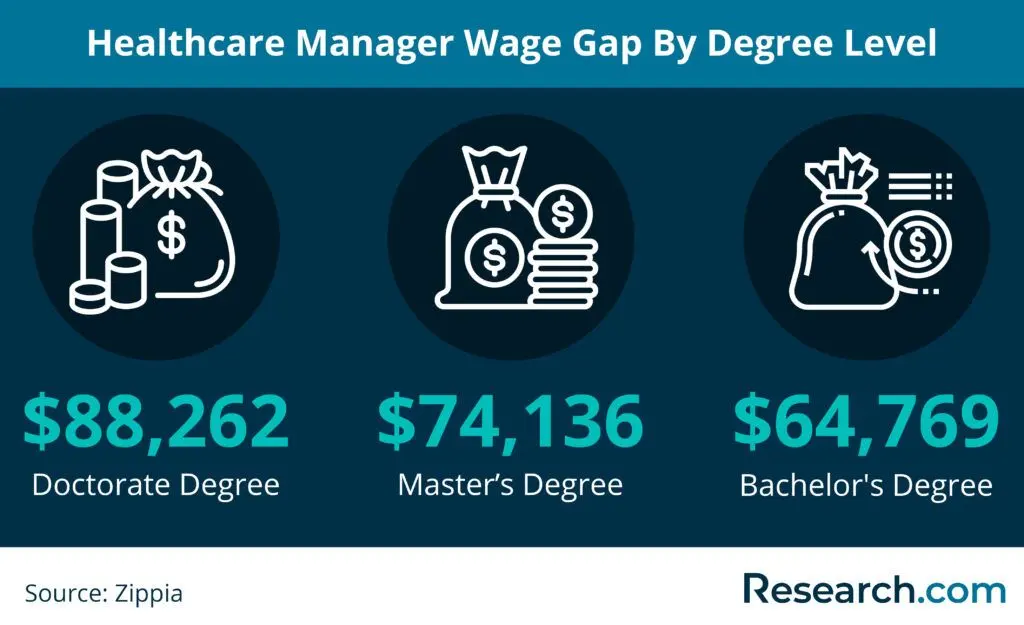
Strategies to Maximize Healthcare Management Salary Potential
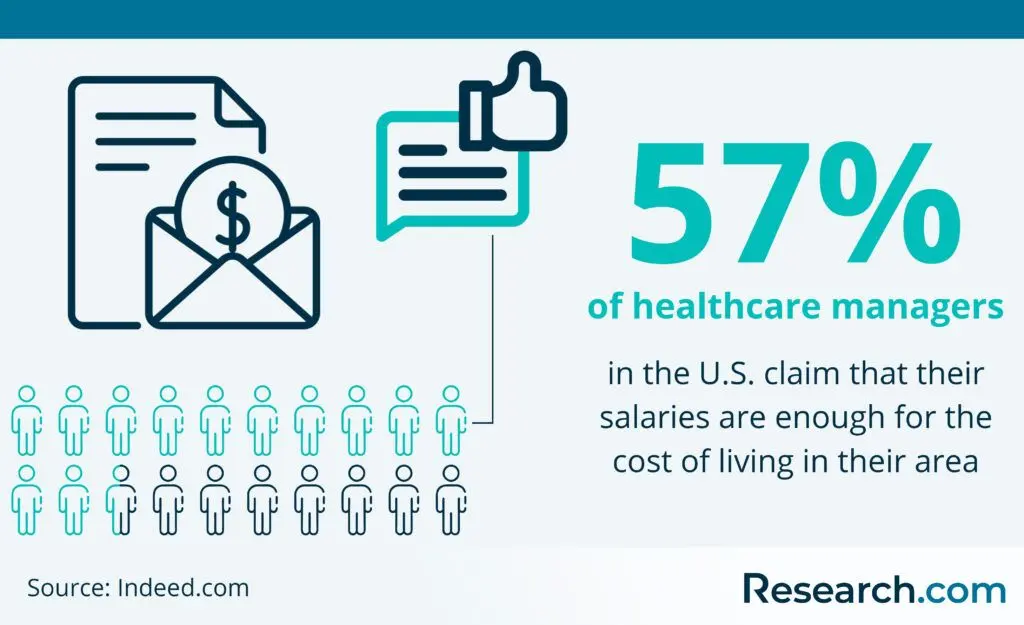
Higher pay in healthcare management usually comes from a combination of stronger credentials, broader responsibility, measurable results, and smart negotiation. More than half of healthcare managers in the United States report earning enough to cover their cost of living, but individual outcomes depend heavily on location, employer, and career decisions.
- Keep building relevant expertise. Use conferences, continuing education, workshops, and webinars to stay current on healthcare finance, compliance, quality improvement, population health, technology, and leadership. Clinical professionals may also increase career flexibility through options such as affordable online FNP programs when those programs align with their goals.
- Choose certifications strategically. Certifications should support your target role rather than simply add letters after your name. For healthcare managers, credentials such as Certified Healthcare Executive or Fellow of the American College of Healthcare Executives may strengthen credibility. They are part of broader healthcare career requirement trends that emphasize specialized skills and verified competence.
- Add business and data skills. Finance, budgeting, revenue cycle, strategic planning, data analysis, quality improvement, and project management can make a healthcare manager more valuable across settings.
- Build a useful professional network. Professional associations, alumni groups, mentors, conferences, and cross-functional projects can expose you to roles before they are widely advertised.
- Negotiate beyond base salary. Review salary ranges, but also consider bonuses, retirement contributions, health benefits, tuition reimbursement, remote or hybrid flexibility, paid leave, relocation support, and professional development funding.
- Pursue leadership assignments before asking for a title change. Leading committees, managing implementation projects, improving a workflow, or supervising a team can create evidence for promotion.
- Monitor market changes. Salary surveys, job postings, industry publications, and professional peers can help you understand which skills employers currently reward.
| Common mistake | Why it can limit salary growth | Better approach |
| Choosing a degree only because it is fast | A short program may not match employer expectations or advancement goals. | Compare accreditation, curriculum, outcomes, faculty, and employer recognition. |
| Ignoring total compensation | A higher base salary may come with weaker benefits or higher living costs. | Calculate full compensation and local cost of living. |
| Waiting for promotions without documenting results | Managers need evidence when negotiating raises. | Track budget savings, quality improvements, retention gains, and project outcomes. |
| Assuming all online programs are equal | Program quality, accreditation, transfer policies, and employer reputation vary. | Ask admissions offices specific questions before enrolling. |
Top-paying Industries for Healthcare Managers
Healthcare management roles exist across more than traditional hospitals and clinics. Industry choice can affect salary because different employers have different revenue models, regulatory pressures, staffing needs, and operational complexity.
- Utilities. In this context, utilities organizations may employ healthcare managers to coordinate health services, benefits, occupational health programs, or care-related operations for employees and dependents. These roles can be complex because they connect healthcare administration with workforce support and regulatory requirements.
- Insurance. Insurance companies rely on healthcare managers for provider networks, utilization management, policy operations, claims processes, care management, compliance, and risk analysis. Strong analytical and leadership skills are especially valuable in this environment.
- Healthcare. Hospitals, clinics, physician groups, health systems, and long-term care organizations employ managers to lead departments, budgets, staffing, quality improvement, compliance, patient access, and daily operations.
- Manufacturing. Pharmaceutical companies, medical device manufacturers, and healthcare product companies may hire managers who understand both healthcare operations and regulated manufacturing environments. Responsibilities may include quality control, compliance, supply chain coordination, product development support, and cross-functional team leadership.
| Industry | Why healthcare managers may be needed | Best-fit skills |
| Utilities | Employee health programs, benefits coordination, occupational health, and compliance | Program management, compliance, vendor coordination |
| Insurance | Claims, utilization review, provider networks, risk management, and care coordination | Analytics, policy knowledge, financial judgment |
| Healthcare delivery | Operations, staffing, patient care coordination, budgeting, and quality improvement | Leadership, clinical workflow knowledge, communication |
| Manufacturing | Regulatory operations, quality systems, supply chain, and healthcare product support | Quality management, regulatory awareness, cross-functional leadership |
Highest-paying U.S. Cities for Healthcare Managers
Healthcare management pay can be strong in large metropolitan areas with major hospitals, academic medical centers, research institutions, insurers, and biotechnology employers. However, a high salary city may also have high housing, transportation, tax, and childcare costs. Compare take-home value, not just the posted salary.
- Boston, MA. Boston’s concentration of hospitals, research organizations, academic medical centers, and biotechnology employers can create strong demand for experienced healthcare leaders.
- Los Angeles, CA. Los Angeles has a large and varied healthcare market, including major medical centers, research institutions, and biotechnology activity. Higher cost of living often accompanies higher salary expectations.
- New York City, NY. New York City offers many healthcare management opportunities through large health systems, academic centers, specialty practices, and healthcare organizations, but competition and living costs are significant.
- Chicago, IL. Chicago’s hospitals, medical centers, research institutions, and healthcare systems support demand for skilled managers across operations, finance, quality, and service line leadership.
- Phoenix, AZ. Phoenix’s population growth and reputation as a retirement destination contribute to healthcare service demand, which can increase competition for qualified healthcare managers.
| City | Salary factor to consider | Question to ask before relocating |
| Boston, MA | Academic medicine, research, and biotechnology presence | Will the salary offset housing and commuting costs? |
| Los Angeles, CA | Large healthcare market and high cost of living | Does the role offer advancement or only a higher nominal salary? |
| New York City, NY | Dense employer market and strong competition | How does total compensation compare after taxes and rent? |
| Chicago, IL | Major healthcare systems and research institutions | Which employers offer leadership development pathways? |
| Phoenix, AZ | Population growth and healthcare service demand | Is the market aligned with your specialty area? |
Navigating Healthcare Management Challenges
Healthcare management can be financially rewarding, but the work is demanding. Managers are often responsible for balancing limited budgets, staffing shortages, quality expectations, patient satisfaction, compliance requirements, and technology changes at the same time.
One persistent challenge is resource allocation. Managers may need to improve patient care while controlling labor costs, reducing waste, and meeting regulatory expectations. Another challenge is the pace of change. Technology, reimbursement models, public health needs, and patient expectations can shift quickly, requiring managers to make decisions with incomplete information.
Cultural competence is also increasingly important. Healthcare managers work with diverse teams and patient populations, so inclusive communication, bias awareness, and culturally responsive service design matter in both patient experience and workforce performance.
Aspiring healthcare managers can prepare by developing problem-solving habits, seeking mentors, learning healthcare finance, and building credentials that match their chosen setting. Relevant medical certifications may help professionals demonstrate focused knowledge in areas such as billing, coding, compliance, or clinical operations.
Essential Soft Skills for Healthcare Management
Technical knowledge gets healthcare managers into the conversation. Soft skills often determine whether they can lead effectively under pressure. The strongest managers can communicate across clinical, administrative, financial, and patient-facing teams.
- Communication. Managers must explain policies, coordinate teams, resolve conflict, and communicate with patients, clinicians, executives, vendors, and regulators.
- Problem-solving and decision-making. Healthcare operations involve urgent trade-offs. Good managers can evaluate evidence, weigh risk, and act decisively.
- Adaptability. Regulations, technology, staffing models, and patient needs change frequently. Managers need resilience and a willingness to adjust workflows.
- Empathy and emotional intelligence. Managers who understand employee and patient perspectives are better positioned to improve culture, retention, and service quality.
- Organization and time management. Healthcare managers often juggle budgets, meetings, audits, staffing issues, and improvement projects at once.
Which Healthcare Management Degree Should You Choose?
The right degree depends on your background and target role. A bachelor’s degree may be enough for some entry-level administrative jobs, while mid-level and executive roles often favor candidates with graduate preparation and management experience. Before enrolling, compare accreditation, curriculum depth, faculty experience, internship or capstone requirements, networking opportunities, and cost.
| Degree path | Best for | Important caution |
| Bachelor’s in healthcare administration or management | Students seeking entry-level administrative or operations roles | May not be enough for competitive executive-track positions. |
| MHA | Professionals focused specifically on healthcare leadership and administration | Compare whether the program includes finance, analytics, policy, and operations. |
| MBA with healthcare focus | Candidates who want broader business mobility inside or outside healthcare | Make sure healthcare coursework is substantial enough for your goals. |
| MPH | Students interested in population health, policy, public health leadership, or community health systems | Some roles may still require operations or finance experience. |
| MSN, DNP, or clinical leadership pathway | Nurses moving into leadership, education, quality, or administration | Check whether the program aligns with management roles rather than only clinical advancement. |
If affordability is a priority, compare programs such as the most affordable online healthcare administration degree options, but do not judge by tuition alone. Ask about fees, transfer credits, graduation requirements, practicum expectations, and employer partnerships.
How Can Specialized Certifications Boost Your Healthcare Management Career?
Certifications can help when they solve a specific career problem: proving expertise, changing specialties, qualifying for promotion, or strengthening a resume for competitive roles. They are most useful when paired with experience and clear career goals.
Examples include certifications in healthcare compliance, revenue cycle, medical billing and coding, quality improvement, project management, finance, or data analytics. A billing and coding certification online, for instance, may be useful for managers who want to understand reimbursement, claims accuracy, and revenue cycle operations.
Can a Biology Degree Propel a Career in Healthcare Management?
A biology degree can be a useful foundation for healthcare management because it develops scientific literacy, analytical thinking, and familiarity with clinical or research concepts. However, most biology graduates still need to build business, finance, operations, leadership, or health administration skills before moving into management.
Common next steps include healthcare administration coursework, an MHA or MBA, internships in hospital operations, quality improvement projects, or certifications in compliance, analytics, or revenue cycle management. For broader career planning, review options for what you can do with a biology degree.
Is Investing in Healthcare Management Education Worth the Cost?
Healthcare management education can be worth the cost if it helps you qualify for roles with higher responsibility, stronger mobility, and better long-term earning potential. It may not be worth it if the program is unaffordable, poorly aligned with your career goal, lacks recognized accreditation, or does not improve your access to internships, networks, or employer-preferred credentials.
| ROI question | Why it matters |
| Will this credential qualify me for the jobs I actually want? | A degree should match employer expectations in your target market. |
| What is the total cost, including fees and lost work time? | Tuition alone does not show the real financial commitment. |
| Can I transfer credits or use employer tuition assistance? | Credit transfer and reimbursement can lower out-of-pocket cost. |
| Does the program offer career support? | Internships, alumni networks, and employer relationships can affect job outcomes. |
| Is the program format realistic for my schedule? | A flexible program is only valuable if you can complete it successfully. |
Students comparing cost-conscious paths may also research options such as the cheapest MPH programs online, especially if their interests include public health leadership, policy, or population health.
Can Advanced Nursing Education Accelerate Your Transition to Healthcare Management?
Advanced nursing education can be a strong bridge into healthcare management for clinicians who already understand patient care, staffing realities, quality metrics, and interdisciplinary teamwork. Nurses moving into management often bring credibility with clinical teams, which can be valuable in operations, quality improvement, patient safety, education, and service line leadership.
An affordable MSN in nursing education may help nurses develop teaching, leadership, curriculum, and organizational skills, but candidates should verify whether the program supports their specific management goals. Some roles may require additional preparation in budgeting, health policy, analytics, or administration.
How can networking and mentorship foster long-term success in healthcare management?
Healthcare management advancement often depends on relationships as much as credentials. Mentors can help you interpret organizational politics, choose skill-building assignments, prepare for interviews, and understand which roles are realistic next steps. Networking can also reveal salary expectations and unadvertised opportunities.
Clinical professionals considering a transition should connect with healthcare executives, department managers, alumni, faculty, and professional associations. Early-career students can also evaluate educational access points, including resources on which nursing schools may be easier to get into, when clinical education is part of a broader healthcare leadership plan.
How can integrated clinical and managerial programs enhance leadership effectiveness?
Programs that combine clinical knowledge with management training can prepare leaders who understand both patient care and organizational constraints. This dual perspective is useful when improving staffing models, redesigning workflows, implementing technology, or leading quality improvement initiatives.
For example, 12-month accelerated nursing programs online can help some students gain clinical preparation quickly, while later management-focused education can build finance, policy, and leadership skills. The best path depends on whether your goal is clinical leadership, administrative management, public health leadership, or executive advancement.
Future Outlook for Healthcare Management Salary
The outlook for healthcare management salary remains generally positive because healthcare organizations need leaders who can manage growth, cost pressure, regulation, staffing challenges, technology, and quality expectations. Pay will still vary by location, employer, role level, and individual qualifications.
- Rising demand for healthcare services. An aging population, medical advances, and expanded healthcare needs contribute to demand for managers who can coordinate care delivery and operations.
- Greater system complexity. Healthcare managers who understand reimbursement, compliance, workforce planning, technology, and quality improvement may be better positioned for higher-value roles.
- Quality and efficiency pressures. Organizations continue to look for managers who can improve outcomes, reduce waste, streamline operations, and maintain patient-centered care.
- Technology integration. Electronic health records, telemedicine, healthcare analytics, automation, and digital patient engagement tools are reshaping management responsibilities.
- Value-based care and population health. Healthcare is continuing its shift toward value-based care, which emphasizes outcomes, patient satisfaction, and cost management. Managers who can lead care coordination, preventive services, and population health initiatives may be especially valuable.
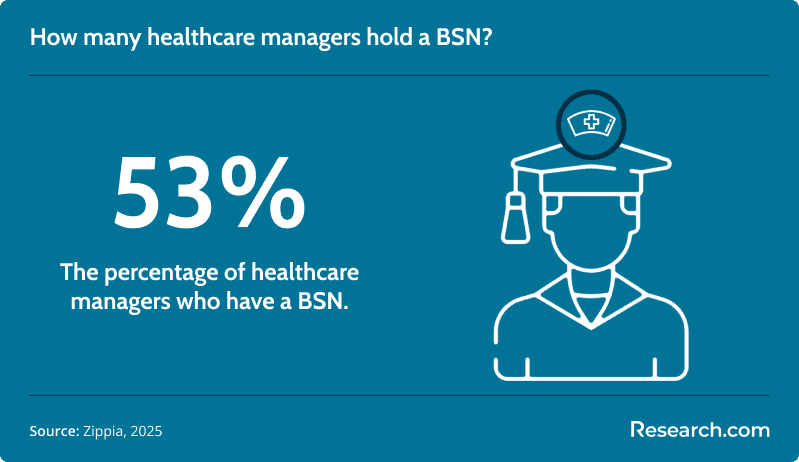
Fast-Track Your Career with Accelerated Programs in Healthcare Management
Accelerated programs can help working professionals move faster, but speed should not be the only reason to enroll. A fast program is only worthwhile if it is credible, rigorous, affordable, and aligned with the roles you want.
Options such as 1 year masters in healthcare administration programs online may appeal to professionals who already have healthcare experience and want graduate-level preparation without pausing their careers. These programs typically compress coursework in healthcare finance, policy, operations, strategy, and leadership.
Before choosing an accelerated program, ask whether it includes applied projects, internship or practicum options, career services, faculty with healthcare leadership experience, and support for working adults. Also confirm the weekly time commitment; accelerated does not mean easier.
The Role of Technology in Healthcare Management
Technology is changing what healthcare managers need to know. Managers are increasingly expected to understand electronic health records, data dashboards, telemedicine workflows, patient portals, cybersecurity basics, interoperability, automation, and analytics-driven decision-making.
Electronic health records can improve information access and care coordination when implemented well, but they also create workflow, training, privacy, and compliance challenges. Data analytics can help managers identify bottlenecks, forecast demand, monitor quality, and allocate resources. Telemedicine can expand access, but it requires thoughtful scheduling, staffing, reimbursement, and patient experience planning.
Technology skills do not replace leadership skills. They make leadership more evidence-based. Healthcare managers who can translate data into operational decisions are likely to be stronger candidates for roles tied to quality, finance, access, and transformation. Students interested in population health and digital health systems may compare programs such as the cheapest online MPH USA options when public health leadership fits their goals.
What opportunities are available for accelerating a career in healthcare management?
You can accelerate a healthcare management career through targeted education, relevant certifications, internal leadership projects, mentorship, and role changes that increase responsibility. For students who need a faster academic route, an accelerated healthcare administration degree online may provide a shorter pathway into healthcare policy, finance, strategy, and operations coursework.
Other practical accelerators include volunteering for quality improvement committees, learning revenue cycle basics, leading an EHR workflow project, supervising a small team, presenting performance metrics to leadership, and asking managers what skills are missing from your current profile.
The Importance of Considering Salary Prospects in Healthcare Management
Salary should be part of your healthcare management decision, but it should not be the only factor. A high-paying role with constant burnout, limited mobility, weak culture, or poor leadership support may not be the best long-term move. Likewise, a lower-paying role that offers strong mentorship and management exposure may be valuable early in your career.
Use salary information to make smarter choices about education, location, employer type, and specialization. If you are still exploring career outcomes, review what you can do to make the most of a healthcare management degree.
The strongest career plan balances compensation, fit, growth, credentials, and work-life realities. Healthcare management can offer strong earning potential, but the best results usually come from intentional planning rather than chasing the highest title available.
Key Insights
- Healthcare management salaries vary widely. As of 2025, the average health services manager salary is approximately $111,000 annually, while the median annual wage for healthcare managers was approximately $120,000 in 2025.
- Role scope matters more than job title. Budget size, staff responsibility, facility complexity, and strategic authority can affect pay more than whether a role is called manager, administrator, director, or executive.
- Education can improve opportunity, but ROI is not automatic. Compare accreditation, cost, transfer credits, employer recognition, career support, and alignment with your target job before enrolling.
- Advanced credentials and experience can raise earning potential. MBA, MHA, MSN, DNP, and specialized certifications such as CHE or FACHE may help when they match your career path.
- Salary estimates differ by source. Entry-level roles can start at around $44,900 annually in some estimates, while senior management roles can exceed $400,000; always compare sources and local market conditions.
- Top-paying opportunities are not limited to hospitals. Utilities, insurance, healthcare delivery, and manufacturing can all employ healthcare managers in specialized, higher-responsibility roles.
- Location affects real earnings. Boston, Los Angeles, New York City, Chicago, and Phoenix may offer strong pay potential, but cost of living can change the value of a salary.
- Technology is becoming a core management skill. Healthcare managers who understand EHRs, analytics, telemedicine, automation, and data-informed operations may be better positioned for future leadership roles.
References:
- Glassdoor. (2026, June 14). How much does a healthcare manager make? Glassdoor.com.
- Glassdoor. (2026, June 14). How much does a healthcare program manager make? Glassdoor.com.
- Glassdoor. (2025, June 14). How much does a hospital manager make? Glassdoor.com.
- Payscale. (2025). Master of Business Administration (MBA), Healthcare Administration Salary. Payscale.com.
- Salary.com. (2025). Healthcare project manager salary. Salary.com.
- Salary.com. (2025). Top quality management executive healthcare salary. Salary.com.
- U.S. Bureau of Labor Statistics. (2025, October 25). Medical and health services managers: Occupational outlook handbook. U.S. Bureau of Labor Statistics.
- ZipRecruiter. (2025, July 2). Entry-level healthcare management salary. ZipRecruiter.com.
Other Things You Should Know About How Much Healthcare Managers Make
In 2027, healthcare manager salaries vary by location. Cities like San Francisco, New York, and Boston offer higher salaries due to the cost of living and higher demand for healthcare services. Conversely, rural areas may offer lower salaries but often with a lower cost of living.
In 2027, healthcare management salaries vary significantly based on geographic location. Urban areas and regions with a high demand for healthcare services, such as California or New York, typically offer higher salaries compared to rural areas. Cost of living and the local healthcare market are key factors influencing these disparities.
The highest-paying industries for healthcare managers include utilities, insurance, healthcare, and manufacturing.
Cities known for offering high salaries for healthcare managers include Boston, Los Angeles, New York City, Chicago, and Phoenix.
Strategies to maximize salary potential include continuous professional development, obtaining specialized certifications, expanding skill sets, networking, negotiating salary and benefits, seeking leadership roles, and staying informed about market trends.
In 2027, entry-level healthcare managers can expect salaries ranging from $60,000 to $85,000 annually. Mid-level managers generally earn between $85,000 and $120,000, while senior-level positions frequently offer salaries upwards of $150,000, depending on experience and organizational size.
Considering salary prospects is crucial for making informed decisions about education, professional development, and career planning. It helps individuals understand the financial rewards associated with different roles and align their career goals accordingly.