2027 Cheapest Accredited Online Fire Science Degree Programs: Tuition, Fees, and Financial Aid

Co-Founder and Chief Data Scientist
The cheapest online fire science degree is not always the one with the lowest advertised tuition. College Board's 2024 pricing data shows average public four-year in-state tuition and fees at $11,610, making fee transparency and financial aid essential for cost-conscious students.
This guide is for firefighters, emergency services workers, transfer students, and first-time online learners comparing accredited fire science programs. You will learn how tuition, mandatory fees, total program cost, FAFSA aid, scholarships, and transfer credits affect the real price so you can identify affordable programs without overlooking accreditation or long-term value.
Key Things You Should Know
- For the lowest advertised bachelor's-level pricing, resident-rate public programs such as Fayetteville State University and University of Florida Online can be substantially cheaper than national flat-rate private options, but residency rules, semester fees, and transfer requirements determine the true total cost.
- Among nationally available flat-rate online options, Columbia Southern University's published undergraduate tuition of about $270 per credit is often one of the lowest advertised rates for an accredited online fire administration or fire science bachelor's pathway, before financial aid and any program-specific costs.
- Net price matters more than sticker price, a Pell-eligible student may qualify for up to $7,395 under the federal Pell Grant maximum for recent aid years, but grants, scholarships, employer tuition benefits, and transfer credits can change which program is cheapest for that student.
What Are the Cheapest Accredited Online Fire Science Degree Programs?
An accredited online fire science degree is a college credential offered by an institution recognized by an approved accrediting agency. Programs may focus on fire science, fire administration, fire and emergency services, fire investigation, arson and explosion investigation, emergency management, or occupational safety. For cost comparison, the most important distinction is between tuition, mandatory fees, total program cost, financial aid, and net price.
Tuition is the price charged for instruction, usually per credit, per semester, or per term. Mandatory fees are required charges such as technology, online learning, student services, graduation, proctoring, or course fees. Total program cost adds tuition, required fees, books, supplies, uniforms or equipment if required, and any residency or travel costs. Financial aid includes grants, scholarships, work-study, loans, employer benefits, and tuition assistance. Net price is what remains after grants and scholarships are applied, and it is the figure most students should use when deciding what is truly affordable.
The table below highlights affordable accredited online fire science and fire services degree options that commonly appear in cost-conscious searches. Published prices can change, and mandatory fees vary by residency, course load, and term, so use the figures as a starting point and request a written cost estimate from each school before enrolling.
| Program | Accreditation type to verify | Degree level | Advertised tuition model | Estimated tuition before aid | Affordability note |
| Fayetteville State University, Fire and Emergency Services Administration | Institutional accreditation through a U.S. Department of Education-recognized accreditor | Bachelor's | Low public semester tuition under North Carolina's NC Promise model | Can be very low for full-time students, especially North Carolina residents | Potentially one of the cheapest public options, but students must confirm online availability, fees, residency classification, and transfer requirements. |
| University of Florida Online, Fire and Emergency Services | Institutional accreditation through a U.S. Department of Education-recognized accreditor | Bachelor's | Resident and nonresident per-credit tuition | About $15,500 in tuition for 120 credits at the Florida resident UF Online rate of $129.18 per credit | Excellent value for Florida residents; nonresident pricing can be much higher, so residency status is central to affordability. |
| Columbia Southern University, Fire Administration or Fire Science pathway | Institutional accreditation through a recognized national accreditor | Associate or bachelor's | Flat per-credit undergraduate tuition | About $16,200 for 60 credits or $32,400 for 120 credits at $270 per credit | Often a low advertised national rate; students should confirm employer acceptance, transfer policies, federal aid eligibility, and included learning materials. |
| Waldorf University, Fire Science Administration | Institutional accreditation through a U.S. Department of Education-recognized accreditor | Associate or bachelor's | Flat per-credit undergraduate tuition | About $40,200 for 120 credits at $335 per credit | A straightforward online pricing model may help nonresidents avoid public out-of-state premiums. |
| American Public University, Fire Science Management | Institutional accreditation through a U.S. Department of Education-recognized accreditor | Bachelor's | Flat per-credit undergraduate tuition, with lower military-affiliated rates available | About $42,000 for 120 credits at $350 per credit | May be more affordable for military, veteran, or public safety students using tuition assistance or transfer credit. |
| Bowling Green State University, Fire Administration | Institutional accreditation through a U.S. Department of Education-recognized accreditor | Bachelor's completion-style pathway | Online per-credit tuition | Often lower than many private options, depending on published online rate and transfer credits | Worth comparing for students with previous fire academy, community college, or technical credits. |
| Eastern Kentucky University, Fire, Arson and Explosion Investigation or Fire Protection Administration | Institutional accreditation through a U.S. Department of Education-recognized accreditor | Bachelor's | Online per-credit tuition | Typically higher than the lowest-cost public resident options | May provide better fit for students seeking a specialized investigation or administration curriculum, even if sticker tuition is higher. |
The cheapest choice depends on your profile. A Florida resident may find UF Online cheaper than a private flat-rate school, while an out-of-state student may pay less at a national online university. A firefighter with an associate degree or academy credit may pay far less at a bachelor's completion program than at a program that accepts fewer transfer credits.
How Were the Cheapest Online Fire Science Degree Programs Ranked?
The most useful ranking for online fire science degrees is not a simple lowest-tuition list. A school with a low per-credit rate can become more expensive if it charges high online fees, accepts few transfer credits, requires more credits in residence, or offers limited financial aid. This article ranks affordability by combining advertised tuition with the factors that most often change the final bill.
The ranking logic below shows how to compare programs in a practical way rather than relying on marketing claims.
- Confirm that the institution is accredited by an agency recognized by the U.S. Department of Education or the Council for Higher Education Accreditation.
- Identify the exact degree level and major, because fire science, fire administration, emergency services administration, and fire investigation programs may have different course requirements.
- Calculate tuition using the number of credits you actually need after transfer evaluation, not the full catalog credit count if you already have college or academy credit.
- Add mandatory fees, including online learning, technology, student services, graduation, proctoring, course materials, lab, and portfolio assessment fees.
- Separate resident and nonresident pricing, because public universities can be the cheapest option for residents and much less affordable for nonresidents.
- Check federal financial aid participation, institutional scholarships, public safety discounts, union benefits, employer tuition reimbursement, and military tuition assistance.
- Compare net price, completion support, transfer acceptance, curriculum relevance, and employer recognition before choosing the final program.
A recent College Board pricing benchmark helps explain why this method matters: average published tuition and fees for public two-year colleges were $4,050 in 2024-25, far below many four-year prices. Students who complete general education or lower-division fire science courses at an accredited community college before transferring can sometimes reduce the final bachelor's cost significantly.
How Can You Verify the Accreditation of an Online Fire Science Degree Program?
Accreditation is the first affordability filter because it affects federal financial aid, transfer credit, graduate school eligibility, and employer acceptance. In fire science, the most important requirement is usually institutional accreditation from a recognized accreditor. Some programs may also hold specialized recognition, but students should not assume that every fire-related credential has the same academic or employment value.
Use this checklist before applying or sending a deposit. It is especially important if a program advertises unusually low tuition or a very fast completion timeline.
- Search the institution in the U.S. Department of Education's Database of Accredited Postsecondary Institutions and Programs and confirm the accreditor, campus, and institutional status.
- Check the school's own accreditation page and make sure the listed accreditor matches federal records.
- Confirm that the online program is covered under the institution's accreditation and state authorization policies.
- Ask whether the degree is eligible for Title IV federal student aid, because accreditation alone does not automatically mean every program or student qualifies.
- Ask your employer, fire department, civil service office, or promotion board whether the institution and degree type meet education requirements.
- Review transfer policies if you plan to move credits into another bachelor's, master's, or certification pathway later.
Common red flags include vague claims such as "fully recognized" without naming an accreditor, pressure to enroll immediately, refusal to provide a written fee schedule, unclear credit-transfer rules, or a program name that sounds like a degree but is actually a certificate. A low-cost program is only a good deal if the credential will be accepted for your academic, promotion, or career goal.
How Much Does an Accredited Online Fire Science Degree Really Cost?
The real cost of an accredited online fire science degree depends on degree level, credits required, residency, fees, books, and how much aid you receive. Associate degrees usually require about 60 credits, while bachelor's degrees usually require about 120 credits. Bachelor's completion programs may require fewer new credits if you already hold an associate degree, fire academy training, military credit, or prior college coursework.
The table below shows how different tuition rates translate into estimated tuition before aid. It does not include mandatory fees, books, supplies, or lost wages, so students should treat it as a base-cost calculator rather than a final invoice.
| Tuition rate | 60-credit associate estimate | 120-credit bachelor's estimate | What it means for students |
| $129.18 per credit | $7,751 | $15,502 | Very low if you qualify for the resident or special online rate; verify whether the same rate applies to all required courses. |
| $270 per credit | $16,200 | $32,400 | Competitive for a national online flat-rate program, especially if books or materials are included. |
| $335 per credit | $20,100 | $40,200 | Moderate online pricing that may still beat out-of-state public tuition. |
| $350 per credit | $21,000 | $42,000 | Can be affordable for students who receive military, employer, or public safety tuition benefits. |
| $434 per credit | $26,040 | $52,080 | May be worth considering if the program specialization closely matches your career goal. |
Mandatory fees can change the ranking. For example, a program with slightly higher tuition but no textbook costs or lower online fees may cost less than a program with a lower per-credit rate and several required charges. The safest approach is to ask every school for a degree-completion plan showing remaining credits, tuition, required fees, estimated books, and expected aid for your first academic year.
Which Tuition Models Make Online Fire Science Degree Programs More Affordable?
Online fire science programs use several tuition models, and each favors a different type of student. The cheapest model for a full-time firefighter with transfer credits may not be the cheapest model for a first-time student taking one course at a time.
The comparison below explains the affordability trade-offs behind common online tuition structures.
| Tuition model | Best fit | Cost advantage | Risk to check |
| Resident public online tuition | Students who qualify for in-state rates | Often the lowest sticker price for a bachelor's degree | Nonresident tuition, distance fees, and limited course availability can raise costs. |
| Flat national online tuition | Out-of-state students and working adults | Predictable pricing regardless of location | May cost more than local public options for residents. |
| Semester-based low tuition | Full-time students who can complete 12 or more credits per term | Can lower cost per credit when tuition is charged by term | Part-time students may not capture the same savings. |
| Bachelor's completion pricing | Students with an associate degree, academy training, or prior credits | Reduces the number of credits purchased from the four-year school | Residency requirements may force students to complete a minimum number of credits at the institution. |
| Competency-based or subscription-style tuition | Self-directed students who can finish quickly | May reduce cost if many courses are completed in one term | Not all fire science programs are offered this way, and pacing can be demanding. |
Students comparing fire science with other career-focused online pathways should look at pace, employer recognition, and total tuition rather than speed alone; this is the same logic used when evaluating quick degree programs that may lead to faster completion but still require careful cost review.
A common mistake is choosing a per-credit program without checking whether a flat-term or resident-rate public option would be cheaper at full-time enrollment. Another mistake is choosing a flat-term model while working unpredictable shifts, because dropping or delaying courses can erase the savings.
What Fees and Hidden Costs Should Online Fire Science Degree Students Expect?
Fees and hidden costs can make a low-tuition online fire science program less affordable than it first appears. Some schools bundle books or course materials into tuition, while others charge separately. Some charge online learning fees per credit or per course, and others add technology, graduation, transcript, portfolio, or proctoring charges.
Before comparing offers, ask each school to identify which costs are mandatory and which are optional. The list below covers the charges most likely to affect online fire science students.
- Online learning or distance education fees charged per credit, per course, or per term.
- Technology, student services, library, registration, graduation, and transcript fees.
- Course materials, textbooks, digital access codes, and required software.
- Proctoring fees for online exams or identity verification tools.
- Prior learning assessment, portfolio review, or credit-by-exam fees.
- Fire investigation, emergency management, occupational safety, or hazardous materials course materials that may carry extra costs.
- Travel or residency costs if a program includes optional or required campus sessions, field experiences, internships, or labs.
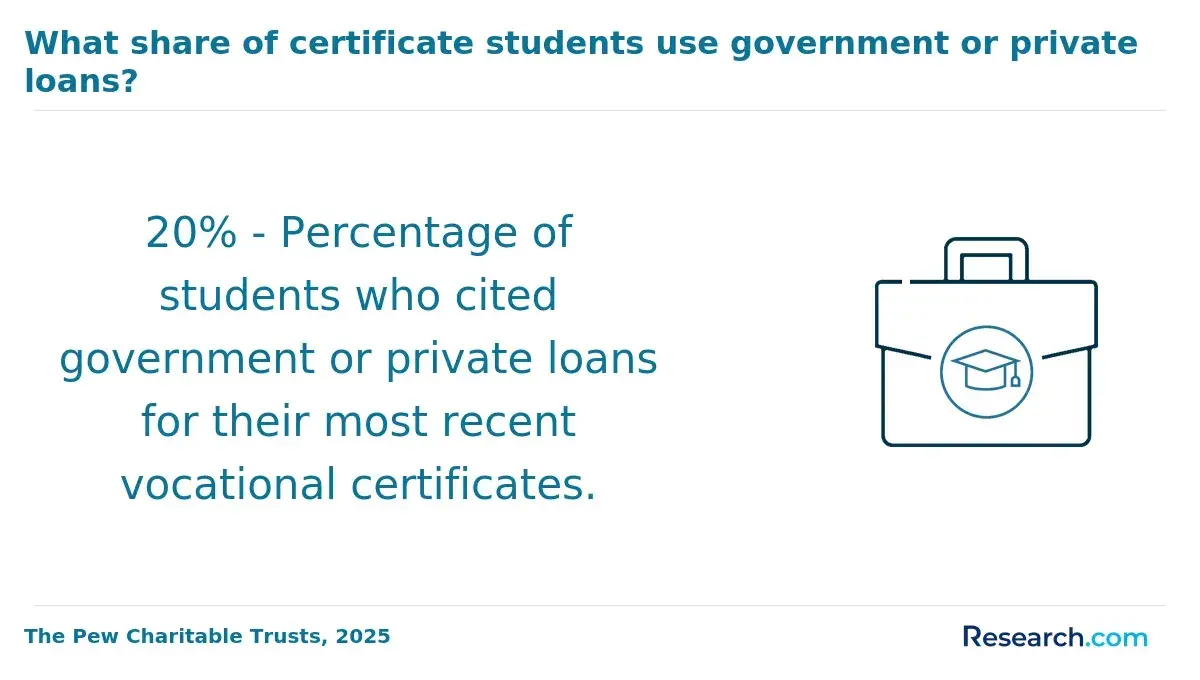
- Loan fees and interest if the student uses federal or private loans to cover remaining costs.
Federal Direct Loans also carry origination fees, which means the amount disbursed can be slightly less than the amount borrowed. That does not make loans bad, but it does mean students should compare grants, scholarships, employer reimbursement, and payment plans before borrowing for the full cost of attendance.
The best fee question to ask is direct: "What is the total required cost for the credits I still need, including tuition, mandatory fees, books, course materials, and graduation charges?" If the answer is only a per-credit tuition rate, keep asking.
How Does FAFSA and Federal Financial Aid Work for Online Fire Science Degree Programs?
FAFSA is the gateway to most federal student aid for eligible students in accredited online fire science degree programs. Online students generally use the same FAFSA process as campus students, as long as the school participates in federal Title IV aid and the student meets eligibility rules. Aid can include Pell Grants, federal loans, and work-study where available.
The FAFSA process changed with the recent aid-cycle redesign, including the replacement of the Expected Family Contribution with the Student Aid Index. For students, the practical point is that schools use FAFSA information to build an aid offer, but that offer may differ by enrollment intensity, dependency status, income, cost of attendance, and satisfactory academic progress.
Use these steps to estimate federal aid before committing to an online fire science program.
- Confirm the school participates in federal Title IV aid and that the specific online degree is aid-eligible.
- Submit the FAFSA using the school's federal code as early as possible for the aid year you plan to attend.
- Review the aid offer and separate grants and scholarships from loans, because grants usually do not require repayment while loans do.
- Check the enrollment level required for each aid amount, since half-time and full-time enrollment can produce different awards.
- Ask whether summer courses, accelerated terms, or competency-based terms affect disbursement timing.
- Compare the remaining balance after grants and scholarships, not just the total aid package.
The federal Pell Grant maximum has recently been $7,395, which can cover a large share of tuition at low-cost public or flat-rate online programs. However, Pell eligibility is need-based, not automatic, and students should not subtract the maximum amount from every school's price unless their aid offer confirms it.
This same financial aid logic applies across accredited online public-service degrees, whether a student is comparing fire science or an accelerated master's program social work: the key is whether the program is aid-eligible and what the student's net price becomes after grants and scholarships.
Which Scholarships, Grants, and Tuition Benefits Can Help Pay for an Online Fire Science Degree?
Scholarships, grants, tuition waivers, employer reimbursement, and union benefits can reduce the out-of-pocket cost of an online fire science degree. The best aid strategy is to combine broad federal aid with fire-service-specific funding and workplace benefits.
The table below summarizes common funding sources and the main question students should ask before relying on them.
| Funding source | Typical use | Key question to ask |
| Federal Pell Grant | Need-based undergraduate aid | What is my confirmed award after the FAFSA is processed? |
| State grants | Resident students attending eligible in-state or approved institutions | Does online enrollment qualify, and must I attend a state school? |
| Institutional scholarships | Merit, need-based, transfer, adult learner, or public safety awards | Is the scholarship renewable, and what GPA or credit load is required? |
| Firefighter association scholarships | Fire service members, dependents, volunteers, or emergency services workers | Does the award require active department membership or a specific career goal? |
| Employer tuition reimbursement | Working firefighters, inspectors, officers, dispatchers, or emergency services employees | Will reimbursement be paid upfront or only after completing the course? |
| Union or professional organization benefits | Members of qualifying labor or professional groups | Can the benefit be used at my chosen online school? |
| Military and veteran education benefits | Eligible service members, veterans, and dependents | How will the benefit interact with institutional discounts and federal aid? |
Grants and scholarships are usually the most valuable because they typically do not require repayment. Employer reimbursement can also be powerful, but students should confirm grade requirements, annual caps, required service commitments, and whether the employer pays before or after the course ends.
Students comparing public-service education options may notice that funding rules differ sharply by profession; for example, scholarship and grant planning for an MSW degree may emphasize field placement and licensure requirements, while fire science funding often depends on department affiliation, emergency services employment, or public safety membership.
Can Transfer Credits, Prior Learning, and Competency-Based Study Lower the Cost of an Online Fire Science Degree?
Transfer credit is one of the strongest cost-saving tools for online fire science students. Many students enter with community college coursework, fire academy training, emergency medical services training, military education, National Fire Academy coursework, professional certifications, or previous college credit. The more applicable credits a school accepts, the fewer credits the student must buy at the new tuition rate.
Before enrolling, request an official or preliminary transfer evaluation. The following questions can prevent expensive surprises.
- How many credits will transfer into the degree, not just into the university as electives?
- Will fire academy, EMT, paramedic, hazardous materials, incident command, or National Fire Academy training be evaluated for credit?
- Is there a maximum number of transfer credits allowed for the associate or bachelor's degree?
- How many credits must be completed at the institution because of residency requirements?
- Are portfolio assessment, prior learning assessment, CLEP, DSST, or challenge exams available, and what do they cost?
- Will transferred technical credits count toward major requirements or only general electives?
- Does the school require upper-division credits that cannot be replaced by academy or lower-division community college coursework?
Competency-based study can also lower costs when students already know the material and can move quickly, but it is not always available in fire science. When it is available, ask how subscription terms, pacing requirements, financial aid disbursement, and employer reimbursement interact.
The transfer-credit strategy is useful beyond fire science. Students comparing flexible adult-completion options, such as an administrative assistant associate degree, should use the same approach: confirm how many credits apply to the credential before comparing tuition rates.
How Should Students Compare the Net Price, Quality, and Return on Investment of Online Fire Science Degree Programs?
The best-value online fire science degree is the one that combines accredited status, manageable net price, relevant curriculum, transfer efficiency, student support, and credible career alignment. A cheaper program may be the right choice if it is accredited, accepted by your employer, and allows you to graduate without unnecessary debt. A more expensive program may be worth considering if it offers a stronger specialization, better transfer fit, or clearer pathway to your goal.
Use the table below to compare value factors that tuition alone does not capture.
| Decision factor | Why it matters | Better-value signal |
| Net price | Shows the cost after grants and scholarships | The school provides a written aid offer and estimated remaining balance. |
| Transfer acceptance | Can reduce the number of credits you must pay for | Major requirements, not just electives, are satisfied by prior coursework or training. |
| Curriculum fit | Fire science careers vary by operations, administration, investigation, prevention, and emergency management | Required courses match your promotion, inspection, leadership, or investigation goal. |
| Employer recognition | Departments may have education rules for promotion or pay incentives | Your agency confirms the degree and institution meet its requirements. |
| Student support | Working firefighters often need flexible scheduling and advising | The program offers online advising, predictable course rotation, and support for shift workers. |
| Completion risk | A low price is less valuable if courses are unavailable or credits do not apply | The school provides a term-by-term degree plan before enrollment. |
| Career alignment | Different roles value different knowledge areas | The program supports goals such as officer promotion, prevention, investigation, safety, or emergency services administration. |
Return on investment should be evaluated carefully. Fire science degrees may support advancement into roles such as fire officer, fire inspector, investigator, emergency services administrator, safety specialist, or emergency management-related positions, but hiring and promotion rules vary by agency, municipality, union contract, and state. The degree can strengthen qualifications, but it does not guarantee promotion, licensure, or a specific salary.
Before choosing, compare at least three accredited programs using the same net-price worksheet. Include tuition, fees, books, transfer credits, expected grants, scholarships, employer benefits, and borrowing. Students who are also considering broader, flexible majors can compare this process with guides to the most affordable online interdisciplinary studies programs, where transfer acceptance and degree customization often play a major role in final cost.
The biggest mistakes are choosing the lowest tuition without checking accreditation, ignoring mandatory fees, assuming all online programs qualify for FAFSA, overlooking residency rules, failing to confirm scholarship renewal requirements, and enrolling before receiving a transfer evaluation. Avoiding those mistakes can save more than a small difference in per-credit tuition.
Other Things You Should Know About Fire Science
It can be, especially when the institution is properly accredited and the curriculum matches the department's promotion or education requirements. Always ask your employer, civil service office, or target agency whether the specific school and degree are accepted.
Neither is automatically better. Fire science is usually more focused on fire behavior, prevention, investigation, fire protection, and department operations. Emergency management is broader and may fit students interested in disaster planning, homeland security, continuity, and public-sector coordination.
Sometimes. Schools may evaluate academy training, certifications, National Fire Academy coursework, EMT training, military education, or documented professional learning. The amount of credit depends on the institution's prior learning and transfer policies.
Many online fire science and fire administration programs are fully online, but some courses may require field-based projects, internships, proctored exams, or optional in-person experiences. Confirm all in-person requirements before enrolling, especially if you live out of state.
References
- Types of Financial Aid https://www.hhloans.com/types-of-financial-aid/
- Can I get financial aid for an online degree? | edX https://www.edx.org/resources/can-i-get-financial-aid-for-an-online-degree
- 2026 Most Affordable Online Fire Science Degrees https://www.onlineu.com/most-affordable-colleges/fire-science-degrees
- Fire Academy https://www.elcamino.edu/academics/divisions/kinesiology-athletics-and-public-safety/fire-academy/index.php
- Fire Science Technology - Human Services | Ozarks Technical Community College https://ozarkstech.edu/programs/human-services/fire-science-technology/
- Fire Science and Forestry Financial Aid | FireScience.org https://www.firescience.org/fire-and-forestry-scholarships/
- Federal Grants: Explore Your Online Education Aid Options https://www.oedb.org/federal-grant/
- Average In-State vs. Out-of-State Tuition [2025]: Cost Comparison https://educationdata.org/average-in-state-vs-out-of-state-tuition
- CFAI Commissioners - Center for Public Safety Excellence https://www.cpse.org/accreditation/accreditation/cfai-commissioners
- Fire Service Technology at CWI: Let's Get Started https://cwi.edu/academics/career-technical-education/fire-service-technology