2027 Regulatory Science & Affairs Degree Popularity by Gender, Region, and Degree Level

Co-Founder and Chief Data Scientist
A prospective student reviewing enrollment data for regulatory science & affairs programs in 2024 may notice strikingly uneven gender representation, with women accounting for nearly 65% of master's degree enrollees nationally but only 40% in certain southern states. Such disparities raise questions about regional industry demand, cultural influences, and access to specific degree levels, complicating the assessment of program quality and postgraduation opportunities.
For instance, higher enrollment in coastal regions may reflect stronger employer networks, skewing perceptions of career viability elsewhere. This divergence also suggests limitations in comparing peer experiences or workforce readiness uniformly across institutions. This article examines regulatory science & affairs degree popularity by gender, region, and degree level to clarify how these patterns affect educational choices and career planning.
Key Things to Know About Regulatory Science & Affairs Degree Popularity by Gender, Region, and Degree Level
- Women represent 62% of regulatory science & affairs enrollments in 2024, signaling growing gender diversification but also highlighting ongoing challenges in balancing career advancement with family responsibilities in a demanding sector.
- North American programs show 40% higher graduate employment rates, reflecting employer preference for region-specific regulatory training critical in complex compliance environments, which may disadvantage international graduates lacking local accreditation.
- Master's degree enrollments increased 25% since 2022, indicating preference for advanced credentials; however, higher tuition and time commitments create barriers for mid-career professionals, affecting workforce entry timing and financial planning.
- Key Things to Know About Regulatory Science & Affairs Degree Popularity by Gender, Region, and Degree Level Key Things to Know About Regulatory Science & Affairs Degree Popularity by Gender, Region, and Degree Level
- How Does Job Market Demand Influence Regulatory Science & Affairs Degree Popularity? Market Demand and Degree Popularity
- How Does Online Regulatory Science & Affairs Degree Enrollment Compare to Traditional Campus Programs? Online vs. Campus Enrollment
- What Degree Level Is Most Common Among Regulatory Science & Affairs Students? Most Common Degree Levels
- How Do Enrollment Trends Differ Between Associate, Bachelor's, Master's, and Doctoral Regulatory Science & Affairs Degrees? Enrollment Trends by Degree Level
- How Popular Is the Regulatory Science & Affairs Degree Compared to Other College Majors? Degree Popularity vs. Other Majors
- Why Is the Regulatory Science & Affairs Degree More Popular in Certain States and Regions? Regional Popularity Drivers
- What Demographic Groups Are Driving Growth in Regulatory Science & Affairs Degree Programs? Growth by Demographic Groups
- What Is the Future Outlook for Regulatory Science & Affairs Degree Enrollment by Gender, Region, and Degree Level? What Is the Future Outlook for Regulatory Science & Affairs Degree Enrollment by Gender, Region, and Degree Level?
- How Have Regulatory Science & Affairs Degree Enrollment Trends Changed Over the Past Decade? How Have Regulatory Science & Affairs Degree Enrollment Trends Changed Over the Past Decade?
- Where Is the Regulatory Science & Affairs Degree Most Popular Across the United States? Geographic Popularity Analysis
How Does Job Market Demand Influence Regulatory Science & Affairs Degree Popularity?
Employer demand within pharmaceuticals and biotechnology has a nuanced impact on regulatory science & affairs degree labor market trends in North America, directly influencing enrollment shifts but reflecting broader operational realities. For instance, regions like California's Bay Area and the Boston metropolitan area, with dense life sciences hubs, consistently demonstrate elevated program participation fueled by industry concentration and specialized credential needs.
Yet, this localized demand can accentuate gender disparities in participation where occupational roles differ by sector or where employers emphasize advanced qualifications, often prompting more graduate-level enrollments that align closely with stringent regulatory requirements.
However, the impact of job demand on regulatory science & affairs degree enrollment is not uniformly immediate or proportional; many employers value practical experience and certifications alongside or even in place of formal degrees, which can moderate program growth despite positive labor forecasts. Enrollment responsiveness also varies by region due to economic conditions and education infrastructure, creating uneven participation patterns that reflect both opportunity and access.
Prospective students evaluating degree relevance should consider these dynamics alongside emerging occupational trends and credential expectations, particularly when exploring program options such as FAFSA approved online colleges, which may offer flexible pathways responding to these complex workforce signals.
How Does Online Regulatory Science & Affairs Degree Enrollment Compare to Traditional Campus Programs?
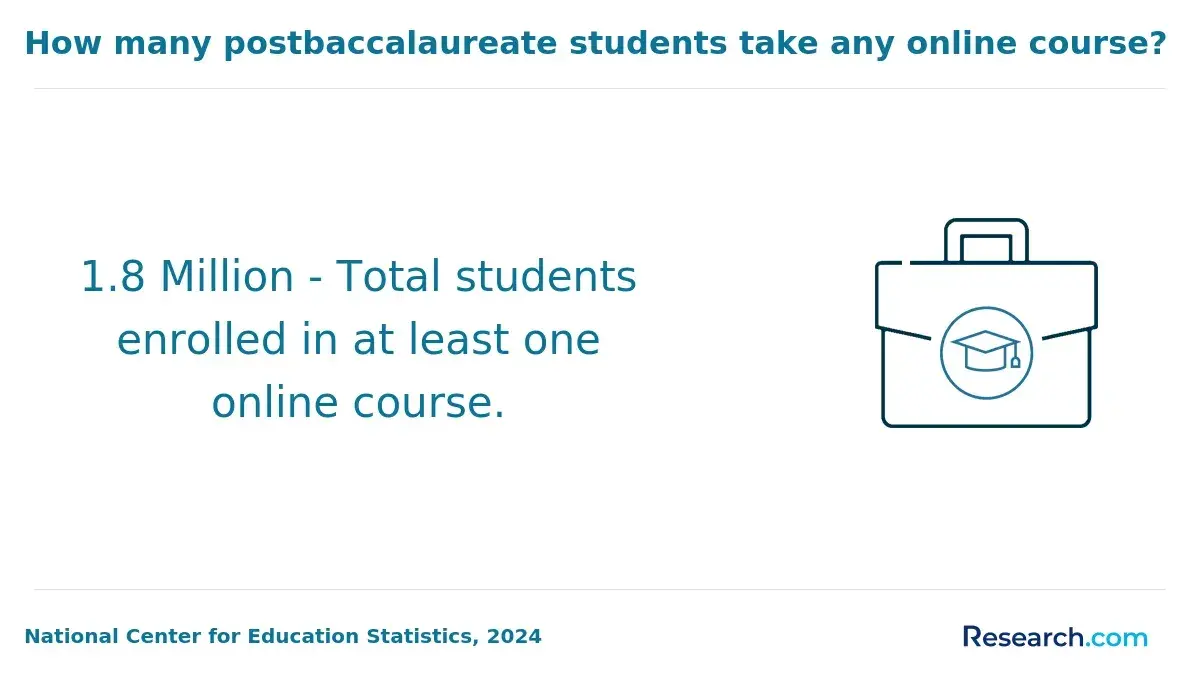
Online regulatory science & affairs programs are reshaping enrollment patterns by drawing a predominantly older, working adult demographic largely absent from traditional campus classrooms. Recent national data from the National Center for Education Statistics shows online offerings have grown annually by 12% over the last three years, a rate triple that of their on-campus counterparts. This surge reflects how online programs reduce geographic and scheduling barriers, particularly benefiting students in rural or underserved areas who would otherwise lack access to specialized regulatory education.
However, this accessibility often coincides with higher part-time enrollment and extended degree completion timelines compared to campus students, who typically engage in more immersive, cohort-based learning environments fostering direct networking and employer connections.
These distinctions influence how prospective students weigh tradeoffs between convenience and experience depth. While campus programs maintain an advantage in facilitating hands-on training and industry-aligned mentorship, online models offer flexibility to meet non-traditional learners' complex responsibilities.
Employers generally recognize accredited degrees from both formats, but many also consider practical exposure gained through campus labs or internships critical when assessing candidates. Consequently, the modality choice can substantially affect not only enrollment figures but also student engagement, retention, and eventual labor market outcomes within regulatory science & affairs fields.
What Degree Level Is Most Common Among Regulatory Science & Affairs Students?
Master's degree programs dominate enrollment within regulatory science & affairs, reflecting workforce demands for advanced technical knowledge and leadership skills. Data from the National Center for Education Statistics and IPEDS for 2023-2024 show that over half of students in this field pursue master's degrees, driven by employer preferences for candidates with comprehensive expertise suitable for mid- and senior-level roles.
This concentration highlights a practical reality: many professionals view the master's credential as essential to accessing the full spectrum of regulatory positions, especially those involving complex compliance and policy responsibilities.
Bachelor's degrees serve primarily as entry points, catering to those new to the discipline or shifting career directions, but they represent a smaller share of total enrollment. Associate programs, while offering quicker pathways, tend to prepare students for more limited technical roles and account for less than 10% of the student body, reflecting their narrower scope and fewer advancement opportunities.
Doctoral programs remain specialized and rare, typically attracting students focused on research or high-level policy development, which limits their overall enrollment despite their importance to academic and regulatory innovation.
Shifts toward online and hybrid formats are expanding access, particularly at the master's level, supporting working professionals' participation and maintaining this degree's central role. Regional industry concentrations and institutional offerings further influence enrollment patterns, with metropolitan areas showing stronger master's program engagement.
For current and prospective students, this distribution underscores the necessity of aligning educational choices with long-term career objectives and sector-specific expectations, balancing accessibility, depth of training, and intended professional outcomes.
How Do Enrollment Trends Differ Between Associate, Bachelor's, Master's, and Doctoral Regulatory Science & Affairs Degrees?
Enrollment patterns in regulatory science & affairs degrees reveal critical distinctions tied to career objectives and institutional reach. Associate programs maintain steady but limited enrollment, largely serving students aiming for entry-level technical roles; their shorter duration and accessibility at community colleges reduce barriers, attracting a demographic less inclined toward prolonged study.
In contrast, bachelor's degrees act as a foundational platform with more balanced gender representation, particularly reflecting regional variations where Northeastern and Western states register higher female participation. These differences underscore how regional and demographic factors influence the choice of degree level in regulatory science & affairs and inform educational planning accordingly.
Master's programs exhibit the fastest enrollment growth, rising by 15% from 2022 to 2024 as reported by the National Center for Education Statistics, driven by employer demand for advanced expertise to manage complex regulatory challenges in sectors like pharmaceuticals and biotechnology. This level often attracts mid-career professionals seeking updated credentials, highlighting the program's role in workforce upskilling amid increasing regulatory complexity.
Meanwhile, doctoral enrollments remain niche but vital, concentrating on research and policy leadership with older, experienced candidates who accept longer timeframes and higher resource commitments. Prospective students weighing long-term prospects should consider these dynamics alongside options such as affordable online master's programs that balance accessibility with advancement potential in regulatory science & affairs.
How Popular Is the Regulatory Science & Affairs Degree Compared to Other College Majors?
The limited enrollment in regulatory science & affairs programs, representing less than 1% of all college majors according to 2024 NCES data, signals a degree with highly specialized appeal rather than widespread academic popularity. Compared to related fields like health sciences or public administration, which graduate students in the tens of thousands annually, regulatory science & affairs remains a niche offering, often concentrated in graduate programs tied to industries with complex regulatory demands, such as pharmaceuticals and biotechnology.
This constrained scale affects program availability and peer network size, potentially limiting geographic mobility and collaborative opportunities despite growing interest driven by increasing regulatory oversight and product compliance challenges.
Gender representation in these programs tends to skew female, reflecting broader trends seen in life sciences disciplines, and enrollment clusters regionally around biotech hubs like the Northeast and California. While upward trends in graduate completions suggest emerging recognition of regulatory roles, the degree's focused nature means it is unlikely to surpass more general fields in enrollment volume soon.
Prospective students must weigh the specialized expertise and stable workforce demand against the tradeoffs of smaller cohorts and fewer institutional options, particularly given the practical realities of employer expectations and sector-specific career pathways.
Why Is the Regulatory Science & Affairs Degree More Popular in Certain States and Regions?
Regional demand for regulatory science & affairs degrees correlates strongly with the density of life sciences industries and institutional anchors. For instance, states like California, Massachusetts, and Maryland-with significant biotech, pharmaceutical, and FDA-related activity-account for nearly 40% of all graduates nationwide. This concentration impacts not only enrollment rates but also shapes student decisions regarding program selection, as local availability reduces barriers related to relocation and tuition costs.
Students in these regions can leverage richer professional networks and internship opportunities, which tend to enhance job placement and perceived degree value compared to areas with sparse industry presence, illustrating how regulatory science & affairs degree demand by state reflects workforce integration.
The presence and expansion of comprehensive regulatory science programs, especially those offering flexible online options, influence regional enrollment patterns and accessibility. Massachusetts exemplifies how educational infrastructure linked to a biotech cluster supports a continuous pipeline of skilled professionals, enabling tailored workforce development that aligns with state economic priorities.
Additionally, metropolitan areas with higher incomes and healthcare investments create wage premiums that improve employment outcomes for graduates, reinforcing the appeal of these programs in concentrated hubs. Such regional trends in regulatory science & affairs education also reflect demographic factors, including varying STEM engagement and gender representation, which further inform student outreach and retention strategies within states.
Given the evolving landscape of remote learning, prospective students must evaluate how geographic factors intersect with program delivery formats and employer expectations, balancing access with on-the-ground networking quality. Understanding these dynamics assists candidates in choosing programs that maximize practical career returns while navigating disparities in regional opportunity and workforce demand.
For those exploring specialized graduate studies, reviewing comparative offerings such as the best data science master's programs may offer additional insights into program value and accessibility beyond regulatory science & affairs. Such informed decision-making is critical for aligning educational investment with realistic career pathways.
What Demographic Groups Are Driving Growth in Regulatory Science & Affairs Degree Programs?
Enrollment surges in Regulatory Science & Affairs degree programs stem largely from shifting workforce demands for specialized expertise in biopharmaceutical and medical device compliance. Women, who now represent about 65% of graduates according to the National Center for Education Statistics in 2024, are reshaping cohort dynamics and program cultures, reflecting broader trends in STEM fields and healthcare professions.
This gender imbalance influences peer networks and may prompt curriculum adjustments to address varied professional interests and career goals, while signaling employers' growing emphasis on diverse talent for innovation in regulatory environments.
Geographic concentrations of program growth align closely with established life science hubs such as Massachusetts, California, and Maryland, where proximity to regulatory agencies and industry clusters creates clear pipelines into employment. These regional trends affect recruitment strategies and internship availability, reinforcing the advantage of studying in areas with dense biomedical ecosystems.
At the degree level, master's programs are expanding more rapidly than bachelor's, increasing about 20% in completions since 2021, a reflection of working professionals prioritizing flexible, practice-oriented credentials over longer doctoral paths. This growth among mid-career and online learners underscores the need for adaptable program delivery that accommodates busy schedules and employer expectations for immediately applicable skills.
What Is the Future Outlook for Regulatory Science & Affairs Degree Enrollment by Gender, Region, and Degree Level?
Enrollment in regulatory science & affairs degree programs is poised for measured but steady growth, largely shaped by shifting demographic representation and regional labor market demands. Analysis from the National Center for Education Statistics projects an approximate 4% annual increase through 2030, driven by surging activity in pharmaceutical and biotechnology sectors.
This growth will depend significantly on expanding access to graduate-level education, as employers increasingly prioritize master's credentials for roles with greater regulatory responsibility and compensation, particularly in compliance-heavy environments.
Gender balance within these programs is evolving, with male enrollment rising at the graduate level even as women historically composed the majority of students. This trend reflects institutional efforts to diversify traditionally female-dominated professional master's pathways aimed at mid-career professionals and career changers. Regionally, North America and Western Europe remain strongholds of enrollment due to regulatory modernization and industry concentration.
Meanwhile, Asia-Pacific, especially China and India, is experiencing rapid uptake aligned with maturing regulatory infrastructures and multinational investment, contrasting with slower growth in less developed regions with limited education offerings.
The predominance of master's enrollment growth signals practical tradeoffs for applicants: advanced degrees facilitate access to specialized roles but may involve higher costs and time commitments, balancing career interruption risks against longer-term employability gains.
Online program availability partially offsets these barriers, accommodating working professionals' needs. Prospective students should weigh how regional factors, degree level demands, and shifting gender demographics collectively influence program availability, career trajectories, and workforce integration in regulatory science & affairs fields.
How Have Regulatory Science & Affairs Degree Enrollment Trends Changed Over the Past Decade?
The upward trajectory in regulatory science & affairs degree enrollment over the last decade signals a shifting workforce demand that is especially pronounced in regions with strong pharmaceutical and biotech sectors, such as California, Massachusetts, and North Carolina. These states have seen growth not only in traditional degree programs but also in online and hybrid formats that increase accessibility for working professionals.
Gender dynamics have also evolved, narrowing the enrollment gap with female participation rising toward parity, a shift that reflects broader STEM diversification trends and shapes expectations around inclusivity and talent pipelines in the regulatory workforce. These demographic and regional shifts complicate straightforward evaluations of program relevance, as expanding access sometimes coexists with uneven program quality and variable employer demand across geographies.
Degree completions reveal a different dimension of enrollment changes, with master's level graduations increasing more rapidly than bachelor's, underscoring employers' growing preference for advanced credentials in navigating complex regulatory frameworks. However, this emphasis on higher degrees involves tradeoffs, where the added time and financial investment may not uniformly yield better employment outcomes, especially in saturated markets.
Prospective students weighing regulatory science & affairs degree enrollment trends in the United States should consider programs' industry connections and practical training alongside credential levels, given that experience and certification often compete with or complement academic qualifications. Understanding these nuances prepares students and graduates to evaluate their educational pathways more critically, avoiding assumptions that degree popularity alone translates to career success.
For those exploring regulatory science as a strategic educational choice, it is useful to compare this field's growth with related areas such as an environmental science degree, where program demand and workforce integration may differ significantly. The expanding regulatory environment has increased demand, but prospective enrollees need to balance enrollment trends against labor market scenarios, selecting programs that align with emerging compliance challenges to optimize long-term employability and career mobility.
Where Is the Regulatory Science & Affairs Degree Most Popular Across the United States?
The regional popularity of regulatory science and affairs degrees in the United States aligns closely with the presence of specialized industries and educational institutions capable of offering relevant, rigorous programs. States like California, Maryland, and Massachusetts illustrate how concentrated biotech, pharmaceutical, and medical device sectors drive enrollment through workforce demand and targeted public-private educational partnerships.
This clustering means prospective students often weigh local industry strength and networking possibilities as much as program reputation when deciding where to study, recognizing that geographic concentration enhances access to internships, job pipelines, and experiential learning opportunities essential for long-term employment outcomes.
Metropolitan areas such as Boston, San Diego, and Washington D.C. reflect this dynamic, where the intersection of research institutions and healthcare technology firms fosters both enrollment spikes and career-relevant specialization. The regional popularity of regulatory science and affairs degrees in these hubs also shows demographic patterns influenced by urban growth and industry migration, which further shapes labor market supply and demand.
Conversely, regions lacking robust healthcare or life sciences industries tend to have fewer degree completions, limiting local professional opportunities and presenting practical challenges for graduates seeking to remain in those areas.
Enrollment at the master's level dominates due to its blend of specialized regulatory knowledge and professional advancement potential, reinforcing the importance of integrated educational infrastructure. Students evaluating programs may find comparative value in those institutions that embed regulatory science within broader life sciences or health policy frameworks.
For alternatives emphasizing flexible or online formats, resources such as online MLIS programs accredited ALA offer a model for balancing accreditation and accessibility while meeting industry expectations.
References:
- Regulatory Science Program https://c-path.org/program/regulatory-science-program/
- Navigating the Regulatory Landscape: Key Trends Shaping Today's Regulatory Affairs Environment https://www.ijdra.com/index.php/journal/article/view/639
- Centre for Innovation in Regulatory Science | CIRS https://cirsci.org/
- Online Master’s in Regulatory Science and Affairs Degree Programs https://www.onlineeducation.com/healthcare/masters-in-regulatory-science-affairs-programs
- Pharmaceutical Regulatory Affairs: An Overview of Global Regulatory Frameworks and Emerging Trends https://www.ijsrtjournal.com/article/Pharmaceutical+Regulatory+Affairs+An+Overview+of+Global+Regulatory+Frameworks+and+Emerging+Trends
- How to get a job in regulatory affairs | Proclinical Recruitment Blogs https://www.proclinical.com/blogs/2021-2/how-to-get-a-job-in-regulatory-affairs
- How to Become a Regulatory Affairs Specialist - Education & Certification https://www.mhaonline.com/faq/how-do-i-become-a-regulatory-affairs-specialist
- Current Trends and Perspectives in Pharmaceutical Regulatory Affairs https://www.ijpsjournal.com/article/Current+Trends+and+Perspectives+in+Pharmaceutical+Regulatory+Affairs
- Regulatory affairs https://www.abpi.org.uk/careers/working-in-the-industry/research-and-development/regulatory-affairs/
- Regulatory Science and the FDA | Triangle CERSI https://trianglecersi.org/regulatory-science
Other Things You Should Know About Regulatory Science & Affairs
Gender balance in regulatory science & affairs programs varies by region and degree level, often reflecting broader industry patterns. Programs with higher female enrollment may foster collaborative and supportive learning environments but could also face stereotypes influencing expectations and opportunities. Prospective students should consider how gender dynamics might affect classroom interaction, mentorship availability, and professional networking within their chosen program, prioritizing those that demonstrate inclusivity and equitable career support over raw enrollment statistics.
Regional popularity of regulatory science & affairs degrees often aligns with concentrations of pharmaceutical, biotech, and healthcare industries. Choosing a program in a region with strong industry presence increases internship and employment opportunities but may come with higher competition and cost of living. Students should balance the benefit of proximity to employers against potential saturation in the local job market, and may find that programs in emerging regions offer unique chances to impact growing regulatory sectors.
Higher degree levels in regulatory science & affairs generally correspond with increased specialization and research demands, which translate to more intensive academic workloads. Employers often expect master's and doctoral graduates to handle complex regulatory challenges and leadership roles, while bachelor's holders might focus on entry-level compliance tasks. Students must weigh the workload and time commitment of advanced degrees against their career targets and readiness for specialized responsibilities.
While both degree level and program location significantly affect career trajectories, prioritizing degree level often yields clearer long-term gains in expertise and advancement potential. Regional factors influence immediate access to internships and jobs, but a higher-level degree can provide greater flexibility to work across regions or assume leadership positions. Students aiming for senior roles or specialized regulatory functions should focus on the rigor and reputation tied to degree level, with regional aspects shaping practical entry points into the industry.