2027 Accredited Online Health Services Degree Programs for Working Adults: Flexible, Part-Time, and Self-Paced Options

Co-Founder and Chief Data Scientist
Choosing an online health services degree is often a scheduling decision as much as an academic one. Working adults need accredited programs that fit jobs, caregiving, and career goals without sacrificing credibility. The demand is timely: the U. S. Bureau of Labor Statistics projects employment for medical and health services managers to grow 23% from 2024 to 2034, much faster than average. This guide explains accreditation, flexible formats, admissions, cost, transfer credits, timelines, and career paths so you can compare programs by fit, value, and realistic workload.
Key Things You Should Know
- Accreditation is the first filter: choose a school with recognized institutional accreditation, then check whether the health services, health administration, public health, or health information curriculum aligns with your career goal and any state or employer requirements.
- Flexible does not mean effortless: a part-time online bachelor's program often takes 4 to 6 years, while full-time study may require 12 to 18 hours of coursework each week; transfer credits can shorten the path substantially if the school accepts prior college, military, certification, or exam-based credit.
- Cost varies widely, so compare total program price instead of tuition alone; for context, College Board's 2024 data lists average published in-state tuition and fees at public four-year colleges at $11,610 for 2024-25, before grants, employer aid, books, technology fees, and transfer-credit savings.
What Is an Accredited Online Health Services Degree Program and Why Does Accreditation Matter?
An accredited online health services degree program is a college degree delivered primarily through distance learning and focused on the organization, delivery, quality, financing, and administration of healthcare services. Depending on the school, the degree may be called health services administration, healthcare administration, health sciences, health information management, health services management, or public health with a healthcare management concentration.
For working adults, accreditation matters because it affects transfer credits, federal financial aid eligibility, employer tuition reimbursement, graduate school admission, and professional credibility. Institutional accreditation means the college or university has been reviewed by an accrediting agency recognized by the U.S. Department of Education or the Council for Higher Education Accreditation. Programmatic accreditation is separate and applies to specific fields or degrees.
The table below summarizes the main accreditation checks. Use it to separate baseline legitimacy from program-specific quality signals.
| Accreditation or quality check | What it tells you | Why it matters for working adults |
| Institutional accreditation | The college meets broad academic, financial, and student-support standards. | Usually required for federal aid, transfer credit review, employer reimbursement, and graduate admission. |
| Programmatic accreditation | A specific program has been reviewed by a field-related accreditor, when available. | Can matter for certain health administration, public health, nursing, or health information pathways. |
| State authorization | The school is allowed to enroll online students from your state. | Important if you live outside the school's home state or plan to complete a field experience locally. |
| Licensure alignment | The curriculum may or may not meet requirements for regulated roles. | Critical if your goal involves licensure, certification, or a clinical credential rather than general healthcare administration. |
A common mistake is assuming that "online" or "nationally known" automatically means a program is recognized for your goal. Before applying, verify the school's accreditation status in official accreditor databases, ask whether the program has field-specific accreditation, and confirm that your state is eligible for online enrollment.
Health services degrees are generally nonclinical or management-oriented, so they do not automatically qualify graduates for licensed clinical jobs such as registered nurse, nurse practitioner, physical therapist, or physician assistant. If your goal is clinical practice, compare the degree carefully against licensure requirements before enrolling.
Which Flexible Health Services Degree Formats Are Best for Working Adults: Part-Time, Full-Time, or Self-Paced?
The best format depends on how predictable your schedule is, how quickly you want to finish, and how much structure you need to stay on track. Working adults usually compare three options: full-time online study, part-time online study, and self-paced or competency-based learning.
The table below compares common online formats by schedule, workload, and best-fit student profile. This helps you avoid choosing a program that sounds flexible but conflicts with your actual week.
| Format | Typical structure | Best fit | Trade-off |
| Full-time online | Often 12 or more credits per term with weekly deadlines. | Students who can protect consistent study time and want a faster path. | Harder to sustain with overtime, shift work, or heavy family responsibilities. |
| Part-time online | Usually 1 to 2 courses per term. | Full-time workers who need a steadier pace and lower weekly workload. | Longer time to completion and potentially more terms of fees. |
| Asynchronous online | No required weekly live class meetings, but assignments still have due dates. | Adults with changing work hours or caregiving obligations. | Requires strong self-management because the program may not remind you daily. |
| Synchronous online | Live virtual classes at scheduled times. | Students who want interaction, structure, and real-time discussion. | Less convenient for rotating shifts or time-zone conflicts. |
| Self-paced or competency-based | Students move through material faster or slower within school-defined limits. | Experienced adults with prior knowledge, strong motivation, and irregular schedules. | Not every course may be self-paced, and financial aid pacing rules can be different. |
If you are comparing self paced colleges, look beyond the marketing language. Some programs allow acceleration only within a term, while others allow broader competency-based progress after you demonstrate mastery.
Use these steps to choose a format based on your real life rather than the fastest advertised completion time:
- Map your weekly schedule for two normal workweeks, including commute time, caregiving, sleep, and recurring obligations.
- Ask the program how many hours per week students typically spend per course, not just how many credits the course carries.
- Check whether lectures are recorded, whether live sessions are required, and whether group projects require evening meetings.
- Ask what happens if you need to pause for a term because of work, health, deployment, or family responsibilities.
- Choose the format that you can complete consistently, even during a difficult month.
A self-paced option can be excellent if you are disciplined and already understand healthcare operations, billing, compliance, or data systems. It may be a poor fit if you rely on weekly instructor prompts, need frequent discussion, or tend to postpone open-ended work until deadlines become urgent.
What Are the Admission Requirements for Accredited Online Health Services Degree Programs?
Admission requirements vary by degree level, but accredited online health services programs are usually designed to evaluate academic readiness, prior college work, and career fit. Bachelor's programs may admit first-year students or transfer students, while master's programs usually require a completed bachelor's degree.
The table below outlines typical requirements by degree level. It is not a substitute for a school's official admissions policy, but it shows what working adults should prepare before contacting admissions.
| Degree level | Common admission requirements | Working-adult considerations |
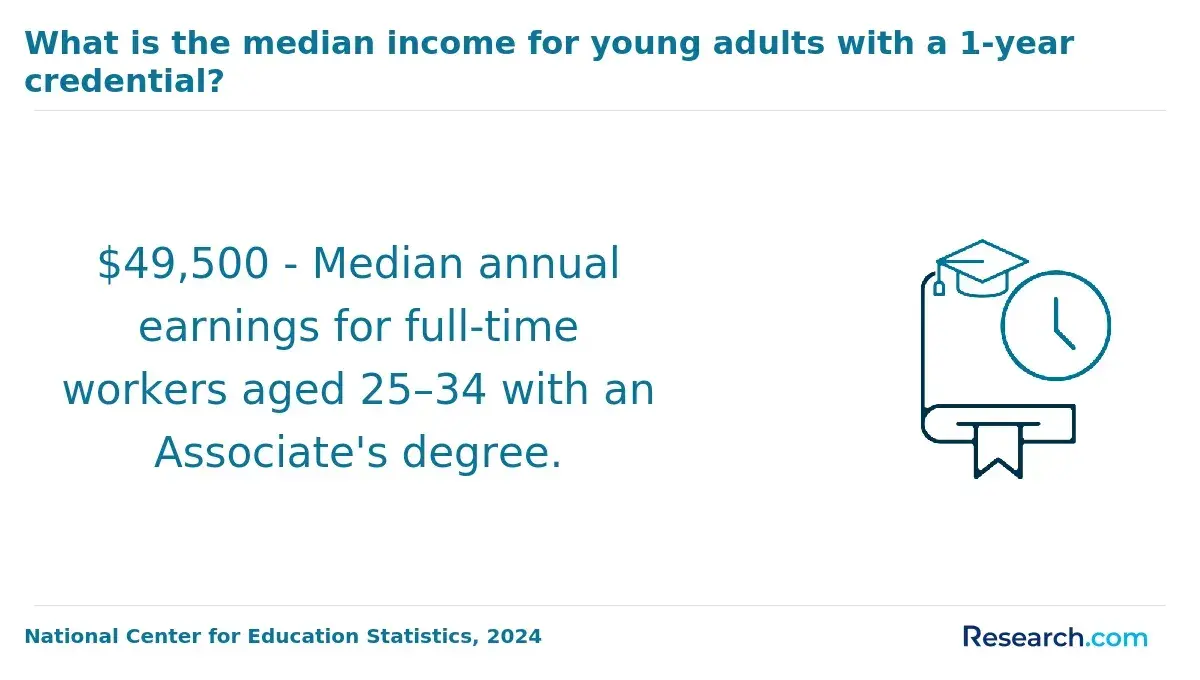
| Associate degree | High school diploma or equivalent, placement requirements, transcripts. | Useful for entry-level healthcare office, records, billing, or transfer pathways. |
| Bachelor's degree | High school or college transcripts, minimum GPA, transfer-credit evaluation, sometimes a personal statement. | Often the main credential for healthcare administration, operations, and supervisory roles. |
| Bachelor's completion program | Prior college credits, minimum transferable credits, prerequisite coursework. | Good fit for adults with unfinished credits who want a faster path to a bachelor's degree. |
| Master's degree | Bachelor's degree, resume, statement of purpose, recommendations, sometimes healthcare experience. | Best for advancement into management, policy, analytics, or leadership roles. |
Some adults start with a narrower credential before moving into a broader bachelor's program. For example, a health information management associate degree online may make sense if your immediate goal is medical records, coding, revenue cycle, or data-focused healthcare work before pursuing a management degree.
Before applying, gather the documents and policy details that most often delay adult learners:
- Official transcripts from every college you attended, even if you withdrew or earned low grades.
- Documentation for military training, industry certifications, continuing education, or standardized exams that may be evaluated for credit.
- A written transfer-credit estimate showing which credits apply to the major, general education, electives, and graduation total.
- Any prerequisite requirements in statistics, anatomy, healthcare terminology, accounting, or information systems.
- State authorization confirmation if you live outside the school's home state.
One red flag is an admissions process that rushes you to enroll before completing a transcript review. For working adults, transfer evaluation can change the cost, timeline, and even the best program choice, so request it early and in writing.
How Much Does an Online Health Services Degree Cost, and What Financial Aid Options Are Available?
The cost of an online health services degree depends on tuition, fees, transfer credits, residency status, course load, books, technology, and whether you attend a public, private nonprofit, or for-profit institution. Online programs may save commuting and relocation costs, but they are not automatically cheaper.
For a national benchmark, College Board reported average published in-state tuition and fees of $11,610 at public four-year institutions for 2024-25. That figure is only a starting point: online program pricing may be charged per credit, per term, or through a flat-rate subscription model, and net price can drop after grants, scholarships, employer benefits, and transfer credits.
- Tuition: usually charged per credit, per course, per term, or through a competency-based subscription period.
- Mandatory fees: may include technology, online learning, graduation, library, transcript, or proctoring fees.
- Course materials: health services courses may require textbooks, case-study platforms, statistics tools, or exam software.
- Field experience costs: practicum courses can add background checks, immunizations, liability insurance, or transportation expenses.
- Time cost: a lower tuition program may be less valuable if poor transfer policies add extra semesters.
Financial aid can make the difference between enrolling now and waiting. The maximum Federal Pell Grant for the 2024-25 award year is $7,395, which can materially reduce out-of-pocket costs for eligible undergraduate students but may not cover the full cost of attendance.
Working adults should compare aid options in a practical order:
- Submit the FAFSA if the school participates in federal student aid and you are eligible.
- Ask your employer about tuition assistance, reimbursement, preferred school partnerships, or workforce development funds.
- Request scholarship lists for adult learners, healthcare employees, military-affiliated students, first-generation students, and transfer students.
- Compare net price after grants and scholarships, not just the advertised tuition rate.
- Borrow only after estimating monthly repayment and considering whether the degree supports a realistic career move.
If you are comparing healthcare administration with advanced nursing pathways, be careful not to compare unlike credentials. Resources on cheapest MSN to DNP programs can be useful for nurses evaluating doctoral clinical or leadership routes, but a health services degree usually serves a broader administrative, operations, or policy audience.
How Long Does It Take to Complete an Online Health Services Degree, and Can Transfer Credits Help You Graduate Faster?
Completion time depends on starting credits, course load, term length, transfer policy, and whether the program is cohort-based or individually paced. A traditional bachelor's degree is commonly designed around 120 credits, but many working adults enter with prior credits that reduce the remaining requirement.
The table below shows common timeline scenarios. Use it as a planning guide, then ask each school for a personalized degree audit before deciding.
| Student scenario | Typical pace | Possible completion pattern | Key risk |
| First-time bachelor's student | Full-time | About 4 years if continuously enrolled. | Work and family demands may make full-time study difficult to sustain. |
| First-time bachelor's student | Part-time | Often 5 to 6 years or longer, depending on credits per term. | Longer timelines can increase total fees and burnout risk. |
| Transfer student with substantial credits | Part-time or full-time | May finish faster if credits apply directly to degree requirements. | Credits may transfer as electives instead of satisfying major or general education requirements. |
| Competency-based student | Self-paced within term limits | Can accelerate if the student already knows the material and completes assessments quickly. | Progress can stall without strong independent study habits. |
Transfer credit is one of the most important value levers for adult learners. A school that accepts more credits is not always better; what matters is how many credits apply to the degree you are actually pursuing.
Ask these transfer-credit questions before enrolling:
- What is the maximum number of transfer credits accepted into the program?
- How many of my credits will apply to major requirements rather than free electives?
- Is there an expiration policy for science, technology, statistics, or healthcare coursework?
- Does the school evaluate military training, professional certifications, prior learning portfolios, CLEP, DSST, or AP exams?
- Will I receive a written degree plan showing remaining courses, estimated terms, and total credits left?
The most common mistake is assuming that "90 credits accepted" means only 30 credits remain. In many programs, residency requirements, upper-division major courses, and general education rules can still add time.
What Should You Look for When Comparing Accredited Online Health Services Degree Programs?
Comparing accredited online health services degree programs requires more than checking tuition and course names. The best choice is the program that combines recognized accreditation, realistic scheduling, strong transfer policies, relevant curriculum, transparent costs, and support services that match your life.
The table below summarizes comparison factors that affect value and completion. It is designed to help you identify strengths and weaknesses quickly before speaking with admissions.
| Comparison factor | What strong programs clarify | Red flag |
| Accreditation | Institutional accreditation and any relevant programmatic accreditation are easy to verify. | The school avoids naming the accreditor or uses vague claims like "fully recognized" without documentation. |
| Scheduling | Course format, live-session rules, assignment deadlines, and term length are clearly explained. | "Flexible" is advertised, but required meetings or group work are not disclosed until after enrollment. |
| Curriculum | Courses align with healthcare finance, law, ethics, quality improvement, data, leadership, and operations. | The curriculum is too general and lacks healthcare-specific content. |
| Transfer policy | The school provides a written credit evaluation before enrollment. | Admissions gives only a verbal estimate or delays evaluation until after you commit. |
| Career fit | The program explains career paths, employer connections, internships, and graduate options. | Career outcomes are vague or rely on broad salary claims without role-specific context. |
| Total cost | Tuition, fees, books, technology, and practicum costs are disclosed. | The school highlights low tuition but hides mandatory fees. |
Use this short evaluation process before you submit an enrollment deposit:
- Verify accreditation through an official accreditor or federal database, not only the school website.
- Request a sample course schedule and confirm whether classes are asynchronous, synchronous, hybrid, or self-paced.
- Ask for a written transfer-credit review and total remaining credit count.
- Compare net cost after aid, employer benefits, and transfer credits.
- Review student support hours to confirm they work for evenings, weekends, or different time zones.
- Ask what percentage of online health services courses are taught by full-time faculty, adjunct faculty, or industry professionals.
- Confirm whether the program prepares students for optional certifications or graduate study, if those matter to your goals.
Working adults should avoid choosing a program solely because it is fastest. Acceleration is valuable only if the school is accredited, the curriculum is relevant, the workload is realistic, and the credential is recognized by employers or graduate programs in your target field.
What Career Opportunities and Salary Potential Can You Expect With a Health Services Degree?
A health services degree can support roles in healthcare administration, operations, patient services, compliance, health information, quality improvement, community health, insurance, and care coordination. It is especially relevant for adults who already work in healthcare and want to move from frontline, clerical, or technical work into supervisory or administrative roles.
Salary potential depends on role, location, experience, degree level, employer type, and whether the job requires specialized credentials. The U.S. Bureau of Labor Statistics reported a median annual wage of $117,960 for medical and health services managers in May 2024. That figure represents a management occupation, not an automatic outcome for every graduate, but it shows why many adults view healthcare administration as a long-term advancement path.
The table below connects common health services career paths with typical responsibilities. It can help you decide whether you want a people-management, data, compliance, or operations-focused role.
| Career path | Typical responsibilities | Useful strengths |
| Healthcare operations coordinator | Scheduling, workflow tracking, vendor coordination, staff support, service-line operations. | Organization, communication, problem-solving, healthcare terminology. |
| Medical and health services manager | Department planning, budgets, staffing, compliance, quality improvement, performance reporting. | Leadership, finance, regulatory awareness, data-informed decision-making. |
| Health information or records supervisor | Records workflow, privacy compliance, documentation quality, coding or data coordination. | Attention to detail, data systems, HIPAA knowledge, process improvement. |
| Patient services manager | Patient access, satisfaction initiatives, front-office operations, staff scheduling, service recovery. | Customer service, conflict resolution, training, workflow management. |
| Community health program coordinator | Program planning, outreach, reporting, partnership coordination, population health support. | Communication, cultural competence, grant or program reporting. |
Health services is also affected by current trends in healthcare technology. AI-supported scheduling, revenue-cycle automation, population health analytics, telehealth operations, and digital records are changing what employers expect from administrators. Programs that include healthcare data, ethics, privacy, quality improvement, and change management may better prepare students for modern healthcare workplaces.
Some healthcare workers compare administrative health services degrees with advanced nursing pathways. If your goal is psychiatric mental health advanced practice, a resource on the fastest PMHNP program may be more relevant than a general health services degree, because nurse practitioner roles require specific clinical education and licensure.
How Can Working Adults Balance a Health Services Degree With Full-Time Work and Family Responsibilities?
Balancing an online health services degree with full-time work requires more than motivation. You need a schedule, a workload estimate, a backup plan, and a program format that matches how your life actually works.
Start by treating school as a recurring responsibility rather than something you fit in after everything else. Adults who succeed in online programs often build routines that are simple enough to survive busy weeks.
- Choose a course load you can sustain for at least two terms, not the maximum load you can survive once.
- Block study sessions on your calendar before the term starts, including one backup session for unexpected work or family demands.
- Tell family members, supervisors, or support people when major assignments are due so they understand your pressure points.
- Use the first week of each course to download syllabi, map deadlines, and identify exams, group projects, and proctored assessments.
- Contact instructors early when work travel, shift changes, illness, or caregiving affects your timeline.
Asynchronous courses are often the best fit for adults with rotating schedules, but they still require weekly progress. Synchronous courses can work well if you prefer structure and discussion, but only if the live meeting times do not conflict with work or caregiving.
The biggest workload mistake is enrolling full time because the degree plan looks faster on paper. If you work full time, manage family responsibilities, or have unpredictable shifts, part-time enrollment may produce better persistence and lower stress, even if graduation takes longer.
Another practical strategy is to pair difficult courses with lighter ones. For example, a statistics, finance, or law course may require more focus than an introductory healthcare systems course, so ask an advisor to help you sequence classes realistically.
What Student Support Services and Online Learning Resources Should You Expect From a Health Services Degree Program?
Strong online student support can determine whether a working adult persists through a difficult term. At minimum, an accredited online health services program should provide academic advising, technical support, library access, tutoring, career services, disability accommodations, and clear communication channels.
The table below lists support services that matter most in online health services programs. These services are especially important if you study at night, on weekends, or across time zones.
| Support service | What to expect | Why it matters |
| Academic advising | Degree planning, course sequencing, transfer-credit interpretation. | Prevents unnecessary courses and helps you avoid overload. |
| Online tutoring | Writing, statistics, accounting, research, and healthcare course support. | Helpful for adults returning to school after several years away. |
| Technical support | Help with learning platforms, video tools, exams, and logins. | Essential when assignments are due outside normal business hours. |
| Library and research help | Database access, citation support, literature search help. | Health services courses often require evidence-based papers and case analysis. |
| Career services | Resume review, interview preparation, internship guidance, employer connections. | Supports advancement, especially for students changing roles within healthcare. |
| Accessibility services | Documented accommodations for eligible students. | Ensures online learners can access course materials and assessments fairly. |
Before enrolling, ask how support works for online students specifically. A school may have excellent campus resources but limited evening availability for distance learners.
- Are advisors available outside standard business hours?
- Can tutoring be scheduled online in the evenings or on weekends?
- How quickly does technical support respond during exams or assignment deadlines?
- Does career services help online students find healthcare internships or local field sites?
- Are library databases, research guides, and citation tools available remotely?
A useful program will not leave online students to navigate registration, degree audits, and career planning alone. For working adults, responsive support can reduce wasted credits, missed deadlines, and avoidable stop-outs.
Do Online Health Services Degree Programs Include Internships, Practicums, or Other Hands-On Learning Requirements?
Many online health services degree programs include applied learning, but the format varies. Some use virtual case studies, simulations, capstone projects, data-analysis assignments, or healthcare operations projects. Others require internships, practicums, or supervised field experiences with a healthcare organization.
Hands-on requirements are not a problem by themselves; they can strengthen your resume and help you connect coursework to real healthcare settings. The issue is whether the requirement fits your location, schedule, employer rules, and state authorization status.
The table below explains common applied-learning formats in online health services programs. Review these before choosing a program if you cannot easily leave work during weekday business hours.
| Applied-learning format | How it usually works | Scheduling concern |
| Capstone project | Students complete a final project, often based on healthcare operations, quality, policy, or leadership. | Usually online-friendly, but may require significant independent research. |
| Virtual simulation | Students work through digital scenarios involving healthcare decisions, data, ethics, or management. | Often flexible, but software and proctoring requirements may apply. |
| Internship | Students complete supervised hours with a healthcare organization. | May require daytime availability and local site approval. |
| Practicum | Students apply skills in a structured healthcare or community setting. | Can involve background checks, immunization records, liability coverage, or site contracts. |
| Employer-based project | Students complete an approved project at their current workplace. | Requires employer permission and may not be allowed for every course. |
Ask these questions before enrolling in any program with a field component:
- Is an internship, practicum, or capstone required for graduation?
- How many hours are required, and can they be completed during evenings or weekends?
- Does the school find sites, or is the student responsible for securing one?
- Can I use my current healthcare workplace for an approved project?
- Are there background checks, immunizations, drug screens, or liability insurance costs?
- What happens if I cannot find a site in my state or region?
Clinical degrees are different from general health services programs because they often require direct patient-care placements and licensure-aligned experiences. Nurses comparing administrative routes with DNP programs should review clinical-hour requirements carefully, since online coursework does not remove supervised practice obligations.
Other Things You Should Know About Health Services
Yes. Many associate and bachelor's programs accept students without healthcare experience, especially if the degree is designed for entry-level administration or transfer students. However, experience can help with internships, class projects, and job searches after graduation.
Not always. Healthcare administration usually emphasizes management of healthcare organizations, while health services may be broader and include systems, policy, community health, quality, or health information topics. Review the curriculum instead of relying only on the degree title.
In many accredited universities, the diploma does not specify that the degree was completed online, but policies vary by school. Ask the registrar how the diploma and transcript list the program before enrolling if this matters to you.
Possibly, but a health services degree does not automatically satisfy nursing clinical requirements. Some general education or science courses may transfer, but nursing programs have specific prerequisites, labs, clinical placements, and licensure standards.
References
- What does a nursing assistant do? https://apexlearning.org.uk/online-health-and-social-care-courses-are-they-recognised-by-employers/
- 15 Best Online Bachelor's Degrees in Health Services 2019 - Healthcare Administration Degree Programs https://www.healthcare-administration-degree.net/best-online-bachelors-degrees-in-health-services/
- Fastest Online Healthcare Degrees for Adult Learners https://www.collegetransitions.com/blog/fastest-online-healthcare-degrees-for-adult-learners/
- Cost of Online College vs. Traditional | Champlain College Online https://online.champlain.edu/blog/cost-of-online-education-vs-traditional-education
- Career Benefits of a Master's in Health Informatics https://www.usfhealthonline.com/resources/health-informatics/online-health-informatics-training-benefits/
- Online Bachelor’s Degree in Community Health and Wellness https://www.monroeu.edu/academics/undergraduate-programs/school-allied-health-professions/online-bachelors-degree-community
- Health and Social Care Management – Online Degree Pathway (240 Credits) - LCPS - London College of Professional Studies https://lcps.org.uk/product/health-and-social-care-management-online-degree-pathway/
- Health and Human Services: Campus & Online Degrees and Careers https://www.publichealthonline.org/human-services/online-degree-programs/
- How does a college degree improve graduates’ employment and earnings potential? - APLU https://www.aplu.org/our-work/4-policy-and-advocacy/publicuvalues/employment-earnings/
- Online Health Science Degrees with Financial Aid https://www.edumed.org/online-schools/health-science-degrees/financial-aid/