2027 Best Accredited Online Health Services Degree Programs: Compare Tuition, Admissions, and Career Outcomes

Co-Founder and Chief Data Scientist
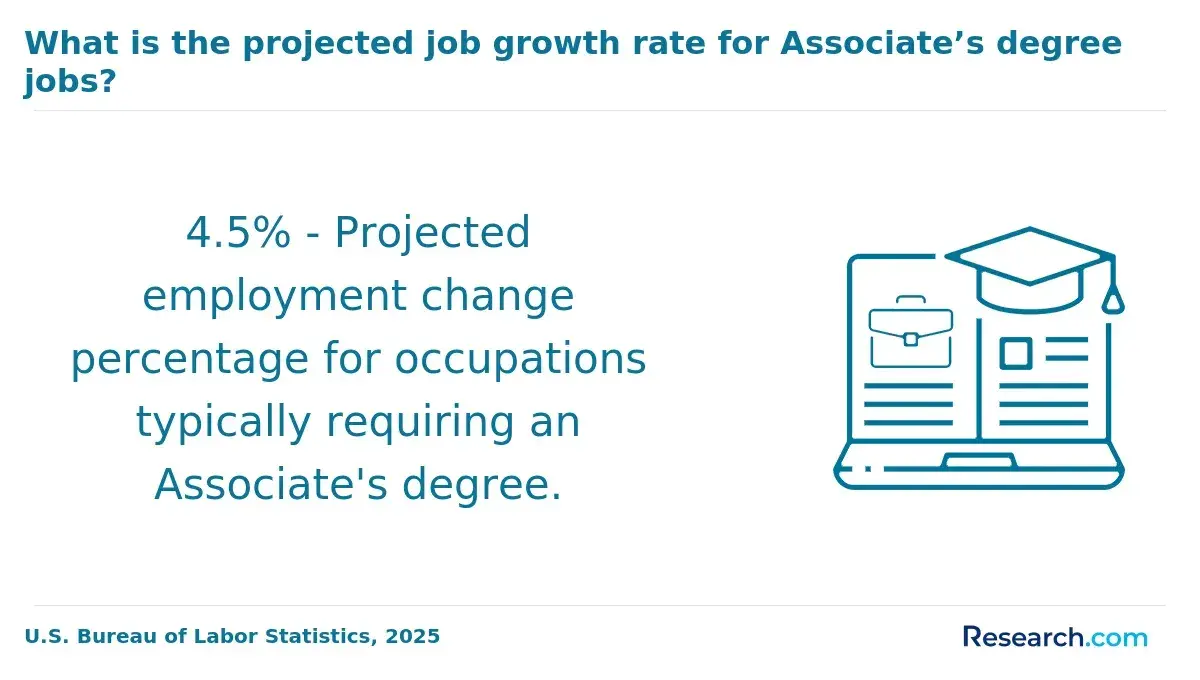
Choosing an online health services degree is a cost, time, and career decision, not just a school search. The stakes are higher as the U. S. Bureau of Labor Statistics projects medical and health services manager employment to grow 23% from 2024 to 2034, much faster than average. This guide is for working adults, transfer students, and first-time college students comparing accredited online options. You will learn how to evaluate tuition, admissions, accreditation, format, support, and career outcomes so you can choose a program that fits your goals and budget.
Key Things You Should Know
- The best-value accredited online health services programs usually combine regional accreditation, transparent total cost, strong transfer-credit policies, and career-relevant coursework in healthcare administration, health information, public health, or health systems.
- Cost comparisons should include tuition, online fees, books, technology, practicum expenses, and lost work time; College Board reported average 2024-25 published tuition and fees of $11,610 for in-state public four-year colleges and $43,350 for private nonprofit four-year colleges.
- Career fit matters as much as price: the BLS reported a May 2024 median wage of $117,960 for medical and health services managers, but many entry-level health services roles require experience, certifications, or graduate education in addition to a bachelor's degree.
Which Accredited Online Health Services Degree Programs Offer the Best Overall Value?
The best overall value is usually not the cheapest program in isolation. For online health services degrees, value comes from the balance of accreditation, total cost, transferability, schedule flexibility, career alignment, and student support. A low tuition rate can be a poor investment if credits do not transfer, clinical or internship requirements are unclear, or the curriculum does not match the roles you want.
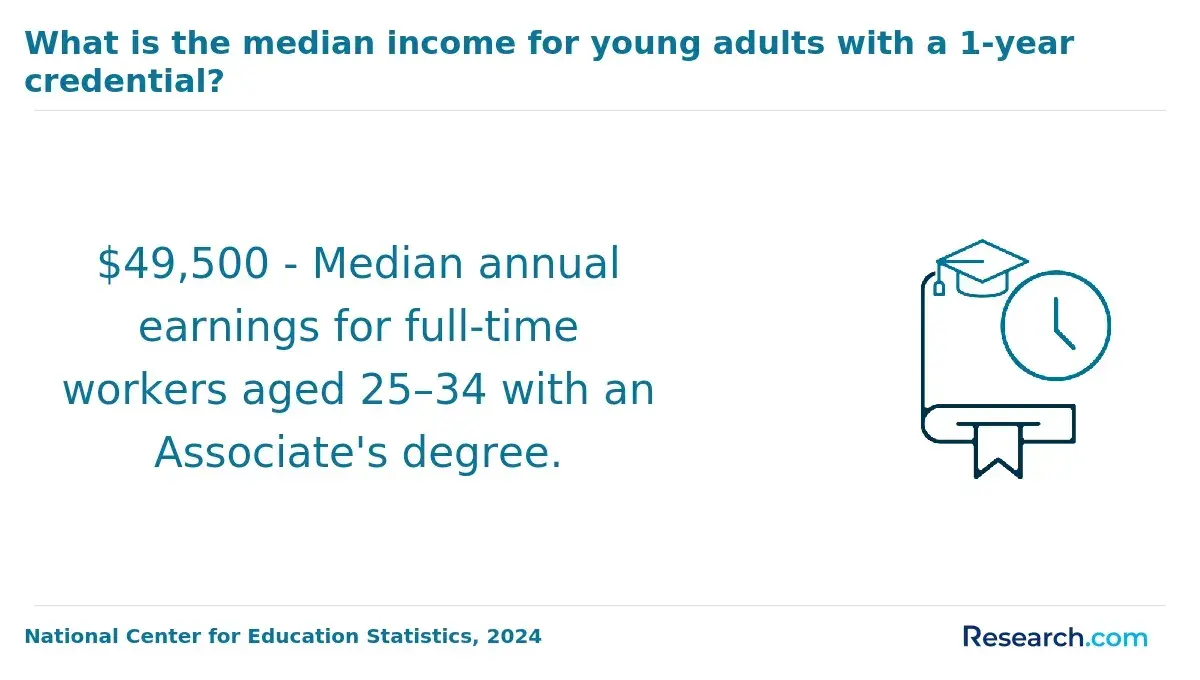
Health services is a broad degree area. Programs may be called health services administration, healthcare management, health sciences, health information management, public health, or allied health leadership. Students seeking entry into records, coding, compliance, or revenue-cycle work may find that a health information management associate degree online is a better first step than a broader bachelor's program.
The table below compares common online health services program types by the kind of student each one tends to serve best. Use it to narrow your search before comparing individual schools.
| Program type | Best fit | Main value advantage | Watch for |
| Online associate in health services or health information | Career starters, career changers, and students testing the healthcare field | Lower total cost and faster entry into administrative, records, or support roles | May not qualify graduates for management roles without later bachelor's completion |
| Online bachelor's in health services administration | Students aiming for healthcare operations, office management, or department coordination | Strong match for management-oriented healthcare roles | Some employers prefer experience in addition to the degree |
| Online bachelor's in health sciences | Allied health workers, transfer students, and students wanting a broad healthcare foundation | Flexible pathway into administration, graduate school, or nonclinical healthcare roles | May be less specialized than health information or healthcare administration programs |
| Online bachelor's completion program | Students with an associate degree, military credits, or prior college coursework | Often the strongest ROI when transfer credits shorten time to graduation | Transfer limits and residency-credit rules can change the real completion cost |
| Online master's in health services administration or healthcare administration | Professionals moving into leadership, analytics, policy, or executive-track roles | Can support advancement when paired with healthcare work experience | Higher cost and stronger need to verify employer demand before enrolling |
For many students, the strongest combination is a regionally accredited public university with an online bachelor's completion option, predictable tuition, and generous transfer credit. However, a private nonprofit program can still be a good investment if it offers substantial aid, accelerated terms, strong advising, and a curriculum aligned with your target role.
What Accreditation Should Students Look for in an Online Health Services Degree Program?
Accreditation is the first filter. In the U.S., institutional accreditation means an entire college or university has been reviewed by a recognized accrediting agency. This matters because it affects federal financial aid eligibility, credit transfer, graduate admission, and employer confidence.
For health services programs, specialized accreditation is not always required, but it can be important depending on the field. For example, healthcare management, health information management, public health, and nursing-related programs may have different expectations. Students comparing broader healthcare pathways, including DNP programs, should confirm both institutional and programmatic accreditation because advanced clinical degrees often face stricter professional standards.
Use the following checklist before you apply. It helps prevent one of the most expensive mistakes in online education: enrolling in a program that is legitimate but poorly matched to your career or transfer goals.
- Confirm institutional accreditation through the school's website and the U.S. Department of Education's recognized accreditor database.
- Ask whether the specific health services, healthcare administration, health information, public health, or nursing-related program has specialized accreditation when your target job, graduate program, or certification requires it.
- Check whether credits transfer into bachelor's or graduate programs you may want later, especially if you are starting with an associate degree.
- Verify whether the program meets requirements in your state if the degree connects to licensure, certification, internship placement, or supervised practice.
- Be cautious of schools that emphasize speed and discounts but provide vague information about accreditation, outcomes, faculty, or transfer policies.
A good rule is simple: do not treat "accredited" as a single yes-or-no label. Ask what is accredited, by whom, and whether that accreditation supports your next step.
How Do Tuition Costs Compare Across Accredited Online Health Services Degree Programs?
Tuition varies widely because online health services programs are offered by public universities, private nonprofit institutions, private for-profit colleges, community colleges, and competency-based providers. The best comparison is total program cost, not the advertised per-credit rate.
College Board's 2024-25 pricing data gives useful context for the broader U.S. market. These figures are not health-services-specific, but they help students understand why public, transfer-friendly, and completion-focused options often produce better affordability.
| Institution category | Average published tuition and fees | How to interpret the figure |
| Public two-year, in-district | $4,050 | Often the lowest-cost route for general education, associate-level health services, or transfer preparation |
| Public four-year, in-state | $11,610 | Often a strong value for bachelor's students who qualify for resident or online in-state tuition |
| Public four-year, out-of-state | $30,780 | Can be less competitive unless the online program uses a reduced distance-learning rate |
| Private nonprofit four-year | $43,350 | May still be affordable after grants or scholarships, but net price should be verified carefully |
To compare offers fairly, calculate the amount you will actually pay to finish the degree. The right cost calculation should include several items schools do not always highlight in the same place.
- Tuition per credit multiplied by the number of credits you still need after transfer evaluation
- Mandatory online, technology, graduation, lab, assessment, or proctoring fees
- Books, software, background checks, immunizations, or internship-related costs when required
- Residency rules that require you to complete a minimum number of credits at the school
- Time costs, including whether the course schedule allows you to keep working while enrolled
Red flags include unclear fee pages, tuition discounts that expire after the first term, and admissions counselors who quote a per-credit price without providing a full degree-completion estimate. If two programs look similar academically, the one that accepts more verified transfer credit and publishes clearer costs often delivers the better return.
How Competitive Is Admission to Accredited Online Health Services Degree Programs?
Admission to online health services programs ranges from open-access associate pathways to selective graduate programs. A flexible admissions process does not automatically mean weak academics; many adult-serving programs are designed for students who have work experience, prior credits, military training, or uneven academic records.
The table below summarizes common admissions expectations. Use it to identify which programs match your academic background before you spend money on applications.
| Degree level | Common admissions requirements | Competitiveness | Best applicant profile |
| Associate degree | High school diploma or GED, placement steps, basic application | Usually least selective | New college students and career changers seeking an affordable start |
| Bachelor's degree, first-year entry | High school transcript, GPA review, possible test-optional policy, prerequisite courses | Varies by institution | Students who want a full four-year online pathway |
| Bachelor's completion degree | Prior college credits, minimum GPA, official transcripts, sometimes an associate degree | Moderate, depending on credit and GPA rules | Transfer students and working adults with completed general education credits |
| Master's degree | Bachelor's degree, minimum GPA, resume, statement, recommendations, possible healthcare experience | Often more selective | Professionals seeking leadership, analytics, policy, or administrative advancement |
Students should prioritize admissions fit, not just admissions ease. If you have a low GPA but strong work experience, look for programs with holistic review. If you have many transfer credits, ask for a preliminary transcript evaluation before applying. If you want graduate school later, choose a bachelor's program with rigorous writing, analytics, management, and research coursework.
A common mistake is assuming selectivity equals better ROI. A highly selective program may offer prestige and stronger networks, but an accessible accredited program with lower debt and relevant healthcare experience can be the smarter path for many working adults.
Which Learning Formats Offer the Greatest Flexibility in Online Health Services Degree Programs?
Flexibility is one of the main reasons students choose online health services degrees. The best format depends on your work schedule, need for structure, transfer status, and comfort with independent learning.
Online programs use different delivery models. Students who need maximum control over pacing may also want to compare self paced colleges, especially if they already have healthcare experience and strong study habits.
The table below shows how common formats differ in structure and student fit. It can help you avoid choosing a program that looks convenient but does not match how you learn.
| Format | How it works | Best for | Potential drawback |
| Asynchronous online | Students complete weekly work without scheduled live class meetings | Working adults with changing schedules | Requires strong time management |
| Synchronous online | Students attend live virtual sessions at set times | Learners who want real-time discussion and accountability | Less flexible for shift workers |
| Hybrid | Online coursework plus occasional campus, lab, internship, or in-person requirements | Students near campus or programs with applied requirements | Travel can add cost and scheduling challenges |
| Accelerated terms | Courses run in shorter sessions, often 5 to 8 weeks | Motivated students who can manage intensive workloads | Can be difficult with full-time work or caregiving |
| Competency-based | Students progress by demonstrating mastery of required competencies | Experienced professionals who can move quickly through familiar material | May not suit students who need frequent instructor-led structure |
The most flexible program is not always the best one. If you are new to college, a structured asynchronous or synchronous program with regular deadlines may be more supportive than a self-paced model. If you are an experienced healthcare worker, competency-based or accelerated coursework may reduce time and cost.
What Student Support Services Improve Success in Online Health Services Degree Programs?
Student support can determine whether an online program is merely convenient or genuinely workable. Online health services students often balance coursework with jobs, family responsibilities, military service, or clinical-administrative work schedules, so support should be evaluated before enrollment.
Look for services that directly reduce academic, career, and administrative friction. These supports are especially important for first-generation students, transfer students, and adults returning after a long gap.
- Dedicated online academic advising that helps map courses term by term and prevents unnecessary credits
- Transfer-credit advising before enrollment so students know the real remaining cost and timeline
- Career services with healthcare-specific resume guidance, interview preparation, internship leads, and employer connections
- Writing, statistics, accounting, and research support because health services coursework often includes policy papers, finance, data, and management analysis
- Technology help available outside standard business hours for students who study at night or on weekends
- Faculty access through virtual office hours, timely feedback, and clear communication standards
One red flag is a program that offers broad "online support" language without naming specific services, hours, or contacts. Before enrolling, ask who your advisor will be, how often you can meet, whether career services support online students equally, and how quickly faculty are expected to respond.
Which Financial Aid Options Are Available for Accredited Online Health Services Degree Students?
Accredited online health services students may qualify for the same major federal aid categories as campus students when enrolled at eligible institutions. The key is to compare net price after grants, scholarships, employer assistance, and loans, rather than comparing sticker tuition alone.
For 2024-25, the maximum federal Pell Grant was $7,395, but eligibility depends on financial need, enrollment intensity, cost of attendance, and federal rules. This makes FAFSA completion an essential first step even for students who assume they will not qualify.
Common financial aid options include several categories. Each one affects affordability differently, so students should compare award letters carefully.
- Federal grants, including Pell Grants, which do not usually require repayment when eligibility rules are met
- Federal student loans, which can help cover costs but should be limited to an amount that fits expected earnings and repayment capacity
- State grants and workforce scholarships, especially for healthcare, public service, or high-demand occupations
- Institutional scholarships based on need, merit, transfer status, military affiliation, or adult-learner status
- Employer tuition assistance or reimbursement, which can be valuable for hospital, clinic, insurance, and public health employees
- Military and veteran education benefits for eligible students and families
Students already in nursing or advanced clinical roles may need a different financing strategy for graduate study. For example, comparing cheapest MSN to DNP programs can help nurses evaluate whether leadership or advanced-practice doctoral options fit their long-term budget.
Avoid borrowing based only on the first year's cost. Ask each school for a full program estimate, including remaining credits, fees, and the likely schedule to completion. If a higher-priced program shortens your timeline substantially through transfer credit or employer reimbursement, it may be more affordable than it first appears.
Which Career Outcomes Are Associated With Accredited Online Health Services Degree Programs?
Career outcomes depend on degree level, specialization, work experience, location, and whether the role is administrative, technical, community-facing, or leadership-oriented. An online health services degree can support nonclinical healthcare work, but it does not replace credentials required for licensed clinical roles.
The BLS reported a May 2024 median wage of $117,960 for medical and health services managers. That figure is useful for understanding the leadership upside of the field, but it should not be read as an entry-level salary expectation; many management roles require healthcare experience, supervisory ability, finance knowledge, and sometimes a graduate degree.
The table below connects common degree paths to realistic career directions. Use it to decide whether the curriculum matches the job family you want.
| Degree focus | Possible career directions | Skills employers often value | Additional factors |
| Health services administration | Clinic coordinator, practice manager, operations specialist, healthcare supervisor | Scheduling, budgeting, compliance, leadership, patient-flow improvement | Experience in healthcare settings can be important for advancement |
| Health information management | Medical records, coding, revenue cycle, data quality, privacy and compliance | Health data systems, coding knowledge, HIPAA compliance, analytics | Certifications may strengthen job competitiveness |
| Health sciences | Allied health leadership, care coordination support, program coordination, graduate-school preparation | Healthcare systems, communication, population health, research literacy | Broad degrees should be paired with internships or targeted electives |
| Public health or community health | Health education, outreach, program support, prevention initiatives | Community engagement, data interpretation, communication, program planning | Some roles prefer public health coursework or certifications |
| Graduate healthcare administration | Department manager, project manager, policy analyst, healthcare consultant, executive-track roles | Strategy, finance, quality improvement, analytics, organizational leadership | ROI is strongest when students already have healthcare experience |
Current trends are reshaping health services careers. Employers increasingly value data literacy, telehealth workflow knowledge, privacy compliance, revenue-cycle awareness, and the ability to work with AI-enabled scheduling, documentation, analytics, and patient-access tools. Students should look for programs that teach both healthcare systems and practical technology use.
For registered nurses who want leadership, systems improvement, or advanced-practice preparation, broader health services degrees may not be the most direct route. In that case, comparing DNP programs may provide a clearer path than a general healthcare administration degree.
How Do Online and Campus-Based Health Services Degree Programs Compare?
Online and campus-based health services programs can lead to similar academic credentials when the school is properly accredited and the curriculum is equivalent. The bigger differences are schedule, networking style, cost structure, access to local internships, and how much independent learning the student must manage.
The table below summarizes practical trade-offs. It is most useful for students deciding whether online learning is the right format rather than simply the most convenient format.
| Factor | Online program | Campus-based program | Decision guidance |
| Schedule | Often better for working adults, caregivers, and shift workers | More fixed class times and campus commitments | Choose online if schedule control is essential |
| Cost | May reduce commuting and housing costs, but fees vary | May offer local campus resources and in-person networking | Compare total cost, not tuition alone |
| Networking | Depends on virtual events, discussion boards, alumni access, and internships | More spontaneous in-person interaction | Choose the format with stronger employer connections in your target market |
| Learning style | Requires self-direction and regular online communication | Provides more face-to-face structure | Choose campus or hybrid if you need frequent live accountability |
| Applied experiences | May be arranged locally or completed through virtual projects | Often tied to nearby partners | Ask how internships, practicums, or capstones are completed |
Online is often a better fit for adults who cannot relocate or pause work. Campus-based learning may be better for students who want daily structure, local networking, and easier access to in-person faculty support. Hybrid programs can offer a middle ground, especially for students in regions with strong healthcare employers.
How Should Students Choose the Best Accredited Online Health Services Degree Program?
The best accredited online health services degree is the one that fits your career goal, budget, timeline, and learning style. Rankings can help you discover programs, but they should not replace your own evaluation of cost, accreditation, curriculum, and outcomes.
Use this step-by-step process to compare programs in a way that protects your time and money.
- Define your target role first, such as healthcare administrator, health information specialist, public health coordinator, care operations supervisor, or graduate-school applicant.
- Verify institutional accreditation and any specialized accreditation needed for your field, certification, employer, or graduate pathway.
- Request a written transfer-credit estimate before enrolling, especially if you already have college credits, military training, or allied health credentials.
- Calculate full completion cost by adding tuition, fees, books, required technology, practicum expenses, and the number of credits you still need.
- Compare curriculum against job postings in your region to see whether courses cover compliance, healthcare finance, data, leadership, quality improvement, and electronic health systems.
- Ask about career outcomes, internship options, employer partnerships, graduation support, and whether online students receive the same services as campus students.
- Choose the program with the strongest balance of affordability, credibility, support, and career alignment rather than the one with the lowest advertised tuition.
Students should also know when a health services degree is not the right choice. If your goal is direct patient care, nursing licensure, therapy, radiology, or advanced clinical practice, you may need a program with specific clinical accreditation and supervised training. For example, nurses focused on psychiatric advanced practice may be better served by researching the fastest PMHNP program rather than a general health services degree.
Before you apply, ask admissions counselors direct questions: How many credits will transfer? What is the full estimated cost? Are there required in-person components? What career services are available to online students? What recent graduates commonly do next? Clear answers are a good sign; vague answers are a reason to keep comparing.
Other Things You Should Know About Health Services
No. A health services degree usually focuses on administration, healthcare systems, information management, policy, or operations. A nursing degree prepares students for licensed clinical nursing practice and has separate clinical and licensure requirements.
Yes, but your options may be more limited at first. Entry-level administrative, records, scheduling, insurance, or program support roles may be possible, while management roles usually favor applicants with healthcare experience and leadership skills.
Some do, especially bachelor's completion, healthcare administration, public health, or capstone-based programs. Requirements vary by school, so ask whether placements can be completed locally, virtually, or through your current employer.
Prioritize healthcare communication, data literacy, compliance basics, budgeting, project management, electronic health record familiarity, and problem-solving. These skills are useful across healthcare administration, health information, and operations roles.
References
- Health and Human Services: Campus & Online Degrees and Careers https://www.publichealthonline.org/human-services/online-degree-programs/
- 11 Types of Healthcare Careers - Education & Requirements https://nursinglicensemap.com/resources/healthcare-careers/
- CAAHEP https://www.caahep.org/
- Employment statistics for graduates: how country and major shape your career - GLOSS Education Agency https://gloss.education/en/blog/employment-statistics-for-graduates-how-country-and-major-shape-your-career
- Online Health Sciences Degrees https://www.affordablecollegesonline.org/degrees/public-health-programs/health-sciences/
- New Graduate Employment Data https://www.aacnnursing.org/news-data/research-data-center/new-graduate-employment-data
- List of Online Colleges by Accreditation https://www.onlineu.com/resources/accreditation
- Programmatic Accrediting Organizations https://www.chea.org/programmatic-accrediting-organizations
- Careers https://www.publichealthdegrees.org/careers/
- Eligibility and Admission Requirements https://www.kumc.edu/school-of-health-professions/academics/departments/health-information-management/academics/health-information-management/online-bachelors-degree-completion-program-(rhit-to-rhia)/eligibility-and-admission-requirements.html