2027 Fastest Accredited Online Machine Learning Programs: Accelerated Degrees and Completion Times

Co-Founder and Chief Data Scientist
Choosing a fast online machine learning degree is really a timeline decision: How quickly can you graduate without choosing a weak or unaccredited program? The Bureau of Labor Statistics reports a 2024 median wage of $140,910 for computer and information research scientists, making speed, credibility, and cost especially important for career changers and working tech professionals.
This guide explains accredited online machine learning programs, accelerated formats, transfer credits, prerequisites, course loads, and fieldwork-like capstone requirements so you can compare advertised completion times against what is realistic for your schedule.
Key Things You Should Know
- The fastest realistic accredited online machine learning degree is usually a bachelor's-completion pathway that accepts 60 to 90 transfer credits or a 30-credit master's program taken year-round; motivated students may finish in about 12 to 24 months, while full bachelor's students commonly need 3 to 4 years.
- Accelerated formats usually use 4-week, 5-week, 7-week, or 8-week terms, but shorter terms compress the same workload; taking two graduate courses in an 8-week term can feel like a full-time academic load even if the program is marketed to working adults.
- Many bachelor's programs cap transfer credit around 90 credits, while master's programs usually allow fewer transfer credits and may require prerequisites in programming, statistics, linear algebra, calculus, or data structures.
Which Colleges Offer the Fastest Accredited Online Machine Learning Programs?
The fastest accredited online machine learning programs are not always labeled exactly "machine learning." Many are computer science, artificial intelligence, applied AI, analytics, or data science degrees with a machine learning track, concentration, or course sequence.
For speed, the most important comparison points are institutional accreditation, total credits, term length, transfer-credit limits, and whether the program is designed for full-time or part-time enrollment.
The table below compares well-known U.S. accredited online options that can fit machine learning goals. Timelines are best read as planning ranges, not promises, because actual graduation speed depends on admitted transfer credit, course availability, prerequisite readiness, and how many courses the school allows you to take at once.
| College or university | Online machine learning-related credential | Accreditation to verify | Format factors that can speed completion | Typical fastest-fit student |
| Colorado State University Global | Master's in Artificial Intelligence and Machine Learning | Institutional accreditation by the Higher Learning Commission | Online 8-week courses, frequent starts, 30-credit graduate structure | Working professionals with programming and quantitative preparation who can study continuously |
| The University of Texas at Austin | Online Master's in Artificial Intelligence | Institutional accreditation by the Southern Association of Colleges and Schools Commission on Colleges | Online graduate coursework, 30-credit structure, flexible pacing | Students who want a recognized public university AI credential and can handle rigorous technical courses |
| Georgia Institute of Technology | Online Master of Science in Computer Science with machine learning specialization options | Institutional accreditation by the Southern Association of Colleges and Schools Commission on Colleges | Online asynchronous delivery, 30-credit structure, broad course catalog | Students who value low tuition and strong CS depth more than the absolute shortest calendar |
| Stevens Institute of Technology | Online Master's in Applied Artificial Intelligence | Institutional accreditation by the Middle States Commission on Higher Education | Online graduate delivery, 30-credit curriculum, applied AI focus | Engineers, analysts, and developers seeking an applied technical graduate pathway |
| Southern New Hampshire University | Online Bachelor's in Computer Science with artificial intelligence concentration options | Institutional accreditation by the New England Commission of Higher Education | 8-week undergraduate terms and transfer-friendly bachelor's structure | Transfer students who need an undergraduate credential and want AI-related coursework |
| National University | Online computer science programs with AI or machine learning-related study options | Institutional accreditation by the WASC Senior College and University Commission | Short course formats and transfer-friendly policies | Adult learners who already have college credit and want a structured online bachelor's pathway |
A "fastest" ranking can be misleading if it ignores the student profile. A graduate student with a computer science background may finish a 30-credit AI or machine learning master's faster than a beginner can finish prerequisite math and programming.
By contrast, a student with 75 transferable undergraduate credits may complete a bachelor's in computer science with AI coursework faster than someone starting a master's without the required technical foundation.
When comparing programs, look for the exact degree title, concentration title, and transcript language. Employers usually care more about the institution, technical coursework, projects, and skills than whether the diploma uses the words "machine learning," but graduate schools may review prerequisite coursework more closely.
How Long Does It Take to Complete an Accredited Online Machine Learning Degree?
In this context, the "fastest" means the shortest realistic time from enrollment to graduation for an accredited online degree, not the shortest marketing claim. "Accelerated" usually means compressed terms, year-round scheduling, self-paced progress, or generous transfer-credit acceptance. "Completion time" means the total calendar time after enrollment, including required prerequisites, bridge courses, capstones, thesis options, or final projects.
The table below shows common online machine learning-related degree routes and realistic completion ranges. Use it to decide whether you are comparing a full degree, a degree-completion program, or a graduate program designed for students who already have technical preparation.
| Program type | Common credit requirement | Fastest realistic completion range | Typical completion range | What can extend the timeline |
| Bachelor's-completion program with AI or machine learning coursework | About 120 total credits, with many credits transferred in | About 12 to 24 months after transfer evaluation | About 2 to 3 years for many adult learners | Low transfer acceptance, missing general education courses, math placement, course sequencing |
| Full online bachelor's in computer science or data science with machine learning electives | About 120 credits | About 3 years with heavy year-round study | About 4 years | Starting without prior credit, calculus sequence, programming sequence, part-time enrollment |
| Online master's in AI, machine learning, data science, or computer science | Often about 30 credits | About 12 to 24 months with continuous full-time or heavy part-time study | About 2 to 3 years for working adults | Prerequisite courses, limited course availability, employer workload, thesis or capstone timing |
| Competency-based bachelor's pathway with machine learning-relevant courses | Usually equivalent to a standard bachelor's credit load | Potentially faster for experienced students | Highly variable | Limited prior knowledge, assessment delays, program pacing rules, required proctoring |
| Graduate certificate in machine learning or AI | Often 9 to 18 credits | About 4 to 12 months | About 6 to 18 months | Not a full degree, may not qualify for the same aid or employer requirements |
For career planning, a certificate can be the fastest academic credential, but it is not the same as an accredited degree. If a job posting asks for a bachelor's or master's, a certificate may strengthen your profile but may not satisfy the stated education requirement.
Labor-market demand is one reason students try to move quickly. The Bureau of Labor Statistics projects much-faster-than-average growth for computer and information research scientists over the 2024 to 2034 period, which includes roles connected to algorithms, AI systems, and advanced computing research. That outlook supports the value of technical training, but it does not mean every machine learning degree will lead to the same role or salary.
How Do Accelerated and Competency-Based Online Machine Learning Programs Work?
Accelerated online machine learning programs use schedule design to reduce calendar time. They do not remove the need to learn programming, statistics, linear algebra, model evaluation, ethics, and deployment workflows. The speed comes from taking courses more frequently, transferring prior credit, completing assessments faster, or avoiding long semester breaks.
These are the most common accelerated formats and how they affect real completion time. The right choice depends on whether you need structure, flexibility, or the ability to move faster than a standard semester calendar.
- Short-term courses: Courses run in 4-week, 5-week, 7-week, or 8-week blocks instead of 15-week or 16-week semesters, allowing more start dates and more course attempts per year.
- Year-round enrollment: Students take courses during fall, spring, and summer instead of pausing for long breaks, which can shorten a degree by one or more terms.
- Stacked course sequences: Some programs let students complete one intensive course at a time, which can help working adults focus while still progressing quickly.
- Competency-based education: Students advance by demonstrating mastery, which can be faster for learners who already know programming, databases, statistics, or cloud tools.
- Transfer-friendly bachelor's completion: Students bring in community college, military, prior university, or exam-based credit and complete only the remaining major and residency requirements.
The trade-off is intensity. A shorter term usually means fewer weeks, not fewer assignments. A machine learning course may still require coding labs, readings, model-building projects, discussion posts, exams, and debugging time; compressing that into 8 weeks can make the workload feel heavier than a standard term.
Other fields use acceleration differently, which is useful for comparison. For example, an accelerated MSW program online may be limited by field placement hours, while machine learning programs are more commonly limited by prerequisite knowledge, project deadlines, and technical course sequencing.
What Accreditation Should an Online Machine Learning Program Have?
Accreditation is the main quality filter when comparing fast online machine learning programs. At minimum, choose a college or university with institutional accreditation recognized by the U.S. Department of Education or the Council for Higher Education Accreditation. This matters for federal financial aid, credit transfer, graduate school review, employer tuition assistance, and general credential credibility.
Programmatic accreditation is less straightforward. Many machine learning degrees sit inside computer science, data science, engineering, analytics, or AI departments. ABET accreditation can be valuable for some undergraduate computing and engineering programs, but many legitimate graduate computer science and AI programs do not carry separate programmatic accreditation.
The absence of ABET is not automatically a red flag for a master's in AI or machine learning, but the absence of recognized institutional accreditation is a major concern. Before enrolling, verify accreditation directly rather than relying only on promotional pages. These checks are especially important for accelerated programs because speed should not come at the expense of recognition:
- Confirm the institution's accreditor on the school's official accreditation page and in federal accreditation databases.
- Check whether the degree is offered by the same accredited institution, not by an unrelated bootcamp or third-party provider alone.
- Ask whether the online program appears on the same transcript as the campus program, if a campus version exists.
- Verify whether credits can transfer to other accredited colleges or graduate programs.
- For undergraduate computing programs, ask whether ABET accreditation applies and whether it matters for your target employers or graduate schools.
Accreditation rules can be even more consequential in licensed fields. Students comparing technology degrees with regulated pathways such as online BCBA programs should note that machine learning roles usually do not require state licensure, but employers may still screen for accredited institutions and rigorous technical preparation.
How Can Transfer Credits and Prior Learning Shorten an Online Machine Learning Degree?
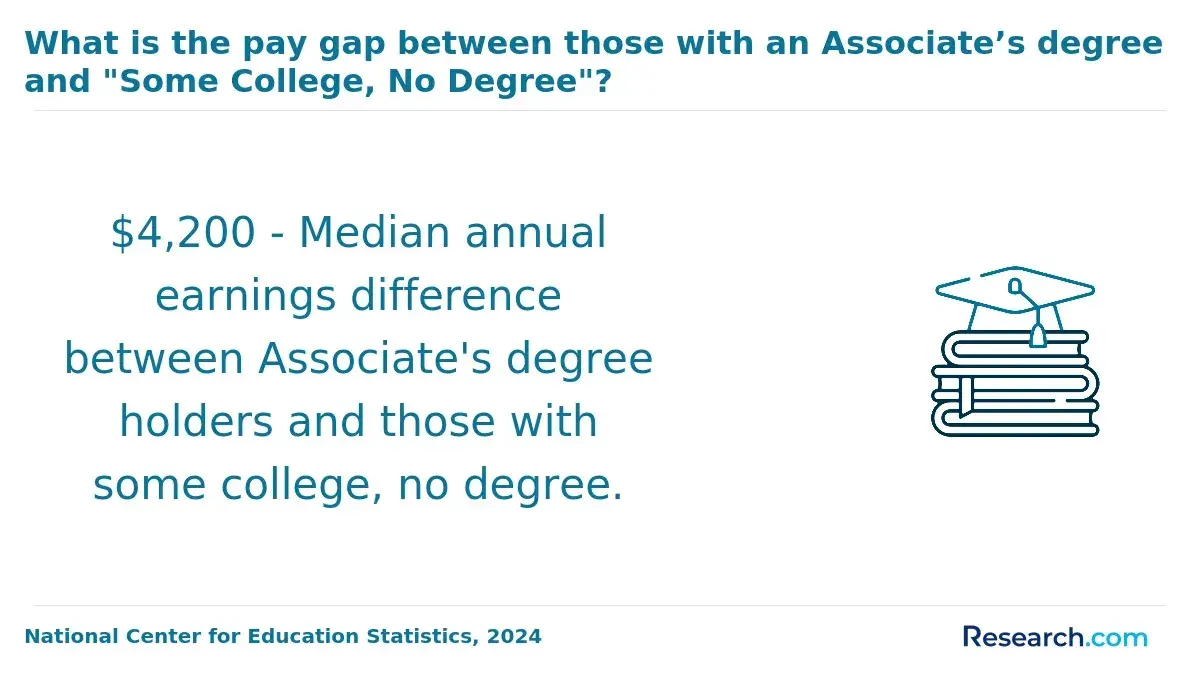
Transfer credit is often the fastest route to graduation in an online bachelor's program. A student entering with an associate degree or prior college coursework may skip many general education and elective requirements, leaving the major core, concentration courses, and institutional residency requirement. At the master's level, transfer credit is usually more limited, so speed depends more on prerequisites and course load.
The table below summarizes common credit-shortening options. It helps separate credits that usually reduce total degree requirements from experiences that may help with admissions or placement but do not always shorten the program.
| Credit-shortening option | Most useful for | How it can shorten time | What to confirm |
| Community college transfer credit | Bachelor's students | May satisfy general education, electives, and lower-division prerequisites | Maximum transfer cap, course equivalency, minimum grade requirement |
| Associate degree block transfer | Bachelor's-completion students | Can move a student directly into upper-division coursework at some schools | Whether the associate degree satisfies all lower-division requirements |
| Credit by exam | Undergraduate students with strong general education knowledge | May replace selected introductory courses | Accepted exams, score thresholds, deadline for submission |
| Military or workplace learning evaluation | Adult learners and veterans | May award elective or technical credit when documented learning matches college outcomes | Whether credits apply to the major or only to electives |
| Graduate transfer credit | Master's students with prior graduate coursework | May reduce a small number of required credits | Recency limits, grade requirements, and whether machine learning courses must be completed in residence |
To shorten the timeline safely, request an official transfer evaluation before committing to a program. A school may advertise that it accepts up to 90 credits, but that does not mean all 90 of your credits will apply to the degree plan. Credits that transfer as electives may not reduce the number of machine learning, calculus, statistics, or programming courses you still need.
Prior learning can also reduce hidden time. If you already know Python, SQL, probability, data structures, or cloud deployment, you may place into higher-level courses or move faster through competency-based assessments. However, many schools require foundational courses even for experienced programmers if prior coursework does not appear on an official transcript.
What Are the Admission Requirements and Start Dates for Accelerated Online Machine Learning Programs?
Admission requirements influence speed before classes even begin. A program with monthly or 8-week starts may look faster than a semester-based program, but missing transcripts, prerequisite gaps, or a delayed transfer evaluation can push your first technical course back by a term.
Most online machine learning-related programs use some combination of the requirements below. Checking them early helps you avoid choosing a fast calendar that you cannot actually enter on time.
- Undergraduate admission: High school diploma or equivalent, prior college transcripts if applicable, placement requirements, and sometimes completed college math before upper-division computer science courses.
- Graduate admission: Bachelor's degree from an accredited institution, transcripts, statement of purpose, resume, and evidence of readiness in programming, statistics, calculus, linear algebra, algorithms, or data structures.
- Optional or waived testing: Many online technical master's programs do not require the GRE, but policies vary and may change by cohort.
- Technology readiness: Reliable computer, broadband access, coding environment, webcam or proctoring setup, and ability to use tools such as Python notebooks, Git, cloud platforms, or statistical software.
- Start-date structure: Programs may use monthly starts, 6 to 8 starts per year, traditional semester starts, or cohort-based starts that admit students only a few times annually.
The fastest start date is not always the best start date. If you enter before reviewing prerequisites, you may spend your first term catching up instead of making degree progress. For a technical field like machine learning, a one-month delay to complete Python, statistics, or linear algebra preparation can sometimes prevent failed courses and a longer overall timeline.
Admissions calendars also affect financial aid timing. Students using employer tuition assistance, veterans benefits, or federal aid should ask whether the program's short terms meet enrollment-intensity requirements for each funding source.
How Much Does a Fast Online Machine Learning Degree Cost, and Is Financial Aid Available?
Fast online machine learning programs can cost less if they reduce the number of terms you pay for, but faster is not automatically cheaper. Total cost depends on tuition per credit, fees, textbooks or software, transfer credit accepted, repeat courses, residency requirements, and whether you can keep working while enrolled.
Recent national cost data can help frame the decision. The College Board's 2024 pricing data for tuition and fees shows that public four-year in-state tuition remains far lower on average than private nonprofit tuition, which means school type can matter as much as program speed when estimating return on investment.
- Public four-year in-state average published tuition and fees for 2024-2025: $11,610
- Private nonprofit four-year average published tuition and fees for 2024-2025: $43,350
Online students should compare total program cost, not just per-credit tuition. A 30-credit master's with higher tuition but no repeated prerequisites may cost less than a cheaper program that requires several bridge courses. For bachelor's students, transfer credit can be the biggest cost reducer because it may remove dozens of credits from the degree plan.
The table below highlights the main cost variables in accelerated online machine learning programs. Use it to identify which schools are truly affordable for your situation rather than only fast on paper.
| Cost factor | Why it matters | Question to ask |
| Tuition per credit | Determines the base cost of the degree | Is tuition charged per credit, per term, or through a subscription model? |
| Transfer credit accepted | Can reduce both cost and time for bachelor's students | How many of my credits apply directly to this degree plan? |
| Course overload fees | Some students pay extra to accelerate beyond a standard load | Are there additional charges for taking more courses in a term? |
| Software and technology | Machine learning coursework may require cloud tools, statistical software, or upgraded hardware | Which tools are included, and which are out-of-pocket? |
| Financial aid eligibility | Federal aid depends on accreditation, program eligibility, and enrollment status | Is the degree eligible for federal aid, employer reimbursement, military benefits, or scholarships? |
Students comparing technology programs with other affordable online pathways, such as the cheapest online human resources degree, should remember that machine learning programs may have additional technology costs and prerequisite requirements. The right comparison is total cost to graduation, not just listed tuition.
Can You Work Full Time While Completing an Accelerated Online Machine Learning Degree?
Yes, many students work full time while completing an online machine learning degree, but the accelerated path may require trade-offs. Machine learning courses are project-heavy and often involve coding, debugging, math review, team work, and model evaluation. A student working 40 hours per week may be able to take one course per 8-week term consistently, while two technical courses in the same term can become difficult during work deadlines.
The table below compares realistic study patterns for working adults. It is meant to help you choose a pace you can sustain, because failed or withdrawn courses can erase the time savings of an accelerated schedule.
| Enrollment pace | Best fit | Likely timeline effect | Main risk |
| One course at a time | Full-time workers, caregivers, students new to programming | Slower but steadier progress | Degree may take longer than advertised |
| Two courses per short term | Experienced students with flexible schedules | Can substantially shorten completion time | Heavy weekly workload, especially in math-heavy or coding-heavy courses |
| Full-time year-round | Students who can reduce work hours or study as a primary commitment | Fastest term-based path | Burnout and reduced project quality |
| Competency-based acceleration | Students with strong prior knowledge and self-discipline | Can be faster than term-based study | Progress slows if assessments require skills the student has not already mastered |
A practical approach is to start with one technical course and one lighter course, if the program allows it, then increase your load after seeing the weekly workload. Machine learning classes can vary widely: an introductory AI ethics course may be manageable with full-time work, while deep learning, algorithms, or statistical modeling can require much more study time.
Programs with clinical or field placement requirements, such as a clinical psychology online masters, often face external scheduling limits. Machine learning degrees usually do not have clinical hours, but capstones, group projects, and proctored exams can still create fixed deadlines that affect working students.
Are Accelerated Online Machine Learning Degrees Respected by Employers and Graduate Schools?
Accelerated online machine learning degrees can be respected when they come from accredited institutions, include rigorous technical coursework, and help students build evidence of skill. Employers generally evaluate the whole profile: degree level, school credibility, programming ability, project portfolio, internships or work experience, communication skills, and familiarity with real-world tools.
The word "online" is usually less important than the strength of the institution and curriculum. Many accredited universities issue the same diploma for online and campus students, although transcript practices vary. If this matters for your employer or graduate school plans, ask the registrar how the delivery format appears on official records.
Graduate schools may review accelerated degrees more closely if applicants lack foundational coursework. A fast bachelor's completion program can be credible, but applicants to selective master's or doctoral programs may still need graded courses in calculus, linear algebra, statistics, data structures, algorithms, and advanced programming.
For employment, the strongest accelerated programs help students produce portfolio-ready work. Useful projects may include supervised learning models, natural language processing pipelines, computer vision experiments, model evaluation reports, data cleaning workflows, MLOps demonstrations, and responsible AI analyses. This is similar to creative technology fields where a video game design degree is often strengthened by a portfolio of completed work rather than the credential alone.
Be cautious of any program that suggests speed alone will make you job-ready. Machine learning hiring can be competitive, and many roles prefer candidates who combine academic preparation with internships, applied projects, software engineering habits, and domain knowledge.
How Should You Compare the Fastest Accredited Online Machine Learning Programs?
The best fast online machine learning program is the one that lets you graduate quickly while preserving accreditation, technical depth, affordability, and career fit. Instead of choosing the shortest advertised timeline, compare each program against your starting point: prior credits, math background, programming experience, weekly study time, and target role.
Use the following steps to compare programs in a way that reveals the true time to graduation. This process is especially important for accelerated degrees because small policy differences can add or remove months.
- Verify institutional accreditation before comparing speed, tuition, or rankings.
- Request a written transfer-credit or prerequisite evaluation before enrolling.
- Ask for a term-by-term degree plan showing the fastest allowable schedule and a realistic working-adult schedule.
- Confirm whether machine learning electives are offered every term or only once per year.
- Ask whether courses are asynchronous, synchronous, self-paced, cohort-based, or competency-based.
- Check whether the program has a capstone, thesis, practicum, proctored exam, or group project that can delay graduation.
- Compare total program cost after transfer credit, fees, software, and repeated prerequisites.
- Review graduate outcomes carefully, avoiding any school that implies guaranteed jobs or salaries.
Several red flags are common in searches for the fastest accredited online machine learning programs. The most serious ones are easy to miss when a program page emphasizes speed.
- Assuming "accelerated" applies to every student: The fastest timeline may require full-time study, year-round enrollment, or a large number of transfer credits.
- Ignoring prerequisites: Missing calculus, statistics, programming, or data structures can add bridge courses before you reach machine learning coursework.
- Confusing short terms with easy courses: An 8-week machine learning course may require the same outcomes as a 16-week course.
- Overlooking residency rules: Some schools require a minimum number of credits to be completed through the institution, limiting how much transfer credit helps.
- Choosing only by tuition: A low per-credit price may not be the lowest total cost if many credits do not transfer or course availability slows progress.
- Skipping portfolio review: A fast degree with weak projects may be less useful than a slightly longer program with stronger applied work.
A good final test is simple: ask the admissions or advising team, "Based on my transcripts and work schedule, what is the earliest realistic graduation date, and what assumptions does that date require?" If the answer depends on overloads, perfect course availability, or unconfirmed transfer credits, treat the advertised timeline as optimistic rather than guaranteed.
Other Things You Should Know About Machine Learning Programs
Yes. A graduate or professional certificate can often be completed faster than a degree because it requires fewer courses. However, it may not meet job postings or graduate admissions requirements that specifically ask for a bachelor's or master's degree.
Many do, especially at the graduate level. Common expectations include statistics, calculus, linear algebra, programming, and sometimes algorithms or data structures. If you lack these courses, prerequisite work may extend your timeline.
It depends on the institution. Many accredited universities do not label the diploma as online, but transcript and record practices vary. Ask the registrar before enrolling if this matters for your employer, graduate school, or licensing plans.
Look for accredited online degrees in artificial intelligence, computer science, data science, analytics, or applied AI that include machine learning courses or concentrations. Review the curriculum carefully to make sure it covers the skills you need.
References
- Online MSc Computer Science with Artificial Intelligence | Walbrook https://www.walbrook.ac.uk/degrees/postgraduate/msc-computer-science-with-artificial-intelligence/
- Fastest AI Master’s Programs for 2026 (1 Year or Less) https://aidegreeprograms.org/rankings/fastest-ai-masters-programs/
- Machine Learning Courses | Online Courses for All Levels | DataCamp https://www.datacamp.com/category/machine-learning
- Machine Learning Specialization https://www.deeplearning.ai/specializations/machine-learning
- Best Online Machine Learning Courses for 2023 - Comprehensive Guide https://aifwd.com/education/best-online-machine-learning-course/
- Paying for a Computer Science Degree | Scholarships, Grants, Loans https://www.computerscience.org/resources/how-to-pay-for-a-degree/
- Earn a Master’s in Artificial Intelligence in One Year - MastersInAI.org https://www.mastersinai.org/degrees/one-year-masters-in-ai/