2027 Paralegal Programs With Legal Billing and Timekeeping Software Practice

Co-Founder and Chief Data Scientist
A paralegal program may advertise "legal technology" without ever letting students enter billable time or prepare an invoice. That distinction matters if you want to work in a law office where accurate time records, billing codes, and client confidentiality are part of daily operations. This guide explains what meaningful software practice looks like, which educational routes are worth considering, and how to check a program's claims before paying tuition. It is for prospective paralegals and career changers who want practical training - not just a software name on a course list.
Key Things You Should Know
- Prioritize programs that require you to enter time, review billing codes, and produce a sample invoice in software; a course description that merely mentions legal technology is weaker evidence.
- There is no reliable nationwide list of paralegal programs with verified hands-on billing assignments. Request a current syllabus and confirm software access before enrolling.
- The Bureau of Labor Statistics reports median pay of $62,890 in May 2025 for paralegals and legal assistants, with about 40,800 openings projected annually despite 0% projected growth from 2025-2035; software practice can strengthen preparation but does not guarantee a job.
What Are Paralegal Programs With Legal Billing and Timekeeping Software Practice?
These are paralegal education programs that incorporate actual work in a legal billing or practice-management system, rather than only teaching the vocabulary of law-office administration. Students might record time against a fictional client matter, distinguish billable from nonbillable work, apply task codes, review an entry for accuracy, and create a draft invoice. The strongest assignments also require students to correct errors and explain their choices.
Timekeeping means recording work performed, usually by matter, task, and duration. Legal billing turns eligible entries and expenses into charges for review. Some firms use standardized billing codes or electronic invoice formats, but practices differ by employer and client. Training should emphasize accurate descriptions and confidentiality, not suggest that a student can set a firm's billing policy independently.
Software exposure has several levels: a lecture about a product, a demonstration, student access, and assessed hands-on work. Only the latter two establish that students can practice. Even then, classroom access is not proof of proficiency with an employer's particular system.
What Education Do You Need for a Paralegal Career?
Paralegals work under attorney supervision, supporting research, documents, case organization, and other delegated tasks. They do not become attorneys through paralegal education and cannot independently provide legal advice. Entry routes vary by employer: an associate degree in paralegal studies, a bachelor's degree with relevant coursework, or a post-degree paralegal certificate may each be useful.
The appropriate route depends largely on your starting education. A career changer who already has a bachelor's degree may prefer a focused certificate over another full degree. Someone seeking a first college credential may find that an associate degree provides both general education and legal coursework; best online associate degrees in paralegal studies can serve as a starting point for comparison. In either case, check whether billing practice is assessed rather than assuming it comes with the credential.
A paralegal certificate is an educational award. Professional certification is a separate credential granted by a certifying organization or, where applicable, a state system. Neither turns a paralegal into a lawyer.
Which Paralegal Programs Teach Legal Billing and Timekeeping Software?
No nationwide program directory verifies whether students complete current, hands-on billing assignments. A named school should not be treated as a confirmed match merely because its website lists "legal technology," "law office management," or a software brand. Program-level confirmation requires a current syllabus, assignment description, or written answer from the department.
The distinction below helps narrow a search without mistaking marketing language for practical training. It compares evidence of practice, not the overall quality of a school.
| What the program documents | What it establishes | Decision value |
| "Legal technology" in a program overview | A broad curriculum topic | Ask what applications and assignments are included. |
| Billing software named in a course description | Planned coverage of a tool | Confirm whether students receive their own access. |
| Student access and required time-entry assignments | An opportunity for hands-on practice | Check whether work is graded and current. |
| Time entries, corrections, and a sample invoice in an assessed project | Practice across a realistic billing workflow | Strongest evidence for this specific goal. |
To identify a genuine match, ask the program for written answers to these questions before applying:
- Which course and current syllabus cover timekeeping and legal billing?
- What software can each student use, and is access included in required charges?
- Must students enter time and create or review an invoice, or only watch a demonstration?
- Are assignments completed with fictional matters and feedback from an instructor?
If a school cannot identify the course or assignment, treat its billing instruction as unconfirmed. An otherwise suitable paralegal program paired with employer training may be a better choice than a poorly matched program selected solely for a software claim.
How Do Online and Campus-Based Paralegal Programs Compare?
Either format can teach billing software effectively if students have individual access and complete assessed work. "Online" does not necessarily mean self-paced: courses may have live meetings, fixed deadlines, proctored exams, or an in-person internship. Campus instruction may provide easier access to a lab and immediate help, but attendance and travel can constrain working students.
Before choosing a format, confirm whether the software runs on your computer, whether a remote desktop or browser is required, and when technical support is available. Ask for the actual course schedule, not just the program's delivery label. If you are considering accelerated online paralegal training options, check that compressed courses still leave time to complete and receive feedback on practical assignments.
What Courses Do Paralegal Programs Typically Include?
Paralegal curricula commonly cover legal research and writing, civil litigation, ethics, legal terminology, and substantive areas such as contracts or real estate. Billing and timekeeping are more likely to appear within law-office management, legal technology, or an internship than as a stand-alone course. Course titles alone cannot establish what students practice.
For billing-focused preparation, look for assignments connecting an attorney-supervised task to a matter, a clear time narrative, a billing category, and invoice review. Ethics instruction should address safeguarding client information and avoiding inaccurate entries. Research platforms and document-management tools are useful, but access to them is not a substitute for billing-system practice.
Programs may also introduce electronic billing formats, such as Legal Electronic Data Exchange Standard (LEDES), or standardized task codes. These are useful additions when relevant to an employer, not universal prerequisites for an entry-level paralegal role.
How Long Do Paralegal Programs Take and What Do They Cost?
Completion time depends on credential level, required credits, course sequencing, and whether you study full time. A post-degree certificate may avoid repeating general education, while an associate degree usually includes it. An accelerated schedule can reduce calendar time without reducing the work required each week. Obtain each program's published course map before comparing timelines.
Compare total required cost, not tuition alone: mandatory fees, textbooks, computer requirements, software access, travel, and any internship expenses can change the result. A lower-priced noncredit course may offer useful skills but may not award transferable college credit. The receiving institution, not the original provider, decides whether credit transfers.
Federal aid eligibility must be checked for the specific program; an institution's participation in federal aid does not mean every certificate qualifies. Ask the financial aid office for the program's eligibility status and a current cost-of-attendance estimate. If billing practice is your main objective, weigh the cost and time of a full credential against shorter training plus a paralegal program that better meets your broader career goals.
How Can You Verify Paralegal Program Accreditation and Quality?
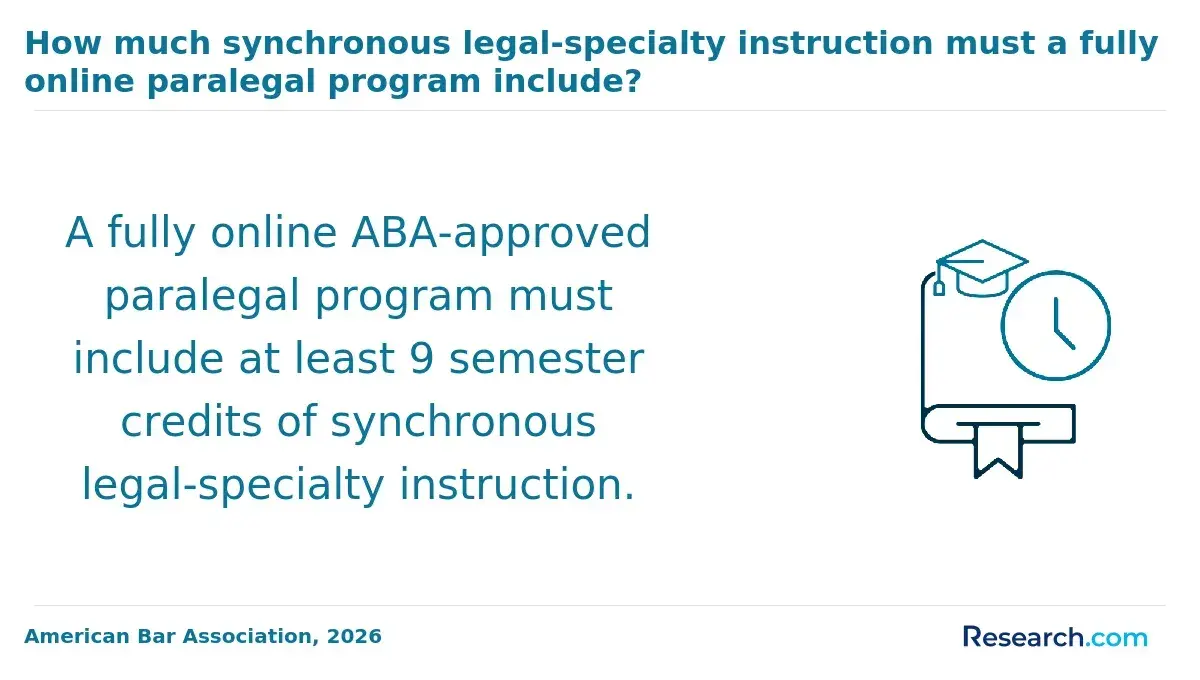
Verify two different statuses separately. Institutional accreditation concerns the college or other educational institution; check its current status with its recognized accreditor or U.S. Department of Education resources. American Bar Association (ABA) approval applies to qualifying paralegal education programs, not to an entire institution. Check the ABA's current program directory rather than relying on an old school description.
ABA approval can matter to some students and employers, but it does not establish that billing software is taught. Conversely, lack of ABA approval alone does not prove a program has poor technology instruction. Readers who want to compare affordable ABA-approved paralegal programs should still verify each program's present approval status, required attendance format, and total cost.
For this decision, the most useful quality evidence is a current course map, software-access policy, sample practical assignment, and clear internship rules. Be cautious if a school promises software proficiency or employment but will not document how students practice.
What Are the Admission Requirements for Paralegal Programs?
Requirements vary by credential and school. An associate program may admit students with a high school diploma or equivalent, while some paralegal certificates require a prior bachelor's degree or specified college coursework. Do not assume that every program called a "certificate" has the same entry requirements or awards college credit.
Ask admissions to distinguish required prerequisites from recommended experience, and request a written evaluation before counting on transfer credit. The receiving school determines how prior courses apply. If you may later pursue broader legal or business study, resources on comparing business law transfer opportunities can help frame questions, but only your intended receiving institution can confirm a particular transfer decision.
Also check technology prerequisites before enrollment. A billing assignment is less valuable if the required software will not run on your available device or access is restricted to hours you cannot attend.
What Jobs and Salaries Can Paralegal Graduates Expect?
Graduates may seek paralegal or legal assistant positions in law firms, corporate legal departments, or government offices. Billing-related tasks can include recording delegated work, checking narratives and codes, and helping attorneys or billing staff resolve invoice questions. Some employers place most billing work with a separate administrative team, so ask about actual duties when evaluating a job posting.
The Bureau of Labor Statistics reports median annual pay of $62,890 in May 2025 for the combined paralegals and legal assistants occupation and 0% projected growth from 2025-2035. Those occupation-wide figures do not predict pay for a new graduate or for a billing-heavy role. The BLS nevertheless projects about 40,800 openings per year, largely reflecting workers leaving or changing occupations rather than net job growth.
For applicants with relevant prior experience, billing practice can complement skills in administration, accounting support, or client service. Legal research, writing, confidentiality, and attorney-supervised workflow still matter. Someone aiming primarily for an HR or regulatory role rather than paralegal work could also examine human resources law concentrations in legal studies; a non-JD legal studies degree builds legal knowledge but does not qualify its holder to practice law.
Do Paralegals Need Certification or a Professional License?
There is no single nationwide paralegal license or universally required professional certification. Rules concerning paralegal titles, registration, and permitted services can differ by state, and employers may set their own hiring preferences. Check the relevant state authority and target job postings rather than assuming a requirement applies everywhere.
Professional certifications are distinct from school-issued certificates. For example, the National Association of Legal Assistants grants the Certified Paralegal credential under its own eligibility and examination rules; completing a paralegal course does not automatically award it. The ABA approves eligible education programs but does not certify individual paralegals.
If your immediate goal is software practice, confirm the school's assignments first. Then assess whether a separate professional credential is requested in the jobs you want and whether you meet the credentialing organization's current eligibility rules.
Other Things You Should Know About Law & Paralegal
Ordinarily, no. A classroom exercise should use fictional or properly de-identified matters unless an authorized workplace placement has explicit procedures for protecting client information.
No. Billing systems track time, expenses, and invoices; legal research platforms help users find and analyze legal authorities. Some practice-management products combine functions, but the skills remain distinct.
Yes. Familiarity with accurate records, invoices, and reconciliation may transfer, but legal billing also requires matter-specific descriptions, confidentiality, and compliance with the employer's procedures.
Not necessarily. Products and employer configurations vary. Practice with a complete workflow - entry, review, correction, and invoicing - may be more transferable than memorizing one interface.
References
- Cost of Attendance (Budget) | 2025-2026 Federal Student Aid Handbook https://fsapartners.ed.gov/knowledge-center/fsa-handbook/2025-2026/vol3/ch2-cost-attendance-budget
- Cost of Attendance - Financial Aid and Scholarships | The University of Utah https://financialaid.utah.edu/tuition-and-fees/cost-of-attendance.php
- Paralegal Studies | ABA-Approved Online Certificate https://cpage.sfsu.edu/paralegal
- Paralegal Studies Certificate Program - Dallas | SMU https://www.smu.edu/cape/programs/certificates/paralegal-studies
- Virtual Computer Labs | Information Technology | University of Illinois Chicago https://it.uic.edu/news-stories/remote-access-to-specialized-software-with-virtual-computer-labs/
- Paralegal Program Information | University of Cincinnati https://www.ucclermont.edu/academics/academic-departments/business-law/blt-programs/paralegal/paralegal-ecurr.html
- Undergraduate and Graduate Tuition and Fees | Purdue Global https://www.purdueglobal.edu/tuition-financial-aid/undergraduate-graduate-tuition-and-fees/
- Online Certified Paralegal from University of Texas at Arlington https://eeccareertraining.uta.edu/training-programs/certified-paralegal/
- Legal Billing Software for Law Firms | Tabs3 https://www.tabs3.com/billing-product/
- AI Time Tracking for Lawyers: Boosting Efficiency and Profitability | americanbar.org https://www.americanbar.org/groups/law_practice/resources/law-technology-today/2025/ai-time-tracking-for-lawyers/