
2027 Master of Legal Studies vs. a Master's in Legal Administration

Co-Founder and Chief Data Scientist
A master of legal studies and a master's in legal administration can both strengthen a law-related career, but they prepare you to solve different problems. One emphasizes understanding law and regulation; the other typically emphasizes running legal organizations. That distinction matters if you are weighing graduate tuition against a specific promotion or career change.
This guide compares what the degrees teach, where they may be useful, what they cannot qualify you to do, and the questions to ask before enrolling.
Key Things You Should Know
- Choose a Master of Legal Studies (MLS) primarily for legal and regulatory knowledge; choose legal administration primarily for law-office operations, people, budgets, and systems. Check the actual curriculum because program titles vary.
- Neither degree alone qualifies you to practice law. If your goal is paralegal work, a shorter, job-focused credential may be a better first investment than either master's degree.
- Use occupational pay as context, not a promised outcome: the U.S. median was $80,730 for compliance officers and $62,890 for paralegals and legal assistants in May 2025, according to the Bureau of Labor Statistics (BLS).
What is the difference between a Master of Legal Studies and a Master's in Legal Administration?
An MLS is a non-Juris Doctor (non-JD) graduate degree that teaches legal concepts to people who do not intend to become attorneys. A master's in legal administration generally focuses on managing the business and operational side of a law firm, legal department, or other legal organization. Schools may use different degree names, and some MLS programs offer legal administration coursework. Compare required courses rather than relying on the diploma title.
The distinction is most useful when you connect each curriculum to the work you want to do:
| Decision factor | Master of Legal Studies | Master's in Legal Administration |
| Main emphasis | Understanding law, legal processes, and regulation | Managing legal-service operations and resources |
| Typical coursework | Legal research, contracts, regulatory topics, and electives | Finance, staffing, workflow, technology, and leadership |
| Likely fit | Professionals who need legal knowledge in compliance, business, or government | Professionals pursuing law-firm or legal-department management |
| Shared limitation | Does not itself confer attorney licensure | Does not itself confer attorney licensure |
If a school's terminology is unfamiliar, review legal studies graduate degree options explained before comparing its required courses with your target role.
Which degree is better for your career goals: Legal Studies or Legal Administration?
Choose legal studies when your work calls for interpreting rules, recognizing legal risk, or communicating with counsel—for example, in compliance, human resources, or contract-related roles. Choose legal administration when you want to supervise staff, improve billing or matter workflows, manage vendors, or oversee a legal organization's operations. Neither is universally better: prior experience and the duties in actual job postings matter more than a degree label.
For someone seeking an entry-level paralegal job, either master's degree may be more education than the position requires and may offer less targeted training in litigation support. Compare employer requirements and lower-tuition online paralegal programs with ABA approval before committing to graduate study. ABA approval applies to qualifying paralegal education programs; it is not institutional accreditation or an individual certification.
Can either degree qualify you to practice law or take the bar exam?
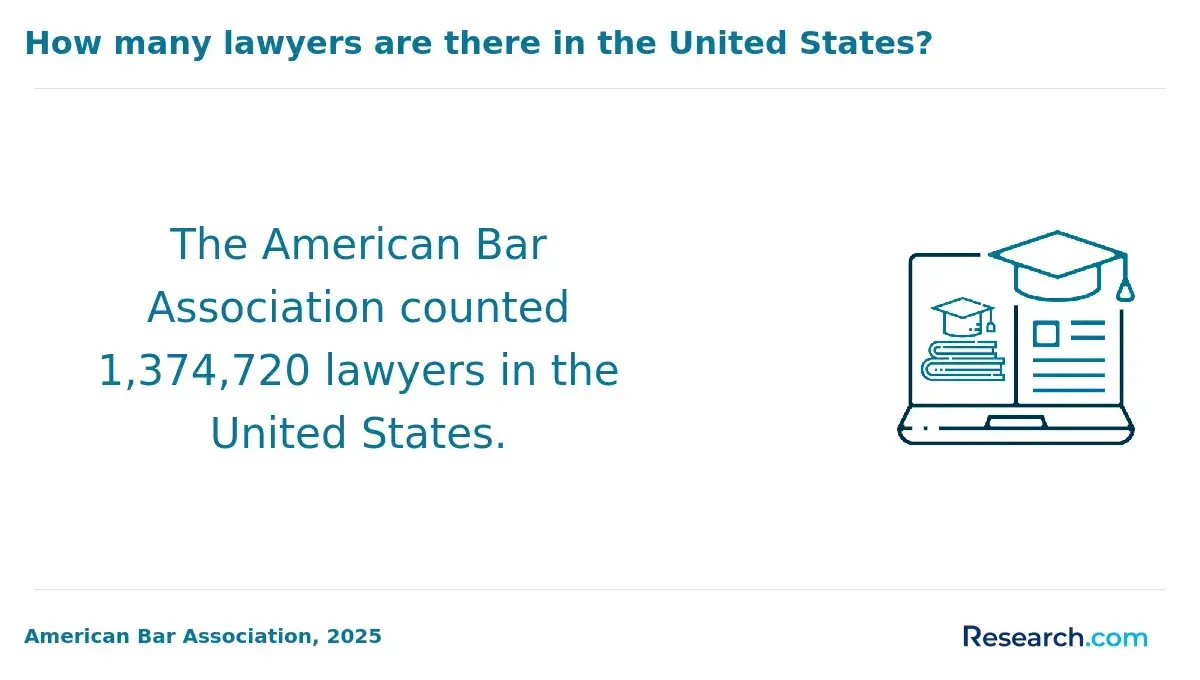
No—not by itself. An MLS or legal administration master's is not a JD and does not confer a license to practice law. Bar eligibility is set by each jurisdiction, and applicants must meet that jurisdiction's rules. If becoming an attorney is your goal, examine the relevant bar authority's education and admission requirements before paying for a non-JD degree.
Graduates can use legal knowledge in their own professional roles, but they cannot represent clients or independently give legal advice merely because they completed either program. The boundaries of permitted work vary by role and jurisdiction.
What do you learn in a Master of Legal Studies program?
MLS programs typically introduce the U.S. legal system, legal reasoning, research, and subjects such as contracts. Electives may address employment law, privacy, healthcare regulation, or other fields. The practical value depends on whether assignments let you apply those concepts to the documents and decisions you encounter at work.
Check whether a topic is a formal concentration, a required course, or merely an available elective. A course mentioning legal technology or artificial intelligence does not necessarily provide hands-on access to tools or training in their professional use.
What do you learn in a Master's in Legal Administration program?
Legal administration curricula generally focus on how legal work gets delivered: budgeting, personnel management, client service, billing, project management, information systems, and organizational leadership. A strong fit for an aspiring administrator would connect those subjects to realistic law-firm or legal-department decisions, rather than teach management only in the abstract.
Look closely at required finance and supervision courses, any capstone, and opportunities to work on operational problems. A program may prepare you to manage legal-service delivery without teaching the depth of substantive law offered by an MLS.
What are the admission requirements for each master's degree?
Both routes generally require a bachelor's degree, but schools set their own rules for transcripts, minimum academic performance, recommendations, work experience, and standardized tests. Some legal administration programs may favor applicants with relevant professional experience; do not assume it is required unless the current admissions page says so. Neither route generally requires a JD, but verify the specific program.
If you are still completing undergraduate study, our guide to legal studies associate-to-bachelor's pathways can help you plan the prerequisite degree. A receiving institution decides whether previous credits transfer and how they apply.
How long do these programs take and how much do they cost?
Completion time depends on required credits, course sequencing, and whether you enroll full time or part time. Tuition also varies substantially by school and billing model. Without comparing specific current programs, there is no reliable single price or timeline for either degree; request each school's current 2026-27 cost of attendance and a term-by-term plan based on your intended course load.
Compare the total cost to finish, not just advertised tuition: include mandatory fees, books, technology, possible campus travel, and income you might forgo by reducing work hours. Ask the financial aid office what aid is available for the specific program and your circumstances. If speed matters, compare shorter online legal studies graduate programs, but verify required course availability before treating a published completion time as your own.
Are online or campus-based programs better for legal careers?
Neither format is inherently better. Online study can help a working professional remain employed, while campus study may make scheduled interaction or local networking easier. An online program may still require live meetings, fixed exam times, group work, or campus visits; confirm those requirements before enrolling.
For an entry-level learner who is not yet eligible for graduate admission, online study for a legal studies associate degree is a different, undergraduate route to consider. Compare it against the actual qualifications in your target job postings rather than assuming an online master's is necessary.
What jobs and salaries can each degree lead to?
An MLS may complement experience in compliance, contracts, or other regulation-heavy work. Legal administration study may complement experience in legal operations, office management, or staff supervision. Employers do not necessarily require either degree for those roles, and management positions often depend on substantial experience. The BLS does not publish a median salary specifically for graduates of either degree.
These U.S. occupational figures offer context, not a prediction of what a graduate will earn. The categories cover workers with different education and experience:
| Occupation | Median annual pay | Projected job growth |
| Compliance officers | $80,730 in May 2025 | 4%, 2025-2035 |
| Paralegals and legal assistants | $62,890 in May 2025 | 0%, 2025-2035 |
The compliance figures may be relevant to an MLS applicant, but compliance jobs span many specialties and do not generally require that degree. Paralegal pay is a useful comparison if you are considering legal-support work; it is not a salary measure for legal administrators. Before enrolling, check local postings for your intended job title and separate required qualifications from preferred ones.
How can you choose an accredited and reputable program?
Start by verifying the institution's current accreditation through its recognized accreditor or U.S. Department of Education records. Then inspect the program itself: accreditation of the institution does not establish that a particular curriculum matches your career goal. ABA approval of some paralegal education programs is a separate designation and should not be assumed for either master's degree.
Before applying, request information that lets you compare programs on the same terms:
- Match required courses and assignments to duties in several target-job postings; note whether relevant subjects are guaranteed requirements or optional electives.
- Obtain a written estimate of tuition and required fees, plus a realistic schedule for finishing while working.
- Confirm live-class, campus-visit, capstone, and technology requirements, and ask how students complete any required practical work.
- Ask for career-support details and the methods behind any published outcomes; treat unverified placement claims cautiously.
If a shorter credential or employer training covers the missing skill, compare that option's cost and time commitment before taking on a master's degree.
Other Things You Should Know About Law & Paralegal
Both names commonly describe non-JD legal education for people who do not intend to practice law. They are not automatically interchangeable in content: compare each school's required courses and credential description.
No. A certificate documents completion of an educational program. Professional certification is a separate credential awarded under a certifying organization's or state system's rules; requirements vary.
Possibly, but do not assume a law-firm-focused curriculum covers court budgets, public-sector procedures, and judicial operations. Compare required courses with court-administrator job postings.
Yes, but the degree alone may not replace field-specific experience. Identify the responsibilities you can already demonstrate and the additional training or experience employers request in the field you want to enter.
References
- Frequently Asked Questions - Texas Board of Law Examiners https://ble.texas.gov/faq
- Accreditation in the U.S. | ed.gov http://www.ed.gov/laws-and-policy/higher-education-laws-and-policy/college-accreditation/accreditation-in-the-us
- Bar Exam Information - SMU Dedman School of Law https://www.smu.edu/law/academics/jd-programs/bar-exam-information
- Online MLS Tuition & Financial Aid Information | William & Mary Law https://online.law.wm.edu/admissions/tuition
- Inside the MLS Curriculum: What You'll Actually Learn | Goodwin College of Professional Studies https://drexel.edu/law/news/legal-studies-blog/inside-the-mls-curriculum/
- Master of Legal Studies Online Cost & Financing Options | University of Miami School of Law https://admissions.law.miami.edu/academics/mls/tuition-financing/
- Tuition & Financial Aid | UC Law San Francisco MLS https://mls.uclawsf.edu/admissions/tuition-financial-aid/
- How to Choose the Right MLS Program in Healthcare Compliance | wsulaw.edu https://www.wsulaw.edu/news/how-to-choose-the-right-master-of-legal-studies-program-for-healthcare-compliance/
- MLS vs. JD vs. LLM: Which Law Degree Is Right for You? | DePaul University Online Master of Legal Studies https://onlinemls.depaul.edu/articles/mls-vs-jd-vs-llm/
- Can You Practice Law Without Passing the Bar? | J.D. Jobs https://www.collegesoflaw.edu/blog/2022/04/12/jobs-for-j-d-s-bar-exam-not-required/


