2027 Paralegal Certificates vs. Compliance Certificates for Career Changers

Co-Founder and Chief Data Scientist
A certificate can help you move into law-related work, but paralegal and compliance programs prepare you for different jobs. Paralegals support legal matters, while compliance professionals help organizations follow applicable rules.
If you are changing careers, the better choice depends on the work you want to do, the experience you already have, and what local employers expect. This guide compares the training, costs, credentials, and job prospects so you can identify a sensible next step before enrolling.
Key Things You Should Know
- Choose a paralegal certificate for supervised legal research, drafting, and case support; choose a compliance certificate for organizational policies, monitoring, and regulatory work.
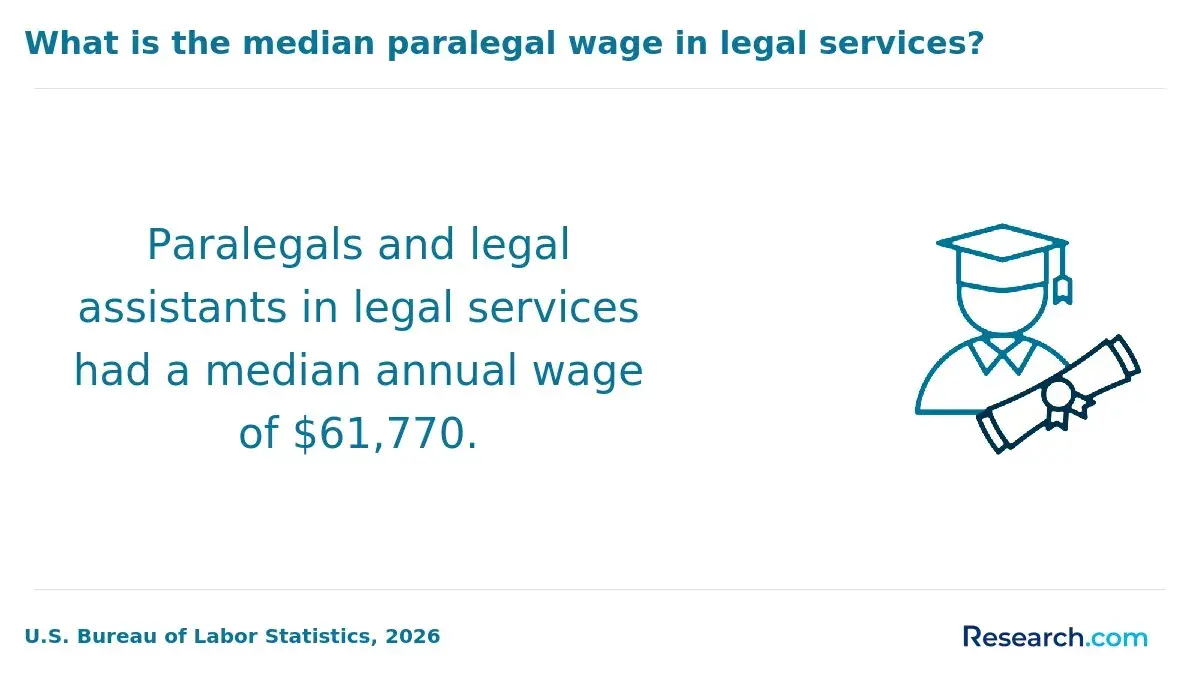
- The U.S. median annual pay was $62,890 in May 2025 for paralegals and legal assistants, versus $80,730 in May 2025 for compliance officers. These are occupational medians, not starting salaries or certificate-holder outcomes.
- Neither certificate automatically confers professional certification or qualifies you to practice law. Check program prerequisites, total cost, and the qualifications in job postings before enrolling.
What Is the Difference Between Paralegal and Compliance Certificates?
A paralegal certificate is an educational credential focused on supporting lawyers and legal teams. A compliance certificate is an educational credential focused on helping an organization meet legal, regulatory, and internal requirements. A certificate records completed coursework; professional certification is a separate credential awarded by a certifying organization or state system after its requirements are met.
The comparison below focuses on the work each program is meant to prepare you for, not on a promise of employment.
| Decision factor | Paralegal certificate | Compliance certificate |
| Typical work | Research, documents, discovery, and case or transaction support under attorney supervision | Policy implementation, monitoring, reporting, training, and responses to regulatory requirements |
| Common settings | Law firms, corporate legal departments, government legal teams | Regulated businesses, healthcare organizations, financial institutions, government agencies |
| Program emphasis | Legal procedure, research, writing, and practice skills | Risk controls, regulations, investigations, and industry-specific obligations |
| Important limitation | Does not authorize independent legal practice | Does not by itself establish expertise in every regulated industry |
Admission requirements vary. Some paralegal certificates are designed for people who already hold a degree or college credit; others have different entry requirements. Compliance certificates may be undergraduate, graduate, or noncredit professional programs. Compare the actual eligibility rules rather than assuming the two credentials are at the same academic level.
Which Certificate Is Better for Career Changers?
Choose paralegal training if you want to work closely with attorneys on legal matters and would enjoy precise writing, research, deadlines, and document management. Prior experience in administration, writing, healthcare, or business can help, but you will still need to learn legal research, procedure, and professional boundaries.
Choose compliance training if you prefer improving how an organization operates: interpreting requirements, documenting controls, identifying problems, and communicating with business teams. Experience in a regulated industry, auditing, operations, HR, or finance may be particularly useful. A general compliance certificate may need to be paired with industry-specific knowledge to compete for specialized roles.
Neither route is automatically the best first purchase. Review entry-level postings in your target location: if they emphasize existing industry experience and employer training, you may be able to test the field through a related role before paying for a certificate. If you are considering a longer-term path, compare legal studies graduate concentrations and salary considerations with the narrower skills and lower time commitment a certificate may offer. A non-JD legal studies degree does not qualify someone to practice law.
What Careers Can You Get With Each Certificate?
A paralegal certificate may support applications for paralegal or legal assistant jobs, particularly when paired with the education or experience an employer requests. Depending on the role, work may involve organizing evidence, preparing drafts, tracking deadlines, and assisting with transactions or litigation. A certificate alone does not guarantee an interview or replace attorney supervision.
A compliance certificate may be relevant to compliance coordinator, analyst, or officer roles. Duties can include maintaining policies, reviewing records, helping with audits, and escalating potential violations. Employers may also require knowledge of their industry or prior experience; an officer-level title should not be assumed to be entry-level.
Career changers with HR experience may want to compare compliance coursework with online legal studies programs focused on HR law. The useful choice depends on whether your target postings call for operational compliance skills, broader legal study, or demonstrated HR experience.
What Do Paralegal and Compliance Certificate Programs Teach?
Paralegal curricula commonly cover legal research and writing, civil procedure, ethics, and document preparation. Strong practice-oriented courses let students apply those subjects to realistic assignments. Compliance curricula commonly cover regulatory frameworks, organizational policies, risk assessment, monitoring, reporting, and investigations; the specific rules taught should match the industry you hope to enter.
Check what students actually do, not just course titles. A program that mentions legal technology or compliance software may not provide access or hands-on assignments. Ask to see current course descriptions and examples of practical work. If you might later pursue a degree, investigate credit transfer considerations for paralegal bachelor's programs before choosing a certificate. A receiving school decides whether certificate coursework counts toward its degree, even when the coursework is credit-bearing.
How Long Do Paralegal and Compliance Certificates Take?
Completion time depends on required courses, prerequisites, course availability, and whether you study while working. A short noncredit course and a college certificate with sequenced, credit-bearing classes are not interchangeable simply because both use the word "certificate." Compare the published course sequence and the earliest realistic completion date for your schedule.
Ask whether classes run every term, whether an internship or practicum is required, and who arranges a placement. Those details can extend the timeline more than the advertised number of courses suggests. If you already have a bachelor's degree and are considering broader business-law study, faster routes to a master's in business law provide a different time-and-depth comparison - not a substitute for checking the requirements of a specific certificate.
How Much Do These Certificate Programs Cost?
There is no reliable single price for either type of certificate. Tuition may be charged per credit, per course, or for the full program, and a noncredit professional course may be priced differently from college coursework. Compare the total amount you would need to pay, not just an advertised tuition figure.
Request a written cost breakdown covering required fees, books, research-platform access, technology, prerequisite courses, and any travel or internship expenses. Then weigh the price against the program's credit value, schedule, practical training, and relevance to target jobs. For one part of that comparison, see comparing costs of ABA-approved online paralegal programs; confirm each program's current approval status and charges directly before applying.
Do not assume federal financial aid covers a certificate. Eligibility depends on the institution, the specific program, and the student's circumstances; a noncredit course may not qualify. Ask the school's financial aid office about the exact program rather than borrowing on the assumption that aid will be available.
Are Paralegal or Compliance Certificates Accredited?
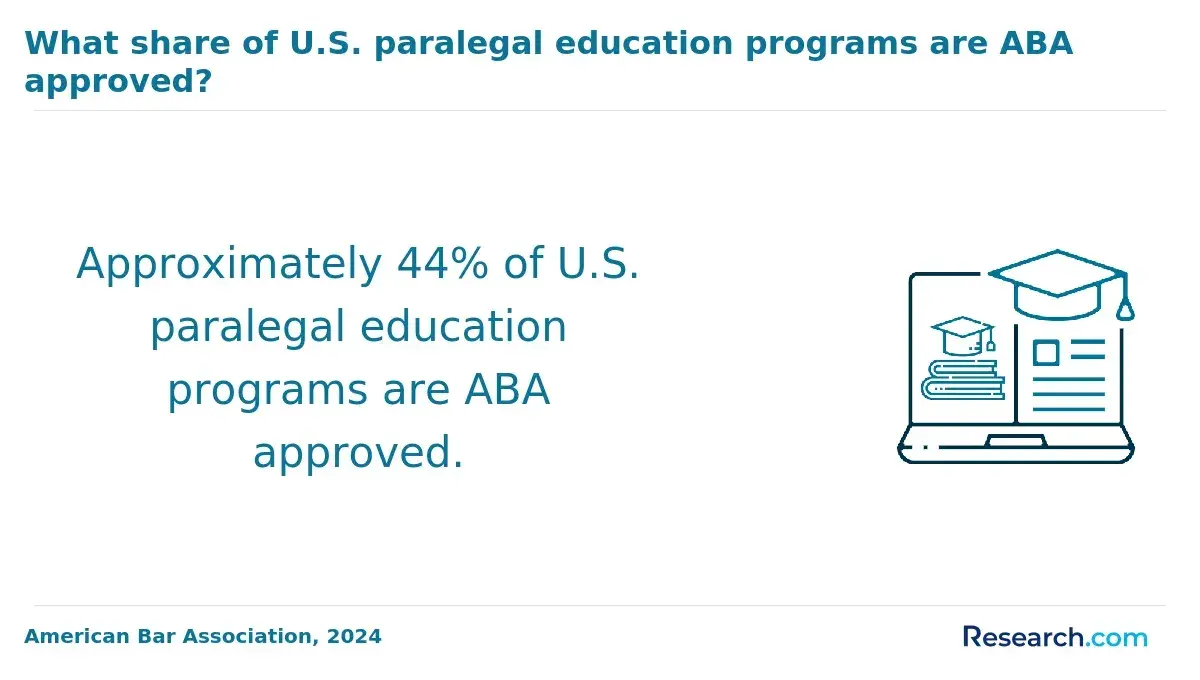
Institutional accreditation concerns the college or other educational institution. Separately, the American Bar Association (ABA) approves qualifying paralegal education programs; ABA program approval is not institutional accreditation, and not every paralegal program has it. Check the ABA's current approved-program directory if approval matters to you or appears in local job postings.
Compliance certificates do not share one universal program-approval system. For either path, confirm the institution's recognized accreditation, the specific certificate's credit or noncredit status, and any approval a school claims. A certificate from an accredited institution is not necessarily transferable to another school, and completing an ABA-approved program does not make someone an "ABA-certified paralegal."
Do Paralegals or Compliance Professionals Need Licenses?
Neither job has a single nationwide license requirement. Paralegals work under attorney supervision and cannot use a certificate to give independent legal advice or perform work reserved for lawyers. State rules and employer expectations can differ, so check the rules where you plan to work.
Professional credentials are separate from school certificates. Organizations such as the National Association of Legal Assistants and the National Federation of Paralegal Associations award paralegal credentials under their own eligibility and examination rules. Compliance credentials likewise have issuer-specific requirements, often tied to an industry or specialty. Verify the current rules with the credential issuer before selecting coursework to meet them; a school certificate does not automatically satisfy eligibility.
Should You Choose an Online or Campus Certificate Program?
Choose the format that lets you complete the required work consistently. Online does not necessarily mean self-paced: classes may have live meetings, timed exams, group projects, or fixed deadlines. A campus program may offer convenient in-person practice but require travel at times that conflict with work.
Before enrolling, ask for the current course schedule and confirm any campus visits, technology requirements, internship rules, and access to instructor feedback. If you need to keep a full-time job, compare actual meeting times and course sequencing - not just the words "online" or "flexible."
What Are the Salaries and Job Outlooks for Each Career?
The U.S. Bureau of Labor Statistics (BLS) reports pay and projections for broad occupations, not for graduates of particular certificate programs. These figures provide a market benchmark, but they do not show what a career changer will earn on entry.
| BLS occupation | Median annual pay | Projected employment growth | Projected annual openings |
| Paralegals and legal assistants | $62,890 in May 2025 | 0%, 2025-2035 | About 40,800 |
| Compliance officers | $80,730 in May 2025 | 4%, 2025-2035 | About 32,700 |
The higher compliance-officer median is not proof that a compliance certificate produces a better return: the occupation includes workers with different experience and education. Likewise, little net growth for paralegals does not mean no hiring; projected openings include positions created when workers leave the occupation. Compare local postings, starting-role requirements, and your likely cost of training alongside these national figures.
Other Things You Should Know About Law & Paralegal
Yes, if you clearly label it "in progress" and give an expected completion date you can reasonably meet. Do not list it as earned or describe it as professional certification.
Possibly. A writing sample, process improvement, or training document can demonstrate transferable skills, but remove confidential and personal information and obtain any permission your employer requires.
Yes, particularly if your legal work exposes you to contracts, investigations, or regulated operations. You may still need industry-specific knowledge; the move is not automatic.
Yes. Applications can reveal whether employers value your existing experience or consistently request training you lack. Use the response to refine your program choice rather than assuming enrollment must come first.
References
- Overview of Accreditation in the United States | ed.gov http://www.ed.gov/laws-and-policy/higher-education-laws-and-policy/college-accreditation/overview-of-accreditation-united-states
- Program Eligibility, Written Arrangements, and Distance Education | 2024-2025 Federal Student Aid Handbook https://fsapartners.ed.gov/knowledge-center/fsa-handbook/2024-2025/vol2/ch2-program-eligibility-written-arrangements-and-distance-education
- How to Become a Paralegal | Online Paralegal Studies Certificate Program https://paralegalonline.bu.edu/articles/become-a-paralegal/
- Certified Paralegal | Wake Technical Community College https://onlinecareertraining.waketech.edu/training-programs/certified-paralegal/
- Paralegal Studies Certificate Program | Long Island University https://liu.edu/brooklyn/academics/school-of-professional-and-continuing-studies/Paralegal-Studies-Certificate-Program
- Online Certified Paralegal Training | Rock Valley College, Continuing Education https://careertraining.rockvalleycollege.edu/training-programs/certified-paralegal/
- Paralegal Studies, AAS | laguardia.edu https://www.laguardia.edu/majors/paralegal-studies/
- Paralegal Studies - Academic Certificate | Midlands Technical College https://www.midlandstech.edu/programs-and-courses/education-and-public-service/paralegal-academic-certificate
- ISO - Certification https://www.iso.org/certification.html
- Certificate Program Accreditation Overview | ansi.org https://anabpd.ansi.org/accreditation/credentialing/certificate-issuers/