2027 Paralegal Programs That Teach Secure Handling of Client Documents

Co-Founder and Chief Data Scientist
A paralegal program may advertise legal technology without teaching students how to protect an actual client file. That distinction matters if you expect to handle confidential records, court filings, or electronic evidence. This guide is for prospective students and career changers comparing U.S. paralegal programs. It explains which courses and assignments demonstrate document-security training, how to assess program credibility and cost, and what to ask before enrolling. You will be able to distinguish hands-on preparation from a course catalog that merely mentions confidentiality.
Key Things You Should Know
- Look for graded practice in secure intake, access control, redaction, metadata review, and file transfer - not just a legal ethics lecture or a software name on a course list.
- ABA approval applies to qualifying paralegal programs; institutional accreditation is separate. Neither status, by itself, verifies that students practice secure document handling.
- The U.S. median annual pay for paralegals and legal assistants was $62,890 in May 2025, with 0% projected job growth for 2025-2035. About 40,800 openings per year are projected, but a program cannot promise employment.
What Do Paralegal Programs Teach About Secure Client Document Handling?
Strong programs teach students to manage a document through its full working life: receiving it, identifying whether it contains confidential or privileged information, storing it with appropriate permissions, using it in a matter, sharing it only with authorized recipients, and retaining or disposing of it under applicable instructions. Privilege is a legal protection that may keep certain communications from disclosure; it is not a label a student can safely apply to every sensitive file.
Useful assignments might require a student to organize a simulated client file, check recipients before sending a document, redact protected information, inspect a file for hidden comments or tracked changes, and record what was transferred. Litigation exercises may also address preservation instructions and e-discovery, the identification and handling of electronically stored information for a legal matter.
The important distinction is between discussion and demonstrated practice. A syllabus that mentions confidentiality establishes a topic. A graded exercise using sample records, written procedures, and instructor feedback shows how students apply it. Programs should use simulated or properly authorized materials rather than exposing students to real client information without appropriate safeguards.
Do Paralegal Programs Need Accreditation to Prepare Students for Legal Work?
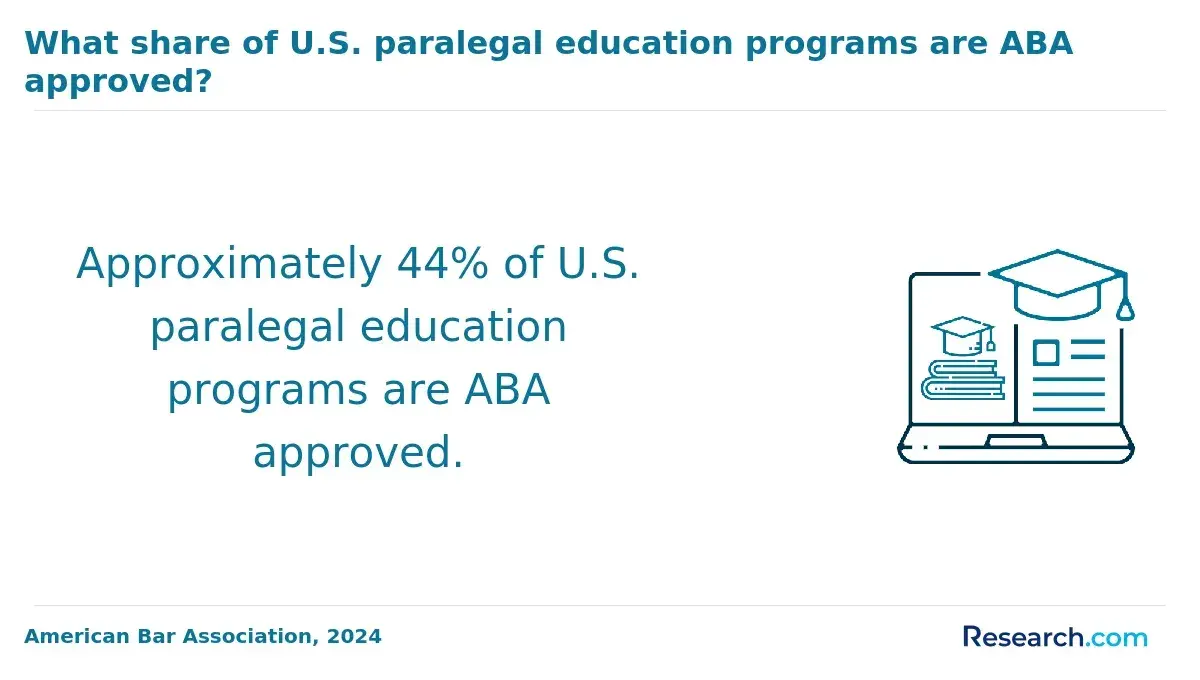
No single program approval is required nationwide for someone to work as a paralegal. Institutional accreditation concerns the college or other educational institution. American Bar Association (ABA) approval concerns a qualifying paralegal education program; it is not institutional accreditation, and the ABA does not certify individual paralegals.
ABA approval can be a useful quality signal, particularly where an employer prefers it, but lack of approval does not automatically make a program unsuitable. Verify any claimed approval in the ABA's current paralegal program directory, and check institutional accreditation with the accreditor or U.S. Department of Education. Then examine the actual coursework: neither status substitutes for evidence of secure-file assignments, qualified instruction, and supervised feedback.
What Education Is Required to Become a Paralegal in the United States?
There is no universal U.S. degree or certificate requirement for paralegals. Employers commonly consider applicants with an associate degree in paralegal studies, a bachelor's degree, or a bachelor's degree supplemented by paralegal coursework. Hiring preferences and any applicable state-specific rules vary, so check the requirements where you intend to work.
If you are starting college, compare paralegal-specific associate programs with associate degrees focused on legal studies. The latter may offer broader legal foundations, but you should verify that they include the practical document, procedure, and technology work sought by paralegal employers. If you already hold a degree, a post-degree paralegal certificate may avoid repeating general education courses. A school-issued certificate records completion of education; it is not the same as professional certification awarded by a credentialing organization.
A non-JD legal studies degree or paralegal credential does not qualify someone to practice law as an attorney. Paralegals perform delegated work under attorney supervision and cannot independently give legal advice or take on tasks that constitute the unauthorized practice of law.
How Do Online and Campus-Based Paralegal Programs Teach Document Security?
Either format can teach secure handling well. What matters is whether students complete realistic, assessed tasks in an appropriate learning environment. "Online" does not necessarily mean asynchronous: classes may have scheduled meetings, proctored assessments, campus visits, or a placement with fixed hours.
The comparison below shows what each format can offer and the limitation to investigate before choosing it.
| Format | Potential document-security practice | Point to verify |
| Online | Controlled file-sharing exercises, digital redaction, electronic filing simulations, and feedback on submitted work | Whether required software access, live meetings, device rules, or placements limit flexibility |
| Campus-based | Supervised file-room, scanning, redaction, and collaborative case-file exercises | Whether practice includes current digital workflows rather than paper files alone |
| Hybrid | Online document exercises combined with in-person labs or supervised practice | How often attendance is required and whether travel adds cost |
Ask whether the school supplies a secure training environment and sample files. Access to a research database or case-management product is not, by itself, evidence that students complete hands-on security assignments. If a program requires an internship, confirm who arranges it and whether remote work or an existing job can meet the requirement.
Which Courses Cover Confidentiality, Legal Ethics, and Cybersecurity?
Course titles vary, so inspect learning outcomes and sample assignments rather than looking for one course called "document security." The strongest preparation usually combines legal duties with repeated practice in procedural and technology courses.
These common course areas show where relevant skills may appear and what students should be able to demonstrate afterward.
| Course area | Relevant skill or exercise |
| Legal ethics and professional responsibility | Recognizing confidentiality issues, escalation duties, and the limits of a paralegal's role |
| Legal research and writing | Managing drafts, citations, comments, and versions without exposing sensitive material |
| Litigation and e-discovery | Organizing records, following preservation instructions, reviewing productions, and checking redactions |
| Legal technology or office practice | Applying access permissions, secure sharing procedures, and file-naming or audit conventions |
Cybersecurity instruction should connect ordinary risks - such as a misaddressed email, compromised account, or unauthorized cloud upload - to the office's reporting and supervision procedures. If a program mentions artificial intelligence tools, ask whether students learn to check outputs and avoid entering client information into tools without authorization. A tool demonstration is not proof of proficiency or permission to use it in a law office.
What Are the Admission Requirements for Paralegal Programs?
Requirements depend on the credential. An associate program may admit students beginning college, while a post-baccalaureate certificate may require an earned bachelor's degree. Other certificates may require prior college coursework rather than a completed degree. Check the published requirements for the specific program instead of assuming that every "paralegal certificate" has the same entry point.
If you hope to continue toward a bachelor's degree, review legal studies degree progression and transfer considerations before enrolling. Ask the receiving college how the proposed courses would apply; institutional accreditation alone does not guarantee credit transfer. Also distinguish a required prerequisite from a recommended course, because an extra term of prerequisite study changes the time and cost of the route.
How Long Do Paralegal Programs Take and What Do They Cost?
Completion time depends on the credential, prerequisites, course sequence, and whether you study part time. An associate degree commonly takes about two years of full-time study; a bachelor's degree commonly takes about four. Certificates vary more widely, especially when a program is designed for students who already have a degree. Confirm the school's published schedule and whether every required course is offered often enough for your intended pace.
Compare the total cost to finish, not tuition alone. Request an itemized estimate covering mandatory fees, books, required technology or legal-research access, prerequisite courses, travel, and any internship-related expense. A lower-priced noncredit certificate may meet a training goal but offer different transfer or aid options from a credit-bearing program. Do not assume a certificate qualifies for federal financial aid; eligibility depends on the institution and the specific program.
If you are considering graduate legal study for a broader career goal, lower-tuition master's in legal studies programs provide a separate cost comparison. A non-JD master's is not required for ordinary paralegal document work, so weigh its additional tuition and time against the role you actually want.
Which Certifications Can Paralegal Graduates Pursue?
Graduates may consider voluntary professional credentials, including the Certified Paralegal (CP) credential from NALA and the Registered Paralegal (RP) credential associated with the National Federation of Paralegal Associations' PACE examination. These are distinct from a school-issued certificate and from ABA program approval. Eligibility, examinations, fees, and continuing-education rules are set by the credentialing organization and can change.
Some states also have their own qualifications or programs for particular paralegal designations. Before paying for an exam or enrolling to meet an eligibility pathway, check the credentialing body's current rules and any applicable state authority. Certification may strengthen an application where an employer values it, but it is not a nationwide prerequisite for paralegal employment or a license to practice law.
What Jobs and Salaries Can Paralegal Programs Lead To?
Graduates may seek paralegal or legal assistant roles in law firms, corporate legal departments, government, or other legal workplaces. Document-heavy work can include maintaining matter files, preparing drafts for attorney review, organizing discovery, and tracking records. A job title alone does not tell you how much of that work is devoted to security; examine the employer's duties and training practices.
The Bureau of Labor Statistics reports median annual pay of $62,890 in May 2025 for paralegals and legal assistants. It projects 0% growth for 2025-2035, yet about 40,800 openings per year, largely because workers leave or change occupations. This occupation-wide median is not an entry-level offer or a forecast for graduates of a particular program.
Prior experience with records, administration, or regulated information may help a career changer, but employers may still expect legal procedure and attorney-supervised workflow skills. If your goal is broader compliance or management work rather than paralegal practice, explore career paths across legal studies master's specializations before assuming a paralegal credential is the right investment.
How Do You Choose a Reputable Paralegal Program?
Start with your intended job and credential level, then compare programs on verifiable evidence. A program is a stronger match for document-intensive work when it can show assessed security exercises across several courses - not just a promise that graduates will be "technology-ready."
Use these checks before committing tuition or leaving a job for classes:
- Confirm the exact credential, admission prerequisites, institutional accreditation, and any claimed ABA program approval through the relevant current directories.
- Request recent syllabi or assignment descriptions showing redaction, file permissions, secure transfer, confidentiality decisions, and instructor feedback.
- Ask which tools students actually use, whether access is included, and whether exercises use simulated or appropriately authorized records.
- Confirm scheduled meetings, campus visits, course availability, and who arranges any required internship.
- Get a written total-cost estimate and verify financial-aid eligibility, transfer treatment, and the program's policy on changing requirements.
Be cautious if a school equates a certificate with professional certification, calls institutional accreditation "ABA accreditation," or promises employment from software exposure alone. If you are weighing graduate study instead, you can compare shorter online legal studies graduate programs; check whether that broader, non-JD education serves a different career goal before choosing it over focused paralegal training.
Other Things You Should Know About Law & Paralegal
Not simply because the person is related to the client. Follow the supervising attorney's instructions and the organization's authorization procedures before disclosing any client information.
Report it promptly through the employer's incident procedure and tell the supervising attorney. Do not assume that recalling an email fixes the disclosure or try to resolve it without direction.
No. HIPAA applies to specified covered entities and business associates, not automatically to every document containing health information. Other confidentiality duties and protective orders may still govern how a legal team handles the record.
Do not assume so. Filing and signature rules depend on the court and the document. Follow the applicable rules and the supervising attorney's instructions rather than treating access to an e-filing account as signing authority.
References
- 1.6 Confidentiality Of Information | North Carolina State Bar https://www.ncbar.gov/for-lawyers/ethics-and-governing-rules/rules-of-professional-conduct/10-119-client-lawyer-relationship/16-confidentiality-of-information/
- attorney-client privilege | Wex - Law. Cornell. Edu https://www.law.cornell.edu/wex/attorney-client_privilege
- Home - Paralegal College | Center for Advanced Legal Studies https://paralegal.edu/
- Online Associate Degree in Paralegal Studies - Campus https://campus.edu/online-paralegal-degree
- Online Certified Paralegal from City College of New York | The City College of New York https://careertraining.ccny.cuny.edu/training-programs/certified-paralegal/
- Paralegal Certificate Program at Hofstra Law: Academics https://law.hofstra.edu/admissions/paralegal-certificate-program/academics/
- Securely Share Data and Files - - IT Service Desk https://itsupport.umd.edu/itsupport/
- Rule 1.6 Confidentiality of Information - Comment https://www.americanbar.org/groups/professional_responsibility/publications/model_rules_of_professional_conduct/rule_1_6_confidentiality_of_information/comment_on_rule_1_6/