
2027 MLS Programs for Public Pension and Benefits Administrators

Co-Founder and Chief Data Scientist
Public pension and benefits administrators work with plan rules, tax requirements, board decisions, and employee questions that can carry legal consequences. A Master of Legal Studies (MLS) may help experienced professionals handle that complexity, but it is a substantial investment - and not every role calls for a graduate degree. This guide explains which MLS pathways fit public-sector benefits work, what to check in an online program, and how to weigh tuition and time against shorter training options. The goal is to help you decide whether an MLS is worth pursuing and what to ask before enrolling.
Key Things You Should Know
- Prioritize courses in administrative law, employment law, tax, and benefits over a concentration label alone; public pension rules vary by plan and jurisdiction.
- An MLS is a non-JD degree for legal knowledge, not a requirement for most benefits jobs or a qualification to practice law.
- The Bureau of Labor Statistics reports $78,210 in May 2025 median pay for compensation, benefits, and job analysis specialists and 6% projected growth, 2025-2035; these broad figures are not a public-pension-specific salary forecast.
What is an MLS degree for public pension and benefits administrators?
An MLS is a graduate degree that teaches legal concepts and methods to people who do not intend to become attorneys. Schools may call a similar non-JD degree a Master of Studies in Law (MSL) or Master of Jurisprudence; the curriculum matters more than the initials.
In a public pension office, that knowledge can support work such as interpreting plan documents, documenting benefit determinations, preparing materials for counsel or a governing board, and coordinating responses to audits or appeals. An administrator still must follow the plan's governing law and procedures and refer legal advice or representation to authorized counsel. An MLS does not qualify its holder to practice law.
A paralegal certificate serves a different purpose: it generally focuses on legal-support skills rather than graduate-level study of law for administrators. If your goal is a legal-support position rather than pension policy or compliance work, compare paralegal certificate study options online before committing to an MLS. Completing a certificate does not, by itself, confer professional paralegal certification.
Why should pension and benefits professionals earn a Master of Legal Studies?
The strongest case for an MLS is a recurring need to work across legal boundaries: plan provisions, state statutes, federal tax rules, employment agreements, and administrative procedures. Legal research and statutory-interpretation coursework may help an administrator identify the controlling question, maintain a defensible decision record, and communicate more effectively with attorneys, actuaries, auditors, and trustees.
That benefit depends on the job. Someone whose duties primarily involve processing routine transactions may gain more immediate value from supervised plan training, a targeted graduate course, or a relevant professional credential. An MLS also carries opportunity cost: study time can displace work or family commitments, and a degree alone does not establish eligibility for promotion. Check actual job postings and your employer's advancement criteria before treating it as a career requirement.
What are the best MLS degree pathways for public pension administrators?
There is no universally best concentration. Public administrators should match a program's required courses and available electives to the decisions they make at work, then confirm that those courses will run on a workable schedule. The pathways below describe curriculum patterns, not verified concentrations offered by particular schools.
| Pathway | Best fit | Key curriculum to look for | Potential gap |
| Employment and labor law | Administrators coordinating benefits with public employment and bargaining rules | Public employment, labor agreements, discrimination, and leave | May offer little pension tax or plan-governance coverage |
| Tax and employee benefits | Staff handling plan design, qualification, or benefit compliance | Retirement-plan tax rules, employee benefits, and legal research | Courses may focus on private employers rather than governmental plans |
| Government and administrative law | Staff supporting boards, appeals, rulemaking, or public-records responses | Administrative process, state and local government, and statutory interpretation | May require benefits electives to connect doctrine to daily work |
| General MLS with selected electives | Administrators whose responsibilities cross several areas | Research and writing plus a documented mix of relevant electives | Electives may not be available every term |
A formal concentration is a published degree track; taking several related electives is not the same designation. Ask for the current course rotation and syllabi, especially where a "benefits" course might concentrate on private-sector plans. If you have prior business-law coursework, comparing business law transfer opportunities can help frame your questions, but the MLS institution decides whether any prior graduate credit applies.
Are online MLS programs suitable for working pension administrators?
They can be, provided the schedule works during benefit elections, board meetings, audits, and other busy periods. "Online" does not necessarily mean asynchronous: a program may require live classes, timed exams, a cohort sequence, or occasional campus visits. Check the current catalog and ask how often required courses are offered, whether part-time enrollment is permitted, and what happens if you pause for a term.
Online study also needs a workable confidentiality plan. Public plan staff should not assume they may upload member records, employer files, or privileged communications for class assignments. Ask whether assignments can use public decisions, hypothetical facts, or properly approved de-identified material.
If a shorter legal-education route would meet your goal, a guide to accelerated paralegal programs offers a different option to investigate. Compare the skills taught, not just completion speed: paralegal training is not a substitute for a graduate curriculum in pension governance.
What do MLS programs teach about pensions, benefits, and public-sector law?
Useful MLS coursework may cover legal research and writing, statutory interpretation, administrative law, employment law, tax, and employee benefits. For public pension work, test each course against a real task: analyzing a benefit appeal, tracing authority for a plan amendment, reviewing a vendor agreement, or preparing a clear issue summary for counsel.
The public-sector distinction is essential. Governmental pension plans are generally excluded from the Employee Retirement Income Security Act of 1974 (ERISA) framework that governs many private plans, but other federal tax provisions and applicable state or local laws may still matter. A course built around ERISA can provide context without fully teaching your plan's rules. Health benefits, governmental deferred-compensation arrangements, collective bargaining, public-records duties, and financial reporting each raise different questions; no single "benefits law" course should be assumed to cover them all.
Before enrolling, request syllabi and ask whether assignments address governmental plans and whether instructors distinguish legal requirements from accounting standards and plan policy. That is more informative than a broad claim that the program covers compliance.
What are the admission requirements for MLS programs?
MLS programs generally target applicants who already hold a bachelor's degree, but each school sets its own admission rules. Review the current requirements for transcripts, a résumé, a statement of purpose, recommendations, English-language proficiency where applicable, and any minimum academic standard. Do not assume the absence - or presence - of a standardized test requirement based on another school's policy.
Public benefits experience can make an application more specific. In your statement, identify the work you do, the legal questions you encounter, and the courses that would help you address them. If you lack a bachelor's degree, ask about undergraduate routes first; a paralegal certificate is not ordinarily a substitute for a graduate program's degree prerequisite.
How long do MLS programs take, and how much do they cost?
Completion time depends on required credits, course availability, and whether you attend full time or part time. Some students can finish in about a year of full-time study; working administrators may need longer. Use the published degree plan and course rotation - not an advertised fastest-possible timeline - to estimate your own finish date.
For a comparable cost estimate, obtain each school's current 2026-27 tuition schedule and add mandatory fees, books, technology requirements, and any required travel. Ask whether tuition differs by residency or delivery format and whether an employer will reimburse graduate study relevant to your position. The financial aid office can explain the specific program's aid eligibility and applicable federal borrowing rules; enrollment in a graduate program does not mean every expense will be covered.
If cash flow is the main constraint, ask the MLS school directly about its payment schedule rather than assuming a monthly option exists. Information on managing tuition payments for online paralegal study concerns a different educational route and should not be taken as evidence of MLS payment terms.
What careers can an MLS support in public pensions and employee benefits?
An MLS may complement experience in pension administration, benefit-plan operations, compliance, policy analysis, appeals coordination, or support for a retirement-system board. In those roles, the practical advantage is often the ability to research an issue, document its governing authority, and recognize when counsel or another specialist must decide it.
Hiring criteria vary. A benefits administrator role may emphasize plan operations and customer service, while a senior compliance or policy role may place more weight on legal analysis and supervisory experience. An MLS does not replace plan-specific training, an accounting or actuarial qualification where one is needed, or a law degree for attorney positions. To assess career value, compare postings for the position you want with your current qualifications and note whether a graduate degree is required, preferred, or not mentioned.
What salaries and job outlook can pension and benefits administrators expect?
The Bureau of Labor Statistics (BLS) does not provide a single national wage or growth forecast specifically for public pension administrators. These broader occupations offer context, not a prediction of what an MLS holder or a government plan employee will earn.
| Broader BLS occupation | Median annual pay | Projected job growth |
| Compensation, benefits, and job analysis specialists | $78,210 in May 2025 | 6% projected growth, 2025-2035 |
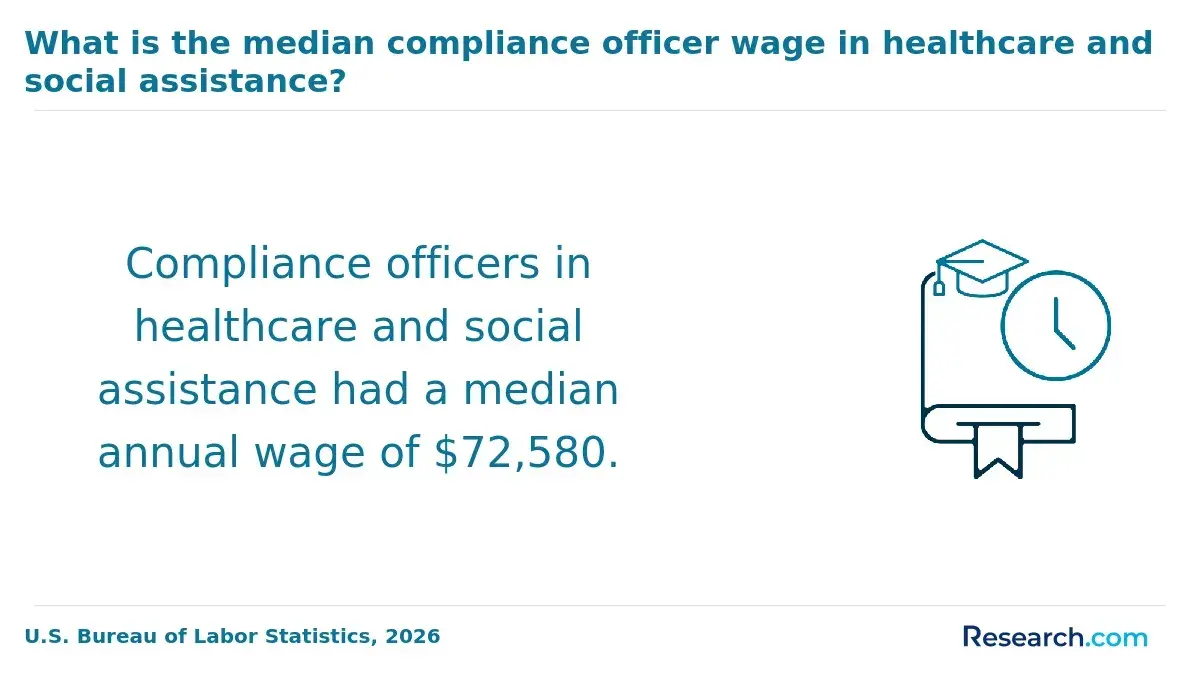
| Compliance officers | $80,730 in May 2025 | 4% projected growth, 2025-2035 |
The first category is closer to many benefits-administration duties; the second may better reflect roles centered on monitoring rules and internal controls. Neither isolates public pension agencies or measures an MLS pay premium. For a more useful personal comparison, inspect published salary ranges for government jobs in your jurisdiction and the qualifications attached to higher-level positions.
How can you choose an accredited and reputable MLS program?
First, verify the institution's current accreditation with a recognized institutional accreditor or the U.S. Department of Education's accreditation records. Then evaluate the MLS itself: read its catalog requirements, confirm who teaches the relevant courses, and obtain written answers about course rotation, online attendance, total charges, and any applied project. Institutional accreditation does not establish that a particular curriculum is a strong fit for governmental pensions.
Be cautious if a program advertises "pension specialization" without identifying required courses, treats private-plan law as interchangeable with public-plan law, or implies that an MLS permits legal practice. The American Bar Association's approval of qualifying paralegal education programs is a separate matter; it is not institutional accreditation and is not an MLS quality designation. If your objective is paralegal training instead, compare cheaper ABA-approved online paralegal options on their own terms.
A sound next step is to shortlist programs whose actual courses match your plan's legal issues, ask your supervisor which skills would support advancement, and request each school's written cost and schedule details. Choose the MLS only if its added depth addresses a need that employer training, selected courses, or a shorter credential would not meet as well.
Other Things You Should Know About Law & Paralegal
Only with appropriate employer authorization and safeguards. Member information and legal communications may be confidential. Ask the instructor whether a hypothetical or public case can meet the assignment instead.
No. A degree and a professional certification are separate credentials. Check the issuing organization's current rules if you want a specific certification or credit toward one.
Possibly, but not automatically. Trustee-training rules vary by jurisdiction and retirement system. Confirm eligible subjects and documentation with the authority that administers the requirement before enrolling.
It may. Your public plan's obligations and a private vendor's obligations can arise under different rules. Look for coursework that teaches you to identify which entity, plan, and transaction a rule governs.
References
- Employee Retirement Income Security Act (ERISA) | dol.gov https://www.dol.gov/general/topic/retirement/erisa
- Cost of Attendance (Budget) | 2025-2026 Federal Student Aid Handbook https://fsapartners.ed.gov/knowledge-center/fsa-handbook/2025-2026/vol3/ch2-cost-attendance-budget
- Pension and Welfare Benefits Administration | gao.gov https://www.gao.gov/products/gao-02-232
- Types of Financial Aid: Grants, Work-Study, and Loans | studentaid.gov https://studentaid.gov/understand-aid/types
- How to Apply & FAQ's | Yale School of Public Health https://ysph.yale.edu/admissions-financial-aid/master-in-public-health-admissions/apply-to-yale-school-of-public-health/
- Understanding Costs | lsu.edu https://www.lsu.edu/financialaid/cost/index.php
- M.S.L. Program | Yale Law School https://law.yale.edu/studying-law-yale/degree-programs/graduate-programs/msl-program
- Admissions - Pitt Online - University of Pittsburgh https://www.online.pitt.edu/admissions/
- Online Master of Legal Studies | AU-LAW https://onlinelaw.wcl.american.edu/legal-studies/
- MLS vs Graduate Certificate: What's the Better Career Investment? | wsulaw.edu https://www.wsulaw.edu/news/why-choose-a-master-of-legal-studies-over-a-graduate-certificate/


