2027 Purdue Global vs. UMass Global: Comparing Bachelor's Programs for Legal Support Careers

Co-Founder and Chief Data Scientist
Purdue Global and UMass Global offer different routes into law-related work: one centers on legal support, while the other takes a broader legal studies approach. That distinction matters if you want paralegal skills rather than a degree you can apply across several business or legal settings.
This guide compares what to check in each curriculum, how online study and transfer credit affect the decision, and what these degrees can - and cannot - do for your career. It also identifies the questions to settle with each school before you enroll.
Key Things You Should Know
- Choose by intended work. Purdue Global's Bachelor of Science in Legal Support and Services is the more directly named legal-support route; UMass Global's Bachelor of Arts in Legal Studies is the broader legal-studies route. Compare current required courses before treating either as paralegal training.
- Keep recognition separate. Both universities hold institutional accreditation, but that does not establish American Bar Association (ABA) approval of a particular paralegal program or eligibility for professional certification.
- Check the financial stakes. The U.S. Bureau of Labor Statistics reports $62,890 in May 2025 median annual pay for paralegals and legal assistants. That occupational median is not a salary forecast for graduates of either school.
How Does Purdue Global Compare With UMass Global for Legal Support Bachelor's Degrees?
The central difference is emphasis, not degree level. Purdue Global offers a Bachelor of Science in Legal Support and Services; UMass Global offers a Bachelor of Arts in Legal Studies. Both are bachelor's degrees, but their names point to different questions a prospective student should ask of the current catalog: How much required coursework develops paralegal tasks, and how much examines law more broadly?
The comparison below separates established distinctions from details that require a program-specific review. A degree title alone cannot tell you whether an employer will regard its coursework as adequate preparation for a particular position.
| Decision criterion | Purdue Global | UMass Global |
| Degree | Bachelor of Science in Legal Support and Services | Bachelor of Arts in Legal Studies |
| First curriculum question | Which required courses teach research, drafting, litigation support, and legal-office work? | Which required courses teach practical legal-support skills, rather than legal concepts alone? |
| Best starting point for comparison | Students specifically seeking legal-support coursework | Students seeking a broader legal-studies education |
| Essential item to verify | Current degree requirements and any available concentration | Current degree requirements and any available paralegal-focused coursework |
Neither degree qualifies its holder to practice law. If your goal is to become a lawyer, a bachelor's degree may precede law school, but it is not a substitute for a Juris Doctor (JD) or state bar admission.
Are Purdue Global and UMass Global Accredited for Legal Studies?
Purdue Global is institutionally accredited by the Higher Learning Commission; UMass Global is institutionally accredited by the WASC Senior College and University Commission. Institutional accreditation concerns the university. It does not mean every legal-studies course or paralegal pathway has a separate professional endorsement.
ABA approval is a different question. The ABA approves qualifying paralegal education programs; it does not institutionally accredit these universities or certify individual graduates. If ABA approval matters to an employer or to your own selection criteria, check the ABA's current paralegal program directory for the exact program you would enter. Do not infer approval from a university's accreditation, a course title, or another program at the same institution.
What Legal Support Careers Can These Bachelor's Degrees Prepare You For?
Paralegals and legal assistants help attorneys with research, documents, case organization, and other supervised work. A legal-support-focused curriculum may align closely with those tasks; a broader legal-studies curriculum may also be useful in legal operations, contract administration, or compliance support. Job titles and hiring requirements vary by employer, and neither degree authorizes independent legal practice.
For a prospective paralegal, compare assignments - not just course names. Research and writing exercises, document drafting, and work with legal procedure are more direct evidence of practical preparation than a general statement that a program covers law. For compliance-oriented roles, look instead for relevant regulatory coursework and consider whether your existing industry experience supplies the context an employer wants.
If you already hold a bachelor's degree and are weighing further study rather than a second one, comparing legal studies master's pathways and potential earnings can help frame that separate decision. A non-JD legal studies master's degree also does not qualify someone to practice law.
How Do Purdue Global and UMass Global Program Formats Differ?
Both schools serve online students, but online does not necessarily mean self-paced. A scheduled course can include weekly deadlines even when students do not attend campus. Course length, live-meeting requirements, exam arrangements, and available start dates can also affect whether a program fits around work.
Ask each school for the schedule of the courses you would actually need, not just its general description of online learning. In particular, confirm whether required legal courses run every term, whether any meetings occur at fixed times, and whether practical experience or a campus visit is required. If an internship is available or required, ask who secures the placement and whether your current job could qualify; do not assume either possibility.
Someone who already has a bachelor's degree and primarily wants graduate-level legal knowledge may also compare shorter online master's programs in legal studies. That is a different credential and should be evaluated against the actual skills needed for the target job.
What Courses Do Purdue Global and UMass Global Include in Their Curricula?
Use each school's current catalog and degree audit to distinguish required courses from electives. Purdue Global's legal-support degree and UMass Global's legal-studies degree should be compared on the same practical subjects: legal research and writing, civil procedure or litigation, contracts, ethics, and document work. A subject mentioned in a program description is not necessarily required of every student.
The most consequential gap to look for is between learning about law and performing supervised legal-support tasks. Ask for sample assignments or course descriptions showing whether students draft documents, research legal authorities, and receive feedback on their work. Confirm separately whether either program requires an internship or provides access to particular research tools; a tool's appearance in marketing material does not establish hands-on proficiency.
What Are the Admission Requirements for Each Legal Studies Program?
Start with each university's current undergraduate admissions requirements, then ask whether the specific degree has additional conditions. Applicants should confirm documentation requirements, how prior college work is evaluated, and whether any legal courses have prerequisites. Do not assume a previous legal credential is required - or that it will satisfy a degree requirement - without a written evaluation.
For transfer students, the decisive number is not simply how many credits a school accepts. It is how many apply to general education, major requirements, and remaining electives. Purdue Global uses quarter credits and UMass Global uses semester credits, so compare each school's official evaluation of your transcript rather than comparing raw credit totals. The receiving institution decides how prior work applies.
Applicants considering a different curriculum can also explore business law degree pathways with transfer credit options. Treat transfer-friendly descriptions as a reason to request an individual evaluation, not a promise that particular courses will count.
How Long Do the Programs Take and What Do They Cost?
Neither school's advertised per-credit tuition, by itself, provides a reliable total-price comparison. Your remaining credits, the credit system each school uses, applicable tuition category, and required fees determine the bill. Transfer evaluations and course sequencing likewise determine time to completion. A student with substantial applicable credit could face a very different timeline from a first-time undergraduate at either school.
Request a written, individualized estimate from each university showing remaining required courses, tuition for those courses, mandatory fees, books or digital materials, and expected terms to completion. Ask whether tuition could change before you finish and whether any required practical experience would add expenses. Compare the estimates using remaining cost and time, not unlike per-credit figures.
If cash flow is the main obstacle, finding online paralegal programs with monthly payment plans offers another comparison point. A payment plan changes when a bill is due; it does not lower the underlying tuition. Ask each university's financial aid office what aid you qualify for and what borrowing would cost to repay.
Can Graduates Qualify for Paralegal Certification or Professional Credentials?
Possibly, but graduation is not the same as certification. A school awards a degree or certificate; a professional organization awards its own credential after an applicant meets that organization's current eligibility and assessment rules. For example, the National Association of Legal Assistants administers the Certified Paralegal credential, while the National Federation of Paralegal Associations administers the Registered Paralegal credential through its examination pathway.
Before enrolling for the purpose of earning a credential, review the certifying organization's current education, coursework, and experience requirements against the specific degree plan you would complete. Ask the school for documentation of applicable legal coursework. State rules and employer expectations also differ; professional certification is not a universal requirement to work as a paralegal. In every setting, legal support staff must stay within the applicable rules on supervised work and unauthorized practice of law.
What Salaries and Job Outlook Apply to Legal Support Careers?
According to the U.S. Bureau of Labor Statistics, paralegals and legal assistants had median annual pay of $62,890 in May 2025. The occupation is projected to have 0% growth from 2025-2035, but about 40,800 openings per year are projected. Little net growth therefore does not mean no hiring; openings can arise when workers leave an occupation. None of these figures measures outcomes for either university's graduates.
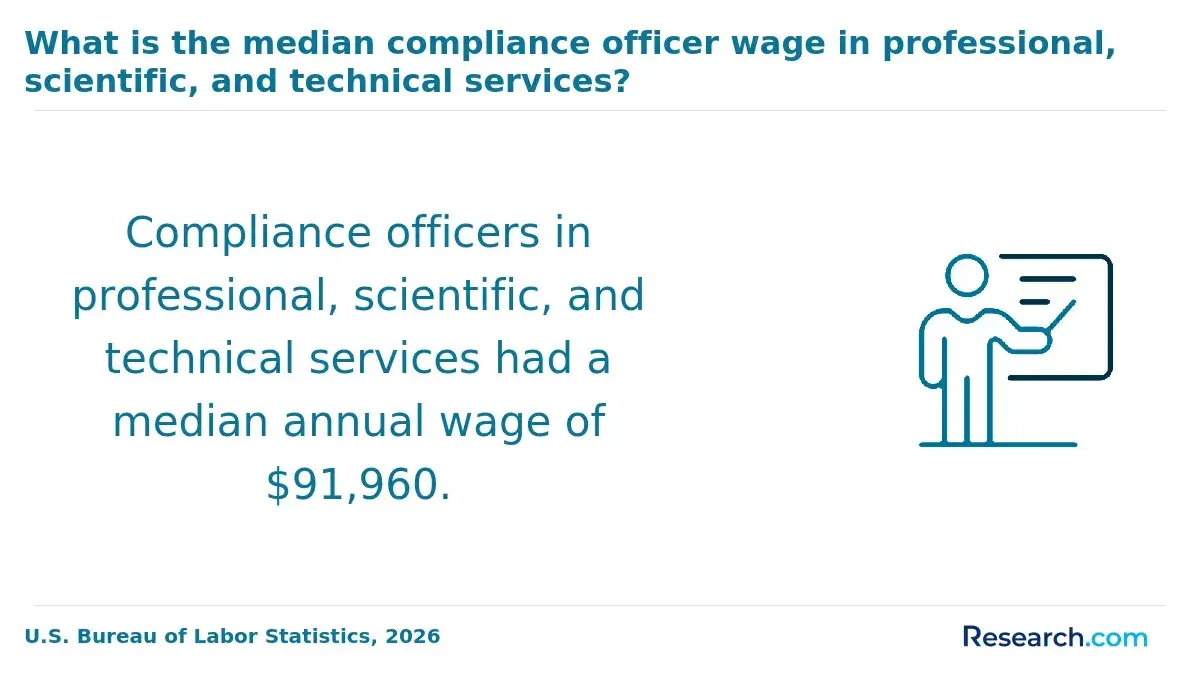
For a broader regulatory direction, BLS reports median annual pay of $80,730 in May 2025 for compliance officers and projects 4% growth from 2025-2035. Compliance officer is a distinct occupation, not an automatic next step from a legal studies degree. Industry knowledge, relevant experience, and the particular employer's requirements matter when assessing that route.
How Should Students Choose Between Purdue Global and UMass Global?
Start with the job, then test the curriculum against it. Purdue Global may be the stronger candidate if you want a degree explicitly oriented toward legal support and its current required assignments cover the practical tasks your target employers seek. UMass Global may be the stronger candidate if you want broader legal studies and its required coursework still provides enough practical preparation for your intended role. Neither conclusion follows from the institution's name alone.
Before paying an enrollment deposit, obtain both schools' degree plans and transfer evaluations. Compare the legal courses you must actually take, any internship logistics, the schedule in which those courses are offered, and written estimates of remaining cost. Check ABA approval separately if it is important to you, and check certification eligibility with the credentialing organization rather than relying on an informal assurance.
If you already have a bachelor's degree, consider the opportunity cost of completing another full degree. A targeted credential, employer training, or - if graduate study suits your goal - lower-tuition master's in legal studies programs may warrant comparison. Choose only after you know which option supplies the missing skills at a cost and schedule you can sustain.
Other Things You Should Know About Law & Paralegal
Yes. It can be an undergraduate route to a JD application, but it does not confer admission or replace a JD. Check each law school's current admissions criteria.
Potentially. Ask the university whether it enrolls students in your state and whether any required placement can be completed where you live. State-specific professional rules still warrant a separate check.
Diploma wording is an institutional policy, not something to infer from the degree title. Ask the registrar how the degree and any concentration appear on the diploma and transcript.
Not automatically. Remote-work eligibility is set by employers and may depend on experience, supervision, confidentiality procedures, and the duties of the position.
References
- Study in a Law Office or Judge's Chamber | ca.gov https://www.calbar.ca.gov/admissions/requirements/education/legal-education/Law-Office-or-Judges-Chamber
- Programmatic Accrediting Agencies | U.S. Department of Education http://www.ed.gov/laws-and-policy/higher-education-laws-and-policy/college-accreditation/programmatic-accrediting-agencies
- Undergraduate Retention and Graduation Rates - COE https://nces.ed.gov/programs/coe/indicator/ctr/undergrad-retention-graduation
- Tuition and Fees Data - Texas Higher Education Coordinating Board https://www.highered.texas.gov/legislative-appropriations-overviews/tuition-and-fees-data/
- Tuition, Fees, and Costs | Illinois Institute of Technology https://www.iit.edu/financial-aid/tuition-fees-and-costs
- Credit for Prior Learning | University of Arizona Catalog https://catalog.arizona.edu/policy/courses-credit/credit/credit-prior-learning
- Transfer Credit - SUNY Empire Academic Catalog https://catalog.sunyempire.edu/undergraduate/transfer-credit/
- Paralegal Certification vs. Degree: What's the Difference? | Bryan University Online© https://bryanuniversity.edu/faq/the-difference-between-a-paralegal-certification-and-degree/