2027 Legal Studies Master's Programs for Employment Policy Writers

Co-Founder and Chief Data Scientist
Writing an employee handbook or workplace policy takes more than clear prose: the rules must reflect employment law, organizational practice, and the people who will use them. A legal studies master's can strengthen that work, but it is a substantial investment and is not required for most policy-writing roles.
This guide is for HR professionals, compliance staff, and career changers deciding whether graduate legal study is worth pursuing. It explains what to look for in a program, how to compare alternatives, and which questions to settle before enrolling.
Key Things You Should Know
- A non-JD legal studies master's can help employment policy writers interpret legal requirements and draft usable policies, but it does not qualify graduates to practice law.
- Choose for employment-law coursework, supervised drafting practice, schedule, and total cost - not a degree title alone. A graduate certificate or employer training may meet a narrower need.
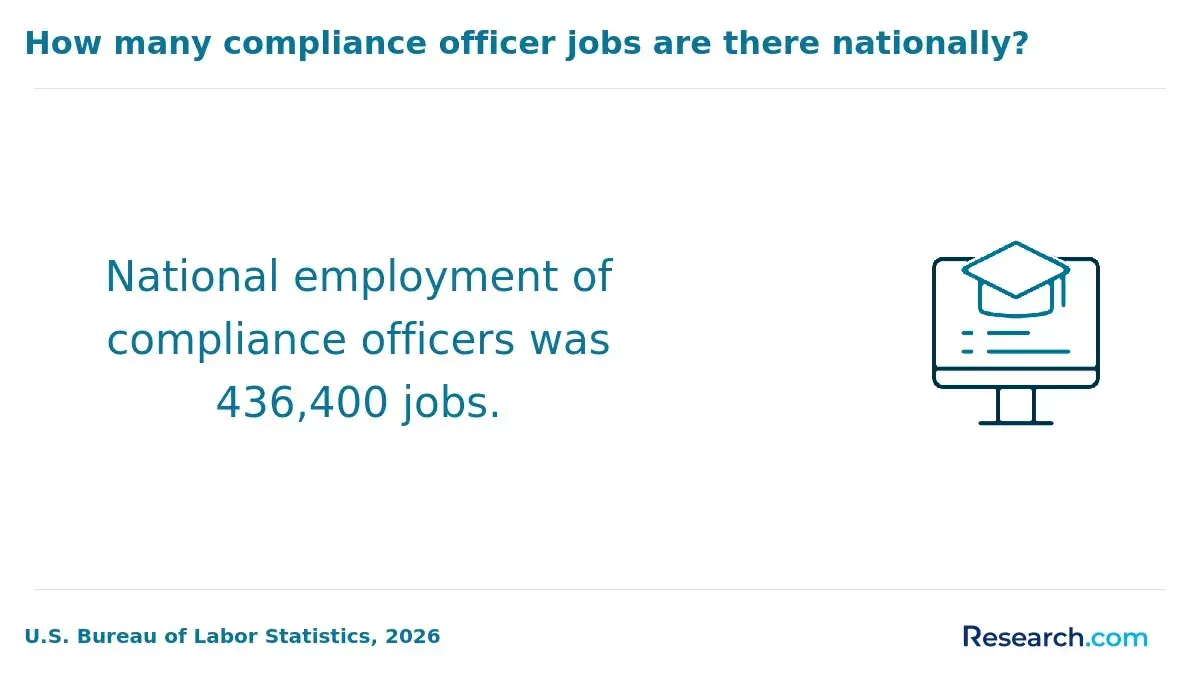
- The Bureau of Labor Statistics reports $80,730 median annual pay for compliance officers in May 2025 and 4% projected job growth for 2025-2035; those figures describe a broad occupation, not employment policy writers specifically.
What are legal studies master's programs for employment policy writers?
Employment policy writers turn legal requirements and organizational decisions into documents employees and managers can follow. Their work may include handbook provisions, leave procedures, anti-harassment policies, accommodation processes, and internal guidance. They must research the rules, identify where a policy could conflict with law or practice, and coordinate review with HR leaders and legal counsel.
A Master of Legal Studies (MLS), Master of Studies in Law (MSL), or similarly named non-JD degree teaches law to professionals who do not plan to become attorneys. For this occupation, its value depends less on the degree's name than on whether students can study employment and labor law, legal research, regulatory compliance, and policy drafting. Some schools offer a formal employment-law concentration; others offer relevant electives without a designated concentration. Check the catalog rather than assuming those options are equivalent.
A master's may make sense for someone who regularly interprets legal requirements across an organization or wants broader compliance responsibilities. Someone who needs focused employment-law knowledge for an existing HR role may be better served by a master's or graduate certificate in legal studies. Neither credential replaces jurisdiction-specific legal advice.
What careers can a legal studies master's support in employment policy writing?
Policy writing is usually a responsibility within a broader job, not a single standardized occupation. The most relevant route depends on whether the employer needs someone to own HR processes, monitor compliance, support labor relations, or edit legal documents under supervision. The table connects those roles to realistic policy work; it does not imply that a master's is a hiring requirement.
| Role | Policy-writing connection | Where graduate legal study may help |
| HR policy specialist or manager | Develops handbook language and implementation guidance with HR and counsel | Researching employment-law issues and spotting conflicts between rules and procedures |
| Compliance officer | Documents controls, reporting procedures, and responses to regulatory obligations | Interpreting requirements and maintaining a review process |
| Labor relations specialist | Drafts guidance concerning workplace rules and labor-management processes | Understanding labor law and the limits of unilateral policy changes |
| Legal or paralegal support professional | Researches and edits policy materials under attorney supervision | Building subject knowledge, without gaining authority to give independent legal advice |
HR operations, investigations, benefits administration, and professional writing experience can transfer into these roles. A career changer still needs practice translating legal concepts into workable instructions. For someone seeking an entry-level legal-support position rather than a graduate-level policy role, a guide to online legal studies associate degrees describes a different starting point. Compare actual job postings before paying for a master's: employers may prioritize HR or compliance experience over another degree.
What are the admission requirements for legal studies master's programs?
These are graduate degrees, so applicants generally need a bachelor's degree. Schools set their own rules for academic records, statements, recommendations, work experience, and testing; do not assume that a law background or a graduate entrance exam is required unless the program says so. An applicant from HR, communications, public administration, or another field may bring useful experience even without undergraduate legal coursework.
If you have an associate degree but not a bachelor's, the immediate decision is how to complete undergraduate study. Our guide to legal studies associate-to-bachelor's pathways can help frame that step. Before choosing a bachelor's program, ask prospective receiving schools how your existing credits would apply; accreditation alone does not guarantee transfer.
Applicants already working in HR should ask whether the program accepts a workplace-based project and whether their experience affects any admission prerequisites. Those are school-specific policies, not benefits inherent to an MLS or MSL.
How do online and campus-based legal studies master's programs compare?
Delivery format affects whether students can keep working while studying, but "online" does not necessarily mean self-paced. The comparison below focuses on scheduling and practical work rather than assuming one format teaches employment law better.
| Format | Potential advantage | Commitment to verify |
| Online | Can reduce travel and widen the choice of schools | Live meetings, exam times, campus visits, group work, and course availability |
| Campus-based | Offers scheduled in-person discussion and access to local campus activities | Commute, class times, and whether required courses fit a working schedule |
| Hybrid | Combines remote coursework with some in-person contact | How often attendance is required and the full travel cost |
For a policy writer, a useful practical assignment matters in any format: look for opportunities to draft, revise, and explain a policy in response to a realistic fact pattern. Ask who provides feedback and whether the project can address the laws relevant to where you work. If a program advertises a practicum, confirm whether students must find their own placement and whether current employment can satisfy it.
What courses do employment policy-focused legal studies programs include?
The strongest curriculum pairs legal substance with the ability to turn it into operational documents. Course names vary, and an employment-law elective alone does not establish a formal specialization. When reviewing a catalog, distinguish required courses from electives that may not run every term.
Useful subjects include employment discrimination and harassment, wage-and-hour rules, leave and accommodations, labor relations, privacy, legal research, administrative regulation, and compliance systems. A drafting or capstone course is particularly valuable if students must revise a handbook provision or procedure after receiving feedback. Coursework should also teach when a policy issue needs attorney review rather than inviting a nonlawyer to make a final legal determination.
Ask to see assignment descriptions, not just course titles. A class that discusses workplace policies may be useful, but it offers a different experience from one requiring students to research applicable law, draft language, test it against operational scenarios, and explain its limits to a nonlegal audience.
How long do legal studies master's programs take, and what do they cost?
Completion time depends on required credits, course sequencing, and whether you study full-time or part-time. A short advertised timeline may assume a heavy course load or particular start date. Use online legal studies master's timeline comparisons as a starting point, then confirm the current catalog's requirements and the school's actual course rotation.
Compare total educational cost, not tuition alone. Request a current cost breakdown covering required credits, mandatory fees, books, technology or research resources, and any travel or project expenses. Ask whether tuition changes by residency, delivery format, or term, and whether your employer offers reimbursement. A cheaper advertised rate may lose its advantage if required fees or scheduling delays raise the eventual cost.
Federal aid eligibility depends on the institution and the specific program, and borrowing creates repayment obligations regardless of career outcome. Confirm aid options with the school's financial aid office. The opportunity cost also matters: if a shorter course or certificate addresses your current policy-writing gap, the additional time and expense of a master's may not be justified.
Do employment policy writers need a law license or certification?
Employment policy writing itself does not have a universal U.S. law-license requirement. An HR or compliance professional can draft and administer organizational policies within their role, but a non-JD legal studies master's does not authorize them to practice law. Whether a task amounts to legal advice, and who may provide it, depends on state law and the circumstances. Employers should define when counsel reviews policies, especially when legal interpretation is disputed or the policy applies across jurisdictions.
Employers may value optional HR or compliance credentials, but the usefulness and eligibility rules depend on the credentialing organization and the job. An educational certificate documents completion of study; professional certification is awarded under a certifying body's rules. Neither should be confused with an attorney license.
Paralegal education is another distinct route for someone who wants legal-support work under attorney supervision rather than ownership of an employer's HR policy process. Readers considering that route can compare online paralegal programs with ABA approval and affordable tuition. ABA approval applies to qualifying paralegal education programs; it is not institutional accreditation, attorney licensure, or certification of an individual graduate.
What salaries and job outlook can employment policy writers expect?
There is no single Bureau of Labor Statistics occupation called "employment policy writer," so a salary figure for that exact title would be misleading. Compliance officer is one relevant benchmark: its median annual pay was $80,730 in May 2025, with 4% projected growth, 2025-2035. Those figures cover compliance officers across industries and responsibilities, not graduates of legal studies programs or people who primarily write employment policies.
Pay and openings for an individual applicant will depend on location, industry, experience, and the scope of the role. When evaluating a program's possible return, compare local postings for jobs you could realistically pursue before and after graduation. Look at required experience and degree language alongside compensation; the occupational median cannot show how much, if anything, a master's would change your pay.
How does accreditation affect a legal studies master's program?
Institutional accreditation indicates that a college or university is reviewed by a recognized accreditor. It is an important check when assessing a graduate degree and potential federal aid eligibility, but it does not prove that a particular employment-law course is offered regularly or that graduates find policy-writing jobs. Verify the institution's current status through the school and its accreditor, then examine the program itself.
Do not confuse institutional accreditation with ABA approval of a paralegal education program. An MLS or MSL is a non-JD degree, and ABA paralegal-program approval is not a quality label that every legal studies master's should possess. For this decision, the more revealing program-level evidence is a current catalog, faculty expertise, substantive employment-law offerings, and examples of assessed drafting work.
How can students choose a reputable legal studies master's program?
Start with the policy-writing job you want, then test each program against the work that job requires. This sequence helps prevent a costly mistake: buying broad legal education when you need one targeted skill - or choosing a narrow credential when your role requires sustained legal research and compliance judgment.
Before committing, get clear answers to these questions from the current catalog and program staff:
- Which employment-law and drafting courses are required, which are electives, and how often are they offered?
- Will a student produce a reviewed policy, handbook provision, or comparable writing sample?
- What live sessions, campus visits, placements, or fixed deadlines could conflict with work?
- What is the full expected cost under your planned course load, and what aid or employer support applies?
- Does the institution hold recognized accreditation, and what do target job postings actually require?
Be cautious if a school implies that the degree qualifies graduates to practice law, advertises a specialization without identifying its required courses, or promotes a completion time that depends on unavailable classes. Favor the program whose verified coursework and schedule close a specific gap in your experience at a cost you can justify - not the one with the broadest claims.
Other Things You Should Know About Law & Paralegal
Possibly, if the instructor permits it and your employer authorizes its use. Remove confidential employee information and confirm who may see the draft before submitting it.
The employer should assign approval authority through its own governance process. HR, affected managers, and legal counsel may all need to review a policy before it is issued; the appropriate reviewers depend on its subject and the organization.
That depends on the handbook's language, applicable state law, and the circumstances. A disclaimer alone should not be assumed to resolve every issue. Have counsel review provisions that could create unintended commitments.
There is no single nationwide review interval for every policy. Employers should establish a review schedule and revisit affected language when laws, operations, benefits, or workplace practices change.
References
- Cost of Attendance (Budget) | 2025-2026 Federal Student Aid Handbook https://fsapartners.ed.gov/knowledge-center/fsa-handbook/2025-2026/vol3/ch2-cost-attendance-budget
- Employment | CRD - Civil Rights Department - CA.gov https://calcivilrights.ca.gov/employment/
- Worker Rights and Protections | Occupational Safety and Health Administration http://www.osha.gov/workers
- Summary of the Major Laws of the Department of Labor https://www.dol.gov/general/aboutdol/majorlaws
- Legal Research and Writing Program | School of Law | Western New England University https://wne.edu/law/academics/jd-program/legal-research-and-writing-program.cfm
- M.L.S. Specialization: Employment & Human Resources Law | UCLA School of Law https://law.ucla.edu/academics/programs/master-legal-studies/mls-specializations-0/mls-specialization-employment-human-resources-law
- Human Resources and Employment Law Master's - ASU Online https://asuonline.asu.edu/online-degree-programs/graduate/hr-and-employment-law/
- Human Resources & Employment Law - Online MLS https://www.law.tamu.edu/degrees-programs/mls-degree/human-resources-employment-law.html
- Online Master's in Employment Law (MJ) | Tulane Law School https://online.law.tulane.edu/employment-law
- How Long Does It Take to Finish an Online Degree? | NMSU Global Campus https://global.nmsu.edu/blog/general/how-long-does-it-take-to-finish-an-online-degree/