2027 MLS Programs for Diversity and Equal Employment Opportunity Professionals

Co-Founder and Chief Data Scientist
Diversity and equal employment opportunity professionals need to understand workplace law without necessarily becoming lawyers. A Master of Legal Studies (MLS) can build that knowledge, but its value depends on the courses offered, the cost, and the work you want to do.
This guide explains how to assess employment-law concentrations, online formats, admissions requirements, and career outcomes. It also shows when a shorter credential or employer training may be the more practical choice.
Key Things You Should Know
- Prioritize employment discrimination, accommodations, investigations, and compliance courses over a concentration name alone; schools may use different names for similar coursework.
- An MLS is a non-JD degree, not a license to practice law or a standard requirement for EEO jobs. Compare it with targeted training before committing to graduate tuition.
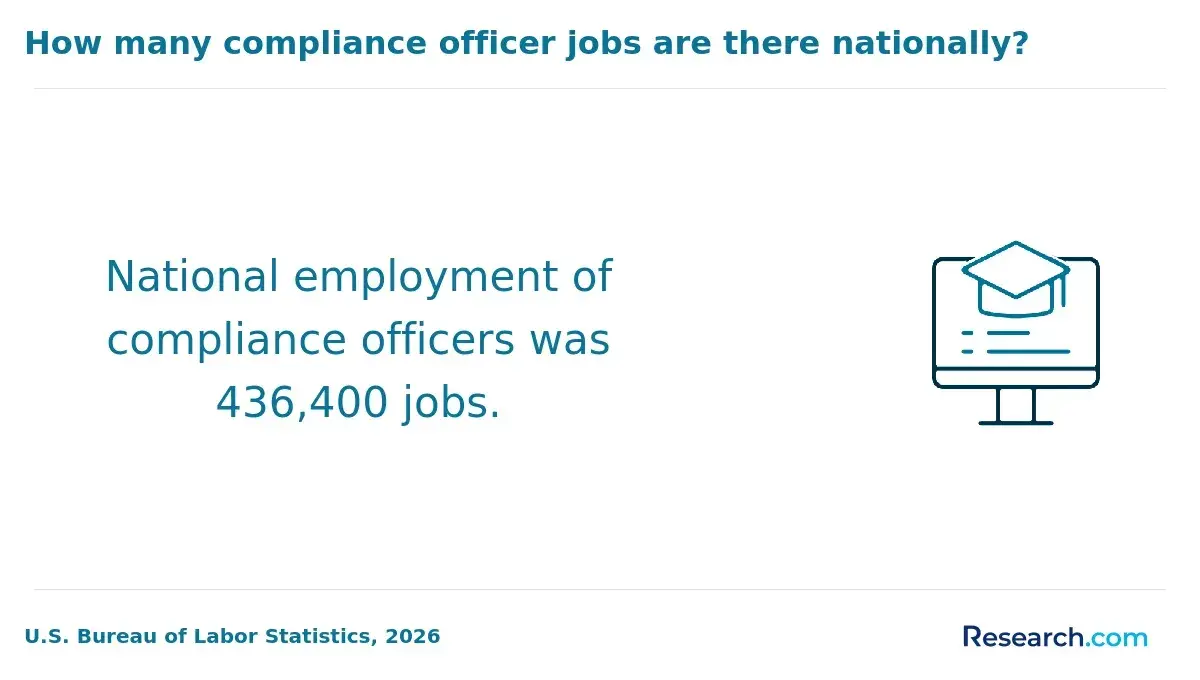
- Compliance officers had median annual pay of $80,730 in May 2025, with 4% projected job growth for 2025-2035, those occupation-wide figures do not predict an MLS graduate's pay.
What Is an MLS Degree for Diversity and Equal Employment Opportunity Professionals?
An MLS is a graduate degree designed to help nonlawyers understand and apply legal concepts in their existing fields. For diversity and equal employment opportunity (EEO) professionals, the relevant work includes reviewing workplace policies, coordinating discrimination complaints, documenting accommodations, training managers, and working with counsel when legal interpretation is needed.
Programs may call a similar non-JD credential a Master of Studies in Law (MSL) or Master of Jurisprudence. The degree title alone does not establish its EEO relevance: compare required courses and available electives. An MLS does not qualify its holder to practice law, represent employees as an attorney, or give independent legal advice.
Why Pursue an MLS in Employment Law and EEO Compliance?
Graduate legal study can help an EEO professional recognize when a policy, investigation, or proposed workplace initiative raises a legal issue. It may be especially useful for someone moving from general human resources or diversity work into a role with substantial responsibility for complaints, accommodations, or compliance oversight. The degree does not substitute for sound investigative practice, organizational judgment, or advice from licensed counsel.
The opportunity cost matters. If you need a focused update on one issue or want to test your interest in graduate study, a course, graduate certificate, employer training, or relevant professional credential may be a smaller commitment. A guide to choosing a legal studies graduate credential can help frame that degree-versus-certificate decision. Neither an academic certificate nor an MLS automatically grants professional certification.
What Are the Best MLS Concentrations for Diversity and EEO Careers?
Employment and labor law is usually the closest fit for EEO responsibilities, provided the course list covers discrimination and workplace compliance. A compliance concentration may be stronger for someone designing organization-wide controls, while a business law pathway can suit a professional whose remit extends beyond employment matters. The comparison below focuses on coursework rather than marketing labels.
| Coursework focus | Strongest fit | Potential gap to check |
| Employment and labor law | Discrimination, accommodations, leave, investigations, and workplace disputes | Whether EEO topics are required or only occasional electives |
| Compliance and risk management | Policies, reporting processes, audits, and escalation | Whether employment law receives enough attention |
| Business law | Broad organizational or HR roles involving contracts and governance | Whether the degree leaves room for EEO-specific courses |
A formal concentration has published requirements. A set of electives, an embedded certificate, and a few related courses are different offerings; ask the school which designation, if any, appears on the transcript. For a broader organizational role, compare business law degree pathways for working professionals against the employment-law options rather than assuming either is the stronger choice.
What Do MLS Programs for EEO Professionals Teach?
The most useful curriculum connects legal rules to decisions EEO staff actually make. Look for substantive coverage of federal employment discrimination law, disability and religious accommodations, retaliation, wage and hour issues, and relevant state-law differences. Courses in legal research and writing should help students identify governing authority and communicate when a question needs counsel's review.
Applied assignments matter as much as topic names. A policy review, complaint-intake exercise, investigation plan, or written risk assessment provides a better basis for judging practical value than a catalog description alone. Ask whether students receive feedback on these tasks and whether instructors address confidentiality, impartiality, recordkeeping, and escalation. Coursework should teach professionals to work within their roles - not to conduct privileged legal work or make legal determinations reserved for counsel.
Are Online MLS Programs Suitable for Diversity and EEO Professionals?
Online study can suit professionals who need to remain employed, particularly when readings and assignments can be completed outside business hours. But online does not necessarily mean self-paced. Live classes, fixed deadlines, group projects, exams, or campus visits can make two online programs very different in practice.
Before enrolling, request the course schedule for the terms you expect to attend. Check when employment-law electives run, whether a part-time student can take them in a workable sequence, and whether any in-person or live-session requirements conflict with your job. If a program advertises practical experience, confirm whether it involves simulations, a placement, or work completed with your current employer.
What Are the Admission Requirements for MLS Programs?
MLS applicants generally need a bachelor's degree, but each school sets its own rules for transcripts, academic standing, recommendations, résumé, essays, and any required interview. Relevant HR or compliance experience may strengthen an application without replacing a published degree requirement. A JD is not ordinarily the intended prerequisite for a non-JD MLS.
If application time is a concern, our guide to no-essay legal studies admissions offers a starting point; verify the current requirements for the particular degree and entry term. Ask admissions whether prerequisites apply to the employment-law courses you want, not just to entry into the MLS itself.
How Long Do MLS Programs Take and What Do They Cost?
Completion time depends on required credits, course availability, and whether you study full time or part time. A published shortest-possible timeline may assume a course load that is unrealistic alongside EEO work. Check the sequence of required courses and how often the electives you want are offered.
For cost, compare each school's estimate for all credits needed to graduate, not just its advertised per-credit tuition. Include mandatory fees, books, technology or legal-research charges, and travel for any required visits. Ask whether tuition differs by residency or delivery format and whether your employer reimburses courses taken outside regular hours. Finding a low-cost online master's in legal studies is a useful starting point, but obtain a current, program-specific cost estimate before comparing offers.
Students considering federal aid should confirm the particular program's eligibility and their own eligibility with the financial aid office. Borrowing can make a degree possible without making it a good investment; compare the net cost with the training your target roles actually require.
What Careers Can an MLS Graduate Pursue in Diversity and EEO?
Depending on prior experience and employer requirements, relevant roles include EEO specialist, workplace investigator, HR compliance specialist, employee relations specialist, and compliance officer. Experienced professionals may pursue management or policy roles. The MLS can support that progression, but employers may place greater weight on investigation experience, HR judgment, industry knowledge, or supervisory work.
For someone entering the field, a sensible first step may be an HR, employee relations, or compliance role that builds hands-on experience while offering targeted training. A paralegal route serves a different goal: assisting lawyers with legal work rather than leading an employer's EEO function. If legal support is the job you want, compare fast-track online paralegal programs rather than assuming an MLS is the most direct preparation. Paralegals do not independently provide legal services reserved for attorneys.
How Much Do Diversity and EEO Professionals Earn?
There is no single Bureau of Labor Statistics wage category for every diversity or EEO job. As a broad benchmark, compliance officers had median annual pay of $80,730 in May 2025, according to the Bureau of Labor Statistics. Its projected growth for that occupation is 4% for 2025-2035. The category covers many kinds of compliance work, so neither figure isolates EEO positions or measures the value of an MLS.
For roles involving labor-management matters, labor relations specialists had median annual pay of $95,420 in May 2025, with 2% projected growth for 2025-2035. That is a different occupation, not a salary target for a new graduate. Compare actual job postings by location, seniority, and required experience when deciding whether a degree's cost is justified.
How Do You Choose an Accredited MLS Program for EEO Careers?
Start by verifying that the university holds current institutional accreditation from a recognized accreditor. Then judge the specific MLS on its published curriculum, course schedule, faculty expertise, total cost, and assignments relevant to EEO work. Institutional accreditation is not a judgment that a particular concentration will meet your career goals.
Do not confuse this check with American Bar Association (ABA) approval. ABA approval of qualifying paralegal education programs and institutional accreditation are separate matters; neither turns an MLS into an attorney-qualifying JD. Before accepting an offer, ask for the current degree requirements and confirm that the courses you need will be available on your timeline. A warning sign is a program that promotes an EEO career outcome but cannot show how students practice the underlying work.
Other Things You Should Know About Law & Paralegal
Do not assume they will. A law school decides whether it accepts prior coursework and how any accepted credit applies. Get its policy in writing before taking an MLS for that purpose.
Possibly, but the organization that issues the certification controls its continuing-education rules. Check course eligibility and documentation requirements with that organization before enrolling.
Some programs accept international degrees, subject to their own credential-evaluation and language-proficiency requirements. Ask the admissions office what documents it needs and when evaluations are due.
Not automatically. Background-check or clearance requirements depend on the employer and position. Read the specific vacancy announcement rather than treating a clearance as a standard EEO credential.
References
- Introduction to the Americans with Disabilities Act | ADA.gov https://www.ada.gov/topics/intro-to-ada/
- Equal Employment Opportunity Laws | U.S. Equal Employment Opportunity Commission https://www.eeoc.gov/equal-employment-opportunity-laws
- How an M.L.S. Degree Prepares You for Employment Law | miami.edu https://news.miami.edu/law/stories/2025/09/how-an-mls-degree-prepares-you-foremployment-law.html
- Human Resources and Employment Law Concentration | SMU Online Master of Legal Studies https://onlinemasterlegalstudies.smu.edu/curriculum/human-resources-employment-law/
- Equal Employment Opportunity Laws and Regulations | psu.edu https://sites.psu.edu/aaoffice2/welcome/equal-employment-opportunity-laws-and-regulations/
- M.S.L. in Labor and Employment Law (Online) | Cardozo Law https://cardozo.yu.edu/admissions/msl-labor-and-employment-law-online
- Laws & Regulations - Office of Equal Opportunity Programs https://oeop.upenn.edu/resources/laws-regulations
- Master of Legal Studies & Graduate Certificates | Winston College of Law https://winston.utk.edu/admissions/degree-programs/master-of-legal-studies/
- Experiential Learning | School of Law | Boston University https://www.bu.edu/law/experiential-learning/
- Labor & Employment | NYU School of Law https://www.law.nyu.edu/areasofstudy/labor-and-employment