2027 Legal Studies Master's Programs for Facilities and Property Contract Managers

Co-Founder and Chief Data Scientist
Facilities and property contract managers handle agreements that can affect a building's costs, operations, and legal exposure for years. A legal studies master's degree may help with lease terms, vendor disputes, and compliance - but it is a substantial investment, and it is not always the best next step. This guide is for working professionals deciding whether to pursue a non-JD legal degree, a different graduate program, or targeted training. It explains what to look for in the curriculum, how to compare costs and formats, and when experience or a professional credential may offer a more direct route.
Key Things You Should Know
- A Master of Legal Studies (MLS) or similar non-JD degree can strengthen contract and regulatory knowledge, but it is not normally required for facilities or property contract management and does not qualify graduates to practice law.
- Prioritize courses in contracts, real estate, procurement, risk, and dispute resolution over a degree title alone; a shorter credential may be sufficient if your skills gap is narrow.
- The U.S. Bureau of Labor Statistics reports median pay of $80,730 in May 2025 for compliance officers, a related occupation - not a salary estimate specific to facilities contract managers.
What are legal studies master's programs for facilities and property contract managers?
These are generally non-JD graduate degrees that teach professionals to recognize legal issues and work more effectively with counsel. Schools may call the credential a Master of Legal Studies (MLS), Master of Studies in Law (MSL), or Master of Jurisprudence. Few degrees are designed exclusively for facilities and property contract managers, so the useful question is whether a program's courses fit the agreements you actually manage.
Those agreements may include commercial leases, maintenance and service contracts, construction-related agreements, and vendor contracts. Managers often help define the work, negotiate business terms, monitor performance, document changes, and escalate disputes. Legal study can improve their ability to identify problematic clauses and understand regulatory obligations. It does not authorize them to give legal advice, represent others as attorneys, or replace counsel on matters that require legal judgment.
Which degree pathways prepare professionals for facilities and property contract management?
The best pathway depends on whether your main gap is legal interpretation, operational leadership, or specialized contracting practice. The comparison below separates those goals; individual schools' curricula may differ substantially.
| Pathway | Strongest fit | Important limitation |
| MLS, MSL, or Master of Jurisprudence | Professionals who regularly work with contracts, property rules, risk, and counsel | Legal breadth may come at the expense of facilities operations or finance coursework |
| Facilities, real estate, or property management master's | Professionals seeking deeper operational, asset, or portfolio-management skills | Contract law may receive limited attention |
| MBA or management master's | Professionals moving toward budget, procurement, or executive responsibility | Legal content depends heavily on electives |
| Graduate certificate or focused training | Experienced managers with a specific gap, such as contracting or real estate law | Usually provides less breadth than a master's degree |
A school's "real estate concentration" may be a formal set of requirements, while another school may merely offer relevant electives. Check which courses are guaranteed to be available on your schedule. A guide to matching legal studies master's specializations to career goals can help narrow the comparison, but the current catalog should control your decision.
What do facilities and property contract management master's programs teach?
A useful curriculum connects legal concepts to decisions managers make before signing and throughout an agreement's term. Look for assessed work - such as contract analysis or a capstone - not just course descriptions that mention contracts.
| Subject to look for | Application to the job |
| Contracts and negotiation | Reviewing scope, payment, renewal, termination, and dispute provisions |
| Real estate and property law | Understanding lease obligations, access rights, and landlord-tenant issues |
| Procurement and business organizations | Managing vendor selection, authority to sign, and approval processes |
| Risk, insurance, and regulatory compliance | Recognizing issues involving indemnity, coverage, safety, and property requirements |
| Dispute resolution and legal research | Documenting performance problems and knowing when to involve counsel |
Labor and employment issues may matter when a role includes vendor staffing, workplace policies, or coordination with human resources. In that case, finding legal studies programs with an HR law focus may be worthwhile. An HR concentration is less compelling if your daily work centers on leases and service agreements.
Are online legal studies master's programs effective for contract managers?
They can be effective when the courses require substantive contract work, instructor feedback, and discussion of realistic problems. Online delivery alone says little about quality or flexibility: a program may have scheduled live sessions, fixed course sequences, proctored exams, or campus visits.
Before enrolling, confirm whether required courses are available online, how often they run, and whether a capstone can use a workplace problem without exposing confidential documents. If speed is important, compare short-duration online business law master's options against the courses you need. A faster schedule is a poor trade if it omits property law or requires a workload you cannot sustain alongside your job.
What accreditation should a legal studies master's program have?
Check that the institution holds recognized institutional accreditation and that the specific master's degree appears in its current academic catalog. Accreditation helps establish institutional oversight; it does not establish that a program teaches the contract skills you need. Review the catalog, faculty expertise, and required courses separately.
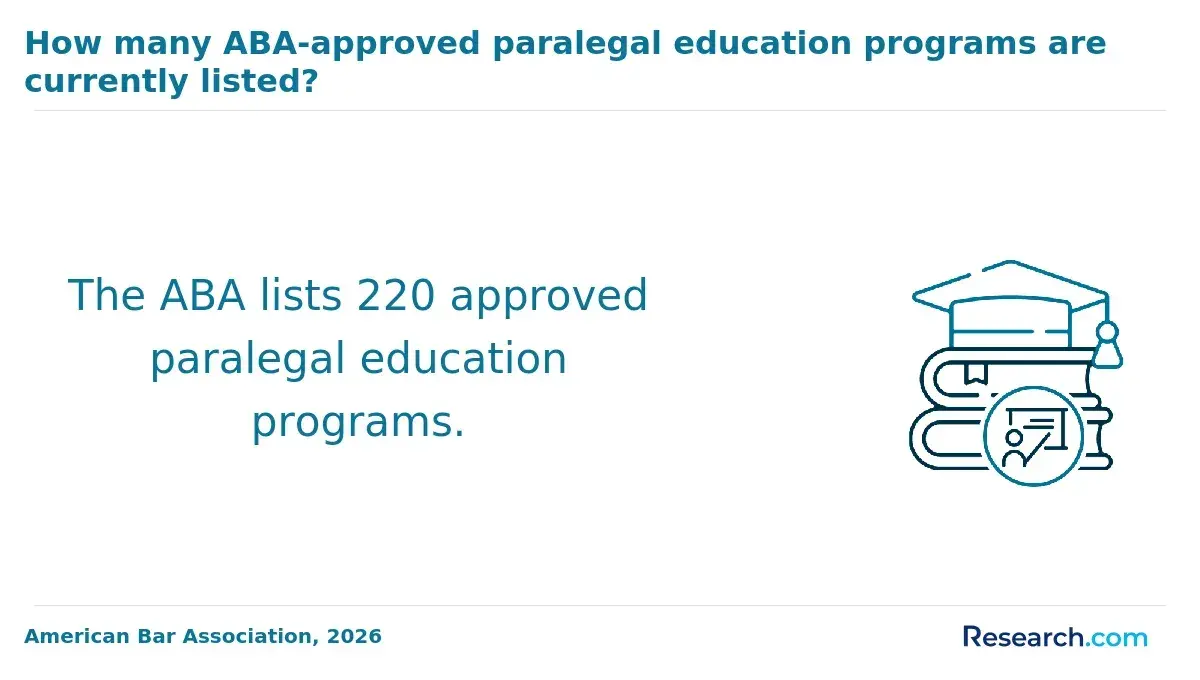
Do not confuse institutional accreditation with American Bar Association (ABA) approval. The ABA approves qualifying paralegal education programs; ABA approval is not a standard accreditation requirement for an MLS or MSL. Nor does attending an accredited institution make a non-JD degree a route to attorney licensure.
What are the admission requirements for legal studies master's programs?
Applicants generally need a bachelor's degree and must meet the school's published graduate admissions standards. Programs may also request a résumé, statement of purpose, recommendations, or evidence of relevant work experience. Requirements for a particular program - including any prerequisite coursework - must be checked in its current admissions materials; property-management experience should not be assumed to waive them.
If you have completed graduate coursework elsewhere, ask the receiving school whether it accepts that credit, how many credits may apply, and whether they replace required courses or only electives. Prior credit does not transfer automatically. A guide to transferring credits into business law programs can frame the conversation, but only the receiving institution can approve credit for its degree.
How long do these master's programs take and what do they cost?
Completion time depends on required credits, course availability, and whether you study full time or alongside work. Compare each school's published degree plan with the sequence you can actually follow; an advertised fast track may assume a heavier course load than a working manager can take.
Tuition alone is not the total price. The categories below show what to include when comparing offers on the same basis.
| Cost category | What may change the total |
| Tuition | Required credits, per-credit rates, and residency or delivery-format rules |
| Mandatory charges | Graduate, technology, course, or campus fees |
| Learning expenses | Books, equipment, and any required research-platform charges |
| Attendance expenses | Travel or time away from work for required in-person activities |
Request a written, program-specific estimate and ask whether your employer offers tuition assistance. Federal aid eligibility depends on the institution, program, and student - not simply on a degree's title. Compare the likely benefit with a graduate certificate or employer training before taking on substantial debt.
What careers can graduates pursue in facilities and property contract management?
Relevant roles include facilities contract manager, property contract administrator, lease administrator, procurement or vendor manager, and compliance specialist. Responsibilities vary: one employer may emphasize negotiating service terms, while another needs someone to track lease deadlines, contractor performance, or regulatory obligations. Prior experience with budgets, vendors, buildings, or real estate may matter more to an employer than the particular name of a master's degree.
For context, the Bureau of Labor Statistics projects 4% growth for compliance officers, 2025-2035. That occupation includes work beyond real estate and facilities, so the projection should not be read as a forecast for property contract managers specifically.
If the role you want is primarily legal support under an attorney's supervision, compare paralegal education rather than assuming an MLS is the closest fit. These online ABA-approved paralegal programs to compare represent a different educational route. ABA program approval applies to the qualifying paralegal program, not to its graduates as individuals.
How much do facilities and property contract managers earn?
There is no single national wage figure that precisely describes facilities and property contract managers across employers. Pay depends on whether the job is classified primarily as property management, procurement, compliance, or another occupation, as well as location and scope of responsibility.
One relevant benchmark is the Bureau of Labor Statistics median annual pay of $80,730 in May 2025 for compliance officers. It is not a predicted starting salary or a typical wage for every contract manager. When assessing a degree's financial value, compare local job postings for your target title and experience level with the program's full cost and any employer tuition support.
Do facilities and property contract managers need licenses or certifications?
There is no universal MLS requirement or single professional license for managing an employer's facilities contracts. A license may become relevant for particular activities - for example, negotiating real estate transactions for others may trigger state real estate licensing rules, subject to the state's definitions and exemptions. Confirm the rules for the work you would perform, not just your job title.
Optional credentials can demonstrate a more targeted skill set. The International Facility Management Association offers facilities credentials, and the National Contract Management Association offers contract-management certifications. Each credential has its own eligibility and renewal rules; a master's degree does not automatically award one. If your goal is immediate recognition for facilities operations or contracting practice, compare those requirements with the time and cost of graduate study before enrolling.
Other Things You Should Know About Law & Paralegal
Ask both your employer and the instructor first. Even a familiar vendor agreement may contain confidential pricing or personal information. A fictionalized or properly approved, redacted example may be safer.
Often, yes. Government purchasing follows rules that differ from private procurement, and requirements vary by jurisdiction. If public facilities are your target, look for coursework addressing government contracts or public procurement.
It may help if your work includes renovations, change orders, contractor disputes, or project risk. If you primarily oversee routine service agreements, contracts and procurement courses may be a more direct first priority.
AI tools may help organize or flag language, but their output can miss context or introduce errors. Follow employer confidentiality rules, verify any flagged provision against the actual agreement, and escalate legal questions to qualified counsel.
References
- Cost of Attendance (Budget) | 2025-2026 Federal Student Aid Handbook https://fsapartners.ed.gov/knowledge-center/fsa-handbook/2025-2026/vol3/ch2-cost-attendance-budget
- Accreditation in the U.S. | ed.gov http://www.ed.gov/laws-and-policy/higher-education-laws-and-policy/college-accreditation/accreditation-in-the-us
- Cost of Attendance - Texas One Stop https://onestop.utexas.edu/managing-costs/cost-tuition-rates/cost-of-attendance/
- MLS vs. JD: Which Legal Path Is Right for Non-Lawyers? | Goodwin College of Professional Studies https://drexel.edu/law/news/legal-studies-blog/mls-vs-jd-which-legal-path-is-right-for-non-lawyers/
- Graduate Real Estate Certificate | Naveen Jindal School of Management https://fin.utdallas.edu/real-estate/graduate-certificate/
- Master of Legal Studies & Graduate Certificates | Winston College of Law https://winston.utk.edu/admissions/degree-programs/master-of-legal-studies/
- Online Master of Legal Studies Program | University of Miami School of Law https://admissions.law.miami.edu/academics/mls/
- Online Master of Legal Studies (MLS) | William & Mary Law School https://online.law.wm.edu/master-of-legal-studies
- Online and Hybrid Programs - UChicago Professional https://professional.uchicago.edu/find-your-fit/remote
- Experiential Learning - UMKC School of Law https://law.umkc.edu/experiential-learning/index.html