2027 Paralegal Certificate vs. Court Administration Certificate: Choosing Between Legal Support Roles

Co-Founder and Chief Data Scientist
A paralegal certificate and a court administration certificate can both lead toward legal support work, but they prepare you for different workplaces. One focuses on helping lawyers manage matters for clients; the other focuses on keeping court operations and case records moving. If you are weighing these programs, the distinction matters more than the word "legal" in either course catalog.
This guide compares training, costs, credentials, and employment evidence so you can choose a program that matches the jobs you actually plan to pursue.
Key Things You Should Know
- Choose paralegal training for attorney-supervised research, drafting, and case preparation; choose court administration training for court records, procedures, and public-facing operations.
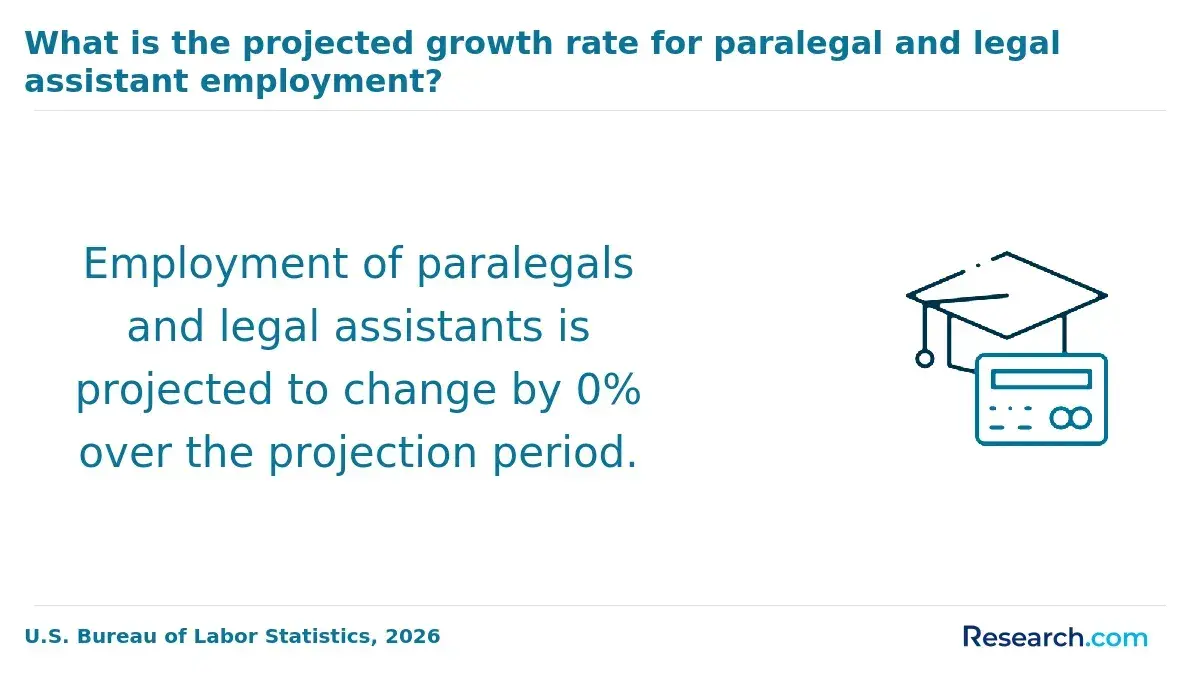
- The Bureau of Labor Statistics reports paralegal and legal assistant median pay of $62,890 in May 2025 and 0% projected employment growth for 2025-2035; those figures do not describe court administration jobs.
- Neither certificate automatically confers professional certification or guarantees a court or law-firm job. Compare actual course requirements and local job postings before enrolling.
What is the difference between a paralegal certificate and a court administration certificate?
A paralegal certificate is an educational credential centered on substantive law, legal research, writing, and support for attorneys. A court administration certificate generally centers on the systems and procedures used to operate courts. The latter name is less standardized: schools and court-training organizations may use it for programs with different audiences and academic levels.
The workplace is the most useful way to distinguish the paths. This comparison describes typical emphases, not a promise about every program or job.
| Decision point | Paralegal certificate | Court administration certificate |
| Primary setting | Law firms, corporate legal departments, government legal offices, and nonprofits | Courts and related judicial-branch offices |
| Typical work | Researching law and facts, organizing evidence, and drafting documents under attorney supervision | Managing filings and records, supporting calendars and hearings, and helping the public navigate court procedures |
| Best initial question | Do local paralegal employers value this program's education and practical training? | Does this program match the qualifications in the court system's actual vacancies? |
Neither route qualifies someone to practice law as an attorney. Paralegals generally work under attorney supervision and cannot independently give legal advice. Court staff must likewise distinguish procedural information from legal advice.
What education and training does each legal support career require?
There is no single nationwide educational requirement for either path. Paralegal employers may seek an associate degree in paralegal studies, a bachelor's degree plus a paralegal certificate, or comparable experience. Requirements can also vary under state rules and for specialized roles. If you need broader college-level preparation rather than a stand-alone certificate, compare online associate degree options for paralegal study.
Court hiring is especially title-specific. An entry-level clerk position may emphasize customer service, records accuracy, and familiarity with court procedures, while a supervisory court administrator position may require substantial management experience or a degree. A certificate intended for working court employees may therefore be a poor entry point for someone seeking a first court job.
Read several current postings in the jurisdiction where you want to work. Separate required education from preferred education and experience; a certificate is useful only if it develops skills those employers seek or satisfies a stated qualification.
What do paralegal and court administration certificate programs teach?
Paralegal coursework commonly covers legal research, legal writing, civil litigation, contracts, ethics, and document preparation. Strong practical assignments ask students to find authority, analyze facts, and prepare work for attorney review - not merely memorize legal terms.
Court administration coursework may cover caseflow, records management, court technology, access to justice, public service, budgeting, and judicial-branch management. Check the intended audience: a course on supervising court operations is different from training for a front-counter clerk who processes filings.
Look beyond course titles. Ask to see required assignments and whether students practice with the research systems, electronic filing workflows, or records processes relevant to the jobs they want. A catalog's mention of software does not establish hands-on proficiency.
Are paralegal and court administration certificates accredited or professionally approved?
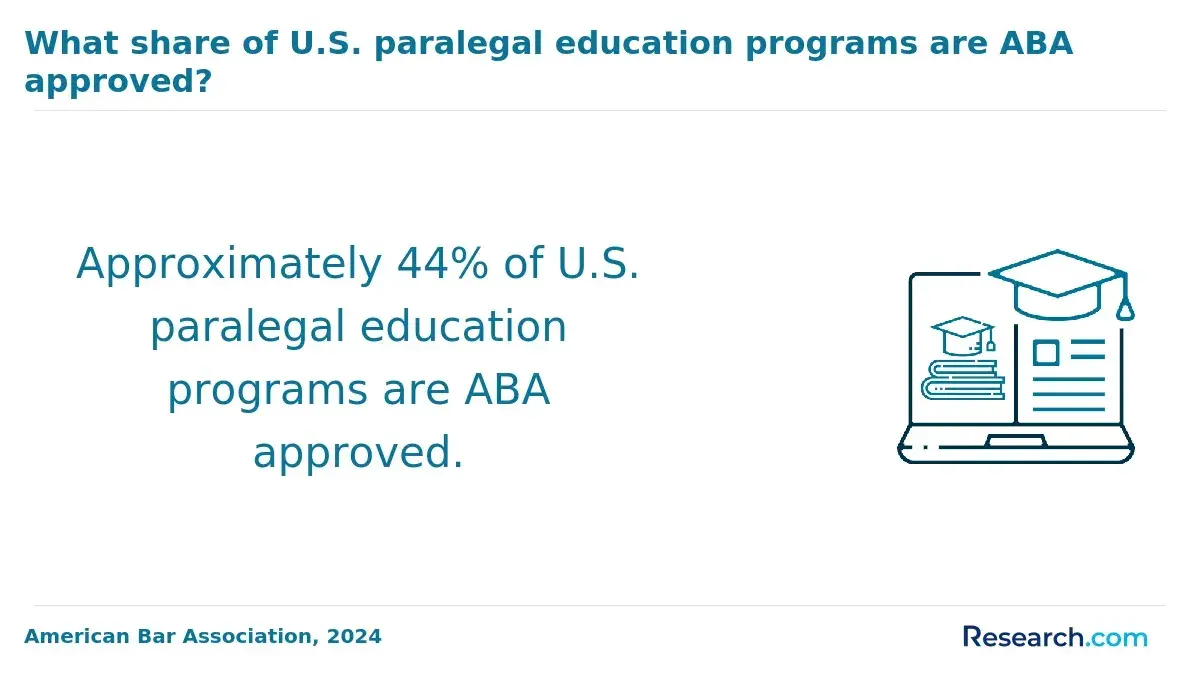
Institutional accreditation concerns the school. American Bar Association (ABA) approval concerns a qualifying paralegal education program; it is not accreditation of the institution. Not every legitimate paralegal program has ABA approval, so check the ABA's current program directory if that status matters to you or a prospective employer.
Do not assume a court administration certificate has an equivalent national program-approval system. Identify who awards the credential, whether the school is institutionally accredited if college credit matters, and whether the issuing organization has a role in the court system where you hope to work.
An educational certificate is also different from professional certification, which a credentialing body or state system grants under its own rules. Completing an ABA-approved program does not make someone an "ABA-certified paralegal," and either certificate may leave additional certification requirements unmet.
Can you complete either certificate program online or on campus?
Both types of training may be offered online, on campus, or in a hybrid format, but delivery depends on the specific program. "Online" does not establish that classes are asynchronous or self-paced. Check for scheduled meetings, live assessments, campus visits, internships, and courses offered only in certain terms.
For paralegal study, compare the pace of paralegal education on an accelerated schedule with your work hours and the time needed for research and writing assignments. For court training, find out whether an internship or current court employment is expected and who must arrange any placement. A flexible lecture schedule will not resolve an in-person placement requirement.
What are the admission requirements for each certificate program?
Requirements vary substantially. Some paralegal certificates admit students after high school; post-baccalaureate certificates require a bachelor's degree. Others require prior college credits or specific writing and general education coursework. Court administration offerings may admit new students, require a degree, or be designed primarily for employees already working in a court.
Before applying, confirm whether prerequisites are required for admission or simply recommended for success. If you have previous college coursework, ask which credits satisfy prerequisites and whether the certificate itself carries transferable credit. The receiving institution - not the certificate provider - decides how credit applies to a later degree. Readers considering a broader legal-business route can also examine finding business law programs that consider transfer credits, rather than assuming either certificate will transfer.
How long do these certificate programs take and how much do they cost?
There is no reliable universal duration or price for either credential because programs differ in academic level, credit requirements, scheduling, and intended audience. A short professional-development course and a college-credit certificate should not be compared solely by their advertised price. Request each program's current total-cost estimate and a term-by-term completion plan.
The cost categories below show why the lower tuition quote may not be the lower-cost choice. They also reveal expenses that can affect whether you can finish while working.
| Cost or time factor | Why it matters |
| Tuition and mandatory fees | Per-course, per-credit, and full-program quotes are not directly comparable. |
| Books, technology, and research access | Required materials or software may sit outside advertised tuition. |
| Prerequisites and course sequencing | Extra coursework or infrequent course offerings can extend completion. |
| Travel and placement | Campus visits or unpaid fieldwork can add expenses and time away from paid work. |
Federal aid depends on the institution, the specific program, and the student's eligibility; a certificate is not automatically aid-eligible, particularly if it is noncredit. Ask the school to identify the program's aid status in writing. If cash flow is the obstacle, paralegal tuition installment options to compare may help you evaluate payment timing, but an installment plan does not reduce the total price.
What jobs can you get with each legal support certificate?
A paralegal certificate may support applications for paralegal, legal assistant, litigation support, or legal-department roles, depending on the employer's degree and experience requirements. A court administration certificate may be relevant to court clerk, case-processing, records, or court-operations roles. Supervisory administrator jobs generally require more than introductory coursework.
Neither credential is a job guarantee, and job titles can obscure different duties. Some "legal assistant" postings focus on scheduling and office support; some clerk roles involve extensive public contact and records work. Compare duties and minimum qualifications in local openings before selecting a curriculum.
How do paralegal and court administration salaries compare?
The Bureau of Labor Statistics reports median annual pay of $62,890 in May 2025 for paralegals and legal assistants. That is an occupational median across workers, not an expected starting salary or a return attributable to a certificate.
"Court administrator" does not have a directly comparable, single national wage figure in the data used here. Court clerk, records, and management jobs can differ considerably in responsibility and pay, so using the paralegal median - or a broad legal-support category - as a court administrator salary would be misleading. For a useful comparison, examine posted pay ranges for the specific court titles and locations you would consider, alongside their experience requirements and benefits.
Which certificate program offers stronger job prospects and career growth?
For paralegals and legal assistants, the Bureau of Labor Statistics projects 0% employment growth for 2025-2035 but about 40,800 openings per year, largely as workers leave or change occupations. Little net growth does not mean no hiring; it does mean a certificate alone may not distinguish an applicant without strong writing, research, and workplace skills. There is no equally precise projection here for graduates of court administration certificates.
Choose paralegal training if you want to work on legal matters for attorneys and the program meets the education preferences in your target job postings. Choose court administration training if you want judicial-branch operations work and the curriculum matches openings in your court system. For an experienced professional aiming at compliance or legal operations rather than either entry-level path, cost-conscious options for a legal studies master's offer a different, more extensive educational route - not an attorney-qualifying degree.
Before paying a deposit, compare local postings with each program's admissions rules, required assignments, completion schedule, total costs, and placement expectations. The most consequential mistake is buying a credential by its name without checking whether the jobs you want recognize the skills it actually teaches.
Other Things You Should Know About Law & Paralegal
Generally, no. A certificate does not authorize the practice of law. Rules and any limited exceptions vary by state, so check the jurisdiction's rules before offering services directly to the public.
No. Court administration concerns court operations and case processes. Court reporting focuses on creating a verbatim record and involves different training and, where applicable, credential requirements.
Yes, records, scheduling, and legal-document experience may be relevant. Courts still use their own hiring standards, so confirm the qualifications and application process for each vacancy.
Not necessarily. Credit-bearing coursework may be considered for transfer, but the receiving school decides what it accepts and how those credits apply. Noncredit training may not reduce degree requirements.
References
- Court Administration and Services Careers | United States Courts https://www.uscourts.gov/careers/who-works-judiciary/court-administration-and-services-careers
- 34 CFR Part 602 -- The Secretary's Recognition of Accrediting Agencies | ecfr.gov https://www.ecfr.gov/current/title-34/subtitle-B/chapter-VI/part-602
- Accreditation in the U.S. | ed.gov http://www.ed.gov/laws-and-policy/higher-education-laws-and-policy/college-accreditation/accreditation-in-the-us
- Programs and Resources for All Court Employees | Federal Judicial Center https://www.fjc.gov/education/programs-and-resources-all-court-employees
- Cost of Attendance (Budget) | 2025-2026 Federal Student Aid Handbook https://fsapartners.ed.gov/knowledge-center/fsa-handbook/2025-2026/vol3/ch2-cost-attendance-budget
- Clarifying Your Paralegal Career Path: What to Know | UC News https://www.online.uc.edu/blog/clarifying-your-paralegal-career-path.html
- What Does a Paralegal Do? Key Roles & Responsibilities | American Public University https://www.apu.apus.edu/area-of-study/security-and-global-studies/resources/what-does-a-paralegal-do/
- What Does a Paralegal Do? What Are the Paralegal Job Duties? | Online Paralegal Studies Certificate Program https://paralegalonline.bu.edu/articles/duties-of-a-paralegal/
- Degrees vs. Certificate Programs: What's the Difference? | snhu.edu https://www.snhu.edu/about-us/newsroom/education/certificates-vs-degrees
- Costs for certificates, licensures and endorsements | The Ohio State University https://gpadmissions.osu.edu/costs/certificates.html