2027 MLS Programs for HR Professionals Managing Multistate Workforces

Co-Founder and Chief Data Scientist
Managing employees across state lines means a policy that works at headquarters may fail elsewhere. For HR professionals responsible for hiring, leave, pay, and workplace investigations, a Master of Legal Studies (MLS) can build useful legal literacy - but it is a substantial investment, not a substitute for employment counsel.
This guide explains what to look for in an HR-focused MLS, how to assess online study and total cost, and when a shorter credential or employer training may be the better choice.
Key Things You Should Know
- An MLS can help HR professionals identify employment-law issues across jurisdictions, but it does not authorize them to practice law or replace state-specific legal advice.
- Prioritize courses in employment law, legal research, and compliance operations; confirm that online scheduling and any residency requirements work with your job.
- Compare total cost against the duties you expect to gain: the U.S. median pay for compliance officers was $80,730 in May 2025, but that occupation-wide figure is not an MLS graduate salary.
What Is a Master of Legal Studies for HR Professionals?
An MLS is a graduate degree designed primarily for people who need to work with legal concepts without becoming lawyers. Schools may use names such as Master of Science in Law (MSL) or Master of Jurisprudence for related non-Juris Doctor (JD) degrees. For an HR professional, the value lies in learning to read legal authorities, recognize risk, document decisions, and communicate effectively with counsel.
An "HR concentration" is not a uniform credential. At one school it may be a formally designated sequence; at another, it may mean choosing employment-law electives within a general MLS. Check the degree requirements rather than relying on a concentration label.
The alternatives differ in depth and opportunity cost. This comparison can help you decide whether graduate legal study matches the work you want to do.
| Route | Potential fit | Key limitation |
| MLS or related non-JD master's | HR leaders with recurring legal-risk, policy, or compliance responsibilities | Requires a larger time and tuition commitment; does not confer a law license |
| Graduate certificate or targeted courses | Professionals addressing a narrower employment-law knowledge gap | May offer less breadth; credit toward a later degree is not assured |
| HR certification and employer training | Professionals seeking broader HR practice skills or immediate training on workplace procedures | May not provide sustained instruction in legal research and analysis |
If your goal is a legal-knowledge degree, comparing legal studies master's pathways and potential earnings can help frame the choice. If you mainly need a current-state compliance update, start by asking whether focused training would solve the problem sooner.
How Can an MLS Help HR Professionals Manage Multistate Workforces?
Multistate HR work requires distinguishing federal baselines from state and local rules, then translating applicable requirements into hiring practices, payroll procedures, leave administration, and manager guidance. An MLS can help an HR professional research which rule applies, recognize when an exception matters, and present a well-defined question to counsel. It cannot make one national policy automatically compliant everywhere.
For example, a course exercise might require comparing a company-wide leave policy with requirements in the states where employees actually work. The practical skill is building a process for checking coverage, documenting the source and effective date of a rule, and escalating uncertainty before a policy changes. Because employment rules can change, a useful program teaches a repeatable research method rather than a fixed checklist of state laws.
Prior experience matters. An HR generalist who already implements policies may get more from advanced legal analysis than someone seeking their first HR role. Conversely, an experienced specialist whose employer has dedicated employment counsel may find that targeted training, supported by that counsel, meets their immediate needs.
What Do MLS Programs Teach About Employment Law and HR Compliance?
Relevant instruction generally connects legal doctrine to workplace decisions. Look for coverage of wage and hour rules, discrimination and accommodation, protected leave, workplace investigations, employee classification, and the interaction between federal and state law. Labor law may also matter if your workforce includes union-represented employees.
The strongest course descriptions specify what students do: research a legal question, analyze a hypothetical dispute, draft a policy recommendation, or evaluate a compliance process. A course titled "Employment Law" may provide valuable background, but its title alone does not show whether it addresses multistate operations. Request a recent syllabus and ask how assignments handle changing state requirements.
Legal literacy also has limits. HR can identify issues, gather facts, and coordinate implementation; licensed counsel should address questions requiring legal advice or representation. This division is especially important when a decision could affect litigation, regulatory exposure, or employees in several jurisdictions.
Are Online MLS Programs Suitable for Working HR Professionals?
They can be, provided the actual schedule accommodates payroll cycles, investigations, travel, and peak enrollment periods. "Online" does not necessarily mean asynchronous or self-paced. A program may require live evening classes, group meetings, fixed exam windows, campus visits, or courses taken in a prescribed order.
Before applying, ask for the current course rotation, expected weekly workload, time zone for live sessions, and policies for missed classes. Confirm whether any capstone can use a workplace problem without exposing confidential employee information. These details reveal practical flexibility more clearly than an online label.
Do not substitute an online paralegal program for an MLS merely because both involve legal study. Paralegal education generally prepares students for supervised legal-support work, while an HR-focused MLS serves a different professional purpose. If legal-support training is actually your goal and payment timing matters, review online paralegal study with monthly tuition payments as a separate route.
What Courses Are Included in an MLS Program for HR?
Course names vary, but the right curriculum should combine legal foundations with work you can apply in HR. Compare required courses - not just electives you may be unable to schedule - against the responsibilities in your current or target role.
A useful shortlist of subjects includes:
- Legal research and analysis: finding authoritative rules, checking whether they remain current, and explaining conclusions with appropriate qualifications.
- Employment discrimination and accommodations: assessing workplace decisions and recognizing when individualized review is necessary.
- Wage and hour law: examining pay practices, worker classification questions, and recordkeeping risks.
- Leave, benefits, and workplace privacy: identifying where overlapping requirements call for coordinated policies.
- Compliance or capstone work: applying legal analysis to a policy, investigation process, or risk assessment.
Ask whether the courses include state-law comparisons, practical writing, and feedback from instructors with relevant expertise. If your intended job is paralegal work rather than HR compliance, shorter routes to an online paralegal bachelor's degree address a different educational decision; an MLS is not a substitute for the preparation an employer expects of a paralegal.
What Are the Admission Requirements for HR-Focused MLS Programs?
MLS programs generally require a bachelor's degree, but each school sets its own admissions rules. Published requirements may include transcripts, a résumé, a statement of purpose, and recommendations. Some programs welcome applicants without prior legal coursework; others describe preferred professional experience. Treat a preference as a preference unless the admissions policy explicitly makes it mandatory.
For an HR applicant, the statement of purpose is a chance to connect a specific responsibility - such as multistate leave administration or compliance leadership - to the program's actual courses. Before paying an application fee, confirm whether standardized tests, prerequisite classes, or a minimum level of work experience apply to your entry term. If your undergraduate record is unusual, ask admissions how the program evaluates professional experience rather than assuming it overrides a stated requirement.
How Long Do MLS Programs Take and What Do They Cost?
Completion time depends on required credits, course availability, and how many classes you can take while working. A school's advertised fastest path may assume a heavier load than an HR professional can sustain. Ask for a part-time plan showing when each required course is offered and whether a missed course delays graduation.
Compare an estimate for the whole degree, not just the posted per-credit tuition. Include mandatory fees, books and materials, technology needs, any campus travel, and possible tuition increases before completion. Also account for time away from work and the risk of paying for courses that do not advance your intended role.
Affordable online master's degrees in legal studies can be a starting point for a price comparison, but verify each school's current charges directly. Ask whether your employer offers tuition assistance and whether the specific degree and your enrollment status qualify for applicable aid; institutional eligibility does not establish that every student or program receives the same funding. A lower-priced program is not the better value if it lacks the courses or workable schedule you need.
How Can You Verify MLS Program Accreditation and Quality?
First verify the university's institutional accreditation through its stated accreditor and a recognized accreditation directory, such as the U.S. Department of Education's or CHEA's. Then check the current academic catalog to confirm that the MLS is an offered graduate degree and that its published requirements match the program page.
Institutional accreditation does not establish that a particular MLS has an HR concentration, transferable credits, or strong employment outcomes. Review faculty qualifications, recent syllabi, academic support, course rotation, and any published outcomes methodology. Ask whether an online student has access to the legal research resources required for assignments.
Do not confuse institutional accreditation with American Bar Association (ABA) approval of qualifying paralegal education programs. ABA paralegal-program approval is not a general quality designation for an MLS and does not confer attorney eligibility. If you may later change programs, get a receiving school's assessment of transfer credit; even accredited institutions decide for themselves what prior study they will accept. That distinction also matters when planning a transfer into business law study.
What Careers and Salaries Can MLS Graduates Pursue in HR?
An MLS may support progression into HR compliance, employee relations, labor relations, or compensation and policy work, particularly when paired with relevant experience. It is not generally a required entry credential for these roles, and a degree alone does not establish seniority.
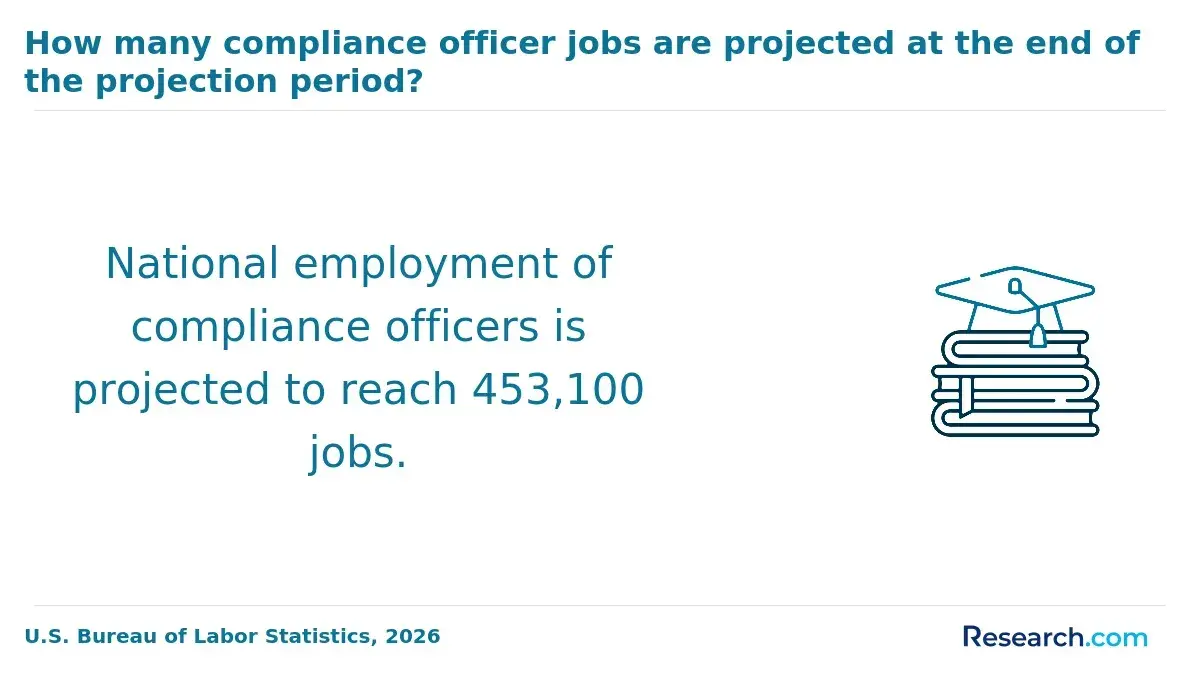
For salary context, the U.S. Bureau of Labor Statistics reports median annual pay of $80,730 in May 2025 for compliance officers and projects 4% growth from 2025-2035. Those figures cover compliance officers across industries - not specifically HR professionals or MLS graduates. They provide a labor-market benchmark, not a prediction of what completing the degree will pay.
Evaluate return on investment against your actual next role. If advancement depends mainly on managing investigations or leading HR teams, seek those responsibilities alongside any coursework. If a job posting consistently calls for a different qualification, such as substantial labor-relations experience, an MLS may complement that requirement but not replace it. When comparing degree paths, use the roles you can realistically pursue - not a program's broad list of possible careers - as your test.
Do HR Professionals Need a License or Certification After an MLS?
An MLS does not qualify its holder to practice law, and HR professionals do not acquire an attorney license by completing one. Whether another credential is useful depends on the position, employer, and jurisdiction. An HR professional certification may demonstrate broader HR knowledge, but it is separate from a university degree and has its own eligibility and maintenance rules set by the certifying organization.
Before committing to an MLS for a credential-driven goal, check actual job postings and the credential issuer's current requirements. If a role requires legal representation, the route is attorney qualification under the applicable state's rules - not an MLS. If it calls for HR certification or demonstrated compliance experience, compare that route's time and cost with graduate study before enrolling.
Other Things You Should Know About Law & Paralegal
It can. The employee's work location may affect payroll, leave, workplace notices, and other obligations. Identify the location before the start date and coordinate with payroll and counsel on applicable requirements.
No. Coursework can help you recognize the issue, but classification depends on the facts and the applicable legal test, which may differ by law and jurisdiction. Seek qualified advice before relying on a company-wide classification rule.
AI may help produce a first draft, but its output can omit local rules, use outdated law, or mishandle confidential information. Follow your employer's data policies and have qualified reviewers check legal claims before implementation.
No. A certificate generally documents completion of an educational program. Certification is a credential granted under an organization's separate eligibility and assessment rules; finishing a course does not automatically award it.
References
- Resources for Employers | dol.gov https://www.dol.gov/agencies/whd/employers
- Human Resources Law Track - Online MLS | Wake Forest https://mls.law.wfu.edu/curriculum/human-resources/
- Certificate in Human Resource Management | California State University, East Bay https://ce.csueastbay.edu/programs/human-resource-management/
- Employment Law for HR: Make Confident, Compliant Decisions | University of South Florida https://www.usf.edu/continuing-education/lifelong-learning/corporate-training-professional-education/human-resources/employment-law-for-hr.aspx
- Online MLS in Human Resources Law | Online Master of Legal Studies at Northeastern https://legalstudiesmastersonline.northeastern.edu/curriculum/mls-human-resources-law/
- Master of Legal Studies (MLS) vs. JD: What's the Difference? | SMU Online Master of Legal Studies https://onlinemasterlegalstudies.smu.edu/articles/mls-vs-jd/
- Essentials of HR Law and Compliance - Professional Education | Executive Education & Career Accelerator https://accelerator.bryant.edu/courses/essentials-hr-law-and-compliance
- Labor & Employment Law | marquette.edu https://law.marquette.edu/areas-study/labor-employment-law
- Application and Admission | University of Louisville Academic Catalogs https://catalog.louisville.edu/graduate/application-admission/