2027 Paralegal Education for Business Owners Planning a Career Change

Co-Founder and Chief Data Scientist
Running a business can build contract, recordkeeping, and client-management skills, but a paralegal job requires legal research and procedure that business experience alone may not provide.
This guide is for owners considering a move into legal support, whether they want to change careers soon or explore the field first. It compares education routes, scheduling and costs, explains what employers may expect, and shows how to test a program against your goals before committing time or money.
Key Things You Should Know
- If you already have a bachelor's degree, compare post-baccalaureate paralegal certificates before paying for another degree; if you lack college credits, an associate degree may offer a more useful foundation.
- Choose a program for its legal research, writing, procedure, and practical training - not for a promise of employment. ABA program approval, institutional accreditation, and individual certification are different things.
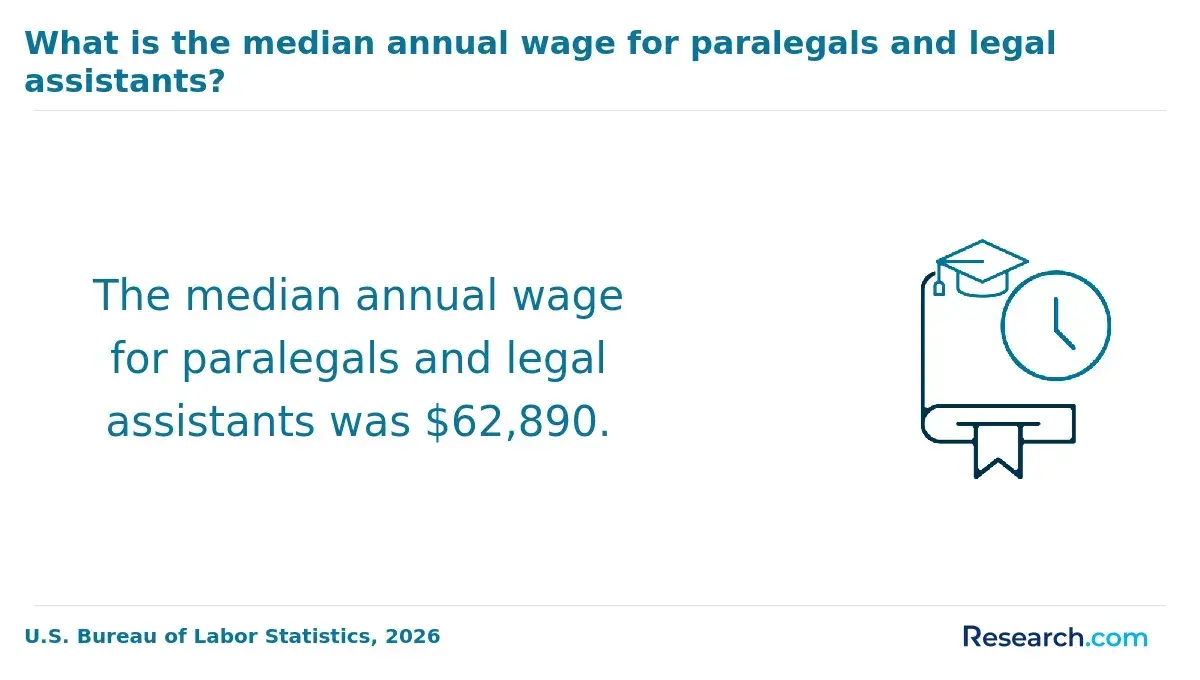
- The median pay for paralegals and legal assistants was $62,890 in May 2025, with 0% projected job growth for 2025-2035; assess local entry-level openings and the income you would give up while retraining.
What is paralegal education, and why might it suit business owners changing careers?
Paralegal education teaches people to support attorneys through legal research, document preparation, case organization, and procedural work. Paralegals generally work under attorney supervision; they do not gain authority to practice law independently by completing a program.
Business ownership may provide a useful starting point: you may already be comfortable organizing records, tracking deadlines, working with customers, or reviewing agreements. The gap is legal method. You still need to learn how to find and check legal authorities, follow court or agency procedures, protect privileged information, and draft work product for attorney review.
The fit depends on what you want to do each day. If you want to manage legal matters for an employer rather than support attorneys, compare compliance or business-law education as well. A guide to best business law degrees for working adults can help frame that alternative, but a business-law degree and a paralegal program prepare students for different work.
What education is required to become a paralegal in the United States?
There is no single nationwide degree or license required for every paralegal job. Requirements and job titles vary by state and employer. Employers may seek a paralegal certificate, an associate or bachelor's degree in paralegal studies, or a bachelor's degree in another field combined with paralegal training. Some accept relevant experience, but business experience does not necessarily replace legal-specific training.
A paralegal certificate is an educational award from a school. Professional certification is a separate credential granted by a certifying organization after its eligibility and assessment requirements are met. Neither is a law degree. A JD is the usual educational route toward attorney licensure; paralegal programs and non-JD legal studies degrees do not, by themselves, qualify graduates to practice law.
If your goal is to understand regulations for a management or compliance role rather than become a paralegal, a Master of Legal Studies or similar non-JD degree may be worth comparing. Start with the job you want and its hiring requirements before choosing an affordable online legal studies master's program; a graduate degree may cost more time and money than the role requires.
Which paralegal degree or certificate pathway is right for career changers?
Your existing education is the first filter. A post-baccalaureate certificate can avoid repeating general education courses, while a degree may make more sense if you need college credits or want broader academic study. The comparison below shows the main trade-offs; individual programs can set different prerequisites.
| Pathway | Starting point | Principal advantage | Principal limitation |
| Paralegal certificate | Varies: some accept high school graduates; others require prior college work or a bachelor's degree | Concentrates on legal-support coursework | Credit value, financial-aid eligibility, and employer recognition vary |
| Associate degree in paralegal studies | Often suitable for students without a prior degree | Combines legal study with general education | May repeat coursework a student with substantial college credit has completed |
| Bachelor's degree in paralegal studies | Students seeking a bachelor's degree or able to apply transfer credit | Provides a broader undergraduate credential | Usually requires a larger time and tuition commitment than a certificate |
| Non-JD legal studies degree | Students targeting broader legal-knowledge roles | May fit business, policy, or compliance goals | May offer less preparation for day-to-day paralegal tasks |
For a former owner with a bachelor's degree and a clear paralegal goal, compare certificate curricula and local job postings first. If you have unfinished college study, examine the credits a bachelor's program will actually accept; the receiving school decides how transfer credit applies. This guide to choosing a paralegal bachelor's program with your transfer credits in mind is most relevant when finishing a degree is part of your plan.
Are online or campus-based paralegal programs better for working adults?
Neither format is automatically better. An online program may reduce travel while you wind down a business, but "online" does not necessarily mean asynchronous or self-paced. Campus programs may make in-person instruction and local networking easier, yet their meeting times can conflict with work.
Before enrolling, check the published schedule for live classes, fixed exam times, campus visits, course sequencing, and internships. If a placement is required, ask who finds it, when it must be completed, and whether remote work or a current workplace can qualify. Those details determine whether the program is workable - not its format label alone.
For an online route, use comparisons of best online paralegal certificate programs to build a shortlist, then confirm each school's current schedule and practical requirements directly. Choose campus study if its structure or local connections justify the commute; choose online study if its actual timetable gives you the flexibility you need.
What courses do paralegal studies programs typically include?
Core coursework commonly covers legal research and writing, civil litigation, contracts, legal ethics, and the organization of legal documents and case files. Programs may also offer business organizations, real estate, family law, or other practice-area electives. Course titles alone reveal little about how much drafting and research you will perform.
For a business owner, contracts or business-organizations coursework may feel familiar. Give equal weight to less familiar skills: applying procedural rules, locating reliable legal authority, preparing documents to an attorney's instructions, and recognizing the boundary between legal support and legal advice. Review sample assignments or course descriptions for hands-on work rather than assuming that a technology course provides proficiency with a particular tool.
What admission requirements apply to paralegal education programs?
Requirements depend on the credential and school. An associate or entry-level certificate program may admit applicants with a high school diploma or equivalent; a post-baccalaureate certificate requires a bachelor's degree. Other programs may specify prior college credits, general education courses, transcripts, or a minimum academic standing. Treat a school's recommendation as distinct from a required prerequisite.
Before applying, request the current catalog requirements for the exact program - not another certificate offered by the same institution. If you have college credits from before you started your business, obtain a written transfer evaluation. Admission to a school does not mean every past course will count toward the paralegal credential.
How long do paralegal programs take, and what do they cost?
A focused certificate can take less time than an associate or bachelor's degree, but the calendar depends on prerequisites, course availability, enrollment pace, and any internship. For a business owner, the relevant cost includes both school charges and the income or business activity displaced by required classes and placements.
Published tuition is not a reliable total on its own. Ask each school for a program-specific estimate covering mandatory fees, books, research-platform or technology charges, required visits, and internship-related travel. Confirm whether the exact certificate is credit-bearing and eligible for federal aid before counting on aid; eligibility is not assured merely because the institution offers other aid-eligible programs.
If speed matters, accelerated paralegal program comparisons can help identify options to investigate. Check whether an intensive course sequence would force you to reduce business income or skip valuable practical experience. The faster option is not necessarily the less costly transition.
How can you evaluate an accredited and reputable paralegal program?
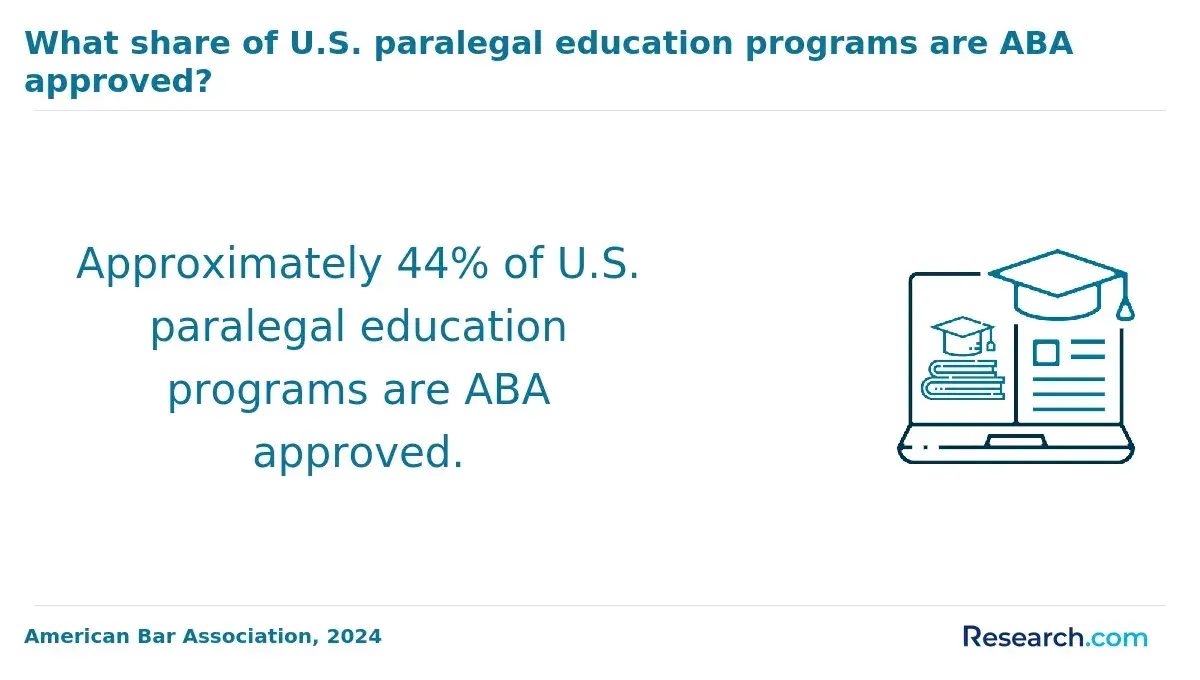
Check institutional accreditation and ABA program approval separately. Institutional accreditation concerns the institution; the American Bar Association approves qualifying paralegal education programs. Not every reputable paralegal program has ABA approval, and ABA approval does not mean a graduate is "ABA-certified." Verify current status in the relevant accreditor's and ABA's official resources rather than relying on an undated advertisement.
Then test whether the program supports your intended transition. Compare its current catalog with local entry-level job postings: look for substantive research and writing, supervised practical work, a schedule you can meet, and clear information about placement assistance. Ask how the school reports employment outcomes, which graduates are counted, and whether the results describe the exact program you are considering. Be wary of guaranteed-job language or a price quote that excludes required charges.
What paralegal jobs and career paths can education lead to?
Paralegals and legal assistants help attorneys prepare and organize matters in law firms, corporate legal departments, government offices, and other organizations. Depending on the role, work may include research, document review, filing support, or tracking transaction and litigation deadlines. A former business owner may be particularly interested in corporate or contracts work, but an entry-level position can still require learning the employer's procedures and accepting close review of legal work.
A practical entry route is to translate owner experience into evidence: records you managed, deadlines you met, and client communication you handled. Pair that history with legal writing samples produced through coursework or with permission at work. Compliance is another possible direction, but it is a distinct occupation; compare its actual duties and hiring criteria before choosing paralegal education as a route into it.
What are paralegal salaries, certifications, and job outlook expectations?
For paralegals and legal assistants, the Bureau of Labor Statistics reports median annual pay of $62,890 in May 2025 and 0% projected job growth for 2025-2035. It nevertheless projects about 40,800 openings per year, including openings created when workers leave the occupation. These are occupation-wide figures, not an expected starting salary for a new graduate or a forecast for your local market.
Professional certification can provide another way to demonstrate knowledge after meeting a certifying body's eligibility rules. Organizations such as NALA and the National Federation of Paralegal Associations offer credentials with their own requirements; state systems and employer preferences may differ. Completing a school certificate does not automatically confer one of these credentials, and certification is not a universal condition of employment.
Before committing to tuition, compare local postings for entry-level pay, requested education, and preferred credentials. Set those findings against your current business income and the time needed to qualify. That comparison is more useful for a career-change decision than applying the national median to a first job.
Other Things You Should Know About Law & Paralegal
Not necessarily. Review the employer's outside-work, confidentiality, and conflict policies before accepting an offer. Be clear about any continuing clients, especially if their interests could intersect with the employer's matters.
Use specific, verifiable work: managing contracts, maintaining records, coordinating deadlines, or communicating with clients. Keep legal training in a separate section so an employer can distinguish transferable experience from newly learned paralegal skills.
Only if you have the right to share them and can protect confidential information. Coursework completed for a writing sample is often a safer choice. Do not imply that you drafted legal advice independently if an attorney prepared or reviewed the document.
Potentially. Firms assess conflicts under rules and procedures relevant to their matters. Disclose relationships when the prospective employer requests them, without sharing confidential client information beyond what its process permits.
References
- How To Get Certified | North Carolina State Bar https://www.ncbar.gov/paralegal-certification/how-to-get-certified/
- How to Become a Paralegal: 2025 Step-by-Step Guide | UC News https://www.online.uc.edu/blog/how-to-become-paralegal.html
- Paralegal Studies - Academic Certificate | Midlands Technical College https://www.midlandstech.edu/programs-and-courses/education-and-public-service/paralegal-academic-certificate
- Paralegal Career Paths: What You Should Know | Rasmussen University https://www.rasmussen.edu/degrees/justice-studies/blog/paralegal-career-path/
- 14 Types of Paralegals: Pick Your Passion | B&SC https://www.bryantstratton.edu/blog/paralegal/types-of-paralegals/
- Do You Need ABA Approval for a Paralegal Program? | Bryan University Online© https://bryanuniversity.edu/faq/aba-approval-accreditation-paralegal-programs/
- Paralegal Certificate vs. Degree: Which Is Right for You? | Online Paralegal Studies Certificate Program https://paralegalonline.bu.edu/articles/paralegal-certificate-vs-degree/
- Paralegal Cost Reductions | American National University https://an.edu/paralegal-cost-reductions/
- FAQs - UNC-Chapel Hill Paralegal Certificate Program https://paralegal.web.unc.edu/faqs/
- What Is a Paralegal? Key Responsibilities, Training, & Careers | American Military University https://www.amu.apus.edu/area-of-study/legal-studies/resources/what-is-a-paralegal-key-responsibilities/