2027 MLS Programs for Export Control and Sanctions Compliance Professionals

Co-Founder and Chief Data Scientist
Export compliance professionals must turn changing trade rules into decisions about customers, products, shipments, technology access, and payments. A Master of Legal Studies (MLS) can build the legal knowledge behind those decisions, but a general compliance degree may not teach enough export-control or sanctions law to justify its cost.
This guide helps trade specialists, compliance staff, and career changers compare relevant programs, identify essential coursework, and decide when an MLS or a narrower credential, is the better investment.
Key Things You Should Know
- Look for documented instruction in export controls, sanctions, international trade, and compliance operations, an MLS program's name alone does not establish that coverage.
- An MLS is a non-JD degree. It does not qualify graduates to practice law, and employers do not universally require one for export compliance roles.
- The U.S. Bureau of Labor Statistics reports $80,730 median annual pay for compliance officers in May 2025 and 4% projected job growth for 2025-2035; those figures cover a broad occupation, not export specialists alone.
What Is an MLS in Export Control and Sanctions Compliance?
An MLS is a graduate law-related degree designed primarily for people who need legal knowledge in their work but do not plan to become attorneys. Schools may instead use names such as Master of Studies in Law (MSL). For this career goal, the degree is usually a general MLS or MSL supplemented by relevant courses - not necessarily a formally named "export control and sanctions" concentration.
Export controls govern activities such as shipping controlled items, transferring technical information, and providing access to certain technology. U.S. sanctions can restrict dealings with designated parties, jurisdictions, or particular transactions. A compliance professional may classify products, screen counterparties, investigate alerts, document decisions, and coordinate license applications. An MLS can help that professional understand the governing rules and recognize when a matter needs attorney review. It does not confer a law license or permission to give independent legal advice.
Why Pursue an MLS for Export Compliance Careers?
Graduate legal study may be useful when your job requires you to interpret regulations, explain risk to business teams, and connect trade rules to contracts, investigations, and corporate policy. It can be especially relevant for someone moving from logistics, engineering, procurement, finance, or operations into a role with broader compliance responsibility.
The trade-off is substantial: degree coursework takes time and tuition that could instead support supervised work experience, employer training, or focused instruction in export administration and sanctions screening. If your immediate gap is learning a particular regulation or workflow, compare a shorter course or graduate certificate before committing to a full degree. This legal studies graduate certificate and master's comparison can help frame that choice.
Choose an MLS when you need sustained, cross-cutting legal study and can point to courses that address your actual responsibilities. Start with a narrower option when you need practical proficiency in classification, licensing, screening, or recordkeeping sooner.
Which Schools Offer MLS Programs in Export Controls and Sanctions?
Schools more commonly offer a broader legal studies degree than a degree dedicated to export controls and sanctions. The examples below are starting points for comparison, not claims that each school offers a named export-control concentration. Because electives and formats can change, confirm the current catalog and term schedule before applying.
| School and degree to investigate | Delivery option | Export-compliance fit to verify |
| Arizona State University, Master of Legal Studies | Online study is available | Check whether currently available international trade, business law, or compliance courses address U.S. export rules and sanctions directly. |
| University of Southern California Gould School of Law, Master of Studies in Law | Online study is available | Compare its business and compliance offerings with your target duties; do not assume a general compliance course covers licensing or product classification. |
| American University Washington College of Law, Master of Legal Studies | Online study is available | Examine the current business and compliance curriculum for trade-specific coursework and confirm how often relevant electives run. |
Apply the same test to each school: request the current degree plan, course descriptions, delivery schedule, admissions requirements, and complete cost estimate. Ask whether relevant courses are required, elective, or merely listed but not scheduled. An accredited university's MLS should not be confused with an ABA-approved paralegal education program.
ABA paralegal-program approval is a separate designation and is not a measure of an MLS's export-control curriculum. If a broader business-law route looks more useful, compare business law study choices for employed adults against the specialized training you still would need.
What Do MLS Programs Teach About Export Controls and Sanctions?
Course titles are less informative than assignments and regulatory coverage. For a U.S. export compliance role, a strong course selection should let you connect legal rules to decisions an employer actually makes.
Review syllabi for the Export Administration Regulations administered by the Bureau of Industry and Security, the International Traffic in Arms Regulations administered by the State Department's Directorate of Defense Trade Controls, and sanctions programs administered by the Treasury Department's Office of Foreign Assets Control (OFAC). Useful instruction also addresses product and technology classification, deemed exports, restricted-party screening, ownership questions, end-use and end-user checks, licensing, recordkeeping, internal investigations, and escalation to counsel.
Practical work matters. A case exercise that asks students to identify a possible license requirement, document uncertainty, and recommend an escalation path is more relevant than a course that only surveys international law. Ask whether students analyze U.S. regulations and realistic fact patterns or simply read about global trade policy. No single course should be treated as proof of readiness to independently resolve complex transactions.
Are Online MLS Programs Suitable for Export Compliance Professionals?
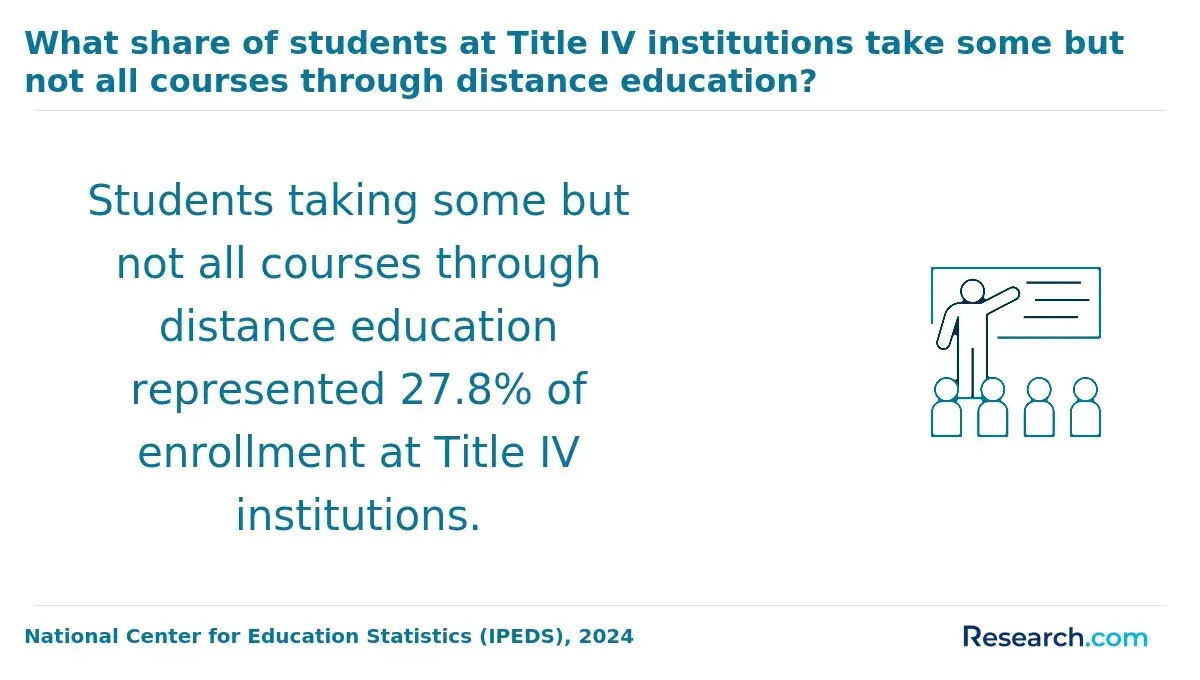
Yes, if the format allows you to complete the relevant courses while keeping your job and gives you meaningful opportunities to practice regulatory analysis. "Online" does not necessarily mean asynchronous or self-paced: live meetings, group projects, exams, and course sequencing can still constrain your schedule.
Before enrolling, ask when export-related electives run, whether attendance is required at fixed times, and whether any campus visit or practical placement is mandatory. A program that offers a useful course only occasionally may take longer to finish than its advertised minimum. If completion time is a deciding factor, compare business law master's programs with faster study pathways, then check whether their shorter schedules leave room for the trade-specific coursework you need.
What Are the Admission Requirements for an Export Compliance MLS?
MLS and MSL programs generally target applicants who already hold a bachelor's degree; each school sets its own rules for academic records, statements, recommendations, and relevant experience. A law degree or prior compliance job is not necessarily required. Check the current admissions page for the specific program rather than assuming one school's policy applies elsewhere.
If you do not yet have a bachelor's degree, that prerequisite may be the first decision. Prior college work does not transfer automatically: the receiving institution decides which credits count and how they apply to its degree. For readers considering that route, online paralegal bachelor's pathways for transfer students provide one comparison point, although paralegal education is not a substitute for specialized export-compliance experience.
How Long Do MLS Programs Take, and What Do They Cost?
Completion time depends on required credits, course availability, and whether you study full- or part-time. For an employed professional, the relevant estimate is not the school's shortest advertised timeline; it is the schedule for completing your chosen trade-related courses alongside the degree requirements.
Request an itemized, current estimate covering tuition, mandatory fees, books or research resources, technology requirements, and any travel. Compare schools using the same unit - such as the full program cost at your expected enrollment pace - not one school's per-credit rate against another's total. Ask your employer about tuition assistance and the school about aid eligibility for the specific degree; do not assume every separate certificate qualifies for the same aid.
Opportunity cost belongs in the calculation too. If the courses most relevant to your job are available through shorter training, the extra time and expense of an MLS need a clear purpose. Use online legal studies master's value and cost comparisons as a starting point, then confirm current charges and course availability directly with each school.
What Careers Can an Export Control and Sanctions MLS Lead To?
Potential roles include export compliance analyst, trade compliance specialist, sanctions analyst, export licensing specialist, and compliance manager. The work varies: a manufacturer may emphasize product classification and technology access, while a financial institution may emphasize transaction screening and sanctions investigations.
An MLS can support advancement where employers value legal analysis, policy writing, investigations, and communication with counsel. It does not replace experience applying regulations, understanding the employer's products or transactions, or learning its systems. Career changers should connect prior skills to specific duties: engineers may bring product knowledge; logistics staff may know shipment documentation; finance professionals may understand payment flows. Each still needs training in the applicable trade rules.
How Much Do Export Control and Sanctions Compliance Professionals Earn?
The Bureau of Labor Statistics reports median annual pay of $80,730 in May 2025 for compliance officers, with 4% projected growth, 2025-2035 and about 32,700 projected openings per year. This is a broad U.S. occupational benchmark, not a salary estimate specifically for export-control or sanctions specialists.
Actual offers can differ with industry, location, experience, supervisory responsibility, and the technical complexity of the work. An MLS does not establish a particular pay level. When assessing its financial value, compare the roles you could realistically pursue with and without the degree, not the occupational median against tuition alone.
Which Certifications Complement an Export Compliance MLS?
A professional certification is a credential awarded by a certifying organization under its own eligibility and assessment rules. It is different from an academic certificate, which documents completion of a school's coursework. Neither should be assumed to be required for every export compliance job.
Options worth investigating include the International Import-Export Institute's export-compliance credentials and the Society of Corporate Compliance and Ethics' Certified Compliance & Ethics Professional credential. The former may align more closely with trade tasks; the latter addresses broader compliance-program practice. Check each organization's current eligibility rules, examination scope, renewal requirements, and fees before paying or claiming a credential on a résumé.
If your employer needs stronger transaction-level judgment now, targeted training plus supervised cases may be more useful than collecting credentials. If you want to lead a wider compliance function, an MLS paired with relevant experience and a well-matched certification may make more sense.
Other Things You Should Know About Law & Paralegal
A degree alone does not grant sign-off authority. The employer determines who may prepare, review, and submit applications, subject to the applicable agency's rules and its internal delegation of authority.
No. A screening result is only one part of the review. Product or technology classification, destination, end use, end user, licensing, and other applicable restrictions may still need analysis.
Do not assume it will. A law school decides whether any prior coursework can apply under its own policies and applicable degree requirements. Get a written answer from the prospective JD program before relying on credit transfer.
No. The rules that matter depend on what an organization makes, shares, ships, or sells, and with whom it deals. A prospective student should compare coursework against the transactions common in their target industry.
References
- Tuition and College Costs | wa.gov https://wsac.wa.gov/tuition-and-college-costs
- Export Compliance Programs (ECPs) | Bureau of Industry and Security https://www.bis.gov/learn-support/export-compliance-programs
- Fast Facts: Tuition costs of colleges and universities (76) | ed.gov https://nces.ed.gov/fastfacts/display.asp
- International Traffic in Arms Regulations (ITAR) - DDTC https://www.pmddtc.state.gov/ddtc_public
- U.S. Export Controls | International Trade Administration https://www.trade.gov/us-export-controls
- M.S.L.S. Admissions - Cornell Law School https://www.lawschool.cornell.edu/admissions/msls-program/
- Frequently Asked Questions - Export Compliance https://export.web.baylor.edu/frequently-asked-questions
- Export Controls & Sanctions | UM System https://www.umsystem.edu/departments-staff/ethics-compliance-audit-services/research-security/export-controls-sanctions
- 4 Flexible Ways to Earn a College Degree on Your Schedule | St. John's University https://www.stjohns.edu/news-media/johnnies-blog/4-flexible-ways-earn-college-degree-your-schedule-0
- UNC Online: Top Online Degree Programs for 2026 https://online.unc.edu/