2027 A Second Paralegal Certificate or a Legal Studies Master's: Options for Experienced Paralegals

Co-Founder and Chief Data Scientist
If you already work as a paralegal, another credential should solve a specific career problem - not simply add a line to your résumé. A second certificate may help you build a targeted practice skill, while a legal studies master's may support broader work involving law and regulation. The difference matters because both options require time and money, and neither automatically brings a promotion. This guide compares what each route teaches, who can enter, what it may cost, and how to test whether either is worth pursuing.
Key Things You Should Know
- Choose a second paralegal certificate when it fills a demonstrable skills gap; choose a non-JD legal studies master's when your target role calls for broader legal or regulatory knowledge.
- Neither credential qualifies you to practice law. A program certificate is also different from professional paralegal certification, which an organization or state system may award separately.
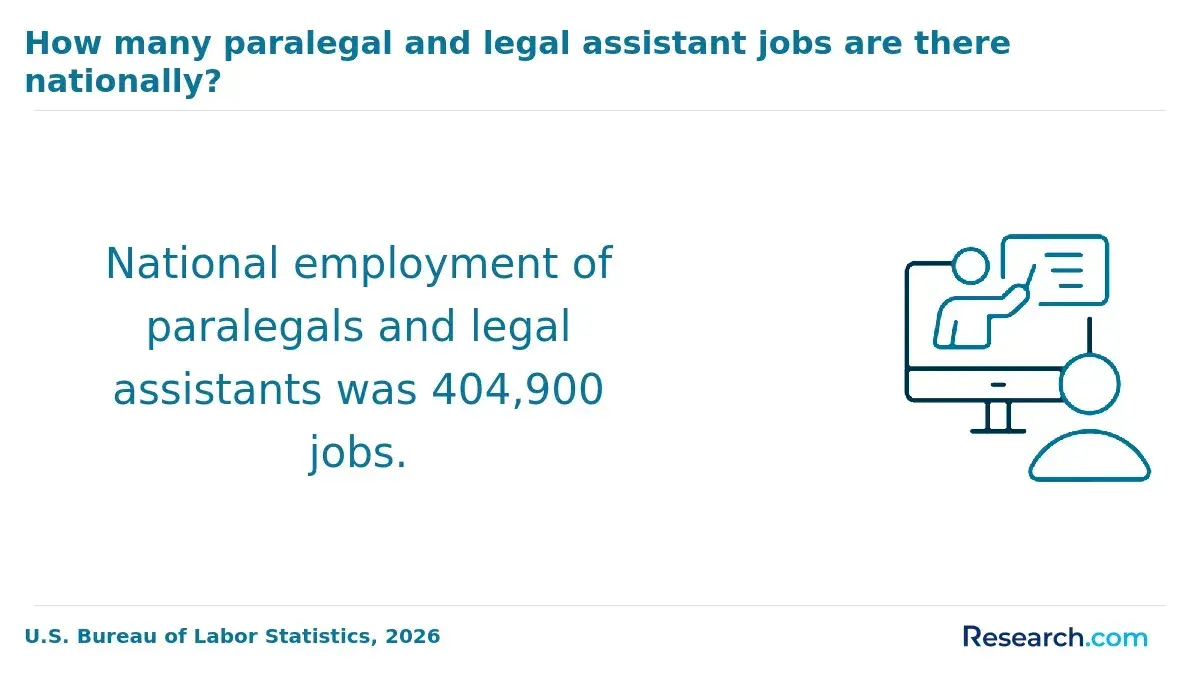
- U.S. paralegals and legal assistants had median annual pay of $62,890 in May 2025, with 0% projected employment growth for 2025-2035, according to the Bureau of Labor Statistics. Compare a program's cost with a specific career opportunity, not an assumed pay increase.
Is a second paralegal certificate or a legal studies master's better for experienced paralegals?
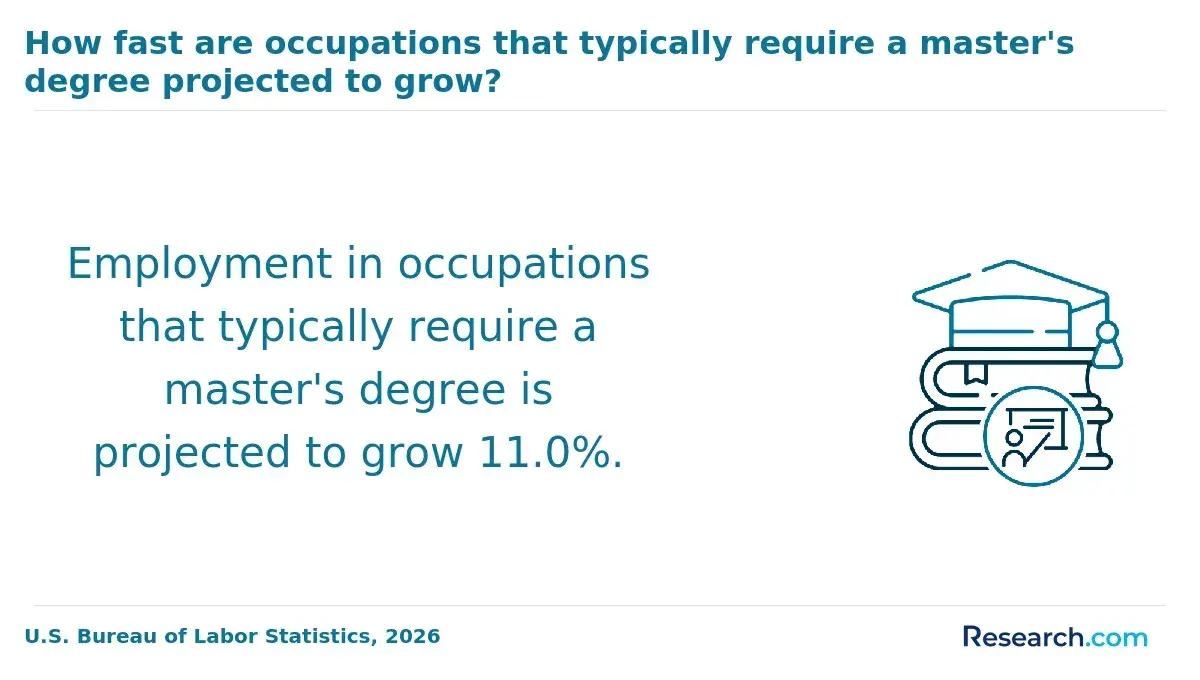
Neither is universally better. A second paralegal certificate is usually the more focused choice if you need training your first program or current job did not provide. A Master of Legal Studies (MLS), Master of Studies in Law (MSL), or similar non-JD degree is a stronger candidate if you have a bachelor's degree and want to apply legal knowledge beyond conventional paralegal work.
This comparison identifies the main trade-off. Individual programs can differ substantially, so treat it as a starting point rather than a description of every school.
| Decision factor | Second paralegal certificate | Legal studies master's |
| Primary purpose | Develop or refresh specific legal-support skills | Study legal systems and regulation at the graduate level |
| Typical entry point | Varies: some programs accept applicants without a degree; others require prior college study or a bachelor's | Generally requires a bachelor's degree |
| Best fit | A defined practice-area or technology gap | A planned move toward compliance, policy, legal operations, or another law-adjacent function |
| Main limitation | May repeat material you already know | Can demand more time and expense than the target job warrants |
If a master's is the stronger fit but time is your obstacle, exploring faster business law graduate programs can help you identify formats to investigate. Confirm the degree awarded and actual course sequence before assuming an advertised pace works with your job.
What career goals does each advanced paralegal education pathway support?
Start with the work you want to do next. If your goal is to move from general litigation support into, for example, contracts administration or e-discovery, a certificate with substantial assignments in that work may be useful. Coursework alone does not establish a specialty: employers may also expect relevant matters, software experience, and attorney-supervised work product.
A legal studies master's may make more sense if your target work involves interpreting rules across an organization, coordinating regulatory processes, or working with legal and business teams. For a paralegal considering an HR or workplace-compliance direction, HR law study options within legal studies degrees illustrate the kind of curriculum to compare. Check whether a school offers a formal concentration, a set of electives, or only a few relevant courses.
Read actual job postings before enrolling. If the roles you want emphasize experience or a particular technical skill rather than a graduate degree, a project at work, employer training, or a shorter course may be the better first move.
Do experienced paralegals need another certificate or an advanced degree?
Usually, neither is a universal requirement. Employer preferences vary by position, and additional education does not replace the judgment, organization, and subject-matter experience developed on the job. Paralegals also continue to work under applicable attorney-supervision and unauthorized-practice-of-law rules; neither pathway authorizes independent attorney services.
Before paying for another credential, identify the gap it would close. If you already handle the target assignments competently, ask whether a broader portfolio, a different team assignment, mentoring, or a professional certification would carry more weight with your employer. If you cannot name the tasks or job requirements the program addresses, postpone enrollment until you can.
How do admission requirements differ between paralegal certificates and legal studies master's programs?
Paralegal certificate admissions depend on the program. One school may accept applicants with a high school diploma, while another may require college coursework or a completed degree. A second certificate may therefore be accessible without a bachelor's, but an experienced applicant should check whether introductory courses can be waived without losing instruction they actually need.
Legal studies master's programs generally require a bachelor's degree and a graduate application. Schools set their own rules for transcripts, writing materials, recommendations, and prerequisites. Legal work experience can strengthen an application, but it does not automatically replace a published degree requirement.
If prior coursework affects your decision, obtain a written evaluation from the receiving school. Business law degree pathways with transfer credit options can provide programs to investigate, but the receiving institution decides whether credits transfer and how they apply to its curriculum. A noncredit certificate may not supply transferable graduate credit.
What do second paralegal certificate and legal studies master's programs teach?
A worthwhile second paralegal certificate should add something identifiable to your first credential: perhaps advanced legal research, drafting, a new practice area, or supervised work with relevant processes. Compare assignments, not just course titles. A technology course that mentions e-discovery is different from one requiring students to complete realistic review or production exercises.
A legal studies master's generally approaches law more broadly through legal reasoning, institutions, and regulatory subjects. Its value to a paralegal depends on whether available courses connect to the intended role. Neither an MLS nor an MSL is a Juris Doctor (JD), and completing one does not qualify a graduate to become an attorney.
When comparing certificate curricula, our list of online paralegal certificate programs can help you develop candidates. Examine each school's current catalog for required courses, hands-on assignments, and any internship before deciding that it offers genuinely new training.
How long do these programs take and how much do they cost?
A focused certificate may take less time than a master's, but the calendar depends on course sequencing, term availability, and your enrollment pace. A working paralegal should compare the earliest realistic completion date - not only the fastest advertised one. A required course offered infrequently or an internship that conflicts with work can extend either route.
Published tuition is not the full price. These cost components matter because two programs with similar advertised tuition may require different out-of-pocket spending.
| Cost component | Why it can change the comparison |
| Tuition and mandatory fees | Schools may charge by credit, term, or program, making advertised prices hard to compare directly. |
| Books, research access, and technology | Required resources may be included or charged separately. |
| Travel and practical requirements | Campus visits or placements may create expenses even for online students. |
| Time away from paid work | Scheduling demands can add an opportunity cost beyond the school bill. |
Request a written estimate for your enrollment plan and ask which charges are mandatory. If price is the main obstacle, lower-cost ABA-approved paralegal education may be worth examining, but confirm current program approval and whether its coursework adds value beyond your first credential. Federal aid eligibility must be checked for the specific program; do not assume a certificate qualifies because its institution participates in aid programs.
Are online or campus-based programs better for experienced paralegals?
The better format is the one whose actual schedule lets you complete the work. Online does not necessarily mean asynchronous or self-paced: classes may require live meetings, timed exams, campus visits, or a locally arranged internship. Campus courses may offer easier face-to-face collaboration but require predictable travel time.
Ask for a sample term schedule and the program's placement rules. If you hope to use your current job for a practicum, get confirmation that the school permits it, who must supervise it, and what work qualifies. These details matter more than the delivery label, particularly when you already have a full-time legal workload.
How should paralegals evaluate accreditation and professional certification options?
Institutional accreditation, ABA program approval, and professional certification are different. Institutional accreditation concerns the school. The American Bar Association (ABA) approves qualifying paralegal education programs; it does not accredit the institution or certify individual paralegals. Check any claimed ABA approval against the ABA's current paralegal program directory rather than assuming approval follows from the school's name.
A certificate documents completion of a school's program. Professional certification is a separate credential awarded under an organization's or state system's rules. For example, the National Association of Legal Assistants administers the Certified Paralegal credential, while the National Federation of Paralegal Associations administers the PACE examination for its Registered Paralegal credential. Eligibility and maintenance requirements differ; state-specific recognition or regulation can differ too. Check the relevant credentialing body and your state's rules before treating another academic certificate as preparation for a particular designation.
What jobs and salary opportunities can advanced paralegal education lead to?
A second certificate may support a move into more specialized legal-support assignments, but pay depends on the employer, location, experience, and responsibilities - not simply the credential. The Bureau of Labor Statistics projects about 40,800 openings per year for paralegals and legal assistants over 2025-2035 despite little or no net employment growth. Openings do not mean that a second certificate creates a new position or a raise.
A legal studies master's may be relevant to compliance, legal operations, contracts, or policy-related work when paired with suitable experience. For context, the BLS reports median annual pay of $80,730 in May 2025 for compliance officers and 4% projected growth for 2025-2035. Those are occupation-wide figures, not earnings forecasts for MLS graduates or experienced paralegals who switch fields.
Test the proposed payoff against actual openings: note which jobs require, prefer, or do not mention graduate study. A degree may help you explain a broader knowledge base, but demonstrated responsibility for the target work is likely to remain important.
How can paralegals choose a reputable certificate or master's program?
Shortlist programs only after defining a target job or skill. Then use the same checks for each school so a persuasive course description does not obscure a weak fit.
- Compare required courses and sample assignments with your existing education and the work you want to do.
- Verify the school's institutional accreditation and, if relevant to your decision, the paralegal program's current ABA approval.
- Get the complete cost, realistic completion schedule, delivery requirements, and any internship rules in writing.
- Ask whether credits are graduate-level and transferable, and obtain the receiving institution's decision before relying on transfer.
- Compare those commitments with a lower-cost alternative, such as employer training or a targeted professional credential.
Be cautious if a program implies that a certificate makes you professionally certified, that ABA approval covers every program at a school, or that a non-JD master's leads to attorney eligibility. The strongest choice is the least extensive credible route that closes your verified gap - whether that is a second certificate, a master's, or no new degree at all.
Other Things You Should Know About Law & Paralegal
Possibly. Ask HR whether tuition assistance covers the specific school, program, and courses, and whether reimbursement depends on grades or continued employment. Get the policy before enrolling.
It can help if you need schedule flexibility, tuition assistance, or relevant assignments. Share the expected time commitment and explain how the coursework relates to your work, while keeping any request consistent with workplace policy.
Only with appropriate permission and confidentiality protections. Client or employer materials may be restricted; a school may accept a separately written sample instead. Follow its application instructions and your workplace's rules.
Do not assume so. Student access may end when enrollment ends, and software terms vary. Ask the program what access it provides during study and whether any access continues afterward.
References
- TEN_25-19_Attachment_1.pdf | dol.gov https://www.dol.gov/node/161266
- Cost of Attendance (Budget) | 2025-2026 Federal Student Aid Handbook https://fsapartners.ed.gov/knowledge-center/fsa-handbook/2025-2026/vol3/ch2-cost-attendance-budget
- Master of Legal Studies (MLS) vs. JD: What's the Difference? | SMU Online Master of Legal Studies https://onlinemasterlegalstudies.smu.edu/articles/mls-vs-jd/
- Do You Need ABA Approval for a Paralegal Program? | Bryan University Online© https://bryanuniversity.edu/faq/aba-approval-accreditation-paralegal-programs/
- Navigating the Paralegal to Lawyer Path | post.edu https://post.edu/blog/navigating-the-paralegal-to-lawyer-path-the-value-of-a-legal-studies-degree/
- Legal Studies vs Paralegal Studies: Career Path Comparison | American Military University https://www.amu.apus.edu/area-of-study/legal-studies/resources/legal-studies-vs-paralegal-studies-career-paths/
- MLS vs Graduate Certificate: What's the Better Career Investment? | wsulaw.edu https://www.wsulaw.edu/news/why-choose-a-master-of-legal-studies-over-a-graduate-certificate/
- Legal Studies (M.A.) - The Graduate College https://www.gradcollege.txst.edu/programs/legal-studies.html
- What Can You Do With a Master of Legal Studies? | WashU Law https://online.law.washu.edu/articles/what-can-you-do-with-master-of-legal-studies/
- Paralegal Studies Program - OU College of Law https://law.ou.edu/paralegal-studies