2027 Master of Legal Studies vs. SHRM Certification: Degree Study or Professional Credential?

Co-Founder and Chief Data Scientist
A Master of Legal Studies (MLS) and a Society for Human Resource Management (SHRM) certification can both support work involving employment rules, but they solve different career problems. One provides graduate-level legal study; the other validates human resources knowledge through an exam. For HR professionals, compliance staff, paralegals, and career changers, choosing the wrong route can mean paying for training that employers do not need. This guide compares what each credential teaches, what it costs in time and money, and which questions to answer before enrolling or registering.
Key Things You Should Know
- Choose SHRM certification when your immediate goal is to demonstrate HR competency for an HR role; choose an MLS when your work calls for sustained study of law and regulation across a broader range of responsibilities.
- An MLS is a graduate degree, while SHRM-CP and SHRM-SCP are professional certifications. Neither qualifies you to practice law, and an MLS does not replace HR experience.
- Compare the investment against your target job, not a promised salary: the Bureau of Labor Statistics reports median pay of $80,730 in May 2025 for compliance officers, an occupation neither credential automatically qualifies you to enter.
What is the difference between a Master of Legal Studies and SHRM certification?
An MLS, sometimes called a Master of Studies in Law (MSL) or Master of Jurisprudence, is a non-Juris Doctor graduate degree designed to develop legal knowledge. SHRM certification is a professional credential awarded after an applicant meets the applicable eligibility rules and passes a SHRM exam. SHRM-CP targets operational HR practice; SHRM-SCP targets strategic HR practice.
The distinction matters because employers may value academic legal analysis and demonstrated HR practice for different positions. This comparison summarizes what each route establishes - not what a holder is automatically authorized to do.
| Decision factor | MLS degree | SHRM certification |
| Primary focus | Legal systems, analysis, and application to professional decisions | HR knowledge and judgment assessed through a credentialing exam |
| Entry point | Typically requires a bachelor's degree and graduate admission | Depends on the SHRM-CP or SHRM-SCP eligibility rules |
| Learning format | Required courses, assignments, and sometimes electives or a capstone | Exam preparation is optional; passing the applicable exam is central |
| Credential awarded | Graduate degree from a university | Professional certification from SHRM, subject to maintenance requirements |
| Key limitation | Does not confer attorney licensure or substitute for HR experience | Does not provide graduate academic credit or broad legal training by itself |
Neither route is the same as paralegal education. If your target is specifically a paralegal job, compare its hiring requirements with online paralegal bachelor's pathways for transfer students rather than assuming either an MLS or SHRM certification is the most direct preparation.
Is a Master of Legal Studies or SHRM certification better for your career goals?
SHRM certification is usually the more direct choice if you already perform HR work and want a recognizable credential aligned with HR hiring or advancement. An MLS may be the better fit if your duties involve interpreting contracts, employment rules, investigations, or regulatory obligations and you need deeper legal context than exam preparation provides.
For a career changer, the answer may be neither - at least initially. An employer may place greater weight on recruiting, benefits administration, employee relations, or compliance experience than on either new credential. Review several target job postings and identify which requirements you lack before committing to graduate tuition or an exam.
If you need focused graduate coursework rather than an entire degree, consider exploring graduate certificate alternatives to a legal studies master's. Confirm whether credits could later apply to an MLS; the receiving university makes that decision.
What are the requirements for an MLS degree and SHRM certification?
MLS applicants generally need a bachelor's degree and must satisfy the university's graduate admission rules. Schools vary in their requirements for transcripts, recommendations, statements, work history, and standardized tests. Admission to a legal studies program is not admission to a Juris Doctor program.
SHRM sets separate eligibility rules for SHRM-CP and SHRM-SCP. SHRM-CP is intended for people performing, or pursuing, operational HR work; SHRM-SCP has experience requirements tied to strategic-level HR responsibilities. Before paying an exam fee, check SHRM's current eligibility definitions against your actual duties, not just your job title. Preparation-course admission is separate from eligibility to earn the certification.
What do you study in a Master of Legal Studies program?
An MLS commonly introduces legal research and reasoning, contracts, administrative law, and the legal system, then offers coursework shaped by the program. An employment-focused student might study workplace law, privacy, investigations, or dispute resolution. Course titles alone are not enough: compare syllabi and assignments to see whether students practice analyzing the issues they encounter at work.
A concentration is a defined set of degree requirements; a few relevant electives are not necessarily a concentration. Professionals whose interests center on contracts, organizations, and regulation can also compare a guide to business law degrees for working adults. Neither path authorizes graduates to represent clients as attorneys.
How does SHRM certification prepare you for human resources careers?
SHRM exams assess the application of HR knowledge and judgment to workplace situations. Preparation may reinforce topics such as employee relations, talent management, workplace policy, and HR strategy, with the emphasis differing by credential. An exam-preparation course can help you organize study, but completing the course is not the same as becoming SHRM-certified.
Certification can give employers a consistent signal of tested HR knowledge. It cannot replace the experience needed to handle sensitive employee matters, and employment-law knowledge gained through exam study is not a substitute for legal advice. SHRM credentials also require ongoing maintenance under SHRM's rules, so include recertification obligations in your decision.
How long do MLS programs and SHRM certification take?
An MLS usually involves multiple academic terms; the schedule depends on required credits, course sequencing, and whether you enroll full time or part time. SHRM preparation can fit into a shorter period, but certification timing depends on eligibility, available exam dates, study readiness, and passing the exam. Comparing a school's advertised completion time with a preparation course's length would overlook those differences.
If the job you want is paralegal rather than HR or compliance, review fast-track online paralegal programs as a separate route. A shorter program may save time, but only if its prerequisites, coursework, and credential match the positions you intend to pursue.
How much do an MLS degree and SHRM certification cost?
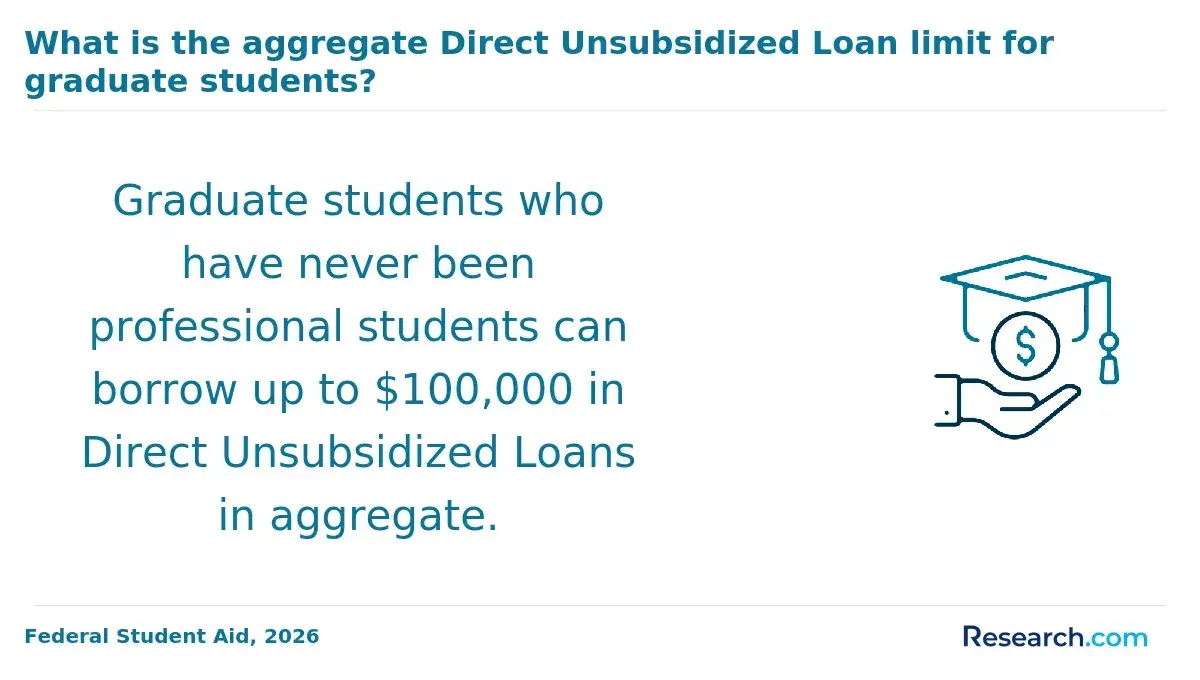
An MLS generally represents the larger financial commitment because it charges graduate tuition across a degree program. Compare the school's total required credits, tuition rate, mandatory fees, books, technology needs, and any campus travel - not just its advertised per-credit price. Ask whether employer tuition assistance applies and whether the specific program qualifies for the financial aid you plan to use. Borrowing also adds repayment costs.
For SHRM certification, budget for the exam, any optional preparation course or materials, a possible retake, and ongoing maintenance. Preparation providers set their own prices; buying a course does not guarantee a passing result. Because prices and SHRM fees can change by registration period and applicant category, obtain current written figures before comparing totals.
If a paralegal credential is your actual objective, compare its separate paralegal degree tuition and financial aid options. A lower upfront price is not a saving if the credential does not meet your target employers' expectations.
Can you earn an MLS degree or SHRM certification online?
Many universities offer online MLS study, but "online" does not necessarily mean self-paced. Ask about live meetings, course sequencing, proctored assessments, campus visits, and whether required courses are available when you need them.
You can prepare for a SHRM exam through online materials or courses. The certification itself depends on satisfying SHRM's rules and passing its exam, not on taking classes in a particular format. Check the current exam appointment and testing options before planning around a location or schedule. For either route, compare weekly commitments with your work obligations rather than relying on the word "flexible."
What jobs and salaries can MLS graduates and SHRM-certified professionals expect?
MLS graduates may apply legal knowledge in compliance, contracts, investigations, or HR-adjacent work; SHRM-certified professionals commonly pursue HR roles matching their experience. Neither credential guarantees entry into a job. The following U.S. occupational figures offer salary context, but they describe everyone employed in each occupation - not the earnings of MLS graduates or SHRM credential holders.
| Occupation | Median annual pay | Projected employment growth | Decision relevance |
| Compliance officers | $80,730 in May 2025 | 4%, 2025-2035 | Relevant to regulatory roles where an MLS may add context |
| Labor relations specialists | $95,420 in May 2025 | 2%, 2025-2035 | Relevant to workplace disputes and collective bargaining |
| Compensation, benefits, and job analysis specialists | $78,210 in May 2025 | 6%, 2025-2035 | Relevant to specialized HR work where tested HR knowledge may help |
These Bureau of Labor Statistics medians are useful benchmarks, not projected returns on education. To judge likely value, compare the stated qualifications of jobs in your area with your current experience and the skills each route would add.
How do you choose an accredited MLS program or reputable SHRM preparation course?
Start by checking that the MLS university holds recognized institutional accreditation and that its current catalog confirms the degree, required courses, delivery format, and graduation rules. Accreditation applies to the institution; it is not the same as American Bar Association approval of a qualifying paralegal education program. ABA paralegal program approval is not an MLS requirement.
For SHRM preparation, distinguish an exam-prep provider's marketing from SHRM's certification requirements. Before you commit, use these checks to test whether the offering will close your specific skill gap:
- Match MLS courses or SHRM prep topics to the duties in your target job postings.
- Request the complete cost, schedule, assessment format, and refund terms in writing.
- For an MLS, confirm institutional accreditation and ask how often required courses run.
- For SHRM, verify your exam eligibility directly against SHRM's current rules and check whether preparation materials address the exam you intend to take.
A warning sign is any promise that enrollment alone leads to certification, attorney status, a promotion, or a particular salary. Choose the option whose verified content and requirements address the gap between your experience and the work you want to do.
Other Things You Should Know About Law & Paralegal
Do not assume so. A law school decides whether it accepts any prior coursework, and an MLS is not a substitute for completing a JD and meeting bar admission requirements.
Possibly, but a paralegal title alone does not establish eligibility. Compare your actual strategic HR responsibilities with SHRM's current criteria before applying.
No. SHRM and the HR Certification Institute award different credentials and set their own exams and maintenance rules. Check which credential, if any, your target employers request.
Yes. The combination may suit work that genuinely requires both HR practice and substantial legal knowledge, but earning one does not waive the other's requirements.
References
- Master of Legal Studies (MLS) vs. JD: What's the Difference? | SMU Online Master of Legal Studies https://onlinemasterlegalstudies.smu.edu/articles/mls-vs-jd/
- What Is SHRM-CP vs. SHRM-SCP Certification? | Purdue Global https://www.purdueglobal.edu/blog/business/shrm-cp-vs-shrm-scp/
- MLS vs J.D.: Which Legal Degree Fits Your Career Goals? | UC Law San Francisco MLS https://mls.uclawsf.edu/articles/mls-vs-jd/
- HRCI vs. SHRM Certification - What's the Difference? | UTSA PaCE https://www.utsa.edu/pace/news/hrci-vs-shrm-certification-what-is-the-difference.html
- MLS vs. JD: Which Legal Path Is Right for Non-Lawyers? | Goodwin College of Professional Studies https://drexel.edu/law/news/legal-studies-blog/mls-vs-jd-which-legal-path-is-right-for-non-lawyers/
- Master of Legal Studies in Healthcare Compliance | wsulaw.edu https://www.wsulaw.edu/academics/master-of-legal-studies/
- How an MLS in Compliance Prepares You for Legal Corporate Careers | William & Mary Law https://online.law.wm.edu/blog/mls-compliance-corporate-legal-careers
- Human Resources Law Track - Online MLS | Wake Forest https://mls.law.wfu.edu/curriculum/human-resources/
- How an M.L.S. Degree Prepares You for Employment Law | miami.edu https://news.miami.edu/law/stories/2025/09/how-an-mls-degree-prepares-you-foremployment-law.html
- What is SHRM Certification? - Trinity Law School https://www.tiu.edu/law/questions/what-is-shrm-certification/