2027 National University vs. UMass Global: Comparing Bachelor's Routes Into Paralegal Work

Co-Founder and Chief Data Scientist
Choosing between National University and UMass Global means deciding how directly your bachelor's degree should prepare you for paralegal work. National University offers a paralegal-focused route, while UMass Global's legal studies route may appeal to students who want broader legal knowledge alongside career preparation. The distinction matters if you are transferring credits, working while enrolled, or paying for coursework you hope to use immediately. This comparison explains what to check in each program's current catalog - and which differences should drive your decision.
Key Things You Should Know
- National University's Bachelor of Science in Paralegal Studies is the more explicitly paralegal-focused credential; UMass Global's Bachelor of Arts in Legal Studies calls for a closer look at its current paralegal-related coursework or emphasis.
- Institutional accreditation and American Bar Association (ABA) approval of a particular paralegal program are different. Confirm the exact program and delivery format in the ABA's current directory before treating approval as a deciding factor.
- The U.S. median annual pay for paralegals and legal assistants was $62,890 in May 2025; the degree you choose does not guarantee that wage or a job.
How do National University and UMass Global prepare students for paralegal careers?
National University is the more direct choice on degree title: its Bachelor of Science in Paralegal Studies signals preparation for legal-support work. UMass Global's Bachelor of Arts in Legal Studies has a broader academic title, so applicants should establish whether their intended course plan includes a current paralegal-profession option and enough practical training for the jobs they want.
The difference is most useful when you compare actual work samples, not marketing descriptions. Ask both schools where students practice legal research, citation, document drafting, case organization, and applying procedural rules. Those are skills a paralegal may use under an attorney's supervision. Neither degree authorizes its holder to practice law independently.
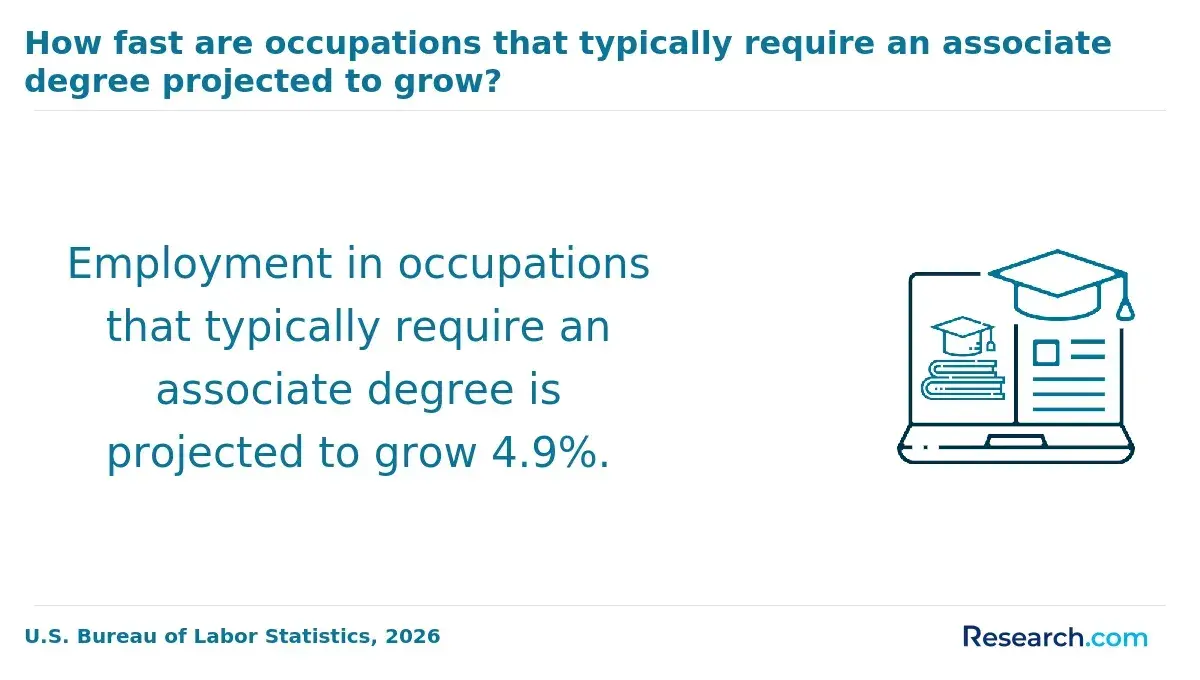
If your sole goal is an entry-level paralegal role, also compare the bachelor's routes with associate degrees focused on paralegal studies. A shorter credential could meet an employer's preference without the additional time and expense of a bachelor's degree, particularly if you do not already have transferable college credit.
Which school has the stronger accreditation and paralegal program approval?
National University and UMass Global are institutionally accredited by the WASC Senior College and University Commission. That status concerns the institutions; it does not establish that either specific bachelor's route has ABA approval. The ABA approves qualifying paralegal education programs rather than accrediting entire universities or certifying individual graduates.
For a meaningful approval comparison, check the ABA's current paralegal program directory for each school's exact program name and confirm that the option you plan to complete - including any online route or emphasis - is covered.
If an admissions page uses "ABA-approved," ask which credential and course sequence the statement describes. Do not assume approval transfers from a school's certificate or another paralegal program to its bachelor's degree.
Give verified program approval weight if an employer you are targeting prefers it. Otherwise, compare the courses, practical assignments, schedule, and net cost rather than treating either institutional accreditation or an unverified approval claim as a quality ranking.
How do National University and UMass Global bachelor's degrees compare online?
Online availability is only the first scheduling test. An online course may still have live meetings, timed assessments, fixed weekly deadlines, or a placement that must be completed on site. Ask each school for the current schedule of the legal-specialty courses, not just its general description of online study.
National University's concentrated course scheduling may suit someone who prefers focusing on fewer subjects at a time. UMass Global may suit someone who wants to plan legal studies around an existing work schedule.
Neither format is automatically self-paced; actual flexibility depends on course sequencing and any live or experiential requirements. Readers comparing business law degree pathways for working professionals should apply the same test: can required courses be taken when they need them, without delaying graduation?
Before enrolling, request a term-by-term plan showing required classes, meeting times, and whether any internship, practicum, campus visit, or supervised experience is required. If a placement applies, ask who finds the site and whether your current workplace can qualify.
What courses do the two bachelor's programs include?
The key curriculum question is not how many courses contain "law" in their titles. It is whether the required sequence builds usable paralegal skills. For National University's paralegal-focused degree, inspect the current catalog for required legal research and writing, litigation or procedure, substantive law, ethics, and practical assignments.
For UMass Global's legal studies degree, check which of those subjects are required for your selected option rather than available only as electives.
A course in business law can be valuable for corporate or compliance work, but it is not a substitute for practice drafting a research memo, organizing discovery, or preparing documents under attorney supervision.
Conversely, students interested mainly in regulatory or business roles may value broader legal studies electives more than extensive litigation training. Those planning eventually to compare fast-track business law graduate programs should remember that graduate legal study serves a different purpose from entry-level paralegal skills training.
Request sample syllabi or assignment descriptions from both schools. A current catalog can tell you what is required; samples can show whether "legal research" means hands-on work rather than a general survey.
What are the admission requirements for each bachelor's program?
Start with each university's current undergraduate admission requirements, then ask whether the specific degree or paralegal-related option has additional entry conditions.
Applicants entering with only a high school credential should check general-education requirements; transfer applicants should request a written evaluation showing how previous courses apply to the major, not merely how many credits the university accepts.
This is particularly important if you already completed legal, business, or general-education coursework. A receiving university decides whether credit transfers and whether it satisfies a particular requirement. Advice about transferring earlier coursework into a business law degree illustrates the distinction: accepted elective credit can still leave required major courses unfinished.
Ask both admissions offices for the current minimum entry requirements, application materials, transfer-credit limits, and any prerequisites for upper-division legal courses. Do not plan your completion date around an informal estimate of transfer credit.
How long do the programs take and how much do they cost?
Neither school has a single completion time or total price that fits every applicant. Your remaining general-education and major requirements, accepted transfer credit, course availability, and enrollment pace determine the timeline. Compare a personalized degree audit from each school rather than assuming that a shorter course format produces a shorter degree.
For cost, obtain current written estimates using the same remaining credit load at both schools. The comparison should include tuition, mandatory fees, books or digital materials, technology needs, and any travel or placement expenses. Then compare your expected out-of-pocket cost after applicable aid; advertised tuition alone is not a reliable measure of affordability. Aid eligibility and awards depend on the student and the specific program.
If you already hold a bachelor's degree, ask whether a second bachelor's is necessary for your target jobs. A paralegal certificate may be a shorter route to practical training, while affordable graduate programs in legal studies may fit a different goal, such as building legal knowledge for an existing professional role. Neither alternative should be chosen without comparing its actual coursework and total cost with the job requirements.
Which certifications can graduates pursue after completing either degree?
A bachelor's degree is an academic credential; professional certification is a separate credential granted by a certifying organization after its eligibility and assessment requirements are met.
Graduates may investigate the National Association of Legal Assistants' Certified Paralegal credential or the National Federation of Paralegal Associations' paralegal certification options. Eligibility depends on each organization's current rules, which can consider education and experience differently.
Neither school's diploma automatically confers certification, and there is no universal national requirement that every paralegal hold one. Before selecting a degree partly for certification purposes, send the certifying organization the precise program name and your anticipated educational record, then check its current eligibility rules. State-specific credential rules, where applicable, require a separate check.
What paralegal jobs can graduates pursue with either bachelor's degree?
Graduates can seek legal assistant or paralegal positions in law firms, corporate legal departments, government offices, and other organizations that use supervised legal support. Depending on the employer and prior experience, the work may involve research, document preparation, records management, litigation support, or transaction support.
A degree can help demonstrate preparation, but employers may also weigh writing samples, software skills, practice-area knowledge, and experience.
Choose National University's paralegal-centered route if you want the degree itself to concentrate on that occupation. Consider UMass Global's legal studies route if its confirmed course plan gives you the practical training you need while leaving room for broader legal or business interests. Neither choice guarantees entry into a specialty.
For someone whose goal is compliance or business-focused work rather than supervised paralegal practice, it may be worth comparing experience and targeted training with fast-track business law graduate programs. A graduate legal degree is not normally required for paralegal work and does not qualify its holder to practice law.
How much can graduates earn as paralegals after completing these degrees?
The Bureau of Labor Statistics reports a $62,890 median annual wage in May 2025 for paralegals and legal assistants nationwide. That occupational median includes workers with different education levels and experience; it is not a starting salary or a measured outcome for graduates of either university.
To evaluate the financial trade-off, compare each school's personalized remaining cost with local job postings you could realistically pursue. Look at employers' stated education preferences and whether they ask for practical experience. Paying more for a bachelor's degree is difficult to justify solely by assuming its graduates earn more; school-specific earnings and placement outcomes would be needed to support that claim.
What is the job outlook for paralegals and legal assistants?
The Bureau of Labor Statistics projects 0% employment growth for paralegals and legal assistants from 2025 to 2035, but about 40,800 openings per year over that period. Little net growth does not mean no hiring: openings can arise when workers leave the occupation or retire. It does mean applicants should not count on rapid expansion to offset a weak skills match.
Whichever school you choose, prioritize research, writing, document handling, and familiarity with the tools used by your target employers. Before committing, verify the current degree plan, any applicable ABA approval, transfer evaluation, scheduling obligations, and full cost in writing. Those facts - not the degree title alone - will make the comparison actionable.
Other Things You Should Know About Law & Paralegal
No. A paralegal or legal studies bachelor's degree does not authorize law practice. Attorney qualification generally requires a separate law-school and licensing path governed by the relevant jurisdiction.
Generally, no. Paralegals work under attorney supervision and must avoid the unauthorized practice of law. Rules about permitted tasks vary by jurisdiction.
Seek supervised internships, legal-aid volunteer opportunities, or entry-level legal office work, and retain permissible, anonymized writing samples. Ask a prospective supervisor about confidentiality before using any work product in a portfolio.
It depends on any certification you pursue, applicable state rules, and employer expectations. Check the credentialing organization's renewal requirements rather than assuming that the degree has an ongoing education requirement.
References
- Fast Facts: Tuition costs of colleges and universities (76) | ed.gov https://nces.ed.gov/fastfacts/display.asp
- Employment Statistics - UW School of Law https://www.law.uw.edu/careers/employment-statistics/
- legal education | Wex | US Law | LII / Legal Information Institute https://www.law.cornell.edu/wex/legal_education
- How Long Are Community College Programs? | Edison State Community College https://www.edisonohio.edu/blog/how-long-are-community-college-programs
- ABA: What It Does and Why It Matters to Your Career | Graduate America https://ga.edu/legal/organization/aba-what-it-does-and-why-it-matters-to-your-career
- How to Get a Paralegal Certificate: What You Need to Know | National University https://www.nu.edu/blog/how-to-get-a-paralegal-certificate/
- Curriculum & Requirements - Arizona Law https://law.arizona.edu/academics/degrees/bachelor-arts-law/curriculum
- Careers in Criminal Justice & Legal Studies | Online Degrees | UMass Global https://www.umassglobal.edu/interest/criminal-justice-and-legal
- Do You Need ABA Approval for a Paralegal Program? | Bryan University Online© https://bryanuniversity.edu/faq/aba-approval-accreditation-paralegal-programs/
- How Many Transfer Credits Can You Bring to a University? | Park University https://www.park.edu/blog/how-many-transfer-credits-can-you-bring/