2027 Legal Studies Master's Programs for Healthcare Mergers and Contract Review Teams

Co-Founder and Chief Data Scientist
Healthcare deal and contract teams need people who can spot legal issues without mistaking issue-spotting for legal advice. If you work in compliance, operations, procurement, or legal support, a legal studies master's may deepen your contribution - but it may be more education than your next role requires. This guide compares degree routes, identifies coursework that maps to actual transaction tasks, and explains how to evaluate accreditation, schedule, cost, and career outcomes before you enroll.
Key Things You Should Know
- An MLS, MSL, or similar non-JD master's can support healthcare due diligence and contract review, but it does not qualify graduates to practice law; prioritize programs with healthcare regulation, contracts, and transaction coursework.
- Compare the full cost and required time against a graduate certificate or employer training. A relevant concentration should have published requirements, not just a few electives with appealing titles.
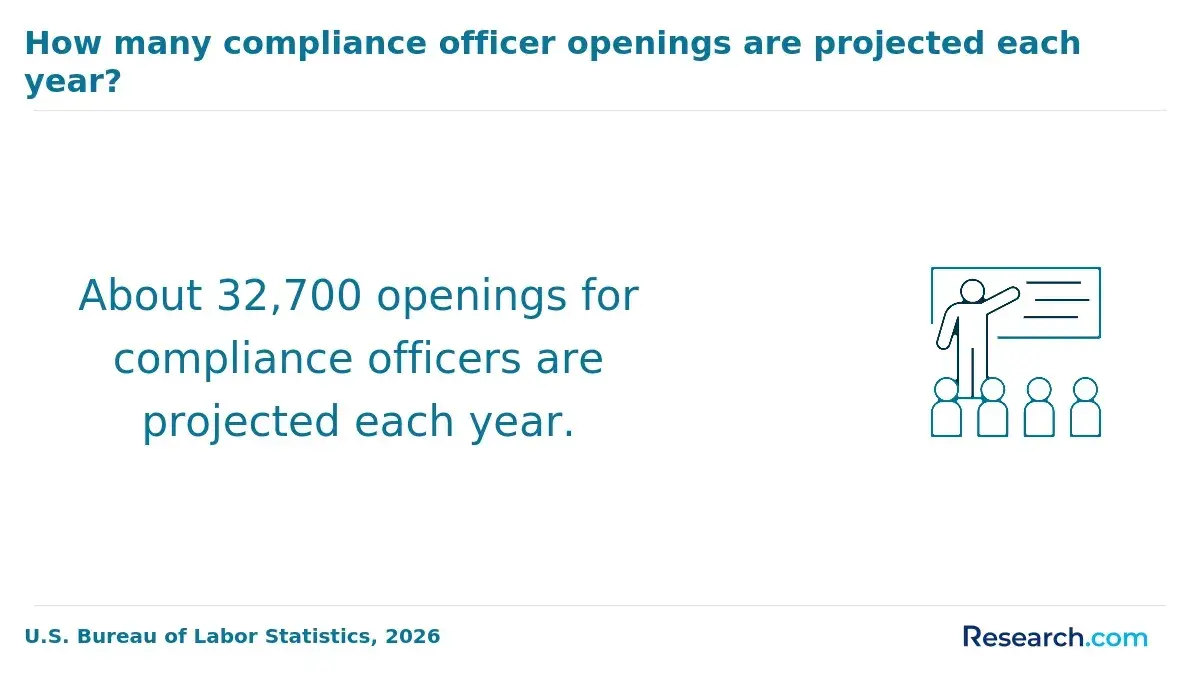
- The median pay for compliance officers was $80,730 in May 2025, with 4% projected job growth for 2025-2035. Those national figures cover many industries and do not predict pay for healthcare deal-team roles.
What are legal studies master's programs for healthcare mergers and contract review teams?
These are graduate degrees that teach nonlawyers to understand legal rules, work with counsel, and manage legally sensitive processes. Common names include Master of Legal Studies (MLS), Master of Studies in Law (MSL), and Master of Jurisprudence (MJ). They are generally designed for professionals who do not intend to become attorneys.
On a healthcare transaction team, the work may include organizing due diligence, tracking contract assignment and change-of-control provisions, identifying privacy or billing concerns, and routing potential antitrust or fraud-and-abuse issues to counsel. After a deal, contract teams may help reconcile vendor terms, renewal dates, and obligations across the combined organization. The degree's potential value is better issue recognition and coordination - not authority to give legal opinions, negotiate independently as counsel, or practice law.
Start with the job you want. If its main responsibility is maintaining a contract database, targeted contract-management training may be enough. If it requires coordinating complex regulatory reviews with lawyers, graduate legal study may be easier to justify.
Which master's degrees prepare students for healthcare mergers and contract review?
The credential's name matters less than its required curriculum and applied work. The comparison below shows where common degree routes may fit; offerings and concentration names vary by school.
| Degree route | Potential fit | What to verify |
| MLS, MSL, or MJ with healthcare law coursework | Hospital, health-system, payer, or vendor compliance and contract teams | Whether healthcare regulation, contracts, and transactions are required or merely available as electives |
| Business-law-focused non-JD master's | Deal operations, commercial contracting, and corporate compliance | Whether healthcare-specific rules receive enough coverage for the intended role |
| Master's in healthcare administration or a related management field | Integration, operations, and service-line leadership | Whether legal instruction goes beyond an introductory survey |
A formal concentration has published requirements. A group of electives may allow similar study but offers less assurance that every course will be available when needed; an embedded certificate has its own stated requirements. Ask for the current catalog and a sample course sequence rather than relying on a program label.
If deal execution is the priority and healthcare content can be supplemented at work, compare business law master's degrees on an accelerated schedule. A faster calendar is useful only if the required courses are offered in an order you can actually complete.
What accreditation should healthcare-focused legal studies programs have?
Check the university's institutional accreditation with its recognized accreditor and confirm that the degree appears in the current academic catalog. Institutional accreditation concerns the institution; it does not certify that a particular healthcare law concentration is strong or that graduates qualify for a profession.
Do not confuse this check with American Bar Association approval. The ABA approves qualifying paralegal education programs; it does not confer institutional accreditation, and ABA paralegal-program approval is not a standard requirement for an MLS, MSL, or MJ. Neither status turns a non-JD degree into a license to practice law.
Before paying a deposit, verify the degree title, the institution awarding it, the applicable accreditation status, and any claims about professional eligibility through the relevant official institution or regulatory source. Treat vague claims such as "ABA-accredited legal studies master's" as a reason to ask for clarification.
What courses cover healthcare law, mergers, and contract review?
Look for courses that connect legal doctrine to documents and decisions a team handles. Contracts instruction should cover interpretation, amendments, assignment, termination, indemnification, and risk allocation. Healthcare law should address privacy and security, reimbursement, provider relationships, and fraud-and-abuse rules, including the Anti-Kickback Statute and physician self-referral law where relevant.
For mergers, useful subjects include corporate transactions, antitrust issue-spotting, due diligence, nonprofit governance where applicable, and post-closing integration. A strong applied assignment might ask students to build an issues log from fictional agreements, flag consent requirements, and prepare questions for counsel. It should not present students as making final legal determinations.
Ask what students actually produce. A syllabus that mentions contract software or AI-assisted review is different from one that provides access, supervised practice, and feedback on an assignment. If your work centers on workforce integration and employment agreements, legal studies education with an employment and HR law focus may be a more useful comparison than a broad transactions track.
What are the admission requirements for legal studies master's programs?
A bachelor's degree is generally the starting academic credential for a master's application. Schools set their own rules for transcripts, minimum academic standing, a résumé, a statement of purpose, recommendations, and any test requirements. Healthcare or legal experience may strengthen an application, but do not assume it is either required or a substitute for a stated prerequisite.
If you have an associate degree but not a bachelor's, plan that step before budgeting for a master's. Associate-to-bachelor's pathways in law-related study can help frame the options, but the receiving institution decides which prior credits apply.
Applicants with clinical, revenue-cycle, procurement, or compliance backgrounds should describe the documents and decisions they have handled, then identify the legal knowledge they lack. Before applying, confirm whether the program admits nonlawyers, requires prerequisite courses, or expects professional experience for a particular track.

Are online or campus-based programs better for healthcare legal careers?
Neither format is inherently better. Online study may help employed professionals keep their jobs, while campus study may make scheduled discussion and local networking easier. What matters is whether the format supports the contract analysis, feedback, and professional connections your target role requires.
"Online" does not necessarily mean asynchronous or self-paced. Confirm live-class times, group-work expectations, course sequencing, proctored assessments, campus visits, and any practicum. If a placement is required, ask who finds it and whether current employment can satisfy it; do not assume remote work qualifies.
For a deal-team employee with unpredictable closing deadlines, a program with recorded instruction and flexible assignment windows may be more workable than one with weekly live meetings. Someone changing fields may place greater value on supervised projects and access to local employers. Compare those specific conditions, not just the delivery label.
How long do these master's programs take, and what do they cost?
Completion time depends on required credits, course availability, enrollment pace, and any capstone or residency. An advertised accelerated timeline may assume continuous enrollment or a particular course sequence. Request a written plan for your intended part-time or full-time pace before treating a completion date as realistic.
For cost, compare each school's published 2026-27 tuition and mandatory fees on the same basis - per credit or for the entire program. Then account for books, technology, travel, and required visits. Do not turn a per-credit rate into a total unless the required credit load and applicable fees are clear. A guide to low-cost online legal studies master's programs can help start a shortlist, but confirm every current price with the institution.
Ask the financial aid office whether the specific degree and your enrollment pattern qualify for the aid you intend to use; institutional eligibility alone does not establish your individual eligibility. Also compare employer tuition support and the income or work opportunities you would give up while studying. If your immediate need is one regulatory or contract skill, a graduate certificate or employer training may cost less time and money than a full degree.
What careers can graduates pursue in healthcare mergers and contract review?
Potential roles include healthcare contracts specialist, contract manager, compliance analyst or officer, legal operations specialist, and transaction-support paralegal. Titles are not standardized: one employer may assign contract redlining to a specialist, while another reserves it for counsel. Read postings for the actual tasks, experience requirements, and reporting relationship.
A healthcare professional moving into deal support may already understand provider operations or reimbursement workflows but need practice reading agreements and escalating legal issues. A paralegal may bring document-control and research skills but need healthcare-specific regulatory knowledge. For someone starting in legal support rather than seeking a graduate-level role, exploring online associate degrees for paralegal education may be a more proportionate first step.
A useful hiring question is whether the employer needs a graduate-level regulatory coordinator or an experienced contract administrator. An MLS may strengthen the former candidacy; it does not replace transaction experience, attorney supervision where required, or the judgment developed by handling real agreements.
How much do healthcare contract and legal professionals earn?
The Bureau of Labor Statistics does not publish a single national wage for "healthcare merger contract reviewer." Broader occupations provide context, but their medians combine industries, employers, and experience levels.
For compliance officers, median annual pay was $80,730 in May 2025, with 4% projected growth, 2025-2035. This is a useful benchmark for regulatory roles, not a promised salary for a healthcare compliance graduate. For paralegals and legal assistants, the median was $62,890 in May 2025, with 0% projected growth, 2025-2035; about 40,800 openings per year are projected despite little or no net employment growth. That occupation is a closer benchmark for some transaction-support positions, but not for every contract manager.
Compare local postings that match your intended responsibilities and experience level before estimating a degree's return. If a posting requests substantial healthcare contracting experience but only prefers a master's, acquiring that experience may matter more than enrolling immediately.
Do graduates need licenses or certifications for healthcare contract roles?
A non-JD legal studies master's does not provide an attorney license. Contract administration and many compliance jobs do not have a single nationwide professional license, though employer requirements and state rules vary. Work that constitutes legal advice or representation must remain with appropriately authorized professionals.
Professional certifications may help demonstrate a defined specialty, but they are separate from academic certificates and degrees. For example, a healthcare compliance credential has its own sponsoring organization and eligibility rules; finishing an MLS does not automatically confer it or establish eligibility. Check the credential issuer's current requirements before choosing courses around a certification goal.
If you seek a paralegal role, distinguish an educational paralegal certificate from professional certification granted by a credentialing body. ABA approval, where applicable, describes a paralegal education program - not an individual graduate. Ask employers whether a credential is required, preferred, or irrelevant for the particular healthcare contract position you want.
Other Things You Should Know About Law & Paralegal
Only if your employer permits it and the school's rules allow it. Confidentiality agreements, legal privilege, and patient-information restrictions may apply. A fictional or properly approved, de-identified exercise is often the safer choice.
Consider a fictional issues log, a sample clause comparison, or a short memo showing when you would escalate a question to counsel. Label simulations clearly and exclude confidential employer or patient information.
Do not assume so. A JD program decides whether any previous graduate credit applies under its own rules. Get a written answer from the specific law school before enrolling in an MLS for that purpose.
No. The parties, transaction structure, locations, and applicable laws affect the review. A team may need to assess antitrust, licensing, privacy, or other issues, but counsel should determine which filings and approvals a specific deal requires.
References
- Business Associates | hhs.gov https://www.hhs.gov/hipaa/for-professionals/privacy/guidance/business-associates/index.html
- Fraud & Abuse Laws | Office of Inspector General - HHS.gov https://oig.hhs.gov/compliance/physician-education/fraud-abuse-laws/
- Fast Facts: Tuition costs of colleges and universities (76) | ed.gov https://nces.ed.gov/fastfacts/display.asp
- Master of Legal Studies in Healthcare Compliance | wsulaw.edu https://www.wsulaw.edu/academics/master-of-legal-studies/
- Master of Legal Studies & Graduate Certificates | Winston College of Law https://winston.utk.edu/admissions/degree-programs/master-of-legal-studies/
- Undergraduate and Graduate Tuition and Fees | Purdue Global https://www.purdueglobal.edu/tuition-financial-aid/undergraduate-graduate-tuition-and-fees/
- Federal Contracting Law Master's - MLS Emphasis - ASU Online https://asuonline.asu.edu/online-degree-programs/graduate/federal-contracting-law-mls/
- Online Master of Legal Studies (MLS) | William & Mary Law School https://online.law.wm.edu/master-of-legal-studies
- Typical Law School Requirements & Prerequisites | Ohio Northern University https://law.onu.edu/news/law-school-admissions-101-typical-law-school-requirements-prerequisites
- Different Types of Law Degrees - Pepperdine Caruso Law Blog https://law.pepperdine.edu/blog/posts/types-of-law-degrees.htm