2027 Master of Legal Studies vs. a Master's in Business Analytics for Compliance Teams

Co-Founder and Chief Data Scientist
Compliance teams need people who can interpret rules and people who can find risks in data. A Master of Legal Studies (MLS) and a master's in business analytics develop those abilities differently, so the right choice depends on the work you want to do, not simply which degree sounds more relevant to compliance.
This guide compares the programs' skills, career uses, costs, and limitations. It will help current compliance professionals and career changers identify which degree addresses their biggest skills gap and what to verify before enrolling.
Key Things You Should Know
- Choose an MLS if your target work centers on interpreting regulations, advising internal teams on requirements, or designing policies; choose business analytics if it centers on testing controls, monitoring transactions, or explaining risk patterns through data.
- Neither degree is a standard requirement for compliance officer jobs. The Bureau of Labor Statistics (BLS) reports $80,730 median annual pay in May 2025 and 4% projected growth for compliance officers, 2025-2035, those occupation-wide figures are not degree-specific outcomes.
- Compare required courses and total cost before applying: an MLS may offer limited quantitative training, while an analytics degree may provide little instruction in the laws your team must follow.
What is the difference between a Master of Legal Studies and a master's in business analytics for compliance teams?
An MLS is a graduate legal-knowledge degree generally designed for people who do not intend to become attorneys. A master's in business analytics teaches students to collect, analyze, and communicate business data. In compliance, the first route helps answer what does the rule require?; the second helps answer where might our activity fall short?
The comparison below shows how each degree can contribute to the same compliance team without treating them as interchangeable credentials.
| Decision factor | Master of Legal Studies | Master's in business analytics |
| Primary focus | Legal frameworks, regulatory interpretation, and organizational obligations | Data analysis, modeling, reporting, and evidence-based decisions |
| Typical compliance contribution | Translate requirements into policies, procedures, and training | Identify unusual activity, measure control performance, and build monitoring reports |
| Likely skills gap | May not develop advanced coding or statistical skills | May not teach how to interpret a particular statute or regulation |
A degree title cannot confirm the skills taught. Some MLS programs offer substantial privacy or financial-regulation coursework; some analytics programs emphasize technical modeling over operational decision-making. The required curriculum matters more than the label.
Which degree better prepares you for a compliance career?
For policy and regulatory-advisory work, an MLS is usually the closer fit. Compliance staff in these roles track rule changes, document obligations, and work with counsel and business units to implement them. Legal study can strengthen the reading and reasoning skills those tasks demand. It does not replace the judgment of an attorney when legal advice is required.
For monitoring and compliance analytics, a business analytics degree is usually the closer fit. These roles may involve examining large datasets, checking whether controls work, and presenting findings to investigators or leadership. The degree is most useful when its assignments use relevant tools and realistic, imperfect data - not just management case studies.
If you already have strong regulatory knowledge but rely on colleagues for every data analysis, analytics may fill the more consequential gap. If you can build dashboards but struggle to connect findings to regulatory obligations, legal studies may do more. Neither degree substitutes for experience with your industry's rules, systems, and internal controls.
What careers can each degree lead to in compliance and risk management?
Either degree may support a compliance career, but employers hire for a combination of subject knowledge, technical ability, and relevant experience. Job titles also overlap: a compliance analyst at one company may write policies, while another may spend most of the day analyzing alerts.
An MLS may be useful for regulatory affairs, privacy governance, policy management, and compliance-training roles. Business analytics may be useful for transaction monitoring, fraud analytics, controls testing, and risk reporting. In senior roles, professionals often need both perspectives and the ability to work across legal, technology, audit, and operations teams.
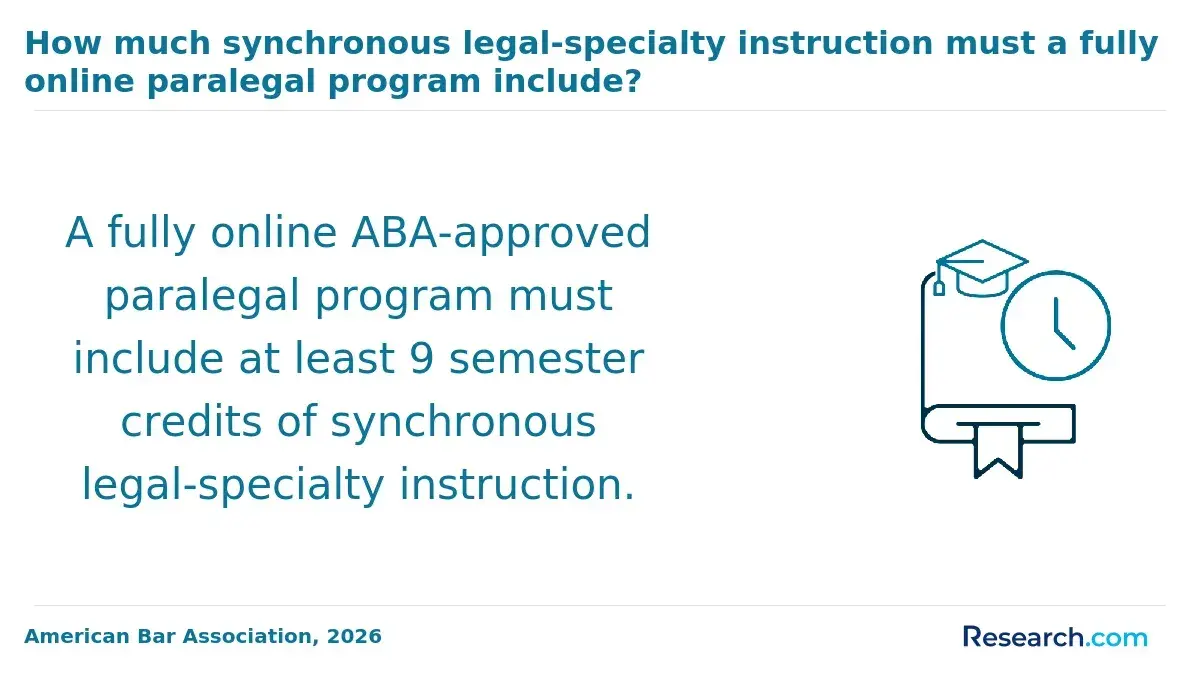
Career changers should compare those tasks with their existing skills before buying a graduate degree. Someone seeking an entry-level legal-support role, rather than graduate-level compliance work, might first examine fast-track options for online paralegal education. Paralegal education serves a different occupation; it is not a substitute for analytics training or a requirement for compliance work.
How do the curricula compare between legal studies and business analytics programs?
MLS curricula commonly include legal research, contracts, administrative law, and electives in areas such as employment, health, privacy, or financial regulation. Business analytics curricula commonly cover statistics, databases, data visualization, and predictive methods. Course availability and depth vary by school, so check what is required rather than relying on an elective list.
For a compliance-focused MLS, look for assignments that require students to interpret requirements and apply them to business procedures. For analytics, look for hands-on work with data cleaning, queries, validation, and communicating limitations. A course that mentions artificial intelligence or a software product does not necessarily provide hands-on practice or prepare students for an external credential.
If previous business-law coursework may affect your education plan, review guidance on transferring earlier coursework into a business law degree. For either master's program, the receiving school decides whether prior credits count; a similar course title does not establish transfer eligibility.
What are the admission requirements for each compliance-focused master's degree?
Both routes generally target applicants who already hold a bachelor's degree, but requirements vary by program. An MLS may welcome applicants from many academic backgrounds and value professional experience in regulated organizations. A business analytics program may expect prior quantitative coursework or ask applicants to complete preparation in statistics, programming, or related subjects. Schools differ on whether such preparation is required before admission or can be completed after it.
Read the current admissions page for prerequisite courses, work-experience expectations, test policies, and application deadlines. If a prerequisite would add time or expense, include it in the comparison. A career changer considering legal-support work instead can also investigate options for earning a paralegal certificate online; certificate admission rules vary, and completing a certificate is not the same as earning professional certification.
How long do these master's programs take, and how much do they cost?
Completion time depends on required credits, course sequencing, enrollment pace, and any capstone or residency. Do not assume an online program can be finished whenever your schedule permits: a required course might be offered only at set times. Ask each school for a term-by-term plan based on the number of courses you can realistically take while working.
Compare total expected educational cost, not just advertised tuition. Include mandatory fees, books, technology, prerequisite courses, and travel for any required campus activities. Then compare what that spending buys: relevant courses, practical work, scheduling flexibility, and support from your employer. A lower price does not establish a better return if the program misses the skills your target job requires.
For an MLS shortlist, lower-tuition master's in legal studies programs can provide a starting point. Confirm each school's current tuition and required fees directly before calculating a budget. Ask its financial aid office which aid options apply to the specific degree and your enrollment status.
Are online or campus-based programs better for compliance professionals?
Neither format is inherently better. Online study can reduce commuting, while campus study may make it easier to attend scheduled discussions or work with classmates in person. What matters most to an employed student is practical scheduling flexibility: whether classes meet live, exams occur at fixed times, group projects require coordination, and a capstone can address a problem relevant to your work.
Ask for a sample course schedule and the requirements for any residency or practicum. If you are comparing legal-study formats around a full-time job, guidance on choosing business law study alongside employment may help frame those questions. "Online" alone does not mean asynchronous or self-paced.
Does either degree qualify graduates to practice law or require a license?
No. An MLS is a non-JD degree, it does not, by itself, qualify a graduate to practice law or represent clients as an attorney. A business analytics degree does not confer legal-practice authority either. Attorney admission requirements are set by the applicable jurisdiction and generally involve a qualifying legal education and other requirements.
Neither degree creates a universal compliance-officer license. Particular jobs may be subject to industry rules, employer requirements, or optional professional credentials, so check the position and jurisdiction rather than assuming a nationwide rule. On a compliance team, a nonlawyer can identify an issue and help implement approved procedures, but should not present independent legal advice as an attorney's judgment.
What salaries and job outlook can compliance graduates expect?
The BLS reports median annual pay of $80,730 in May 2025 for compliance officers, with 4% projected job growth, 2025-2035, and about 32,700 projected openings per year. These are occupation-wide estimates, not salaries or hiring forecasts for graduates of either master's program. They show that the occupation is broader than any one educational route.
Pay for a particular offer depends on the role, industry, location, experience, and technical or regulatory responsibilities. An analytics graduate working in compliance may also have a job title classified outside the BLS compliance-officer category. Before estimating the value of a degree, compare actual postings for your target role: note the skills employers request, whether a master's is preferred, and whether your current experience already qualifies you.
How can you choose an accredited and reputable compliance master's program?
First, confirm that the institution holds recognized institutional accreditation. Then assess the particular degree on its own merits: accreditation does not establish that its electives, tools, teaching format, or career support suit your goal. American Bar Association approval of some paralegal education programs is a separate matter; it is not institutional accreditation and is not a general endorsement of MLS degrees.
Before committing, use the same checks for every program on your shortlist:
- Match required courses and sample assignments to the policy, regulatory, or analytical tasks in your target jobs.
- Confirm prerequisites, live-meeting obligations, course sequencing, and the realistic completion schedule for a working student.
- Request a current estimate of tuition and mandatory fees, including costs for any prerequisite or campus visit.
- Ask what students actually do in a capstone or practicum, what tools they can access, and who arranges any required placement.
A warning sign is a program that advertises compliance careers but cannot show where students practice the relevant skills. Choose the MLS when legal interpretation is your main gap, business analytics when data work is your main gap, or a smaller course or employer-sponsored training option when a full degree would add more cost than useful learning.
Other Things You Should Know About Law & Paralegal
Only if your employer authorizes it and the school's project rules allow it. Otherwise, use public, synthetic, or properly de-identified data; removing names alone may not adequately protect sensitive information.
Build a portfolio using public regulations and fictional business scenarios. A sample policy analysis, control map, or dashboard can demonstrate your reasoning without disclosing internal procedures or data.
No. A graduate certificate is an academic award from a school. Professional certification is granted by a credentialing organization under its own eligibility and assessment rules.
Try a relevant course, a work-approved cross-functional project, or a conversation with people doing your target job. Use what you learn to decide whether you need deeper legal study, technical training, or more on-the-job experience.
References
- Master of Business, Law, and Technology | collegesoflaw.edu https://www.collegesoflaw.edu/academics/business-law-technology-programs/master/
- MBA vs. MLS | American University College of Law Online https://onlinelaw.wcl.american.edu/legal-studies/mls-mba/
- Master of Legal Studies (MLS) vs. JD: What's the Difference? | SMU Online Master of Legal Studies https://onlinemasterlegalstudies.smu.edu/articles/mls-vs-jd/
- What type of jobs can you get with a Master's in Business Analytics? - D'Amore-McKim School of Business https://damore-mckim.northeastern.edu/resources/cc-what-type-of-jobs-can-you-get-with-a-masters-in-business-analytics/
- What Admissions Committees Look for in MLS Applicants | Goodwin College of Professional Studies https://drexel.edu/law/news/legal-studies-blog/what-admissions-committees-look-for-in-mls-applicants/
- Curriculum - Fordham MSL Online https://onlinelaw.fordham.edu/master-studies-law/curriculum/
- What Can You Do With a Master of Legal Studies? | WashU Law https://online.law.washu.edu/articles/what-can-you-do-with-master-of-legal-studies/
- MSBAi Requirements & Deadlines | umn.edu https://carlsonschool.umn.edu/graduate/masters/business-analytics-ai/admissions/requirements-deadlines
- MLS Undergraduate Program: Requirements | Education | UW Medicine https://dlmp.uw.edu/education/mls-requirements
- MLS vs. LLM - Degree Comparison - Online LLM | Online Master of Laws (LLM) at Northeastern https://llmonline.northeastern.edu/articles/mls-vs-llm/