2027 Arizona State vs. DePaul: Comparing Online MLS Programs

Co-Founder and Chief Data Scientist
Choosing between Arizona State University and DePaul University for graduate legal studies means looking beyond the degree name. Both may appeal to professionals who need legal knowledge without becoming lawyers, but the useful differences lie in course availability, scheduling, specialization, and total cost.
This guide compares those decision points, explains what an online Master of Legal Studies (MLS) can - and cannot - do for your career, and identifies the details to confirm with each school before you apply.
Key Things You Should Know
- Start with your intended courses, not the school's name: confirm that your preferred ASU or DePaul electives are available online during your enrollment period.
- Compare written estimates for the entire degree, including required fees; a per-credit rate alone does not establish which program costs less.
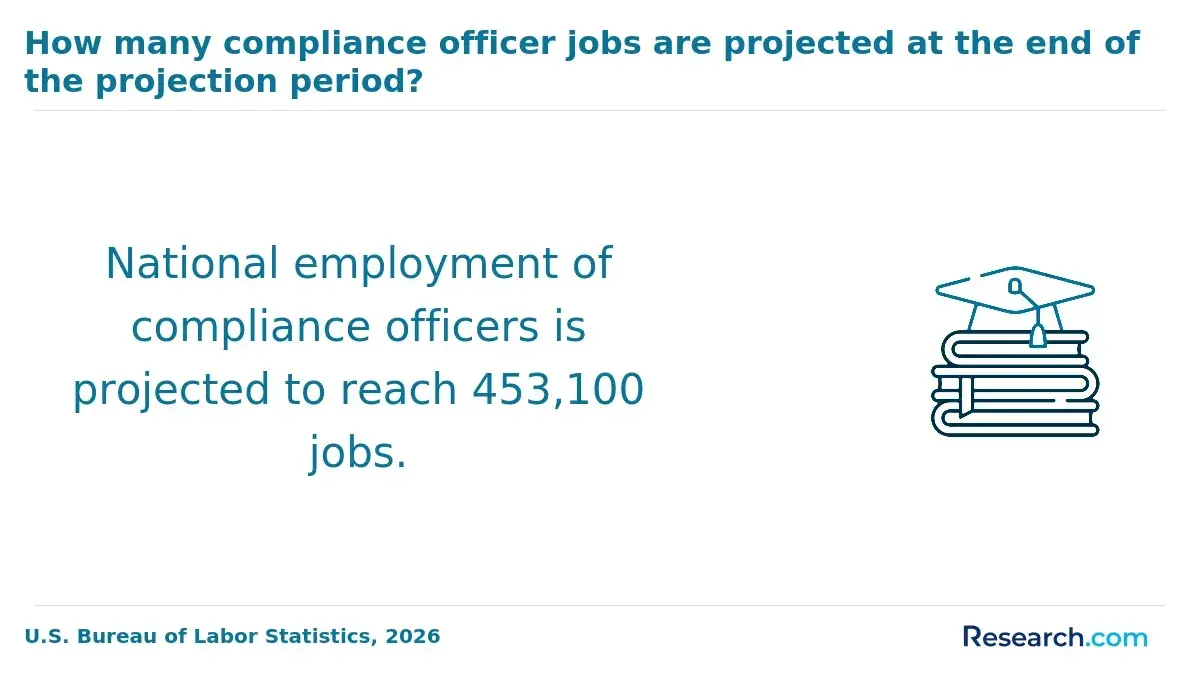
- An MLS does not qualify you to practice law. For context, the U.S. median pay for compliance officers was $80,730 in May 2025, but that occupation does not generally require an MLS.
What are the key differences between ASU and DePaul online MLS programs?
Arizona State offers a Master of Legal Studies through its Sandra Day O'Connor College of Law. DePaul offers graduate legal studies through its College of Law. For an online applicant, the decisive comparison is not whether both universities have law schools: it is whether each school offers the specific degree, courses, and schedule you want in an online format for your intended start term.
The table separates established distinctions from details that require a current, program-specific answer. This matters because a course appearing in a university catalog is not necessarily offered online every term.
| Decision point | Arizona State | DePaul |
| Academic home | Sandra Day O'Connor College of Law | College of Law |
| Degree to confirm on the application | Master of Legal Studies | Master of Legal Studies; confirm the current online application route |
| Most important online check | Whether the intended electives and any concentration requirements can be completed online | Whether the intended degree and electives can be completed online for the chosen start term |
| Best basis for choosing | Fit between available legal subjects, schedule, and total cost | Fit between available legal subjects, schedule, and total cost |
Neither school is automatically the better choice. Favor the program that can document a workable path through the courses relevant to your job, at a cost and pace you can sustain. If DePaul's proposed online route requires courses or visits that do not fit your circumstances, that is more consequential than a preferred course title in the catalog.
How do ASU and DePaul online MLS programs compare in accreditation and academic quality?
Arizona State and DePaul are institutionally accredited by the Higher Learning Commission. Institutional accreditation addresses the university; it does not mean that every graduate degree has a separate professional accreditation or that its credits will automatically transfer elsewhere.
Both universities have law schools, but accreditation of a law school's Juris Doctor (JD) program should not be described as American Bar Association approval of an MLS. ABA approval of a paralegal education program is a different designation again. None of these labels, by itself, establishes that one MLS delivers better instruction than the other.
For academic quality, compare the instructors and assignments in the courses you would actually take. Ask for recent syllabi, assessment methods, and evidence of substantive work - such as legal analysis, regulatory research, or drafting - rather than relying on an institution-wide reputation.
What are the admission requirements for ASU and DePaul online MLS programs?
Applicants should expect graduate-level review and a completed bachelor's degree, but they should use each program's current application page for its exact GPA policy, required statements, recommendations, transcripts, and deadlines. Do not assume that a JD, paralegal experience, or a particular undergraduate major is required - or that a test is waived - without checking the requirements for the intended term.
Admissions eligibility and transfer credit are separate questions. A school may admit you with prior graduate study yet decline to apply those credits to its MLS. Ask each registrar or program adviser for a written evaluation before budgeting on a shorter degree. If you have college credits but do not yet hold a bachelor's degree, review paralegal bachelor's options for students with college credits rather than assuming those credits provide direct entry to a master's program.
How do ASU and DePaul online MLS curricula and specialization options differ?
An MLS typically builds legal literacy for work outside attorney practice: reading legal materials, understanding institutions and regulation, and applying legal concepts to organizational decisions. ASU and DePaul should be compared on the required courses plus the electives you can actually schedule, not on the total number of subjects advertised across their law schools.
If you work in compliance, examine courses involving regulation, investigations, privacy, or employment matters. If you work with contracts or business operations, look for relevant drafting, transactions, and risk-management work. A formal concentration has published requirements; a handful of related electives is not necessarily a concentration, and a graduate certificate is a separate credential only if the school awards one. Ask each program to identify which description applies to your proposed course plan.
For a narrower goal - such as learning legal research to support attorneys - a shorter program may require less time and expense. Paralegal certificate program comparisons offer a useful alternative, though a certificate is not the same as professional certification.
How flexible are ASU and DePaul online MLS programs for working professionals?
"Online" does not establish that a program is self-paced or entirely asynchronous. Before choosing ASU or DePaul, obtain a sample schedule for required courses and intended electives. Check for live meetings, timed exams, group work, course sequencing, and any campus attendance. Also ask whether a course you need is offered often enough to keep your proposed completion date realistic.
The practical winner is the program whose least flexible required course still fits your work and caregiving commitments. A degree with convenient online lectures may nevertheless be difficult to finish if a necessary elective is rarely available or meets at a fixed time.
How long do ASU and DePaul online MLS programs take to complete?
Completion time depends on required credits, how many courses you take each term, and when those courses are offered. Arizona State's MLS is commonly described as a 30-credit degree; confirm the catalog requirements for your entry term. Obtain DePaul's current degree audit or catalog requirements rather than assuming the two schools use the same credit load or academic calendar.
Ask both programs for a term-by-term plan based on the hours you can realistically study while working. That plan is more useful than a shortest-possible completion claim: it reveals whether prerequisites, elective rotations, or a lighter term would extend your time in school.
How much do ASU and DePaul online MLS programs cost?
A reliable price comparison needs current tuition for the specific online degree and entry term, the credits required to graduate, and all mandatory fees. Without matching figures, it would be misleading to label either ASU or DePaul cheaper or to present a total-program price. Request a written 2026-27 estimate from each school.
Use the same cost categories for both estimates. The table shows what to include and why an advertised tuition rate may not capture the amount you will pay.
| Cost category | What to confirm with both schools |
| Tuition | Rate applicable to your online enrollment and credits required for your course plan |
| Mandatory charges | Program, university, technology, and graduation fees |
| Course expenses | Books, materials, and any required legal research access not included in tuition |
| Indirect costs | Possible travel, additional terms, and time away from paid work |
Ask financial aid offices about eligibility for the specific degree and your circumstances; do not assume aid or employer reimbursement will cover every charge. If your goal is an entry-level legal-support role rather than graduate-level legal knowledge, compare the full MLS expense with the cost and career outlook for shorter paralegal bachelor's programs before committing.
What careers can graduates pursue with an ASU or DePaul MLS degree?
An MLS may help professionals apply legal knowledge in compliance, contracts, human resources, policy, healthcare administration, or other regulated work. It can also complement legal-support experience. Whether it helps you change jobs depends on your prior experience and the employer's requirements; the degree is not a substitute for experience or a required professional license.
For someone already handling investigations or regulatory processes, compare each school's relevant coursework with responsibilities in the next role you want. For someone seeking a first paralegal position, legal research, writing, and supervised workplace experience may matter more than graduate-level breadth. Choosing an associate degree in legal studies may be a more proportionate starting point if you are entering the field without a bachelor's degree.
What salaries can online MLS graduates expect in legal and compliance careers?
Occupational wages describe jobs, not MLS graduate outcomes. The Bureau of Labor Statistics reports median annual pay of $80,730 in May 2025 for compliance officers, with 4% projected employment growth from 2025-2035. That benchmark may be relevant if your goal is compliance, but pay varies with industry, location, responsibilities, and experience; an MLS is not generally a universal entry requirement.
For paralegals and legal assistants, the BLS median was $62,890 in May 2025, with 0% projected growth from 2025-2035. That is a different occupation with different hiring expectations. Neither figure shows what ASU or DePaul graduates earn, so ask about career support and independently check job postings for the roles you intend to pursue before estimating a return on tuition.
Does an online MLS qualify graduates for legal practice or paralegal certification?
No. Neither an ASU nor a DePaul MLS is a JD, and completing one does not by itself qualify a graduate for bar admission or independent legal practice. Paralegals work under attorney supervision and cannot use an MLS to provide services reserved for licensed lawyers.
An MLS also does not automatically confer paralegal certification. Professional certification is awarded under the rules of a particular credentialing organization or state system; completing an academic degree or certificate is different. Requirements vary by credential and jurisdiction. If your specific goal is paralegal education with ABA program approval, investigate choosing an affordable ABA-approved online paralegal program and verify the individual program's current status. ABA approval of a paralegal program should not be confused with university accreditation or certification of an individual.
Other Things You Should Know About Law & Paralegal
It can help if a particular subject drives your decision. Ask the program whether the relevant instructor expects to teach an online course during your likely enrollment, while recognizing that staffing can change.
Possibly. Check your employer's reimbursement policy for annual caps, grade requirements, approved programs, and any obligation to remain employed after receiving assistance.
Ask each registrar how the degree appears on its diploma and transcript. Do not assume the wording is identical at the two universities.
Get a written degree plan, a current total-cost estimate, and answers about online attendance requirements. Compare those documents against your work schedule and target job - not just each school's advertised program summary.
References
- Postgraduate Employment Outcomes of Undergraduate and Graduate Public Health Students: A Scoping Review | nih.gov https://pmc.ncbi.nlm.nih.gov/articles/PMC8579388/
- 5 CFR Part 362 Subpart B -- Internship Program | ecfr.gov https://www.ecfr.gov/current/title-5/chapter-I/subchapter-B/part-362/subpart-B
- Curriculum Support - Arkansas Graduation Requirements https://dese.ade.arkansas.gov/Offices/learning-services/curriculum-support/arkansas-graduation-requirements
- Post-Secondary Employment Outcomes Tool Shows What You Might Earn Depending on the College You Attend | Census.gov https://www.census.gov/library/stories/2022/06/job-and-earnings-prospects-by-college-and-degree.html
- Price of Attending an Undergraduate Institution - COE https://nces.ed.gov/programs/coe/indicator/cua/price-of-attending-an-undergraduate-institution
- 2025-2026 Tuition and Fees - Student Account Services | University of Kentucky https://studentaccount.uky.edu/tuition-and-fees/past-tuition-and-fees/2025-2026-tuition-and-fees
- Online Library and Information Science Master's Degree | Syracuse University https://ischool.syracuse.edu/academics/online-library-and-information-science-masters-degree/
- MLIS Curriculum, Specialties & Courses | University of Arizona College of Information Science https://infosci.arizona.edu/ma-library-information-science/curriculum-specialties-courses
- Tuition in Detail - One Stop Student Services https://onestop.utk.edu/billing-payments/tuition-detail/
- Undergraduate Tuition & Expenses | Financial Aid & Scholarships https://www.rochester.edu/financial-aid/undergraduate-tuition-expenses/