
2027 Legal Studies Master's Programs for Credit Union Managers

Co-Founder and Chief Data Scientist
Credit union managers make decisions shaped by lending rules, member privacy, fraud controls, and regulatory examinations. A legal studies master's degree could strengthen that work, but it is a substantial commitment - and a narrower credential or employer training may be enough. This guide explains what a non-lawyer legal studies degree teaches, where it may help in credit union management, and how to compare programs against their full cost and your career goals.
Key Things You Should Know
- A Master of Legal Studies (MLS) or Master of Studies in Law (MSL) can help managers interpret legal requirements and work with counsel, but it is not required for credit union management and does not qualify graduates to practice law.
- Choose coursework that connects legal analysis to your responsibilities: consumer lending, financial regulation, privacy, contracts, employment, and compliance. A broad law curriculum without relevant electives may offer less value.
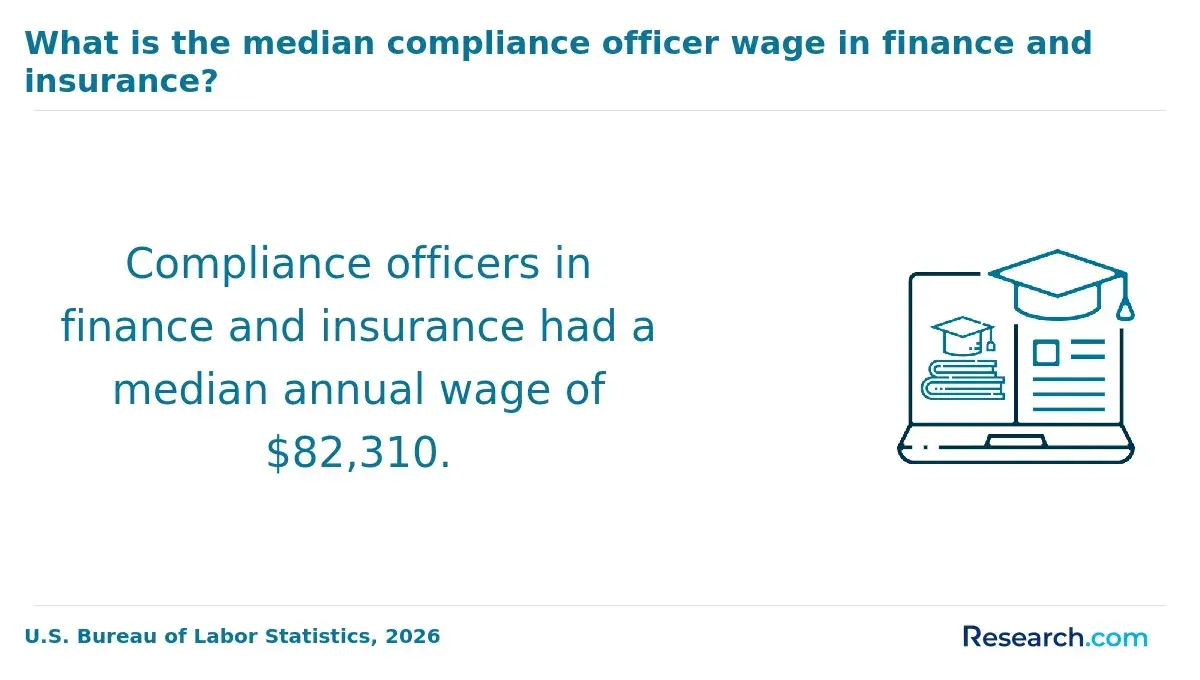
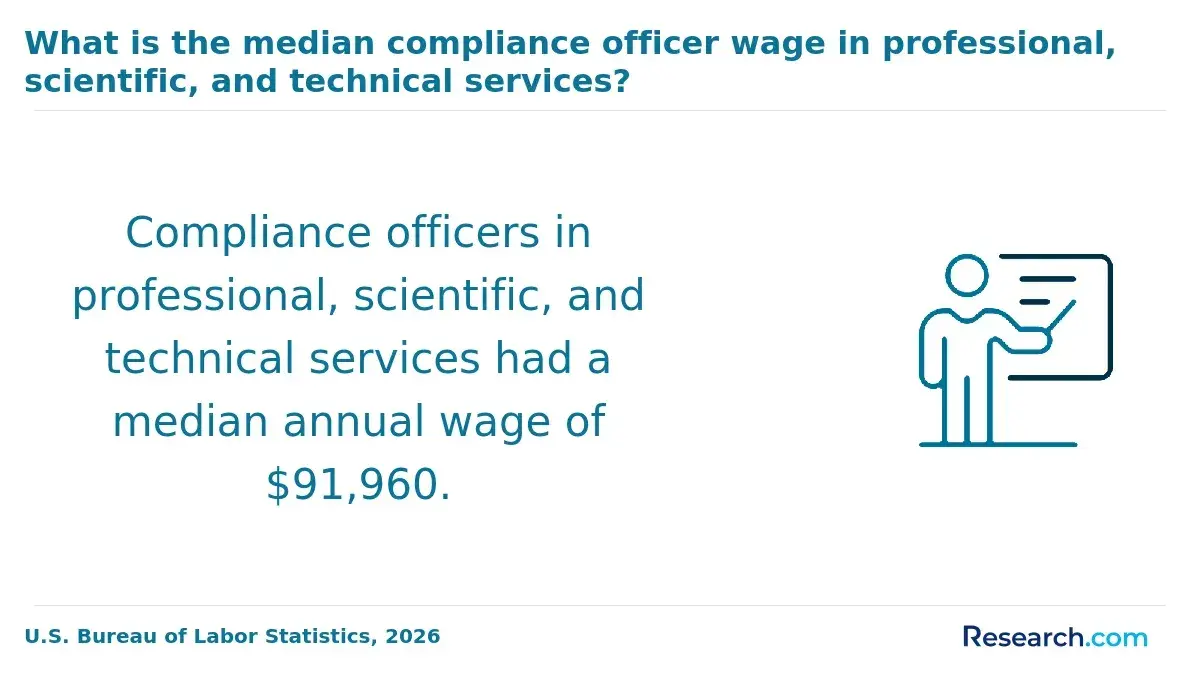
- The Bureau of Labor Statistics reports $80,730 in median annual pay for compliance officers in May 2025 and 4% projected growth, 2025-2035. Those occupation-wide figures are context, not a predicted salary or promotion for a credit union manager with a master's degree.
What Is a Legal Studies Master's Degree for Credit Union Managers?
An MLS, MSL, Master of Jurisprudence, or similarly named degree is typically graduate legal education designed for people who need to understand law in their existing professions. For a credit union manager, its value lies in reading rules and agreements more carefully, spotting issues that require legal review, and communicating effectively with compliance staff and attorneys. It is not a Juris Doctor (JD), and the credential alone does not permit its holder to give legal advice or practice law.
There is not necessarily a degree designed exclusively for credit union managers. Programs may instead offer financial-services, business-law, or compliance coursework. A formal concentration has published requirements; relevant electives alone do not establish one. Comparing how legal studies master's specializations differ can help you distinguish a defined pathway from a flexible course selection.
How Can Legal Studies Master's Programs Advance Credit Union Management Careers?
Managers oversee decisions that can raise legal questions, such as changing loan disclosures, handling member complaints, negotiating vendor agreements, or preparing for examinations. Graduate legal study may improve a manager's ability to identify the issue, document a decision, and know when to involve counsel. It does not replace institution-specific policies, regulatory updates, or advice from qualified professionals.
The strongest case for a degree is a role that repeatedly calls for legal analysis across departments - for example, leading compliance initiatives or overseeing complex lending and vendor risks. If the immediate goal is to learn one regulation or prepare for a particular compliance duty, focused training, supervised experience, or a relevant professional credential may be a less costly first step. Advancement remains dependent on experience, performance, and an employer's hiring requirements.
Do Credit Union Managers Need a Law Degree or Legal License?
Credit union managers generally do not need a JD or attorney license to manage operations or oversee compliance. They do need to recognize the boundary between applying an institution's approved policies and providing legal advice. Questions about legal interpretation, disputes, or representation should go to authorized counsel.
If your goal is to become an attorney, evaluate a JD and the applicable state's bar-admission requirements instead of an MLS or MSL. If your goal is an entry-level legal-support role rather than management, associate pathways into legal studies may be more proportionate. Paralegal education is distinct from attorney education; neither a paralegal credential nor a legal studies master's independently authorizes the practice of law.
What Accreditation Should Legal Studies Master's Programs Have?
Check that the university holds institutional accreditation from an accreditor recognized by the U.S. Department of Education. Verify the current institution and campus or online offering rather than relying only on a program advertisement. Accreditation establishes an institutional quality-assurance baseline; it does not establish that a particular curriculum covers credit union regulation or will meet an employer's expectations.
Do not confuse institutional accreditation with American Bar Association (ABA) approval of qualifying paralegal education programs. An MLS or MSL is not made more appropriate for credit union management by a claim about ABA paralegal-program approval. Nor does the ABA certify individual paralegals. Ask the school to identify exactly which institution or program holds any status it advertises.
What Courses Do Legal Studies Master's Programs Cover?
Core courses often address legal research, statutory and regulatory interpretation, contracts, and how U.S. legal institutions work. For a credit union manager, the deciding factor is whether advanced coursework connects those foundations to actual responsibilities. The examples below show what to look for in a current catalog - not a promise that every program offers these subjects.
| Course area | Credit union management application |
| Consumer financial law and fair lending | Reviewing lending procedures, disclosures, and complaint escalation with compliance and counsel |
| Financial regulation and compliance | Understanding supervisory expectations, examinations, and documented controls |
| Privacy, cybersecurity, and data governance | Assessing member-information practices and vendor-related risks |
| Contracts and employment law | Recognizing issues in service agreements and staff policies before obtaining legal review |
Regulatory obligations depend on the credit union's charter, activities, and applicable law. Federal credit unions are supervised by the National Credit Union Administration; state-chartered institutions also operate under their state's supervisory framework. A useful course should teach how to determine whether a rule applies, not merely list regulatory acronyms.
Are Online Legal Studies Master's Programs Suitable for Credit Union Managers?
Online study can suit managers who cannot regularly travel to campus, provided the schedule works around examinations, month-end duties, and staffing demands. "Online" does not necessarily mean asynchronous or self-paced: courses may require live meetings, group projects, proctored exams, campus visits, or a fixed sequence.
Ask for a sample term schedule and confirm whether a capstone requires access to workplace documents. Before using member information or internal procedures in an assignment, obtain employer permission and follow confidentiality rules. If you need a shorter legal-support education route rather than a graduate management degree, online paralegal programs for a faster study timeline are a separate option with different career aims.
What Are the Admission Requirements for Legal Studies Master's Programs?
Expect to verify each program's current requirements. A bachelor's degree is commonly the starting academic credential, while schools differ on minimum grades, transcripts, recommendations, résumés, interviews, and essays. Prior law coursework is not necessarily required. Credit union experience may strengthen an application, but it should not be mistaken for an admissions waiver unless the school says so.
If preparing an essay is a barrier, compare online legal studies degrees with no admissions essay required, then confirm the current application checklist directly with each institution. Also ask whether the program permits graduate transfer credit; the receiving school decides whether earlier coursework applies to its degree.
How Long Do Legal Studies Master's Programs Take and Cost?
Completion time depends on required credits, course availability, and whether you study full- or part-time. A manager who needs a predictable schedule should check when required courses run - not just the shortest completion time advertised. Request the current tuition schedule and a written estimate based on your intended enrollment pace before comparing offers.
Total cost can extend beyond tuition to mandatory fees, books, technology, travel for required visits, and time away from work. Employer tuition assistance may change the calculation, but check reimbursement caps, grade conditions, and any obligation to remain employed. Federal aid depends on the institution, program, and student's eligibility; do not assume every certificate alternative qualifies. If you are weighing a less extensive paralegal route, examine the fees to compare in online paralegal degree programs using the same total-cost approach.
What Jobs Can Credit Union Managers Pursue With Legal Studies Degrees?
Relevant paths include compliance management, regulatory affairs, lending-policy oversight, enterprise risk, vendor governance, and senior operations roles. The degree may complement credit union experience in these jobs; it does not replace that experience or satisfy every employer's preferred qualifications. A move into a specialist or leadership position may also require knowledge of the institution's products, systems, and examination history.
For labor-market context, the Bureau of Labor Statistics projects about 32,700 compliance officer openings per year for 2025-2035. That figure covers compliance officers across industries, not credit union compliance managers specifically, so it should not be read as a count of suitable openings for MLS graduates.
How Should You Choose a Legal Studies Master's Program?
Start with the work you want to perform more effectively, then test each program against it. The comparison below separates three reasonable education routes; none is automatically the best return on your time and money.
| Route | Best fit | Main limitation |
| Legal studies master's | Managers needing broad, graduate-level legal analysis across recurring responsibilities | Greater tuition and time commitment; no attorney license |
| Focused graduate certificate or professional training | Managers addressing a defined compliance or regulatory skill gap | Narrower scope; academic credit and credential recognition vary |
| Employer training and supervised experience | Managers whose next step depends primarily on institution-specific processes | May not provide a portable academic credential or broad legal foundation |
Before enrolling, request the current catalog, required-course schedule, full cost estimate, and written explanation of any capstone or in-person requirements. Compare syllabi with the regulations and decisions your role actually involves. A warning sign is a program presented as "financial law" whose relevant material is limited to one elective - or marketing that suggests a non-JD degree confers attorney qualifications.
Other Things You Should Know About Law & Paralegal
Do not assume they will. A law school determines whether any prior graduate coursework receives credit toward its JD; get its policy in writing before treating an MLS as a stepping-stone.
Only if your employer permits it and the assignment complies with applicable confidentiality requirements. Ask the instructor whether a public, fictional, or appropriately anonymized case can be used instead.
That depends on the university's published prior-learning and graduate-credit policies. Professional experience may support admission without reducing the credits needed to graduate.
Confirm which programs qualify, when reimbursement is paid, and whether grades or continued employment are conditions. Those terms can materially change your out-of-pocket cost.
References
- Cost of Attendance (Budget) | 2025-2026 Federal Student Aid Handbook https://fsapartners.ed.gov/knowledge-center/fsa-handbook/2025-2026/vol3/ch2-cost-attendance-budget
- Accreditation in the U.S. | ed.gov http://www.ed.gov/laws-and-policy/higher-education-laws-and-policy/college-accreditation/accreditation-in-the-us
- Compliance Management Systems and Compliance Risk | NCUA https://ncua.gov/regulation-supervision/manuals-guides/federal-consumer-financial-protection-guide/compliance-management/compliance-management-systems-and-compliance-risk
- Consumer Compliance | OCC.gov https://www.occ.gov/topics/supervision-and-examination/consumer-compliance/index-consumer-compliance.html
- Types of Financial Aid: Grants, Work-Study, and Loans | studentaid.gov https://studentaid.gov/understand-aid/types
- 12 CFR Part 741 -- Requirements for Insurance | ecfr.gov https://www.ecfr.gov/current/title-12/chapter-VII/subchapter-A/part-741
- Curriculum - FSU College of Law - Florida State University https://law.fsu.edu/academics/academic-programs/juris-master-online-program/financial-regulation-and-compliance-concentration/curriculum
- Credit Union Managers: How to Become One | Franklin University https://www.franklin.edu/career-guide/credit-analysts/how-to-become-credit-union-managers
- MLS vs. JD: Which Legal Path Is Right for Non-Lawyers? | Goodwin College of Professional Studies https://drexel.edu/law/news/legal-studies-blog/mls-vs-jd-which-legal-path-is-right-for-non-lawyers/
- MLS vs J.D.: Which Legal Degree Fits Your Career Goals? | UC Law San Francisco MLS https://mls.uclawsf.edu/articles/mls-vs-jd/


