2027 Applying to a Paralegal Certificate With an Older College Transcript

Co-Founder and Chief Data Scientist
An older college transcript can make a paralegal certificate application feel uncertain, especially if you have been away from school for years. The transcript's age usually is not the deciding factor, the program's admission rules and its treatment of prior coursework are.
This guide helps returning students identify which certificate programs they can apply to, what records to request, and when a degree or another credential may be a better investment. You will also learn which questions to settle before paying an application fee or enrolling.
Key Things You Should Know
- An older college transcript does not automatically disqualify you. Check whether the program requires a completed degree, a minimum number of prior credits, specific courses, or a minimum GPA.
- Admission and credit recognition are separate decisions: a school may admit you but decline to apply older coursework toward a prerequisite or certificate requirement.
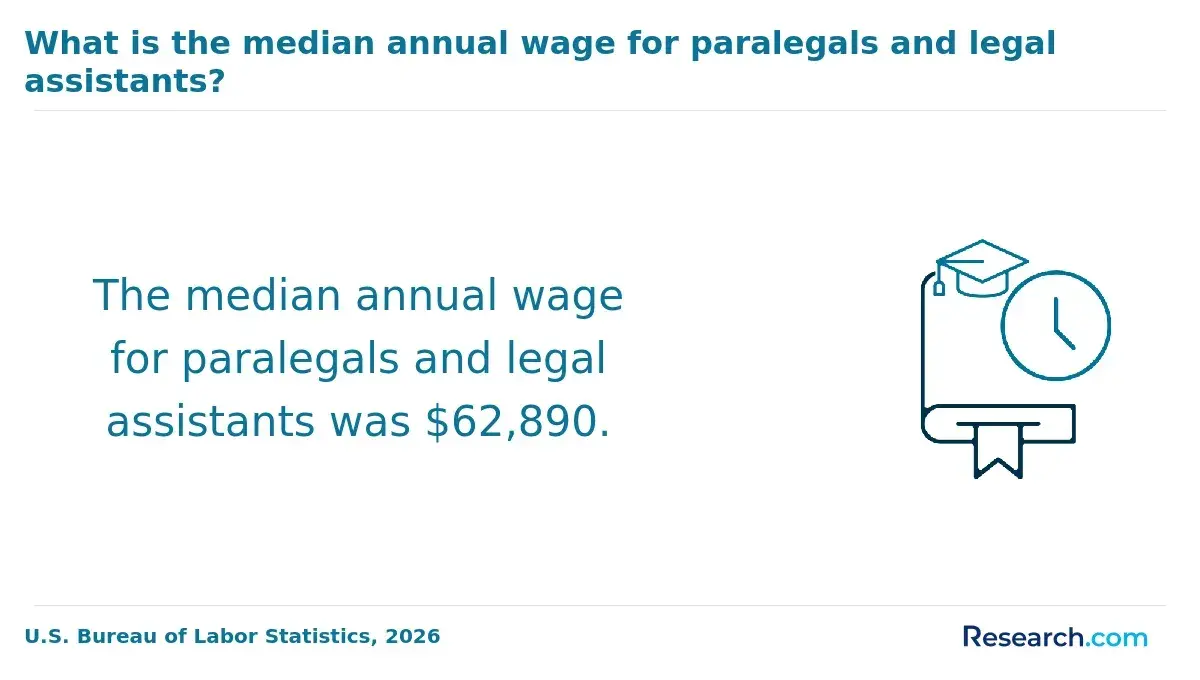
- The Bureau of Labor Statistics reports median annual pay of $62,890 in May 2025 for paralegals and legal assistants, with 0% projected growth for 2025-2035. Compare a program's full cost with the skills and eligibility it actually provides, not an assumed job outcome.
Can you apply to a paralegal certificate with an older college transcript?
Usually, yes. There is no universal expiration date for a college transcript. What matters is whether your prior education meets the particular program's current requirements. A post-baccalaureate certificate may require an earned bachelor's degree; another certificate may accept applicants with an associate degree or specified college credits; an entry-level program may require only a high school diploma or equivalent.
Separate three questions before applying: Can I be admitted? Will my earlier courses satisfy prerequisites? Will any credits count toward the certificate itself? A transcript may establish that you earned a degree without making every old course transferable. The receiving school decides whether and how previous credit applies, and it may require a recent course for a particular prerequisite even if the transcript remains valid.
Request your transcript from the former college's registrar and compare it with the new program's published requirements. If a rule about course age, grades, or prior credits is unclear, ask admissions for a written eligibility review before paying a nonrefundable fee. Do not retake courses solely because they are old without first asking whether the program will accept them.
What are the admission requirements for a paralegal certificate program?
Requirements depend on the type of certificate. An entry-level program may admit students without prior college work, while a post-baccalaureate program is designed for people who already hold a bachelor's degree. Other programs set minimum college-credit, English composition, GPA, or placement requirements. Treat each school's published criteria as controlling, rather than assuming that "certificate" means open admission.
For an older transcript, focus on these application checks in order:
- Confirm whether the program requires an earned degree, prior credits, particular general education courses, or a minimum grade or GPA.
- Ask which institutions must send official transcripts directly and whether you can submit an unofficial copy for an initial review.
- Ask whether any prerequisite has a recency limit and whether professional experience or a placement assessment can satisfy it.
- Confirm whether prior paralegal coursework can reduce the certificate's required courses; admission alone does not establish transfer credit.
If your goal is broader legal knowledge rather than paralegal training, admissions rules may differ substantially. For example, readers comparing graduate legal studies routes can investigate no-essay application options for online legal studies, while still checking each program's degree and transcript requirements.
Do paralegal certificate programs require an accredited college transcript?
Some do, particularly programs that require a prior college degree or credits from an institution with recognized accreditation. Others do not require any college transcript for admission. If your former institution's status is uncertain, ask the certificate program whether it accepts that institution and what documentation it needs. The receiving school makes the admission and credit decision.
Institutional accreditation and ABA approval are different. Institutional accreditation concerns a college or other educational institution. The American Bar Association (ABA) approves qualifying paralegal education programs; it does not accredit the college or certify individual graduates. If ABA approval matters to you, verify the specific program in the ABA's current directory rather than relying on a school-wide claim.
Do not assume that credits transfer because both schools are accredited - or that an older transcript from a school that later closed is automatically unusable. Ask the receiving program which records and accreditation history it will accept, especially if your prior school changed names or ownership.
Is a paralegal certificate or degree better for becoming a paralegal?
The better route depends on what your old transcript shows. If you already have a bachelor's degree, a post-baccalaureate paralegal certificate may add targeted legal research, writing, and procedure training without another full degree. If you have some credits but no degree, an associate degree may provide both general education and paralegal coursework. A certificate with no college prerequisite may be quicker, but check whether its curriculum and credential meet the expectations of employers you hope to approach.
This comparison shows the main trade-off for a returning student. Program rules vary, so use it to narrow your search rather than predict admission.
| Route | Most useful starting point | Key limitation to check |
| Post-baccalaureate paralegal certificate | You already hold a bachelor's degree and want focused paralegal training. | A degree is generally required; old coursework may not replace certificate courses. |
| Associate degree with paralegal coursework | You want a college degree as well as career-focused training. | The school decides which earlier credits count, affecting remaining time and cost. |
| Entry-level paralegal certificate | You want to explore a shorter route and meet its admission requirements. | Credit value, curriculum depth, and employer acceptance differ by program. |
If you have unfinished college credits, compare a certificate with online pathways to an associate degree in legal studies. Ask for a credit evaluation and a remaining-course plan before deciding which route uses your prior work more effectively. Neither a certificate nor a non-JD legal studies degree qualifies you to practice law as an attorney.
Are online paralegal certificate programs as credible as campus programs?
An online format is not, by itself, a measure of credibility. Evaluate the awarding institution, the specific program's curriculum, any applicable ABA approval, and opportunities to practice research, writing, document preparation, and legal technology skills. ABA approval is program-specific; do not infer it from a college's accreditation or from another program at the same school.
Online also does not necessarily mean self-paced. Before enrolling, check for live class meetings, fixed deadlines, supervised exams, campus visits, and internship requirements. If a placement is required, ask who arranges it and whether your current job could qualify. These details determine whether the schedule actually works for someone returning to school while employed.
If you are comparing online credentials because your goal is business-law knowledge rather than paralegal work, short-duration online business law master's options address a different educational goal. A non-JD master's does not train or qualify someone to practice as an attorney.
What courses do paralegal certificate programs typically include?
Common subjects include legal research and writing, civil litigation, legal ethics, and procedures for preparing or organizing case documents. Programs may also offer contracts, real estate, family law, or other practice-area courses. Course titles alone do not show how much hands-on work students complete, so review assignments and required credits as well as the catalog description.
For an applicant with older coursework, ask whether a past introductory law or writing class can satisfy a requirement and whether the school requires current legal research instruction. Legal rules and research systems change; even when an old course is accepted for credit, updated skills may be worth taking. Distinguish a school's mention of a research platform from student access and graded practice using it.
A paralegal curriculum prepares students for supervised legal-support work. If you want legal knowledge for an existing non-paralegal role, exploring graduate certificate alternatives to a legal studies master's may help clarify that separate academic decision. A graduate certificate is not the same as professional paralegal certification.
How long does a paralegal certificate take and cost?
Time and cost vary with required courses, course availability, enrollment pace, and whether the certificate requires a prior degree or credits. An older transcript can shorten your path only if the school applies earlier coursework to a requirement; it cannot reduce the time needed for courses the program requires you to complete there.
Compare the remaining cost to completion, not just advertised tuition. Ask for tuition and mandatory fees, textbooks and research-platform charges, technology requirements, any prerequisite courses, and travel or internship expenses. Also check whether courses are credit-bearing or noncredit. Do not assume a certificate qualifies for federal financial aid: eligibility depends on the institution, the specific program, and the student's circumstances, so confirm it with the financial aid office.
A graduate legal studies degree would typically represent a different commitment and purpose. If you are considering one for a non-paralegal career goal, compare its full cost separately using lower-cost graduate legal studies options; a lower advertised price alone does not establish better value.
Does a paralegal certificate qualify you for professional certification?
Not automatically. A paralegal certificate is an educational award from a school; professional certification is a credential granted under a separate organization's or state system's rules. For example, the National Association of Legal Assistants administers the Certified Paralegal credential, and the National Federation of Paralegal Associations administers the Registered Paralegal credential through its examination pathway. Their eligibility routes and documentation requirements are not interchangeable.
Before enrolling for the purpose of seeking certification, review the current requirements published by the credentialing body and ask whether your combination of prior degree, older credits, certificate coursework, and work experience fits an eligible route. Also check any rules in the state where you plan to work. Professional certification is not universally required to work as a paralegal, and graduating from an ABA-approved program does not make someone "ABA-certified."
What jobs can you get with a paralegal certificate?
A certificate may help you compete for paralegal or legal assistant positions, particularly when paired with the education or experience an employer requests. Related entry points can include legal administrative support or case-support roles. Hiring standards differ, and a certificate alone does not guarantee an interview or a particular job title.
Paralegals may research legal issues, organize files, help draft documents, and support attorneys in litigation or transactions. They work under applicable supervision and cannot independently perform services reserved for attorneys. If you are changing careers, show employers both your transferable skills - such as records management, writing, or deadline control - and the legal-specific skills gained through coursework or supervised experience.
How much do paralegals earn and what is the job outlook?
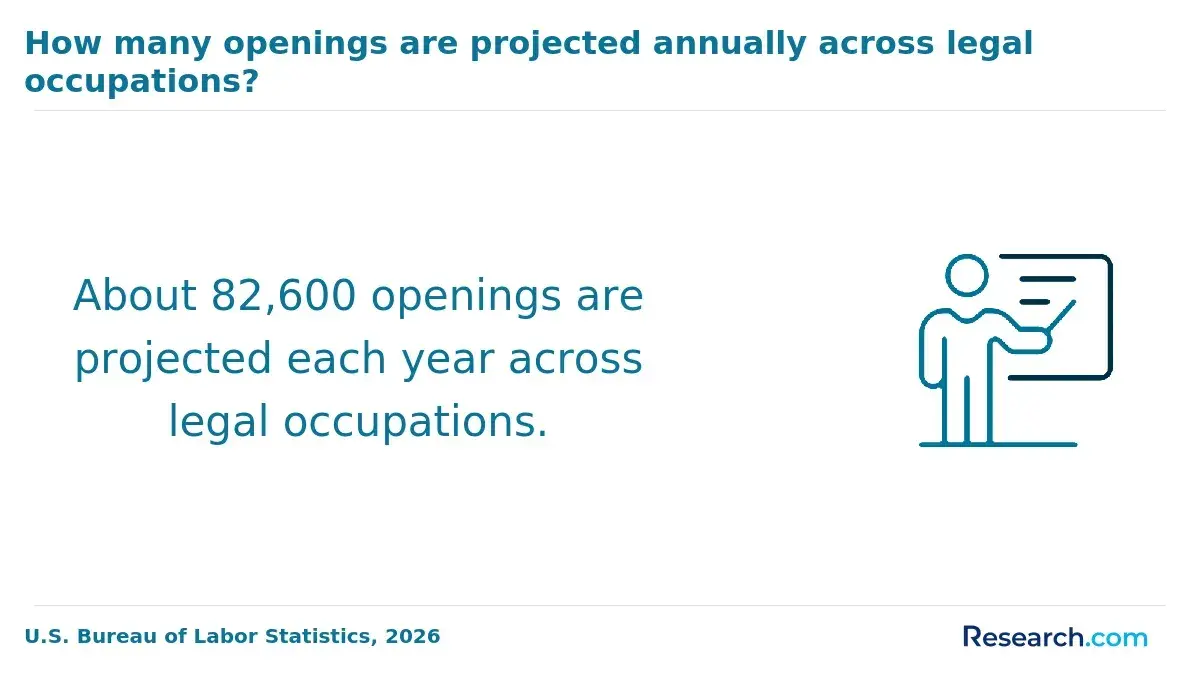
The Bureau of Labor Statistics reports $62,890 in May 2025 as the median annual pay for paralegals and legal assistants. It projects 0% growth for 2025-2035, but about 40,800 openings per year, largely because workers leave or change occupations. These figures describe the combined occupation, not what a new certificate holder will earn or the prospects of graduates from any particular school.
For your enrollment decision, compare local job postings with the program's coursework and your existing qualifications. Pay particular attention to whether employers request a degree, paralegal education, experience, or particular research and document-management skills. A certificate is more defensible as an investment when it fills a requirement or skill gap you can identify, rather than relying on the national median as an expected starting salary.
Other Things You Should Know About Law & Paralegal
Ask the state higher education agency or the former school's successor where records are held. Then confirm with the certificate program what document it will accept and whether it needs to be sent directly by the records custodian.
Tell admissions when you apply and ask what proof of the name change it requires. Submit records under the name the former college has on file unless its registrar instructs you otherwise.
It depends on the program's minimum GPA rule and whether it permits an explanation, later coursework, or another admission route. Ask how it calculates GPA before assuming an old grade makes you ineligible.
Only if the program publishes an experience-based route or approves an exception. Describe your relevant duties to admissions and request a written decision; do not assume legal-office experience substitutes for required college credit.
References
- School-Determined Requirements | 2024-2025 Federal Student Aid Handbook https://fsapartners.ed.gov/knowledge-center/fsa-handbook/2024-2025/vol1/ch1-school-determined-requirements
- Transcripts from Closed Colleges | New York State Education Department https://www.nysed.gov/college-transcripts
- Transcript Requirements & Evaluation | Valencia College https://catalog.valenciacollege.edu/admissions/generaladmissionrequirements/
- How Do Transfer Credits Work When You Go Back to School? | Whitworth Online https://online.whitworth.edu/news-articles/how-do-transfer-credits-work-when-you-go-back-to-school/
- Transfer Credit Policy | Undergraduate Admission https://www.k-state.edu/admissions/undergrad/manhattan/apply/transfer/tools/transfer-credit-policy.html
- Paralegal Studies (Cert.) - College Catalog https://collegecatalog.ncc.edu/current/programs/business_and_professional_studies/paralegal_studies_cert.html
- Transfer of Credit Policy | South University https://catalog.southuniversity.edu/transfer-of-credit-policy
- Post-Baccalaureate Certificate In Paralegal Studies | Tulane University School of Professional Advancement https://sopa.tulane.edu/degrees-programs/certificates/post-baccalaureate/paralegal-studies
- Paralegal Studies Certificate (Hybrid) | Monroe University https://www.monroeu.edu/academics/undergraduate-programs/school-criminal-justice/paralegal-studies-certificate-hybrid
- Paralegal Studies Certificate | Bristol Community College Catalog https://catalog.bristolcc.edu/programs/CTACH_PL/about-aoYks