2027 Master of Legal Studies vs. a Master's in Accounting for Internal Control Roles

Co-Founder and Chief Data Scientist
Internal control jobs can involve testing financial transactions, managing regulatory risk, or both. That makes the choice between a Master of Legal Studies (MLS) and a master's in accounting consequential: each develops a different part of the skill set. This guide is for professionals considering internal audit, compliance, or risk roles. It compares what the degrees teach, where certifications matter, and which questions to ask before investing in a program.
Key Things You Should Know
- Choose a master's in accounting if you want to design or test financial-reporting controls, pursue accounting-focused internal audit work, or prepare for the CPA pathway.
- Choose an MLS if your intended role centers on interpreting regulations, developing compliance policies, or managing legal risk - and you already have, or can separately build, the necessary financial skills.
- Do not choose by salary alone: compliance officers had median annual pay of $80,730 in May 2025, according to the Bureau of Labor Statistics (BLS). That occupational figure is not an MLS graduate salary or a prediction of your earnings.
What Is the Difference Between a Master of Legal Studies and a Master's in Accounting?
An MLS is a graduate legal-knowledge degree generally intended for professionals who do not plan to practice law. A master's in accounting develops advanced accounting, reporting, audit, and related analytical skills; schools may call it an MAcc, MSA, or another name. Neither degree alone qualifies someone to practice law. CPA licensure is a separate, state-regulated process.
The distinction matters because "internal controls" describes a function, not one uniform job. Controls over financial statements call for accounting judgment; controls addressing privacy, employment, or other regulatory obligations call for knowledge of the applicable rules. Programs also differ within each degree category. Readers exploring the legal route can compare legal studies graduate specializations and salary outlook, then inspect individual course requirements rather than relying on a concentration's name.
This comparison shows which degree provides the more direct foundation for common types of control work.
| Decision criterion | MLS | Master's in accounting |
| Primary focus | Legal reasoning, regulation, and organizational legal risk | Accounting standards, financial reporting, audit, and analysis |
| Most direct control application | Regulatory compliance and policy controls | Financial-reporting and accounting-process controls |
| Common skill gap to address | Accounting systems, testing, and financial-statement analysis | Detailed legal interpretation in a regulated specialty |
| Professional limitation | Does not confer attorney licensure | Does not itself confer CPA licensure |
Which Degree Better Prepares You for Internal Control Roles?
For financial-reporting controls, a master's in accounting is usually the more direct choice. Internal control work in this area can involve tracing transactions, evaluating reconciliations, testing approvals, and documenting whether a control operated as intended. Accounting and auditing coursework speaks directly to those tasks. The Committee of Sponsoring Organizations of the Treadway Commission (COSO) framework is commonly used to organize control concepts, but familiarity with a framework is not a substitute for testing experience.
For regulation-driven controls, an MLS may be the better complement to existing experience. A professional working with privacy obligations or industry-specific rules may need to translate legal requirements into policies, training, monitoring, and escalation procedures. An MLS can strengthen that reasoning, but it is less direct preparation for auditing a general ledger.
If the target job combines both areas, examine actual postings and choose the degree that fills your largest skill gap. A current accountant seeking compliance responsibility may gain more from legal study; a compliance professional seeking financial-controls testing may need accounting courses or supervised audit experience instead.
What Careers Can You Pursue With Each Degree?
A master's in accounting aligns most directly with financial internal auditor, financial-controls analyst, accounting manager, and external audit roles, subject to employers' experience and credential requirements. An MLS may support compliance analyst, regulatory affairs, policy, and legal-operations work. Enterprise risk and controls roles can draw on either background; the job description determines which is more useful.
Entry route matters as much as degree title. Employers may value evidence that you have documented processes, tested controls, investigated exceptions, or helped correct deficiencies. A graduate degree does not replace that experience. If your goal is legal support rather than ownership of financial controls, consider whether shorter online paralegal bachelor's programs to compare address the work you actually want before committing to graduate study. Paralegal education prepares people for supervised legal-support work, not independent legal practice or accounting audit work.
How Do the Curricula Compare for Internal Controls and Risk Management?
Look beyond program titles to required assignments. For financial controls, useful accounting coursework covers financial reporting, audit evidence, information systems, and the analysis of errors or fraud risks. For regulatory controls, useful MLS coursework covers legal research, statutory interpretation, administrative regulation, and applying rules to organizational policies. A course that mentions risk is less valuable for this purpose than one requiring students to document a process, assess a control, and explain a finding.
Match electives to the risks in your intended industry. For example, someone focused on workplace compliance might examine online legal studies degrees emphasizing human resources law. Confirm whether relevant courses are required, consistently offered electives, or part of a formal concentration; those are different commitments from a school.
Neither curriculum necessarily teaches every workplace tool. Ask whether students complete hands-on work with spreadsheets, audit documentation, or the systems relevant to their target roles - not merely whether software appears in a course description.
Do You Need a CPA or Other Certification for Internal Control Careers?
There is no universal CPA requirement for internal control jobs. Employers may prefer or require it for particular accounting and financial-audit positions, while many compliance roles do not require it. CPA licensure requirements are set by state boards of accountancy and can include education, examinations, and experience; verify the rules in the state where you intend to qualify before selecting a master's program.
Other credentials may fit more specific work. The Institute of Internal Auditors administers the Certified Internal Auditor (CIA) credential; ISACA administers Certified Information Systems Auditor (CISA) for information-systems audit; and the Association of Certified Fraud Examiners administers Certified Fraud Examiner (CFE). Each organization sets its own current eligibility and examination rules. A degree, a course certificate, and a professional certification are not interchangeable.
Check job postings before paying for either degree: if your target employers prioritize relevant experience or a particular certification, a narrower course of study may be a better first investment.
What Are the Admission Requirements for Each Master's Program?
Both routes generally require a bachelor's degree, but prerequisites vary substantially. Accounting master's programs may require prior accounting and business courses or offer a defined path for applicants without an accounting major. MLS programs may welcome applicants from multiple fields, although some expect professional experience or a clearly related career goal. Neither pattern is a substitute for checking the current admissions page of a specific program.
Request a written review of prerequisite courses and ask whether they add time or cost. If you hope to apply earlier coursework, guidance on using college transfer credits for business law study can help frame your questions, but the receiving institution decides whether prior credit applies to its graduate degree. Undergraduate transfer credit should not be assumed to waive graduate requirements.
How Long Do These Degrees Take and How Much Do They Cost?
Completion time depends on required credits, enrollment pace, prerequisite courses, and whether needed classes are offered when you need them. Compare each school's published plan for your intended pace rather than assuming an online program is faster. An accounting applicant who needs foundation courses, for example, should include them in the timeline.
There is no reliable single price for either degree category. Compare a school-specific total cost: tuition, mandatory fees, books or materials, technology costs, prerequisites, and any required travel. Then weigh that cost against earnings you might forgo by reducing work hours. Financial aid eligibility depends on the institution, program, and student; confirm available options with the school's financial aid office rather than assuming every credential qualifies.
If your intended work is legal support rather than graduate-level compliance or audit, budget-friendly accredited paralegal degree programs may provide a lower-cost route to compare. They serve a different career goal, so lower tuition alone is not evidence of better value for an internal-controls role.
Are Online or Campus-Based Programs Better for Internal Control Careers?
Neither format is inherently better. Online study may make it easier to remain employed and apply lessons immediately; campus study may offer in-person recruiting or project opportunities. What matters is whether the format gives you access to relevant coursework, feedback on applied work, and a schedule you can sustain.
Do not equate "online" with self-paced. Before enrolling, ask about live meeting times, exams, group projects, campus visits, and course sequencing. If a practicum or internship is required, confirm who secures the placement and whether current employment can satisfy it. These details can determine whether the advertised flexibility is workable.
How Do Accreditation and Program Quality Affect Your Choice?
Verify that the institution holds recognized institutional accreditation. Then judge the specific program on its required courses, faculty expertise, applied assignments, career support, and fit with the jobs you want. Accounting programs may also advertise specialized business or accounting accreditation; check what that recognition covers and whether it matters to your employer or CPA plans. For licensure, confirm educational eligibility with the relevant state board rather than treating accreditation as a guarantee.
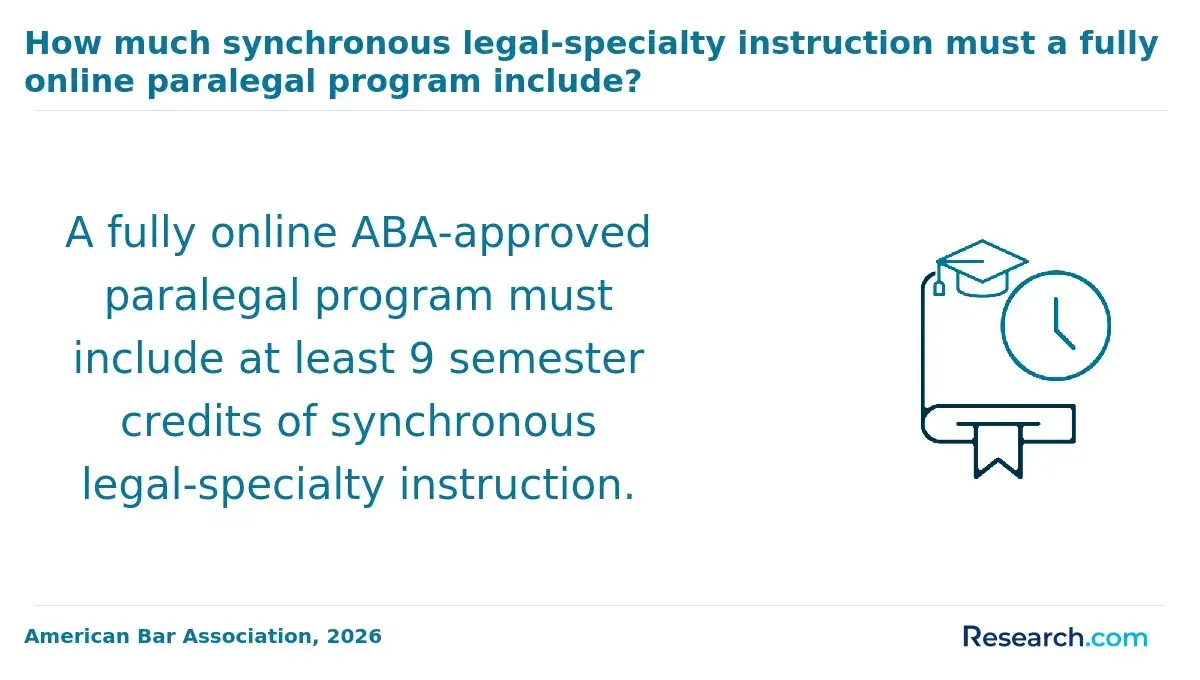
ABA approval of a paralegal education program is a separate concept from institutional accreditation and is not an approval category to assume for an MLS. The American Bar Association does not certify individual paralegals. Be wary of any program description that blurs those distinctions or suggests that an MLS qualifies graduates to practice law.
What Are the Salary and Job Outlook Differences Between These Career Paths?
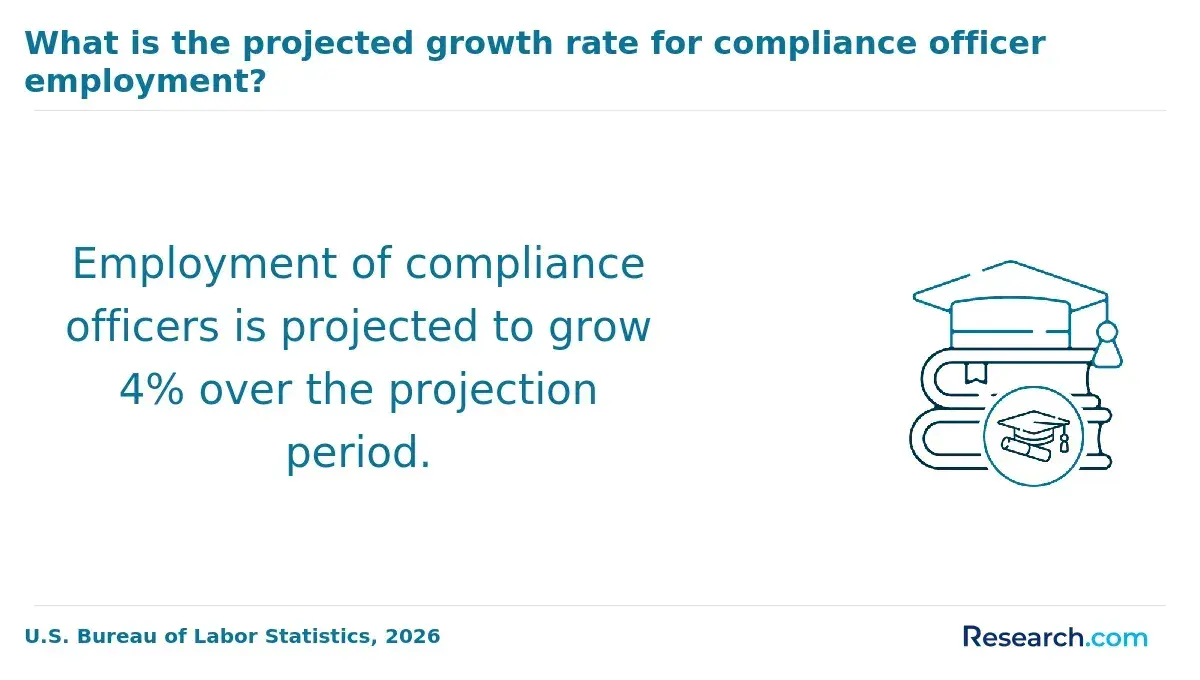
Degree-level salary comparisons are unreliable because MLS and accounting graduates enter different occupations at different experience levels. For one relevant benchmark, BLS reports that compliance officers earned median annual pay of $80,730 in May 2025 and projects 4% job growth, 2025-2035. Those figures cover the broader compliance-officer occupation, not specifically legal-studies graduates or internal-control specialists.
Use the occupation attached to your target job - not the degree's marketing materials - as your comparison point. A financial auditor, compliance officer, and risk manager may do overlapping work but face different hiring requirements and pay conditions. Before enrolling, review local postings for the role you want, note their required skills and credentials, and compare those requirements with each program's curriculum and full cost.
Other Things You Should Know About Law & Paralegal
A de-identified process map, risk-and-control matrix, or sample testing memo can show how you identify a risk, assess a control, and explain a finding. Never disclose an employer's confidential information.
Management typically owns and operates controls within its processes. Internal audit may independently evaluate them, while compliance or legal teams may advise on the requirements a control must address. Reporting lines vary by organization.
Yes. Controls can help nonprofits safeguard funds, document approvals, and support reliable reporting. The appropriate design depends on the organization's size, activities, and obligations.
The finding generally needs to be documented, assessed for impact, and communicated through the organization's process. Responsible teams may correct the issue and test whether the change works; the response depends on the risk and applicable requirements.
References
- Enforcement Guidance on Retaliation and Related Issues | U.S. Equal Employment Opportunity Commission https://www.eeoc.gov/laws/guidance/enforcement-guidance-retaliation-and-related-issues
- Private Sector: Accounting and Auditing Regulatory Structure | congress.gov https://www.congress.gov/crs-product/R48647
- Master of Legal Studies Jobs: Career Paths, Salaries & ROI | Wake Forest MLS https://mls.law.wfu.edu/articles/what-can-you-do-with-a-master-of-legal-studies/
- What Can You Do with a Master's in Legal Studies Degree? | Vanderbilt Master of Legal Studies https://law.vanderbilt.edu/master-legal-studies/articles/what-jobs-can-you-earn-with-masters-in-legal-studies/
- Compliance and Risk Management | William & Mary Law School https://online.law.wm.edu/master-of-legal-studies/concentrations/compliance-risk-management
- Frequently Asked Questions | northcarolina.edu https://www.northcarolina.edu/offices-and-services/governance-legal-and-risk/internal-audit/frequently-asked-questions-faqs/
- Master of Accountancy: Curriculum - CSU College of Business https://biz.colostate.edu/academics/graduate-programs/master-of-accountancy/curriculum
- Department of Accounting | mtsu.edu https://accounting.mtsu.edu/
- 15 Accounting Careers: Undergraduate & Graduate Paths | Bay Path University https://www.baypath.edu/news/bay-path-university-blogs/post/15-accounting-careers-undergraduate-graduate-paths/
- Mastering Financial Regulatory Compliance as an M.L.S. Graduate | miami.edu https://news.miami.edu/law/stories/2024/07/mastering-financial-regulatory-compliance-as-an-mls-graduate.html