
2027 What to Ask When a Paralegal Program Says ABA Approval Is Pending

Co-Founder and Chief Data Scientist
"ABA approval pending" can sound reassuring, but it does not tell you whether a paralegal program will be approved - or whether approval would cover your time there. That uncertainty matters if you are comparing tuition, professional certification routes, or employer expectations.
This guide explains what the American Bar Association (ABA) approves, which claims to verify independently, and what to get in writing before you enroll. You will be able to compare a pending program with approved and non-ABA-approved alternatives based on the consequences that matter to you.
Key Things You Should Know
- Pending is not approved. Ask what stage the ABA review has reached, then check the ABA's current approved-program directory yourself.
- ABA approval and institutional accreditation are separate. Verify both statuses independently, and do not assume either makes a particular certificate eligible for federal financial aid or professional certification.
- Compare outcomes, not just labels. The Bureau of Labor Statistics projects 0% growth for paralegals and legal assistants in 2025-2035 but about 40,800 openings a year; practical skills, cost, and local hiring expectations still matter.
What does ABA approval mean for a paralegal program?
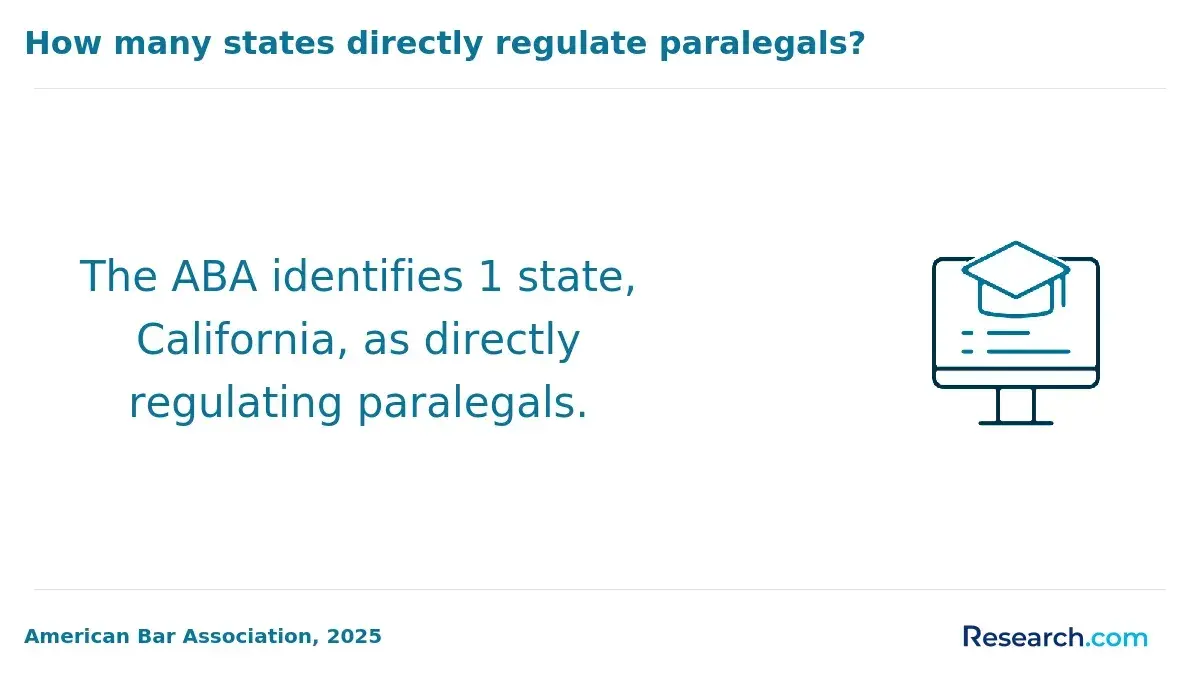
ABA approval is a review of a paralegal education program against the ABA's program guidelines. It is not accreditation of the college, approval of every course the college offers, or certification of its graduates. A school's statement that it has applied, is preparing an application, or expects a decision is not the same as appearing in the ABA's directory of approved paralegal education programs.
Ask for the exact program name and location under review. A college may offer multiple credentials or delivery options, and a general claim about "our paralegal program" may not identify the one you intend to enter. Verify any claim of current approval against the ABA directory rather than relying on a brochure or an admissions representative's forecast.
Approval can be useful when an employer or professional certification route values education from an ABA-approved program. It is not a universal requirement for paralegal employment, and a strong non-ABA-approved program may still meet your goals. Conversely, approval alone cannot establish that a program is affordable, convenient, or effective at preparing you for local jobs.
What should you ask when ABA approval is still pending?
Request answers by email or in the catalog before paying a nonrefundable deposit. These questions separate a review that is underway from a plan to apply and expose risks that a projected approval date cannot resolve:
- What has happened so far? Has the program submitted an application, received an ABA site visit, or merely begun preparing for review? What documentation can the school share?
- Which offering is under review? Confirm the exact credential, campus or location, and online or hybrid format you would attend.
- What happens to my cohort? If approval is granted after I start or graduate, will it cover my enrollment or credential? Ask the program to identify the applicable ABA rule rather than promising retroactive coverage.
- What if approval is delayed or denied? Ask whether your curriculum, graduation requirements, tuition, refund rights, or ability to finish will change.
- What claims can I make afterward? Ask how the school will describe your program's status on transcripts and in its published disclosures.
Treat a guaranteed approval date, a refusal to identify the credential under review, or a promise that all students will automatically become "ABA-certified" as a red flag. The ABA approves programs; it does not certify individual paralegals.
Can you enroll in a paralegal program before ABA approval is granted?
A school may enroll students while seeking ABA approval. The decision is whether the program is worth its price and time commitment without assuming approval will arrive. If a particular employer or certification route requires education from an approved program, get written clarification from that employer or credentialing body before enrolling.
The distinctions below show what each status establishes at the point when you make your decision. None predicts a graduate's employment outcome.
| Program status | What you can establish now | What remains uncertain |
| Listed as ABA-approved | Current approval for the listed program can be checked with the ABA. | Whether the credential fits your budget, schedule, and career goal. |
| ABA approval pending | The school can explain its review stage; approval has not been established. | Whether approval will be granted and how its timing would affect your cohort. |
| Not seeking ABA approval | The school can document its curriculum and other relevant credentials without claiming ABA approval. | Whether particular employers or certification routes will accept that education. |
If you need a credential soon, compare the pending option with approved programs and with shorter routes through online paralegal study. A faster program is not necessarily the safer choice: check its actual approval status, required coursework, and scheduled obligations before trading time for certainty.
How can you verify a program's institutional accreditation?
Institutional accreditation evaluates a college or other educational institution; it is separate from ABA approval of a paralegal program. Look up the institution by its legal name in the U.S. Department of Education's accreditation database, then confirm its current status and any relevant campus details with the named accreditor. Check the school's own disclosures for the credential-granting institution, especially if a course is marketed through a continuing-education division or outside training partner.
Accreditation does not mean that every certificate qualifies for federal student aid or that another college will accept its credits. Ask whether your specific program is credit-bearing, who awards the credential, and how its courses appear on a transcript. If later study is part of your plan, the receiving school decides whether credits transfer and how they apply. That distinction matters whether you remain in paralegal studies or explore a guide to transferring credits into business law programs.
Will pending ABA approval affect paralegal certification eligibility?
It might, depending on the credential. A paralegal certificate is an educational award; professional certification is a separate credential granted by a certification organization or, where applicable, a state system. Completing either an ABA-approved or a pending program does not automatically make you a certified paralegal.
National certification organizations such as NALA and the National Federation of Paralegal Associations publish their own eligibility routes. Those routes can differ by education, degree, coursework, and work experience, and they need not all require graduation from an ABA-approved program. State-specific credentials and employer preferences can differ again.
Identify the exact certification you may pursue, read its current eligibility rules, and send its administrator the proposed program name and your planned credential if the rules leave any doubt. Do not assume approval granted after graduation would change how that organization evaluates your education. Keep the school's written status disclosures and your course records.
What curriculum and faculty standards should an ABA-approved program meet?
ABA review looks beyond a program's title. Its paralegal education guidelines address matters such as legal-specialty instruction, general education, program resources, faculty qualifications, assessment, and opportunities to develop practical skills. Because guidelines and individual program designs can change, compare the current ABA requirements with the school's current catalog rather than trusting an undated claim that its courses "meet ABA standards."
For a pending program, inspect the courses you would actually take: legal research and writing, civil procedure, ethics, and assignments that require you to produce or analyze legal work are more informative than a list of practice areas alone. Ask who teaches legal-specialty courses and how instructors assess research, drafting, and technology use. If the school advertises access to a research platform or other software, distinguish hands-on assignments from a demonstration or a marketing mention.
Paralegals work under appropriate attorney supervision and cannot independently provide legal advice or practice law. A curriculum should make those professional boundaries clear. Neither a paralegal certificate nor a non-JD legal studies degree qualifies its holder to practice as an attorney.
How do online paralegal programs handle ABA approval requirements?
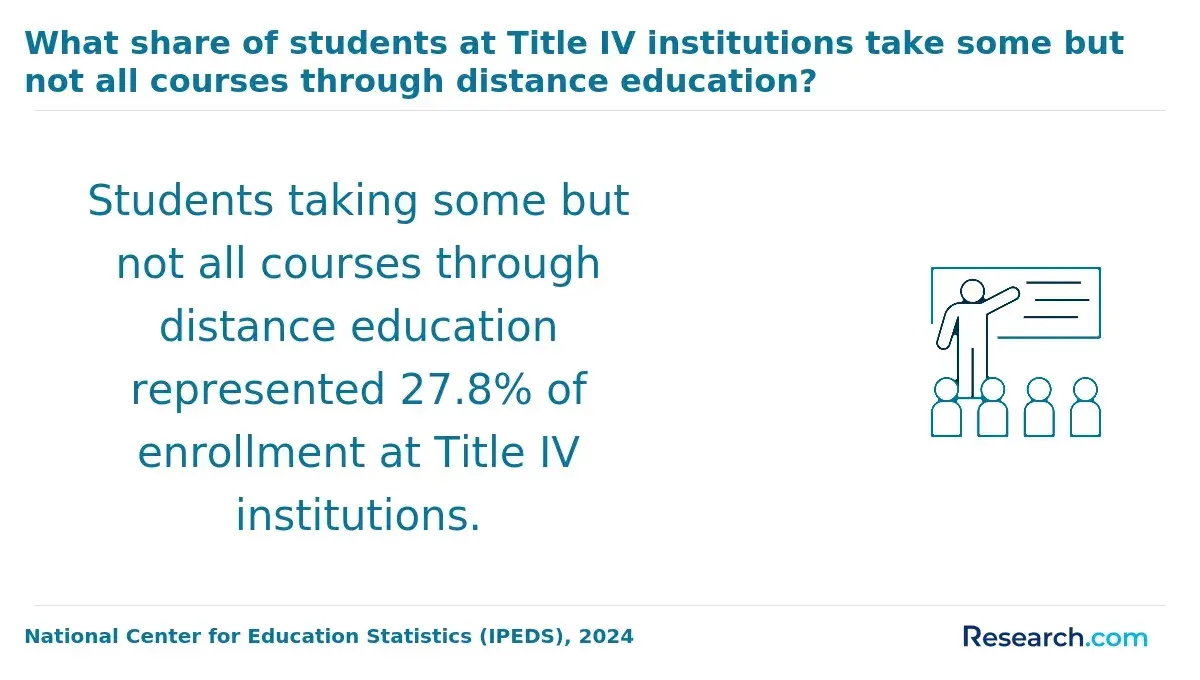
Online delivery does not itself establish or rule out ABA approval. Verify that the particular offering you will attend is covered by the program's stated status. For a pending program, ask whether the online curriculum and its delivery arrangements are included in the ABA review - not merely whether an on-campus version exists.
"Online" also does not mean self-paced. Ask for a sample term schedule showing live meetings, exam times, campus visits, course sequencing, and any internship or practicum. If practical experience is required, establish who finds the placement and whether your location or work schedule limits your options. Compare those obligations across online paralegal certificate programs rather than comparing format labels alone.
What are the program's admission requirements, length, and total cost?
Ask for the current catalog requirements for the specific credential: a certificate intended for students who already hold a degree can have different entry rules from an associate degree or a program open to applicants with a high school diploma. Confirm prerequisites, required courses, term-by-term availability, and the earliest realistic completion date for someone studying at your pace.
Request an itemized estimate covering tuition, mandatory fees, books, technology or legal-research access, travel, and any internship-related expense. Then ask which charges are refundable if you leave because ABA approval is delayed or denied. Do not treat the advertised tuition as the total cost, and do not assume an accredited school's particular certificate is eligible for federal financial aid; confirm eligibility for that program with its financial aid office.
There is also an opportunity cost to consider. If you already have a bachelor's degree and want legal knowledge for an existing professional role rather than paralegal training, compare the program with relevant coursework or lower-cost options for a master's in legal studies. That is a different educational route, not a substitute for required paralegal skills or a path to attorney licensure.
What careers and salaries can graduates expect after completing the program?
Paralegals and legal assistants help attorneys with tasks such as research, document preparation, file organization, and case support. Entry requirements and preferences vary by employer; completing a program does not guarantee a position. The Bureau of Labor Statistics reports median annual pay of $62,890 in May 2025 for paralegals and legal assistants. That is an occupation-wide midpoint, not an expected starting salary for a new graduate.
Some graduates may use their training in a legal department, government office, or role involving legal processes, but job titles and requirements differ. If your aim is primarily an HR-related role, for example, compare paralegal training with legal studies programs combining legal knowledge and HR law. Check whether a program actually offers a formal concentration rather than assuming that a few relevant electives amount to one. A non-JD legal studies degree can build legal knowledge but does not qualify a graduate to practice law.
How does the program's job placement record compare with industry demand?
The Bureau of Labor Statistics projects 0% employment growth for paralegals and legal assistants in 2025-2035, alongside about 40,800 openings per year. Openings can arise even when total employment changes little, but a national projection cannot tell you how many suitable entry-level jobs exist near you.
Ask the school for a dated placement report that defines who was counted, whether jobs were paralegal roles, the period after graduation, and how graduates who did not respond were handled. Request separate results for the credential and delivery format you are considering. A claim that graduates work "in the legal field" is less useful than a clearly defined outcome; a small or unverified survey should not be treated as proof of likely employment.
Finally, compare recent local job postings with the program's actual coursework and career support. If employers you hope to work for require an ABA-approved education, pending status is a significant risk. If they do not, a well-documented curriculum, manageable total cost, and credible practical training may matter more. Enroll only after you can accept the program's value even if approval never arrives.
Other Things You Should Know About Law & Paralegal
No. A paralegal certificate is an educational credential, not an attorney license. Paralegals generally support legal work under attorney supervision and must follow applicable state rules on unauthorized practice.
No. Describe the credential and school accurately. Only call your program ABA-approved if you have verified that the claim applies to the program you attended.
That depends on your goal. An employer may value experience, while a school or certification organization may have specific education requirements. Check the rule for the position or credential you want rather than assuming experience substitutes for coursework.
Not necessarily. An internship may provide relevant supervised practice, but employers and certification organizations can define qualifying work experience differently. Ask how they evaluate your particular placement.
References
- How To Get Certified | North Carolina State Bar https://www.ncbar.gov/paralegal-certification/how-to-get-certified/
- WAC 490-105-130 | wa.gov https://apps.leg.wa.gov/Wac/default.aspx
- .12 Tuition, Fees, Enrollment Contracts, Refunds. | Library of Maryland Regulations https://regs.maryland.gov/us/md/exec/comar/13B.01.01.12
- Institutional Reporting and Disclosure Requirements | ed.gov https://fsapartners.ed.gov/knowledge-center/fsa-handbook/2026-2027/appendices/appx-e-institutional-reporting-and-disclosure-requirements
- Paralegal Program FAQs | Oakland County, MI https://www.oaklandcc.edu/programs/paralegal/faq
- How an ABA Approved Paralegal Program Can Advance Your Career - Peirce College https://www.peirce.edu/stories/how-an-aba-approved-paralegal-program-can-advance-your-career/
- Overview of the ABA Approval Process & Applying for Initial Approval | americanbar.org https://www.americanbar.org/groups/paralegals/approval-resources/general_approval_process_information/


