2027 Paralegal Training for Workers' Compensation Practice: What to Look for in a Curriculum

Co-Founder and Chief Data Scientist
A general paralegal program may teach legal research and litigation but leave little time for workers' compensation claims. If you hope to work for a claimant's lawyer, defense firm, insurer, or employer, that gap matters: the work depends on state-specific rules, medical records, deadlines, and administrative hearings. This guide shows prospective students and career changers how to evaluate a curriculum, compare education routes and formats, and identify costs or credential claims worth checking before enrolling.
Key Things You Should Know
- Prioritize supervised practice with claim files, medical records, wage calculations, deadlines, and your target state's forms - not a course title that merely mentions workers' compensation.
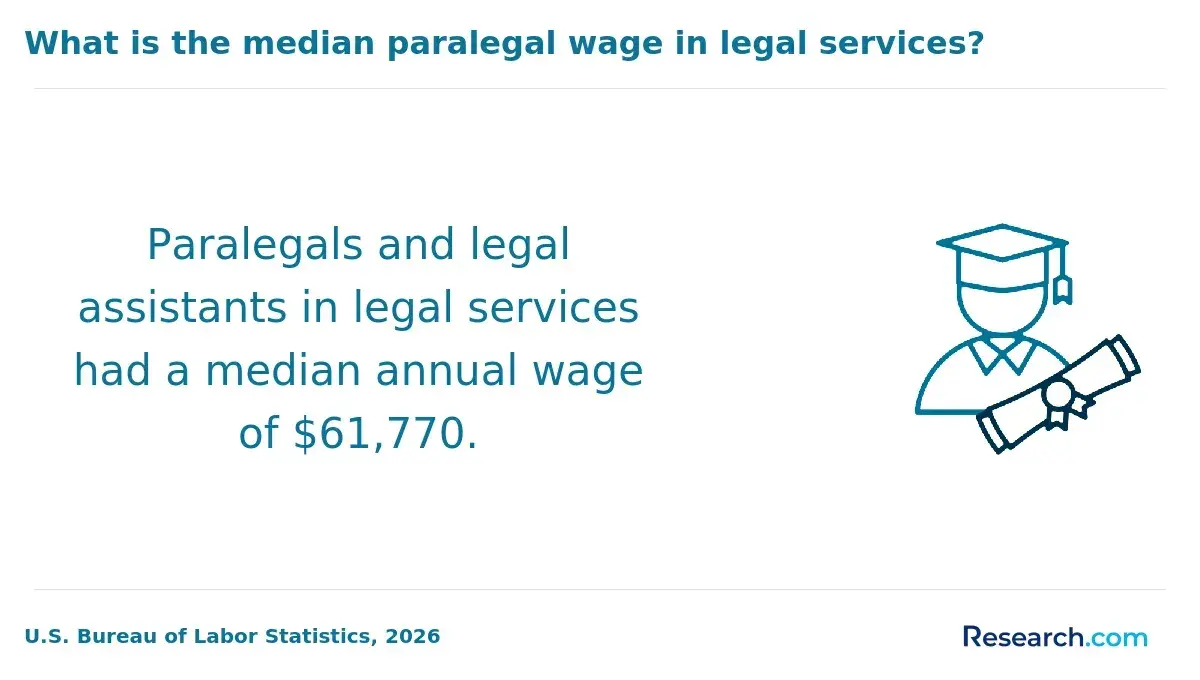
- Paralegals and legal assistants had median annual pay of $62,890 in May 2025, according to the Bureau of Labor Statistics; that occupation-wide figure is not a workers' compensation salary or a graduate outcome.
- Compare the credential, total cost, schedule, and practical training. ABA program approval, institutional accreditation, and individual professional certification are different things.
What Is Workers' Compensation Paralegal Training?
Workers' compensation paralegal training combines general legal-support skills with the procedures used to handle work-related injury and illness claims. Depending on the employer and state, a paralegal may organize records, track filing and hearing deadlines, prepare drafts, summarize medical evidence, and coordinate communications under an attorney's supervision. The paralegal does not independently advise clients, decide legal strategy, or practice law.
The strongest training makes clear which state's system it teaches. Benefits, forms, filing periods, settlement approvals, and appeal routes vary by jurisdiction. A course using one state's examples can still teach transferable methods, but it should not present those examples as nationwide rules.
What Education Do You Need to Become a Workers' Compensation Paralegal?
There is no single nationwide degree requirement for this specialty. Employers may prefer an associate degree in paralegal studies, a bachelor's degree with substantial paralegal coursework, or a post-baccalaureate paralegal certificate. A certificate is an educational award; it is not the same as professional certification granted by a credentialing organization or state system.
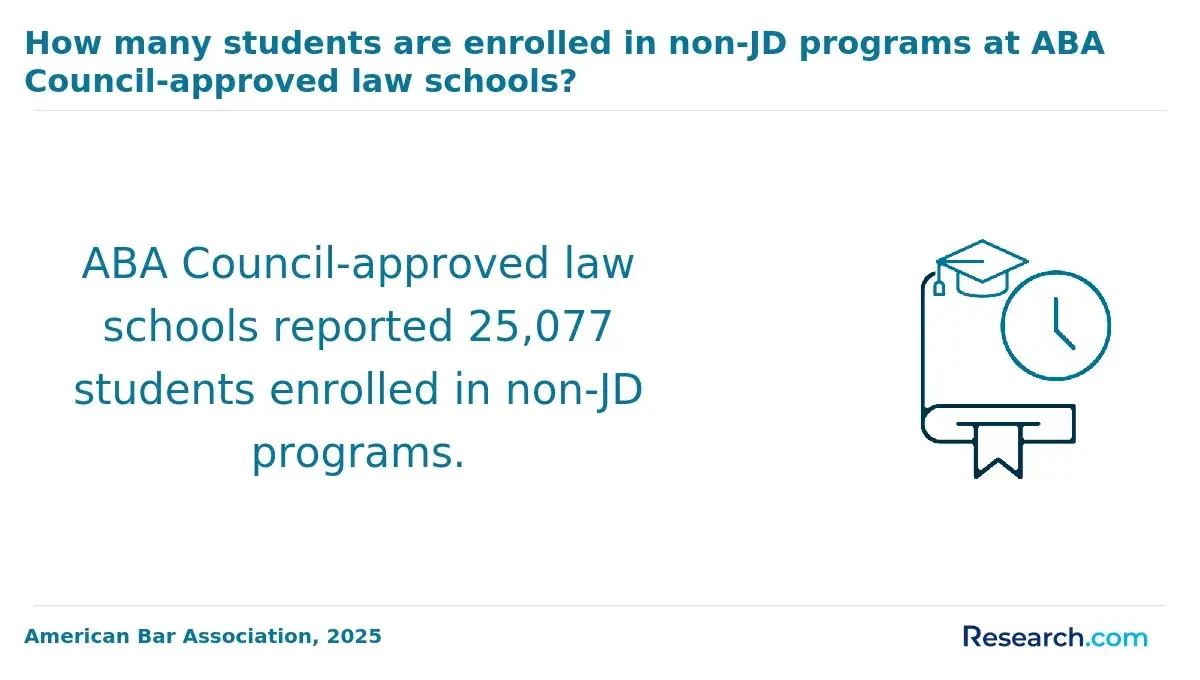
Choose a route based on what you already have. Someone new to college may benefit from a degree that includes general education and legal fundamentals. A bachelor's graduate may need a shorter paralegal certificate instead. If a degree is the right route, compare cheaper options for an accredited paralegal degree against their required coursework and practical experience, not advertised tuition alone. Prior claims or insurance experience can help, but it does not replace learning legal ethics, research, and attorney-supervised drafting.
What Should a Workers' Compensation Paralegal Curriculum Include?
Look for a foundation in legal research, writing, ethics, and civil or administrative procedure, followed by exercises built around an injury claim. The comparison below connects course content to tasks a graduate may actually encounter; assignments should be reviewed by an instructor, not merely demonstrated.
| Curriculum area | Useful practical assignment | What to check |
| State claims procedure | Build a filing and hearing timeline from a sample claim | Which jurisdiction's current rules and forms are used? |
| Medical and wage evidence | Summarize treatment records and organize wage documentation | Are privacy, accuracy, and disputed facts addressed? |
| Drafting and hearings | Prepare a supervised draft filing and hearing exhibit list | Does an instructor give substantive feedback? |
| Case management | Maintain a sample claim file and deadline log | Do students perform hands-on work with the tools provided? |
Also examine coverage of benefit disputes, return-to-work issues, settlements, appeals, and professional responsibility. Software access is useful only if students use it in assessed assignments; a product name in a syllabus does not establish proficiency.
How Do Online and Campus-Based Paralegal Programs Compare?
Either format can teach claim analysis and drafting. The meaningful difference is how students practice, receive feedback, and meet scheduling obligations. An online label does not mean classes are asynchronous or that an internship can be completed remotely.
| Factor | Online program | Campus-based program |
| Schedule | May include live meetings or fixed deadlines | Usually requires scheduled travel and class attendance |
| Practice | Can use digital claim files and remote feedback | Can use in-person workshops and local placements |
| Placement logistics | A local placement may still be required | Nearby placements may be available but are not assured |
Before enrolling, request the course schedule and internship policy. Confirm who finds placements, whether current employment can qualify, and whether any exams or meetings require attendance at a set time or place.
How Long Does Workers' Compensation Paralegal Training Take?
Completion time depends on the credential, prerequisites, course sequence, and whether you study full time. A specialty course may supplement existing paralegal skills, while a degree must also cover broader academic requirements. Ask for a term-by-term plan that includes required classes and any placement; an advertised minimum is less useful if a key course is offered infrequently.
If you already have a degree and need legal knowledge for a broader role rather than paralegal preparation, a master's in legal studies is a different route. Resources on choosing a legal studies master's by completion time can help frame that comparison, but a non-JD master's does not qualify someone to practice law or necessarily teach claim-file skills.
How Much Does Paralegal Training Cost?
Compare the full cost of completion, not just a tuition quote. Request an itemized estimate covering mandatory fees, books, research-platform or technology charges, prerequisite courses, travel, and placement-related expenses. Compare programs using the same unit - total required cost rather than one school's per-credit price against another's program price.
Payment timing matters if you will keep working while studying. You can compare tuition payment plans for online paralegal programs, then check each school's current contract, fees, and refund terms. Do not assume a certificate qualifies for federal aid: eligibility depends on the institution, the specific program, and the student. Ask the financial aid office to confirm before relying on aid in your budget.
What Are the Admission Requirements for Paralegal Programs?
Requirements differ by credential. A degree program may admit applicants with a high school diploma or equivalent, while a post-baccalaureate certificate may require an existing bachelor's degree. Programs can also specify prior college coursework, transcripts, or general education requirements. Check the current catalog rather than assuming every program called a "certificate" admits the same students.
If you have an associate degree, comparing legal studies continuation routes for associate graduates may help you weigh a bachelor's against shorter training. Obtain a written transfer-credit evaluation: the receiving institution decides which credits apply to its credential, even when both schools are accredited.
Do Workers' Compensation Paralegals Need Certification or a License?
There is no single national paralegal license or universally required certification for this specialty. State rules, protected titles, employer expectations, and eligibility for voluntary credentials can differ. Check the rules where you plan to work rather than treating a school's credential description as legal guidance.
Keep three statuses separate: institutional accreditation concerns the school; American Bar Association approval applies to qualifying paralegal education programs; and professional certification concerns an individual credential granted by its issuing organization or state system. The ABA does not certify individual paralegals, and graduating from an ABA-approved program does not make someone "ABA-certified."
What Jobs Can You Get After Workers' Compensation Paralegal Training?
Relevant openings may carry titles such as workers' compensation paralegal, legal assistant, claims litigation assistant, or hearing support specialist. Claimant-side firms, defense firms, insurers, and employers organize this work differently; review postings for the actual duties and required experience before choosing coursework.
The Bureau of Labor Statistics reports median annual pay of $62,890 in May 2025 for paralegals and legal assistants, with 0% projected employment growth from 2025-2035 and about 40,800 openings per year. These figures cover the broader occupation, not this specialty. They offer context for evaluating training costs, not an expected starting salary.
If your goal is compliance or policy work rather than attorney-supervised claim support, explore a guide to legal studies master's concentrations before committing to paralegal training. Compare the work each route prepares you to do; neither credential guarantees a particular role.
How Do You Choose a Reputable Paralegal Training Program?
Start with the claim tasks you want to perform and the state where you expect to work. Then seek documentation, not assurances. These checks help distinguish a useful curriculum from a broad program with a specialty label:
- Read the current catalog and syllabi for legal fundamentals, state-specific claims procedure, assessed drafting, and feedback on practical assignments.
- Verify institutional accreditation with the institution's recognized accreditor; if ABA approval matters to you, check the ABA's current paralegal program directory separately.
- Get the complete cost, term-by-term schedule, technology requirements, and internship policy in writing.
- Ask how often forms and teaching materials are updated and whether the program promises outcomes it cannot substantiate.
A short course may be enough for someone who already has strong paralegal skills and needs exposure to claims practice. A newcomer may gain more from a broader credential with supervised work. Be cautious of programs that promise certification or employment simply for completing a course.
Other Things You Should Know About Law & Paralegal
Not necessarily. Federal employee claims generally follow a separate federal framework. If you expect to work with them, ask whether the course covers that framework rather than assuming state-focused instruction will suffice.
Only if your employer authorizes it and the school's assignment protects confidential information. De-identifying a file alone may not satisfy workplace policies or applicable privacy duties.
It can demonstrate relevant knowledge, but employers decide how they evaluate it. An adjuster's responsibilities or license do not automatically establish paralegal qualifications.
Follow updates from the responsible state agency and your employer's supervising attorney, and use continuing education when procedures change. Do not rely indefinitely on forms saved during a course.
References
- Workers' Compensation Issue Resolution - An Introduction https://www.wcb.ny.gov/content/main/Workers/IssueResolution.jsp
- Introduction to Workers' Compensation Guide | Virginia Workers' Compensation Commission https://workcomp.virginia.gov/documents/introduction-to-workers-compensation-guide
- Workers' Compensation: Overview and Issues | congress.gov https://www.congress.gov/crs-product/R44580
- Workers' Compensation Coverage and Benefits | pa.gov https://www.pa.gov/agencies/dli/programs-services/workers-compensation/state-workers--insurance-fund-home/swif-claims-and-indemnity/coverage-and-benefits
- Guidelines on the Use of Paralegals | North Carolina State Bar https://www.ncbar.gov/paralegal-certification/guidelines-on-the-use-of-paralegals/
- CompFile Implementation - Resources https://iwcc.illinois.gov/resources/compfile-implementation.html
- WCB Training - maine workers' compensation board https://www.maine.gov/wcb/Departments/mae/trainingmodules.html
- Federal Employees' Compensation Act - Frequently Asked Questions | U.S. Department of Labor https://www.dol.gov/agencies/owcp/FECA/fec-faq
- Legal Ethics for Paralegals: Essential Principles and Real-World Dilemmas | Rasmussen University https://www.rasmussen.edu/degrees/justice-studies/blog/legal-ethics-for-paralegals/
- Job Skills For Paralegals | imbc.edu https://imbc.edu/paralegal/paralegal-career/job-skills-for-paralegals/