2027 Master of Legal Studies vs. an AML Certification: Different Training Goals

Co-Founder and Chief Data Scientist
A Master of Legal Studies (MLS) and an anti-money laundering (AML) certification can both support compliance work, but they solve different training problems. An MLS offers broad graduate-level legal study; an AML certification demonstrates knowledge of a narrower financial-crime specialty. That distinction matters if you are deciding whether to invest in a degree or build a job-specific credential. This guide compares what each route teaches, requires, and costs - and shows how to match the choice to the work you want to do.
Key Things You Should Know
- Choose an MLS for broad legal and regulatory knowledge; choose an AML certification for focused evidence of financial-crime knowledge. Neither qualifies you to practice law.
- An MLS generally requires a bachelor's degree and multiple academic terms. AML certifications have issuer-specific eligibility rules and preparation schedules; a course completion certificate is not the same credential.
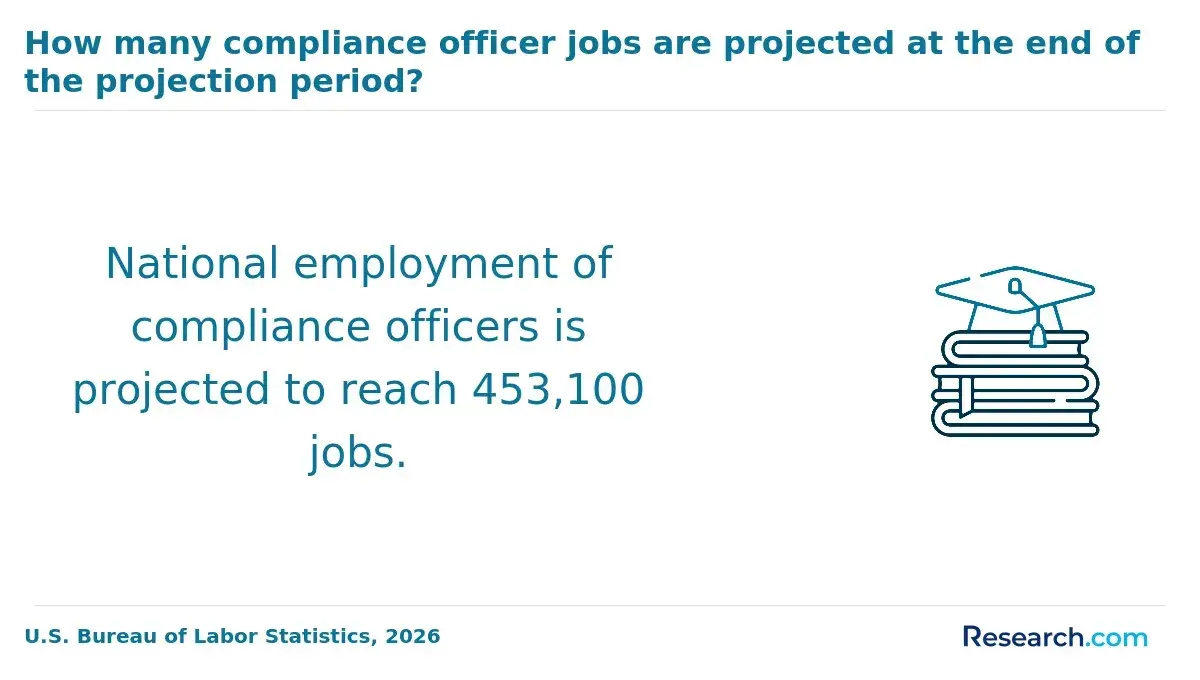
- The Bureau of Labor Statistics reports $80,730 in May 2025 median pay for compliance officers, with 4% projected growth in 2025-2035. Those figures cover a broad occupation, not MLS graduates or AML-certified workers specifically.
What is the difference between a Master of Legal Studies and an AML certification?
An MLS - sometimes called a Master of Science in Law or offered under a related non-JD name - is a graduate degree for people who want to understand how law affects their work without becoming attorneys.
An AML certification is a professional credential awarded by a certification organization after an applicant meets its current requirements. The Certified Anti-Money Laundering Specialist (CAMS) credential, issued by ACAMS, is one example.
The useful comparison is breadth versus specialization, not degree versus "lesser degree." These routes document different kinds of learning.
| Decision factor | Master of Legal Studies | AML certification |
| Primary goal | Develop broad legal and regulatory literacy | Validate knowledge of AML and financial-crime controls |
| Credential awarded | Academic master's degree from a university | Professional certification from its issuer |
| Typical scope | Legal research, reasoning, and selected areas of law | Financial-crime risks, detection, reporting, and controls |
| Best fit | Roles spanning legal, policy, risk, or regulatory issues | Roles with substantial AML responsibilities |
Neither credential is universally required for compliance employment. If a job posting calls for AML investigations, a targeted certification may address its stated preference more directly. If responsibilities span contracts, employment rules, privacy, and regulation, an MLS may have greater relevance.
Who should pursue a Master of Legal Studies or AML certification?
An MLS may suit a working professional who regularly interprets legal requirements across several functions - for example, a healthcare administrator coordinating regulatory policies or a corporate risk professional working with legal counsel.
Its breadth can be valuable when a single specialty would leave important gaps. It also means spending time on subjects that may not help with a narrowly defined AML role.
AML certification may suit a bank investigator, transaction-monitoring analyst, fraud professional moving into financial crime, or compliance employee seeking to document specialty knowledge.
Relevant work experience and employer training still matter: passing an exam does not substitute for conducting investigations or applying an institution's procedures.
If you are new to both law and financial services, inspect entry-level job requirements before buying either credential. Employer training or a shorter course may be a more proportionate first step; an MLS can be difficult to justify if your immediate goal is simply to learn AML terminology.

Does an AML certification qualify you to practice law?
AML certification does not authorize its holder to represent clients, give independent legal advice, or perform work reserved for licensed attorneys. An MLS is also a non-JD degree and does not, by itself, qualify someone for attorney licensure. Rules governing legal practice vary by state.
AML professionals can investigate activity, document findings, help maintain controls, and escalate legal questions within their roles. They should not treat certification - or a legal studies degree - as permission to make legal judgments on a client's behalf. If your goal is to become a lawyer, research the attorney-licensing route in the state where you intend to practice rather than choosing either option as a substitute.
What do Master of Legal Studies and AML programs teach?
MLS curricula commonly build skills in reading legal materials, analyzing rules, and communicating legal issues to nonlawyers. Depending on the university and electives, study may extend to contracts, business regulation, employment law, privacy, or compliance. A program's advertised "compliance" focus is worth checking course by course: broad regulatory study is not necessarily hands-on AML training.
AML certification preparation is more focused on financial-crime risks and the controls used to address them. In a U.S. role, relevant subjects can include Bank Secrecy Act obligations, customer due diligence, suspicious activity reporting, and transaction monitoring.
Sanctions compliance also matters in some jobs, but Office of Foreign Assets Control requirements are distinct from AML requirements; verify that a course covers both if the role demands both.
A university certificate, a certificate of course completion, and a professional certification are different outcomes. If you want narrower academic study without a full master's degree, compare master's-level legal studies versus certificate study before assuming that an exam-prep course offers graduate credit or a professional designation.
What are the admission requirements for MLS and AML programs?
MLS applicants generally need a bachelor's degree; universities set their own rules for transcripts, minimum academic performance, statements, and any professional-experience expectations. A law degree is not normally the starting credential, but requirements differ by program.
Professional AML certification follows the issuer's eligibility and examination rules rather than graduate admissions rules. For CAMS, check ACAMS directly for its current qualifying criteria, application process, exam policies, and any ongoing obligations. Enrollment in an AML preparation course does not establish that you are eligible for its associated certification exam.
If you have not completed a bachelor's degree, resolve that prerequisite before planning an MLS application. Review legal studies degree progression and transfer considerations, and ask the receiving university how it would apply your existing credits. Transfer is its decision, not an automatic result of attending an accredited institution.
How long do MLS degrees and AML certifications take to complete?
An MLS takes multiple academic terms because it requires graduate coursework; the calendar depends on credit load, course sequencing, and whether the student attends part time.
AML exam preparation can fit around work more readily, but the time needed depends on prior knowledge, eligibility, scheduled exam availability, and the certification issuer's process. Neither "online" nor "accelerated" automatically means self-paced.
If a promotion has a near-term AML knowledge requirement, compare the certification exam and eligibility timeline with your employer's deadline.
If broader legal study is the goal, examine actual term dates and required courses rather than relying on an advertised completion time. Programs offering business law master's degrees on an accelerated schedule may be worth comparing, but speed should not displace the subjects you need.
How much do MLS degrees and AML certifications cost?
An MLS usually represents the larger financial commitment because students pay for a graduate degree across multiple terms. Compare the full price - not just tuition per credit - including mandatory fees, books, technology, and any required travel.
Ask whether an employer will reimburse courses relevant to your job. Federal financial aid may be available for an eligible degree program and student, but eligibility must be confirmed with the school.
For AML certification, ask the issuer for its current application, exam, membership, retake, and renewal charges, then add any optional preparation course.
These costs vary by credential and purchase choices, so an advertised prep-course price is not necessarily the total cost of becoming certified. Do not assume a standalone exam or noncredit preparation course qualifies for federal student aid.
Compare out-of-pocket cost against the job requirement you are trying to meet. If broad graduate study is justified, review affordable options for graduate-level legal studies alongside each program's total required costs and curriculum. If the employer primarily wants AML expertise, paying for unrelated graduate credits may have a substantial opportunity cost.
Are online MLS and AML programs as credible as campus programs?
Delivery format alone does not determine credibility. For an online MLS, verify the university's institutional accreditation through its recognized accreditor and check whether the online program awards the same degree as its campus counterpart.
Then examine instructor access, assessment methods, scheduled meetings, and any campus requirements. Institutional accreditation is separate from any approval that might apply to a paralegal education program.
For AML training, focus on the certification issuer and what the online offering actually provides. A third-party course may prepare students for an exam without awarding the credential or guaranteeing exam eligibility. Ask whether instruction is live or on demand, whether practice assessments are included, and whether the advertised outcome is course completion or professional certification.
What careers can you pursue with an MLS or AML certification?
An MLS can complement work in compliance, contracts administration, policy, risk, or regulated operations. Its usefulness depends on the role and your existing experience; it is not a standard entry requirement across those occupations.
AML certification is more directly aligned with transaction monitoring, financial-crime investigations, AML program support, and related bank or financial-services compliance work. Employers may prefer particular credentials without requiring them for every opening.
Compare job descriptions before choosing. Note whether openings ask for experience investigating alerts, writing reports, interpreting policies, or working across multiple legal domains. Then identify which skills you already have and which you would need to demonstrate through work, training, or study.
If your intended job is paralegal rather than compliance work, investigate paralegal education separately: an MLS or AML certification does not replace training in that role's tasks. When comparing the cost of that alternative, monthly tuition payment options for online paralegal degrees may help with cash flow, but a payment schedule does not reduce the total price.
How do salaries and job outlook compare for MLS and AML professionals?
There is no single U.S. wage figure for "MLS professionals" or "AML-certified professionals": both credentials can appear across different job titles, and pay depends on duties, location, industry, and experience.
The Bureau of Labor Statistics reports median annual pay of $80,730 in May 2025 for compliance officers, with 4% projected growth, 2025-2035 and about 32,700 openings per year. This is a useful occupational benchmark for some compliance paths, not a salary estimate for CAMS holders or MLS graduates.
Neither credential alone establishes a pay increase or a better return on investment. Before enrolling, compare the requirements and pay ranges in openings you could realistically pursue with your current experience. Favor the credential that closes a documented skills gap, and ask your employer whether it recognizes or funds that specific credential.
Other Things You Should Know About Law & Paralegal
Yes. They can complement each other if your work combines broad regulatory analysis with substantial financial-crime duties. Consider pursuing the one that addresses your immediate job requirements first.
That depends on the credential. Check its issuer's current continuing-education, renewal, and fee rules before applying; completing an exam may not be the last obligation.
Do not assume so. A law school decides whether it accepts any previous coursework toward its JD under its own rules. Get its policy in writing before treating an MLS as a route to shorten law school.
No. Employer training can be highly relevant to daily duties, but it does not confer an independently issued credential unless the certification organization's requirements are separately met.
References
- When Is It the Right Time To Earn a Master of Legal Studies? | UMKC Online Master of Legal Studies https://onlinemls.law.umkc.edu/articles/when-to-get-a-master-of-legal-studies/
- How an MLS in Compliance Prepares You for Legal Corporate Careers | William & Mary Law https://online.law.wm.edu/blog/mls-compliance-corporate-legal-careers
- Is a Master's Degree in Legal Studies Right for You? | Purdue Global https://www.purdueglobal.edu/blog/legal-studies/is-masters-legal-studies-right-for-you/
- Master of Legal Studies (MLS) vs. JD: Which Is Right for You? | Wake Forest MLS https://mls.law.wfu.edu/articles/mls-vs-jd-which-is-right-for-you/
- MLS vs Graduate Certificate: What's the Better Career Investment? | wsulaw.edu https://www.wsulaw.edu/news/why-choose-a-master-of-legal-studies-over-a-graduate-certificate/
- Is an MLS Worth It? ROI and Career Outcomes for Non-Lawyers | Drexel University Kline School of Law https://drexel.edu/law/news/legal-studies-blog/is-an-mls-worth-it-roi-and-career-outcomes-for-non-lawyers/
- What Can You Do With a Master of Legal Studies? | WashU Law https://online.law.washu.edu/articles/what-can-you-do-with-master-of-legal-studies/
- Master of Legal Studies (MLS) vs. JD: What's the Difference? | SMU Online Master of Legal Studies https://onlinemasterlegalstudies.smu.edu/articles/mls-vs-jd/
- Master of Legal Studies vs JD | American University https://onlinelaw.wcl.american.edu/legal-studies/mls-jd/
- Eligibility Requirements for the CAFP | aba.com https://www.aba.com/training-events/certifications/certified-aml-and-fraud-professional/eligibility-requirements