
2027 Evening Paralegal Certificate Programs: Comparing Live Class Times and Weekly Workloads

Co-Founder and Chief Data Scientist
An evening paralegal certificate can look manageable until live classes, reading, and assignments compete with your work schedule. For working adults, the useful comparison is not simply "evening" versus "online": it is when attendance is required and how much time remains for coursework. This guide explains how to evaluate class times and weekly workloads, then check admissions, cost, program status, and career fit. You can use it to narrow your options before paying an application fee or rearranging your workweek.
Key Things You Should Know
- "Evening" does not necessarily mean flexible: a campus class or live online meeting may require attendance at a fixed time. Ask for the upcoming term's actual timetable.
- Compare total weekly time, not just class meetings. As a planning example - not a program average - two 2-hour meetings plus 6 hours of independent work require 10 hours that week.
- Check career claims against the market: the U.S. Bureau of Labor Statistics reports $62,890 in median annual pay for paralegals and legal assistants in May 2025 and 0% projected growth for 2025-2035. Neither figure predicts a new graduate's outcome.
What Are Evening Paralegal Certificate Programs?
An evening paralegal certificate is a course of study designed to teach legal-support skills through classes scheduled after the traditional workday. Depending on the school, it may be a college-credit credential or a noncredit continuing-education program. "Evening" describes scheduling, not the credential's academic level, delivery method, or admission requirements.
Paralegals support lawyers with work such as research, document preparation, and case organization under appropriate supervision. A certificate does not qualify its holder to practice law independently.
It is also different from professional certification, an optional credential awarded through a separate organization or state system under its own eligibility rules. Completing a certificate does not automatically confer professional certification.
For schedule comparisons, first establish whether a program meets on campus, online at set times, or through a mixture of live and independent coursework. Those distinctions affect commuting, childcare, and whether a changing work shift is compatible with enrollment.
How Do Live Evening Class Times Compare With Online Paralegal Courses?
Online does not mean self-paced. A live online class - often called synchronous instruction - still requires you to log in at scheduled times. An asynchronous course generally lets you access lessons on your own schedule, though assignment and exam deadlines may remain fixed.
The table compares the commitments that matter most when you work during the day.
| Format | Fixed attendance | Additional scheduling constraint | Potential fit |
| Campus evening class | Typically at published meeting times | Travel, parking, and possible campus exams | Predictable work hours and a manageable commute |
| Live online evening class | Typically at published video-meeting times | Reliable connection and a quiet place to participate | Predictable hours without a campus commute |
| Asynchronous online course | Usually no routine live class, subject to program rules | Deadlines, possible timed exams, or required orientation | Variable shifts and strong independent-study habits |
| Hybrid program | Depends on each course | Both online work and scheduled campus or live meetings | Students who can accommodate occasional in-person requirements |
A program's advertised format may not describe every course. Request the upcoming term's course-by-course meeting days, start and end times, time zone, and campus locations
Also ask whether attendance is graded, whether recordings can replace a missed live session, and whether exams or required events occur outside the usual evening window. Published schedules can change between terms.
If fixed meetings repeatedly conflict with your shifts, compare genuinely asynchronous options rather than assuming any online program solves the problem. Some accelerated paralegal programs online may shorten the calendar while making each week more demanding; verify both their live-meeting rules and workload.
How Many Hours Per Week Do Evening Paralegal Programs Require?
There is no reliable single weekly-hour figure for all evening certificates. The number of courses, class length, credit or noncredit structure, reading assignments, writing projects, and the student's familiarity with legal terminology all affect the workload. A school's estimate is useful only if it separates live attendance from independent work.
Build a personal weekly budget before enrolling. For example, two 2-hour live classes plus 6 hours for reading and assignments total 10 hours; that is an illustrative calculation, not a published program average or a promise that every week will be identical.
Add commuting or setup time separately. Legal-writing deadlines, research projects, and exams can make some weeks harder to accommodate than a routine week.
Ask an adviser for the syllabus of each first-term course and a sample course sequence. Look for recurring meetings, assignment due dates, group projects, and any daytime practicum hours. If your available study time barely covers the routine week, a lighter course load may be more workable even though it extends completion time.
What Do Evening Paralegal Certificate Programs Teach?
Curricula vary, but commonly relevant subjects include legal research, legal writing, civil litigation, ethics, and the organization of legal matters. Some programs add contracts, real estate, family law, or legal technology. The decision is whether the required courses produce work samples and skills relevant to the jobs you want - not whether the catalog lists the most practice areas.
For example, a litigation-focused class may teach students to organize case files or draft documents for review by an attorney. A legal-research class is more useful when students practice finding and checking authorities than when it merely describes a research platform. Ask which assignments require hands-on use of any advertised software; a curriculum mention alone does not establish proficiency.
Check whether an internship or practicum is required and, if so, whether it can occur outside standard business hours. Ask who finds the placement and whether current legal employment or a remote placement can satisfy the requirement. Do not assume either alternative is allowed without the program's written policy.
What Are the Admission Requirements for Evening Paralegal Certificates?
Requirements depend on the specific certificate. One program may admit applicants with a high school diploma or equivalent, while another may require prior college coursework or a completed degree. Schools may also distinguish a credit-bearing academic certificate from a noncredit professional-development course. Check the current admissions page rather than treating an institution-wide rule as the certificate's rule.
Prior education affects which route is worth applying to. If you have not attended college, compare the certificate's entry requirements and credit value with legal studies education at the associate level. An associate degree may offer a broader college-credit foundation, but it also represents a different commitment; neither route should be assumed to satisfy a particular employer's preference.
Before paying an application fee, confirm required transcripts, minimum grades or prerequisite courses, and whether any prior coursework can waive a requirement. A waiver of admission prerequisites is not necessarily a reduction in the courses required to earn the certificate.
How Long Do Evening Paralegal Certificate Programs Take to Complete?
Completion time depends on required courses, how often they are offered, and how many you can take alongside work. A short advertised timeline may assume continuous enrollment and a prescribed course load. Taking fewer courses, waiting for a prerequisite, or completing a placement can extend the calendar.
Ask for a term-by-term plan based on your intended course load, including the first available start date and when each required class is next offered.
Confirm whether courses must be taken in sequence and whether the program has a completion deadline. This matters more than a headline duration if your work schedule prevents you from attending a required class on its only available evening.
If you may pursue a degree later, compare the certificate's credit status with associate-to-bachelor's legal studies transfer options. The receiving institution decides whether previous coursework transfers and how it applies; a certificate's completion time and its value toward a later degree are separate questions.
How Much Do Evening Paralegal Certificate Programs Cost?
There is no single dependable price for an evening paralegal certificate. A quoted amount may cover tuition alone, tuition plus required fees, or an entire noncredit course package. Compare written estimates for the same full credential, not one school's per-course charge against another's total-program quote.
The costs below can change which program is less expensive to complete. Request an itemized estimate for your planned enrollment period rather than relying on an advertised starting price.
| Cost component | Why it matters for an evening student |
| Tuition and mandatory fees | Rates may depend on residency, credit load, or enrollment category. |
| Books, research access, and technology | Ask what is included and what equipment or subscriptions you must supply. |
| Travel and parking | Recurring campus trips can change the total cost of a lower-tuition option. |
| Prerequisites or placement expenses | Required courses and unpaid placement time can add cost beyond certificate tuition. |
Credit-bearing status and institutional accreditation alone do not establish that a particular certificate qualifies for federal student aid. Ask the school's financial aid office whether the specific program is eligible and what enrollment conditions apply.
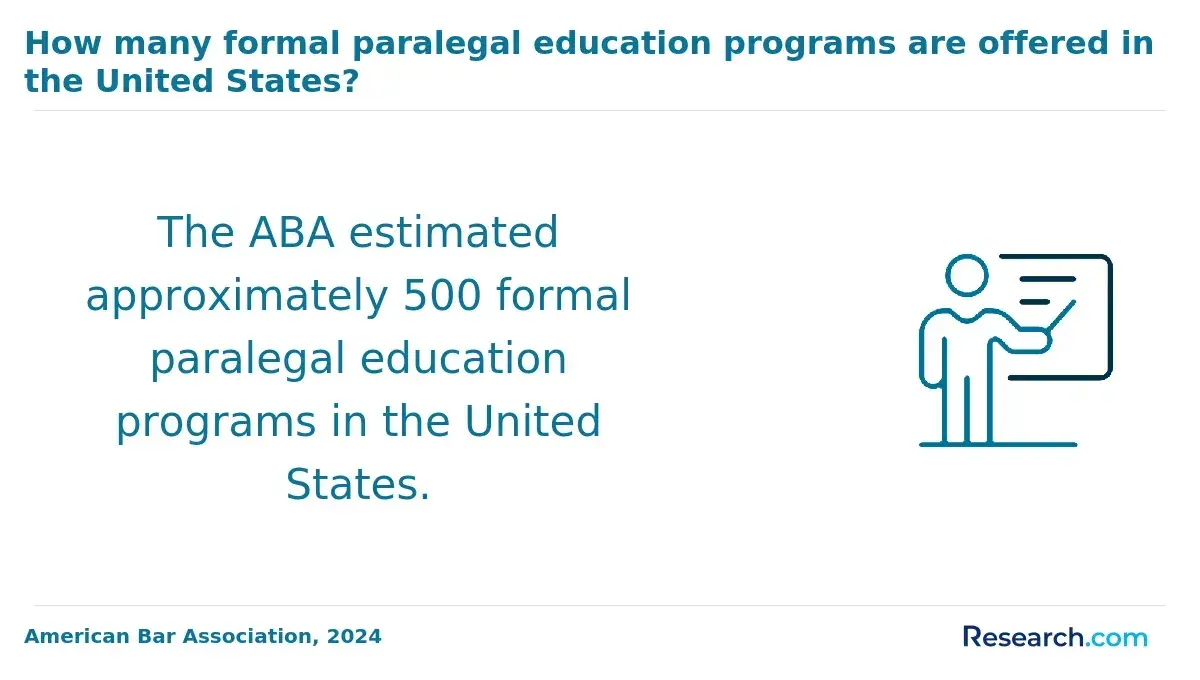
If price is decisive, use low-cost ABA-approved online paralegal programs as a comparison starting point, then check current total charges, approval status, and required live attendance directly with each program.
Do Evening Paralegal Certificate Programs Require ABA Approval or Accreditation?
No universal rule requires an evening paralegal certificate to have American Bar Association (ABA) approval. The ABA approves qualifying paralegal education programs; institutional accreditation is a separate assessment of a college or other educational institution. Neither status should be inferred from a school's general reputation or from another program it offers.
If ABA approval matters to an employer you are targeting, check the specific program in the ABA's current paralegal education program directory and confirm that the certificate you intend to take falls within the approved program.
Separately, verify institutional accreditation through the institution and its recognized accreditor. Ask how a noncredit certificate is administered if its relationship to the accredited institution is unclear.
ABA approval is not individual certification: the ABA does not make graduates "ABA-certified paralegals." Employer preferences and any relevant state rules can differ, so identify the requirements that apply where you intend to work before paying more or changing formats solely for an approval label.
What Careers and Salaries Can Evening Paralegal Graduates Expect?
An evening certificate may help an applicant demonstrate legal research, writing, and case-support skills for paralegal or legal assistant roles. Hiring still depends on the employer's education preferences, the applicant's experience, local opportunities, and the quality of their work. A certificate does not authorize independent legal practice or guarantee entry into a legal job.
The U.S. Bureau of Labor Statistics reports $62,890 in median annual pay in May 2025 for the combined occupation of paralegals and legal assistants.
It projects 0% growth for 2025-2035 but about 40,800 openings per year, including openings as workers leave the occupation. These are national occupation-wide figures, not starting salaries, evening-program graduate outcomes, or a forecast for one city.
For someone already working in an office, transferable skills may include document control, deadline tracking, and client communication; legal research and supervised legal drafting still require specific training.
If your goal is broader legal or regulatory knowledge rather than paralegal work, compare the time and cost of a certificate with legal studies master's degree formats and specializations. A non-JD legal studies degree serves a different purpose and does not itself qualify its holder to practice law.
How Can You Choose a Reputable Evening Paralegal Certificate Program?
Start with the constraint most likely to stop you from finishing: a conflicting live class, an unmanageable independent workload, or a required placement you cannot schedule. Then compare programs on the same evidence.
The following sequence helps separate a workable offer from an appealing but incomplete description:
- Get the actual timetable. Request upcoming course meeting times, time zones, exam arrangements, campus visits, attendance rules, and a term-by-term sequence.
- Test the workload. Ask for first-term syllabi and estimates of reading and assignment time, then reserve time for deadlines and travel in your own calendar.
- Check the credential. Confirm admission prerequisites, credit or noncredit status, internship rules, institutional accreditation, and ABA program approval if relevant to your goal.
- Compare full costs and outcomes. Obtain itemized charges and ask for clearly defined completion and career-support information without treating marketing claims as job guarantees.
A red flag is an inability to explain when required classes meet or whether a practicum can fit your work hours. Another is a claim that "online" means you can miss live sessions without checking the attendance policy.
Choose a fixed-time evening program when its meetings and coursework fit a repeatable weekly plan; favor a more flexible format when variable shifts make that plan unrealistic.
Other Things You Should Know About Law & Paralegal
Possibly. Ask whether the school enrolls students in your state and whether any required campus visit or placement can be completed where you live. A live class's published time zone also matters.
There is no single nationwide answer for every paralegal job. Admission, placement, employer screening, and any applicable state rules may differ. Ask about placement restrictions before enrolling if this concern applies to you.
Some employers offer tuition assistance, but eligibility and reimbursement rules are employer-specific. Check whether a noncredit certificate qualifies and whether approval is required before classes begin.
Coverage depends on the benefit and the specific program's approval status. Ask the school's veterans benefits office to confirm eligibility for the exact certificate before relying on those funds.
References
- Fact Sheet #71: Internship Programs Under The Fair Labor Standards Act | U.S. Department of Labor https://www.dol.gov/agencies/whd/fact-sheets/71-flsa-internships
- How To Get Certified | North Carolina State Bar https://www.ncbar.gov/paralegal-certification/how-to-get-certified/
- Academic Years, Academic Calendars, Payment Periods, and Disbursements | 2025-2026 Federal Student Aid Handbook https://fsapartners.ed.gov/knowledge-center/fsa-handbook/2025-2026/vol3/ch1-academic-years-academic-calendars-payment-periods-and-disbursements
- Standard Class Meeting Patterns | Special Sessions Administrative Support https://swsupport.umbc.edu/standard-course-timesdays/
- Credit Hours and Calculation - Office of Online Education | Wake Forest University https://oe.wfu.edu/program-development-2/credit-hours-and-calculation/
- Paralegal Studies (Graduate) Certificate Program | UCLA Extension https://www.uclaextension.edu/legal-programs/paralegal-studies/certificate/paralegal-studies
- Attendance and Participation in Online Classes - Blogs@Baruch https://blogs.baruch.cuny.edu/ctl/attendance-and-participation-in-online-courses/
- What's the Difference Between Asynchronous and Synchronous Learning? | Ohio State Online https://online.osu.edu/content-hub/blogs/whats-the-difference-between-asynchronous-and-synchronous-learning/
- Paralegal | UCI Division of Continuing Education https://ce.uci.edu/programs/law/paralegal
- Tuition and Fees | California State University Long Beach https://www.csulb.edu/student-records/tuition-and-fees


