2027 MLS Programs for Board Administration and Corporate Secretary Staff

Co-Founder and Chief Data Scientist
Board administration staff handle records, meeting processes, and governance deadlines where mistakes can have legal consequences. A Master of Legal Studies (MLS) may strengthen that work, but it is not automatically the best investment for someone who needs a specific skill or credential. This guide explains what to look for in an MLS program, how it compares with shorter options, and what its costs and career limits mean for corporate secretary staff. Use it to decide whether graduate legal study addresses a gap in your current or intended role.
Key Things You Should Know
- An MLS can help corporate secretary staff understand governance, corporate law, and compliance, but it is not required for most board administration roles and does not qualify graduates to practice law.
- Prioritize courses and assignments tied to board work - not a degree title alone - and compare the full cost with targeted training or employer-supported study.
- The Bureau of Labor Statistics reports $80,730 median annual pay for compliance officers in May 2025 and 4% projected growth for 2025-2035; those figures describe a broad occupation, not MLS graduates or corporate secretaries specifically.
What is an MLS degree for board administration and corporate secretary staff?
An MLS is a graduate legal-knowledge degree generally designed for people who do not plan to become attorneys. Schools may use related names, such as Master of Studies in Law (MSL) or Master of Jurisprudence. For board administration staff, its value lies in applying legal concepts to governance work: preparing meeting materials, maintaining corporate records, tracking approvals, and coordinating with directors, executives, and counsel.
An MLS does not itself authorize legal advice, create attorney-client privilege, or qualify someone for a bar examination. Corporate secretary staff can organize information and flag issues, while company counsel advises on legal interpretation. The degree also is not a standard hiring requirement for the occupation; relevant experience and knowledge of an employer's governance processes may matter more.
If the goal is an entry-level legal support role rather than graduate-level governance work, exploring online associate degrees for paralegal education may be a more appropriate starting point. Paralegal education and an MLS prepare students for different work, and neither is an attorney-qualifying degree.
What education and accreditation should corporate secretary staff look for?
Start with the work you want to perform. Staff who manage board calendars and records may benefit most from training in entity management, minutes, document control, and governance procedures. Staff moving into legal operations or compliance may need deeper study of corporate law, regulatory obligations, and legal research. An MLS is more compelling when that broader knowledge is needed across several responsibilities.
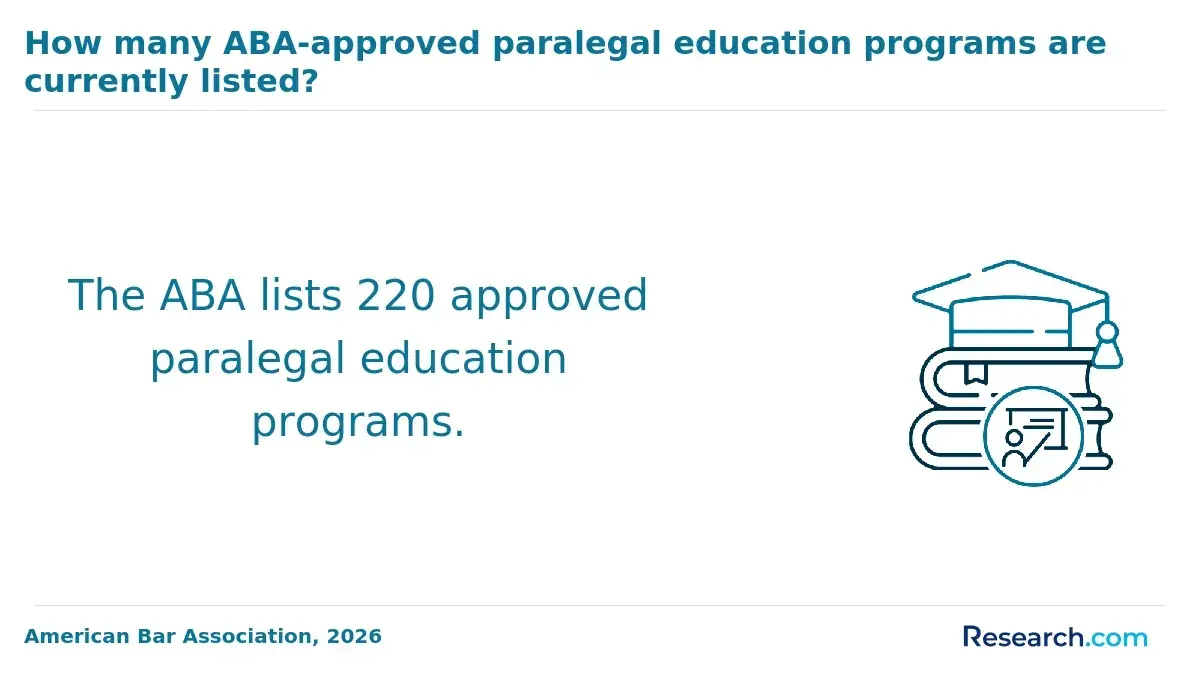
Check that the university holds institutional accreditation from an accreditor recognized by the U.S. Department of Education, then review the current academic catalog for the degree's requirements. Institutional accreditation does not mean a particular MLS curriculum has been approved for board administration. American Bar Association approval applies to qualifying paralegal education programs, not MLS degrees; it is separate from institutional accreditation and does not certify individual graduates.
Someone seeking legal assistant or paralegal work should compare that education route on its own terms, including cheapest accredited online paralegal degree programs. A lower advertised price alone does not establish that a program fits a governance career or has the same credit value, requirements, and total cost as an MLS.
How can an MLS degree prepare you for corporate governance careers?
An MLS can help experienced staff move from processing board materials to recognizing why an approval, disclosure, or record matters. That knowledge may improve how they identify questions for counsel, coordinate with compliance teams, and maintain defensible processes. It does not replace the judgment gained from working with a particular company's directors, governing documents, and legal advisers.
The routes below address different starting points. Comparing them can prevent an experienced professional from buying more education than a specific career goal requires.
| Route | Most useful when | Principal limitation |
| MLS or related non-JD master's | You need broad legal and regulatory knowledge for governance or compliance work. | Substantial tuition and study time; no attorney qualification or assured promotion. |
| Focused course or graduate certificate | You need training in a defined area, such as corporate law or compliance. | Less breadth; credits may not apply toward a later degree. |
| Employer training and governance experience | You need to learn company procedures, board systems, and reporting relationships. | Knowledge may be less portable if training is company-specific. |
| Paralegal education | You are pursuing legal support work under attorney supervision. | It is not a substitute for advanced governance study or attorney qualification. |
If you are building toward legal support work from undergraduate study, check online paralegal bachelor's transfer eligibility rather than assuming an MLS is the next step. A receiving school decides whether prior credits transfer, and a bachelor's pathway serves a different purpose from graduate legal study.
What do MLS programs teach about board operations and corporate law?
Relevant coursework may cover business organizations, governance, contracts, securities regulation, ethics, risk, and compliance. What matters is whether students use those subjects to analyze tasks corporate secretary staff actually face: documenting decisions, identifying who has authority to approve an action, maintaining entity records, and escalating a disclosure question to counsel.
Look beyond course titles. A program with case-based assignments involving minutes, resolutions, organizational documents, or governance policies may offer more direct practice than one that merely mentions corporate law. Check whether a claimed governance concentration is formally recorded on the degree, an embedded certificate, a set of electives, or simply several available courses; those are not interchangeable.
Board portals, automated workflows, and AI-assisted drafting can also affect this work. Ask whether students practice reviewing outputs for accuracy, access controls, and confidentiality rather than assuming that a technology reference in a syllabus means hands-on training. Professionals whose duties center more broadly on transactions or regulation can also compare best business law degrees for working adults when evaluating curriculum fit.
Are online MLS programs effective for working corporate professionals?
Online study can work well when assignments connect legal concepts to workplace decisions and instructors provide substantive feedback. Its practical flexibility depends on the program's schedule, not the word "online." A course may have live meetings, fixed deadlines, group projects, timed exams, or campus requirements that conflict with board meeting cycles.
Before enrolling, request the current course sequence and a sample term schedule. Confirm whether required governance electives are offered when you need them, whether sessions are synchronous, and whether a capstone or other applied requirement can use an appropriate workplace problem. Do not assume your employer will permit confidential board documents to be used in coursework; ask how the school handles anonymized or simulated materials.
What are the admission requirements for an MLS program?
MLS programs generally target applicants who already hold a bachelor's degree, but each school sets its own rules for prior coursework, transcripts, recommendations, statements, and professional experience. Some may seek a résumé or writing sample. Read the current admissions page rather than treating a school's description of its typical students as a requirement.
A law degree is not ordinarily the point of entry into a non-JD legal studies program. If you have governance experience but no legal background, check whether introductory courses are built into the curriculum and whether prerequisites affect your schedule. If you hope to apply previous graduate coursework, obtain the school's written transfer-credit policy; accreditation at both institutions does not guarantee acceptance of those credits.
How long do MLS programs take and what do they cost?
Completion time depends on required credits, course availability, and whether you study full time or part time. A faster advertised timeline may require a workload that is difficult to sustain during annual meeting preparation or other peak governance periods. Compare the sequence of required courses, not just the shortest completion time in a program description.
There is no reliable single MLS price: schools use different credit requirements and tuition rates. For each program, request a current estimate covering tuition, mandatory fees, books, technology, travel for any campus visits, and other required expenses. Compare that total with employer tuition assistance and the income or personal time you would give up. Federal aid eligibility depends on the institution, program, and student; confirm it with the school's financial aid office rather than assuming every graduate or certificate option qualifies.
If time is the binding constraint, compare shorter online master's degrees in business law against MLS options - but verify that the shorter route includes the governance content you need. A focused course or certificate may cost less in time and money if your goal is one defined skill, though its credits may not transfer into a later degree.
What jobs can you get with an MLS in board administration?
Possible paths include board administrator, governance coordinator, corporate secretary department staff member, entity management specialist, legal operations professional, and compliance officer. Titles differ across employers. Board-focused roles may involve agendas, minutes, resolutions, director materials, and records; compliance roles may emphasize monitoring obligations and documenting controls.
An MLS can support an application, especially when paired with governance or legal operations experience, but it does not confer a job title or qualify someone for every role. Corporate secretary appointments and delegated authority depend on the organization and applicable law. For someone new to the field, an administrative, legal support, or compliance coordination position may be a more realistic entry route than a senior corporate secretary role.
What salaries and job outlook can corporate secretary staff expect?
The Bureau of Labor Statistics does not provide a single salary or employment projection specifically for corporate secretary staff. Its compliance officer category offers one relevant - but broader - benchmark: median annual pay was $80,730 in May 2025, with 4% projected employment growth for 2025-2035. Those figures include compliance jobs outside board administration and do not measure the earnings of MLS graduates.
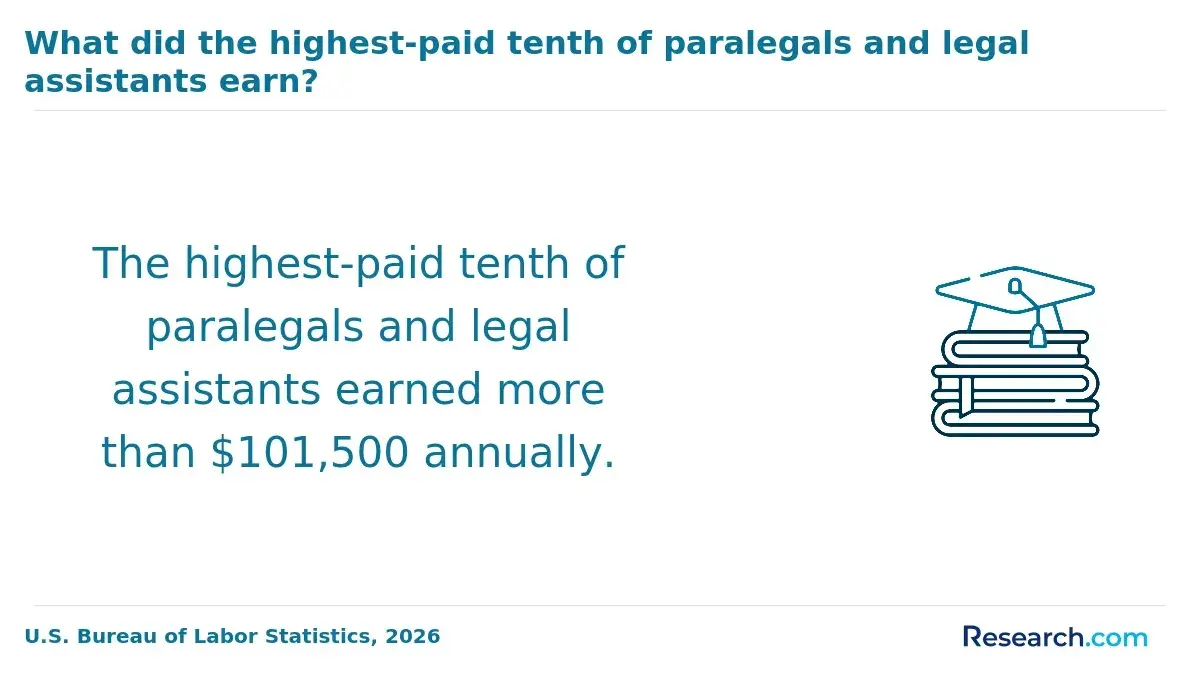
Legal support is another possible comparison for staff whose duties are closer to attorney-supervised document work. BLS reports median annual pay of $62,890 for paralegals and legal assistants in May 2025 and 0% projected growth for 2025-2035, while projecting about 40,800 openings per year. Neither occupation is a substitute for researching salaries for the precise role, industry, location, and experience level you are targeting. Do not use either median as a projected return on MLS tuition.
Do corporate secretary professionals need licenses or certifications?
There is no general U.S. attorney-style license that an MLS graduate must obtain to perform board administration work. Employers may prefer governance experience or particular training, and the authority of a corporate secretary or other officer depends on applicable law and the organization's governing documents. An MLS is an academic degree, not a professional license or certification.
Optional credentials should match the work you want to do. The Society of Corporate Compliance and Ethics offers the Certified Compliance & Ethics Professional credential for qualifying compliance practitioners; applicants should check its current eligibility and examination rules. NALA's Certified Paralegal credential addresses paralegal practice instead and is not a standard requirement for corporate secretary staff. A school-issued certificate shows completion of a course or program; it is not automatically the same as certification granted by a professional body.
Before paying for either route, compare job postings for your target role, ask your employer which skills it values, and check the credential provider's current rules. Choose an MLS when you need sustained, broad legal study; choose focused training when the gap is narrower.
Other Things You Should Know About Law & Paralegal
They can administer a retention schedule, but they should not set one alone. Applicable law, the company's policies, litigation holds, and counsel's advice can affect how long records must be preserved.
Not without authorization. Board materials may contain confidential or privileged information. Ask the employer and instructor whether an anonymized document or simulated scenario is acceptable.
Some skills do, including meeting coordination and recordkeeping. Corporate roles may involve different ownership structures, disclosure obligations, and governing documents, so identify those gaps before choosing coursework.
Only under the organization's approved policies and review process. AI output may omit qualifications, misstate decisions, or expose confidential information; an authorized person should verify the record before it is circulated or approved.
References
- MLS vs. JD: Which Legal Path Is Right for Non-Lawyers? | Goodwin College of Professional Studies https://drexel.edu/law/news/legal-studies-blog/mls-vs-jd-which-legal-path-is-right-for-non-lawyers/
- Compliance and Risk Management | William & Mary Law School https://online.law.wm.edu/master-of-legal-studies/concentrations/compliance-risk-management
- How Long Does It Take to Get a Master's Degree? | snhu.edu https://www.snhu.edu/about-us/newsroom/education/how-long-does-it-take-to-get-a-masters-degree
- Corporate Formation and Governance | wfu.edu https://pycost.law.wfu.edu/planning-guide/corporate-formation-governance/
- What Can You Do With a Master of Legal Studies? | WashU Law https://online.law.washu.edu/articles/what-can-you-do-with-master-of-legal-studies/
- Corporate compliance concentration - Master of Studies in Law https://law.wayne.edu/msl/program/concentrations/corporate-compliance
- Typical Law School Requirements & Prerequisites | Ohio Northern University https://law.onu.edu/news/law-school-admissions-101-typical-law-school-requirements-prerequisites
- Corporate Governance Online Program at Columbia Business School Executive Education https://online1.gsb.columbia.edu/corporate-governance
- Part-time MBA - Online/Modular Option - NYU Stern https://www.stern.nyu.edu/programs-admissions/mba-programs/part-time-mba-manhattan/academics/online-modular-option