
2027 MLS Programs for IT Managers With Privacy and Contract Responsibilities

Co-Founder and Chief Data Scientist
IT managers often help select vendors, protect customer data, and carry out contract obligations without being the organization's lawyers. A Master of Legal Studies (MLS) can build the legal fluency behind those decisions, but it also takes time and money that targeted training might save.
This guide explains which MLS concentrations and courses are useful, how to assess online programs and costs, and when experience or a narrower credential is likely to serve you better.
Key Things You Should Know
- An MLS is a non-JD degree for legal knowledge, not a qualification to practice law; IT managers generally do not need one to handle privacy operations or vendor contracts.
- Prioritize courses that connect privacy rules and cybersecurity obligations to vendor agreements, incident response, and your industry; a concentration name alone does not establish that coverage.
- The Bureau of Labor Statistics reports $80,730 median annual pay for compliance officers in May 2025 and 4% projected growth for 2025-2035. Those figures describe a broad occupation, not the payoff from an MLS.
What is an MLS degree for IT managers handling privacy and contracts?
An MLS is a graduate legal studies degree designed primarily for people who need to understand law in their work but do not intend to become attorneys. Schools may use names such as Master of Studies in Law (MSL) or Master of Jurisprudence for related non-JD degrees. The credential name matters less than the courses, learning outcomes, and schedule.
For an IT manager, useful legal knowledge might mean recognizing when a vendor agreement creates a data-security obligation, documenting how a privacy requirement affects system design, or knowing when to bring a question to counsel. An MLS can help a manager work more effectively with legal, procurement, security, and compliance teams. It does not authorize the manager to give legal advice, represent clients, or practice law.
Do IT managers need an MLS degree to manage privacy and contracts?
Usually, no. Employers can assign IT managers responsibility for implementing security controls, overseeing vendors, and following approved contract terms without requiring a legal studies degree. Counsel should handle legal interpretation and negotiation where an attorney's judgment is needed; the manager's role is to identify operational consequences and escalate unresolved legal questions.
An MLS becomes more plausible when your job repeatedly crosses legal and technical boundaries - for example, when you coordinate privacy governance across departments or translate negotiated obligations into procedures. If your immediate gap is narrower, compare the degree with employer training, a graduate certificate, or a professional privacy or security certification. Certifications have their own eligibility and renewal rules, and none is automatically equivalent to a graduate degree.
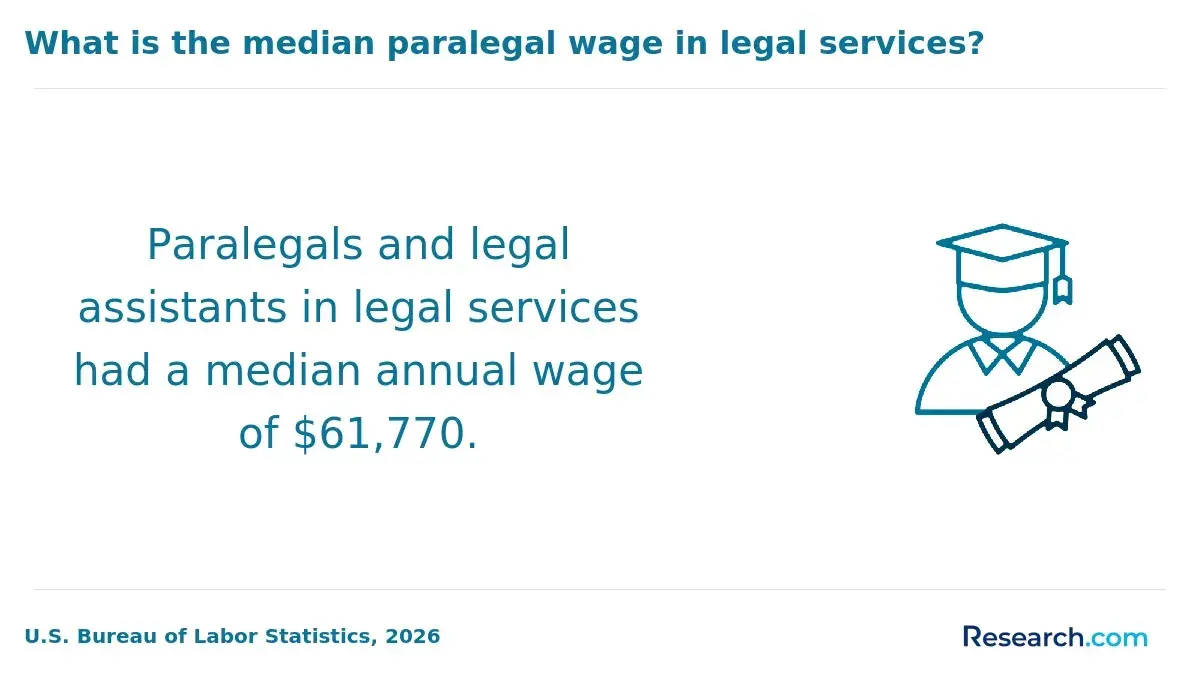
A paralegal program serves a different goal: preparation for legal-support work rather than leadership of IT operations. If that is the career change you want, a guide to low-cost accredited paralegal degrees is a more relevant comparison than assuming an MLS is necessary.
What are the best MLS program concentrations for IT managers?
Privacy, cybersecurity, and technology law are generally the strongest starting points, but the best choice depends on the work you actually do. The table maps common concentration labels to responsibilities; schools define these labels differently, so check the required courses and available electives.
| Coursework focus | Most useful when your work involves | What to check in the curriculum |
| Privacy or data protection | Data inventories, retention, access requests, or privacy governance | Coverage of applicable U.S. privacy rules and operational decision-making |
| Cybersecurity or technology law | Security governance, incident coordination, or technology procurement | Courses connecting incidents and security practices to legal obligations |
| Business law or contracts | Vendor selection, service agreements, or procurement | Actual contract drafting or analysis assignments, not just a survey course |
| Health law or another industry focus | Systems in a regulated sector | Whether the courses address rules applicable to your employer |
A formal concentration usually has defined requirements. A few electives, or a certificate that can be completed alongside the degree, may offer similar relevant coursework but is not the same credential. Managers who spend more time on procurement than incident response can also compare business law study choices for employed adults before committing to a technology-law track.
What do MLS programs teach about privacy, cybersecurity, and contract law?
Relevant MLS courses may cover legal research, statutory interpretation, privacy regulation, cybersecurity obligations, contract formation, and risk allocation. Their practical value is whether they help you connect a rule or agreement to an IT decision - not whether they turn you into the organization's legal reviewer.
For example, a useful contract assignment might ask students to identify how a service-level commitment, audit right, breach-notification provision, or limitation of liability affects a proposed vendor relationship. Privacy coursework might examine data collection, retention, and incident-response decisions. Coverage varies by program and by industry: a health-care manager, for instance, should check whether coursework addresses requirements relevant to covered entities and business associates rather than assuming a general privacy course does.
Read syllabi or course descriptions for substantive assignments. A course that mentions artificial intelligence, legal research software, or cyber incidents does not necessarily provide hands-on access, practice, or preparation for an external certification.
Are online MLS programs suitable for working IT managers?
They can be, especially if the program lets you study around incident rotations, procurement deadlines, and other unpredictable work. But online does not necessarily mean asynchronous or self-paced. Live classes, fixed discussion deadlines, group projects, exams, and occasional campus visits can make two online programs quite different in practice.
Before applying, ask for the current course schedule and whether required privacy and contract courses are offered in the terms you expect to enroll. Check whether you can reduce your course load during a busy period without losing your place in a sequence. If speed is important, compare fastest online master's in legal studies programs against their actual weekly demands; the shortest advertised timeline may not be workable alongside a full-time management role.
What are the admission requirements for MLS programs?
MLS programs generally seek applicants with a bachelor's degree, but each school sets its own rules for transcripts, minimum academic standing, recommendations, essays, and test scores. A JD or prior legal education is not normally the point of entry for a non-JD legal studies degree. IT management experience can help explain your goals, but it does not replace a published requirement.
If application effort is a concern, compare programs' current instructions rather than assuming every school requires the same materials. This guide to applying to legal studies programs with no admissions essay may help narrow the search; confirm the rule with the school for your intended entry term. Ask admissions whether prerequisites apply to a concentration and whether previously completed graduate credits can be considered. The receiving institution decides if and how transfer credit counts.
How long do MLS programs take, and how much do they cost?
Completion time depends on required credits, course sequencing, and whether you attend full time or part time. A working manager should compare a realistic course load with the school's maximum time to finish - not rely solely on its fastest advertised path. A required course offered infrequently can extend the timeline even when the remaining credits look manageable.
For cost, request a 2026-27 estimate for your intended enrollment pattern. Include tuition, mandatory and technology fees, books or research-platform charges, and any required travel. Compare total expected cost on the same basis across schools; a per-credit price is not a total-program price. Then weigh that expense and study time against a shorter course or certificate that may address your immediate skills gap.
Ask the financial aid office whether the specific program qualifies for federal graduate aid and what borrowing would mean for your budget. Do not assume that an embedded or stand-alone certificate has the same aid eligibility as the degree.
What careers can IT managers pursue with an MLS degree?
An MLS may support a move from IT management into privacy operations, technology compliance, third-party risk, security governance, or contract and procurement oversight. The most credible transition usually builds on your existing technical and managerial experience. Employers may still expect sector knowledge, direct privacy work, contract experience, or a role-specific credential.
Consider the work behind the title: a privacy program manager may coordinate data-handling procedures; a third-party risk manager may assess whether vendor practices meet contractual requirements; a compliance manager may monitor controls and escalate gaps. These are not attorney roles merely because they involve legal obligations, and an MLS alone does not qualify someone for every opening.
If you want to work within a legal team on legal-support tasks rather than lead technical operations, compare our list of online paralegal certificate programs. Completing a certificate is education, not automatic professional certification, and paralegals work under appropriate attorney supervision rather than independently practicing law.
How much can MLS graduates earn in privacy, contracts, and compliance roles?
There is no single reliable salary figure for "MLS graduates" in these roles. Pay depends on the job, location, industry, experience, and scope of responsibility; an employer may not pay more simply because a manager earned the degree.
As a broad U.S. benchmark, the Bureau of Labor Statistics reports $80,730 median annual pay for compliance officers in May 2025, with 4% projected growth, 2025-2035 and about 32,700 projected openings per year. Compliance officers encompass many specialties, so those figures are not a salary estimate or job forecast specifically for privacy managers, IT contract managers, or MLS holders. For a personal return-on-investment estimate, compare postings for roles you could realistically pursue with your current experience against the degree's full cost and time commitment.
How can you choose an accredited MLS program for IT managers?
Start by confirming that the university holds recognized institutional accreditation. Then assess the MLS itself for relevance: institutional accreditation does not establish that its privacy, security, or contract courses fit your work. Likewise, a law school's approval to offer a JD should not be treated as a separate endorsement of its non-JD MLS.
Use the same checks for each program on your shortlist. They expose differences that a concentration name or tuition headline can hide:
- Confirm the exact degree and whether the relevant concentration is formally recognized or consists of optional electives.
- Review required courses and recent syllabi for privacy, cybersecurity, vendor contracts, and your industry's rules.
- Ask which classes are live, whether campus attendance is required, and when essential courses are offered.
- Request a complete cost estimate and clarify aid eligibility, employer reimbursement conditions, and transfer-credit decisions.
- Compare the degree with a narrower credential or employer training tied to the responsibilities you want next.
A strong choice closes a specific gap you can name. If the program cannot show relevant coursework at a schedule and cost you can sustain, postponing the MLS is a reasonable decision.
Other Things You Should Know About Law & Paralegal
Do not count on it. A JD program decides whether it will accept any prior coursework and how that credit applies. Ask the JD admissions office before enrolling in an MLS for that purpose.
Only if your employer permits it and you can meet confidentiality and data-handling requirements. Ask the instructor whether a public, fictional, or properly approved example will satisfy the assignment.
That depends on its tuition-assistance policy. Check annual limits, grade requirements, approved-program rules, and whether you must repay assistance if you leave.
No. Capstones, projects, exams, and course-only paths vary by school. Confirm the graduation requirement before enrolling, especially if it involves a workplace project or a scheduled presentation.
References
- International data transfers - European Data Protection Board https://www.edpb.europa.eu/sme/be-compliant/international-data-transfers_en
- Frequently Asked Questions (FAQs) - California Privacy Protection Agency (CPPA) https://cppa.ca.gov/faq.html
- Cost of Attendance (Budget) | 2025-2026 Federal Student Aid Handbook https://fsapartners.ed.gov/knowledge-center/fsa-handbook/2025-2026/vol3/ch2-cost-attendance-budget
- Types of Financial Aid: Grants, Work-Study, and Loans | studentaid.gov https://studentaid.gov/understand-aid/types
- Certificate in Privacy Law: School of Law | Loyola University Chicago https://www.luc.edu/law/academics/certificates/certificateinprivacylaw/
- Earn an MSL With a Cybersecurity Law Focus | George Washington University School of Law https://msl-law.gwu.edu/articles/msl-cybersecurity-law-focus-bridge-law-and-tech/
- Master of Legal Studies in Digital Law & Technology online | Northern Kentucky University Online https://onlinedegrees.nku.edu/programs/business/master-legal-studies-digital-law-and-technology/
- Master of Legal Studies (MLS) vs. JD: Which Is Right for You? | Wake Forest MLS https://mls.law.wfu.edu/articles/mls-vs-jd-which-is-right-for-you/
- Master of Legal Studies (MLS) vs. JD: What's the Difference? | SMU Online Master of Legal Studies https://onlinemasterlegalstudies.smu.edu/articles/mls-vs-jd/
- MLS vs JD: Which Legal Path Is Right for You? | wsulaw.edu https://www.wsulaw.edu/news/mls-vs-jd-which-legal-path-is-right-for-you/


