2027 Paralegal Training for Bank Operations Staff Interested in Financial Legal Support

Co-Founder and Chief Data Scientist
Bank operations experience can be valuable in a legal department, but it does not automatically prepare you to research law, organize evidence, or support attorneys. If you work with accounts, loans, payments, or regulatory processes and want to move into financial legal support, the right training depends on your target role - not simply the longest credential available. This guide explains which education routes build relevant skills, how to assess programs around a full-time job, and what to verify before spending money or changing careers.
Key Things You Should Know
- For attorney-supervised legal work, prioritize a paralegal program with legal research, writing, and practical assignments; banking experience alone does not replace those skills.
- For a compliance-focused move, compare paralegal study with targeted regulatory training before committing to a degree. The median pay for compliance officers was $80,730 in May 2025, but that broad figure does not predict a banking-specific salary.
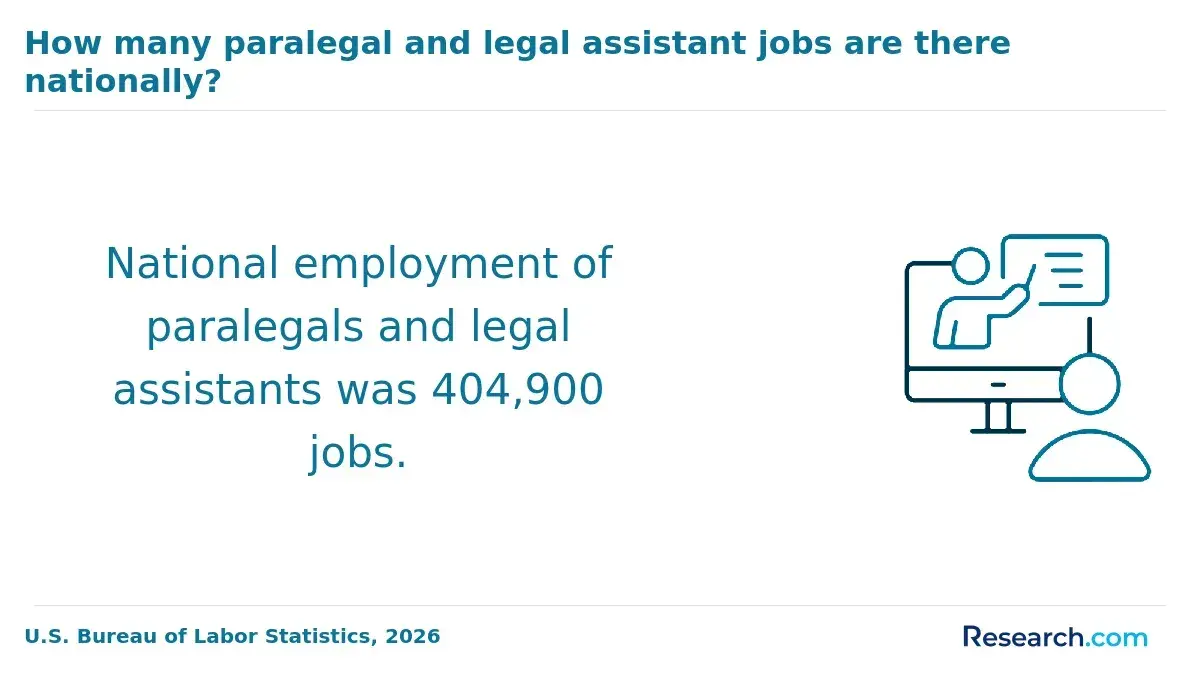
- Compare the full 2026-27 cost and schedule before enrolling. Paralegals and legal assistants had median pay of $62,890 in May 2025, with 0% projected growth for 2025-2035 but about 40,800 projected openings annually.
What Is Paralegal Training for Bank Operations Staff?
Paralegal training teaches people to support legal work through research, writing, document management, fact investigation, and procedural tasks. For a bank operations employee, the most relevant applications may include organizing loan or account records for counsel, tracking contract terms, preparing research summaries, and helping manage litigation or regulatory-response documents.
The distinction is legal support versus independent legal practice. A paralegal may perform substantive work under attorney supervision but cannot act as a bank's attorney or independently give legal advice. Likewise, a paralegal certificate documents completion of an educational program; it is not the same as professional certification awarded by a credentialing organization or state system.
Start by identifying the work you want. If it involves preparing legal research and case materials for attorneys, paralegal education is a direct route. If it centers on monitoring controls or implementing bank policy, compliance training or employer-sponsored development may be more targeted.
Why Should Bank Operations Staff Pursue Financial Legal Support Training?
Operations staff often understand how transactions move through a bank, where records are kept, and why accurate documentation matters. Legal training adds a different set of skills: locating applicable authority, distinguishing facts from legal conclusions, writing for attorney review, and maintaining defensible document workflows. The combination can be useful when legal teams need someone who understands both a banking process and the records it produces.
Training is most worthwhile when a prospective role actually calls for those added skills. Ask a legal or compliance manager which tasks are difficult to staff and which credentials appear in internal postings. A shorter course may be enough for a process-heavy role; an attorney-supervised paralegal position may call for a broader legal curriculum and a writing portfolio.
A non-JD legal studies master's degree is another option for experienced professionals seeking deeper regulatory knowledge, but it generally requires more time and expense than targeted paralegal training and does not qualify a graduate to practice law. If that is your goal, use matching legal studies master's specializations to career goals to distinguish a relevant concentration from electives that happen to cover finance.
What Education Do Bank Operations Staff Need to Become Paralegals?
There is no single nationwide degree requirement for every paralegal job. Employers set many hiring standards, while state rules and particular tasks can impose additional restrictions. The right starting point depends chiefly on your existing education and whether you want a paralegal role or broader advancement in compliance.
The routes below differ in prerequisites and depth. Compare them against actual job postings before choosing a program.
| Route | Potential fit | Key limitation to check |
| Paralegal certificate | An employee who meets the program's admission prerequisites and needs focused legal skills | Certificates vary: some require a prior degree, while others do not; professional certification is separate |
| Paralegal associate degree | Someone seeking legal coursework alongside general education | Previous college credit may not satisfy every program requirement |
| Paralegal bachelor's degree | Someone seeking a four-year credential or substantial undergraduate study | It may take more time and money than a target job requires |
| Non-JD legal studies master's degree | A degree holder seeking advanced legal or regulatory knowledge | It is not attorney training and may be less focused on day-to-day paralegal tasks |
If you already hold a degree, examine post-degree certificates before paying for another full degree. If you have substantial prior college coursework, a guide to transferring into a paralegal bachelor's program can help you frame questions for admissions staff. Only the receiving institution can determine which credits apply to its credential.
Which Paralegal Programs Offer Financial Services and Banking Coursework?
Look for course content, not a banking-themed program label. Corporate or business law, contracts, commercial transactions, real estate, bankruptcy, litigation, and legal research can each support different bank legal-team tasks. Privacy or regulatory coursework may be valuable, but a course title alone does not show how deeply it covers financial services.
Ask for the current catalog and recent course descriptions. Check whether relevant courses are required, reliably offered as electives, or merely listed as possible options. Then compare assignments: analyzing a contract clause, drafting a research memorandum, and organizing a document production demonstrate different skills from taking a survey course.
There is no need to select a program solely because it advertises a banking specialization. A strong general paralegal curriculum paired with bank experience may be more useful than a narrow elective with little practical work. Conversely, if your goal is regulatory policy rather than attorney-supervised support, compare compliance-oriented study before enrolling in a paralegal program.
Are Online or Campus-Based Paralegal Programs Better for Working Professionals?
Neither format is automatically better. Online study can eliminate commuting, while campus classes may provide a predictable routine and easier face-to-face practice. What matters to a bank employee is whether required activities fit work hours and whether the program provides useful feedback on research and writing.
Online does not necessarily mean self-paced. Before enrolling, confirm whether classes meet live, exams occur at fixed times, courses follow a cohort sequence, or campus visits are required. Ask how students obtain research resources and instructor feedback. If there is an internship, verify who arranges it and whether your current employment could qualify; do not assume that bank work can substitute for a legal placement.
If finishing quickly matters, compare accelerated online paralegal training options against your actual weekly availability. A compressed calendar can reduce elapsed time without reducing the reading, writing, or scheduling demands.
What Accreditation Should Financial Legal Support Programs Have?
Check institutional accreditation first. It applies to the college or other accredited institution and matters when assessing educational oversight, credit transfer, and potential financial-aid eligibility. Confirm the institution's current status with its recognized accreditor; do not assume that accreditation makes credits transferable or that every certificate at the institution qualifies for federal aid.
The American Bar Association (ABA) separately approves qualifying paralegal education programs. ABA approval is not institutional accreditation, and the ABA does not certify individual graduates. If approval matters to you or a prospective employer, check the current ABA paralegal program directory for the exact program - not just the school's name - and confirm that the credential and delivery arrangement you plan to use are covered by the program's published information.
ABA approval can be a useful selection factor, but lack of approval does not by itself establish that a program is unsuitable. Compare curriculum, practical work, institutional status, and the requirements in your target job postings rather than relying on one label.
What Are the Admission Requirements for Paralegal Training Programs?
Requirements depend on the credential and institution. An entry-level program may accept applicants with a high school credential, while a post-degree certificate may require an associate or bachelor's degree. Programs can also require transcripts, minimum academic standing, or specific general education coursework. Treat a school's stated prerequisite as a requirement, not a recommendation.
Before applying, request the current admission criteria for the specific paralegal program, not just the college. Ask whether your completed coursework satisfies prerequisites and whether a provisional admission offer would delay access to legal courses. Bank experience may strengthen an application, but it should not be assumed to waive academic requirements.
If you plan to use prior college credit, obtain a written transfer evaluation where possible. Acceptance for admission and acceptance of credits toward graduation are separate decisions, and the receiving institution determines how previous coursework applies.
How Long Do Paralegal Programs Take and What Do They Cost?
Completion time varies with credential length, prerequisite coursework, course sequencing, and how many classes you can take while employed. An accelerated certificate may finish sooner than an associate or bachelor's degree, but a part-time schedule or a required placement can extend any route. Request a course-by-course plan based on your transcript and intended enrollment pace.
For a meaningful 2026-27 cost comparison, ask each school for tuition and mandatory fees, books, research-platform charges, technology needs, travel, and internship-related expenses. Compare the cost to reach the credential - not one program's per-credit price against another's total advertised price. Factor in time away from work and any employer tuition assistance.
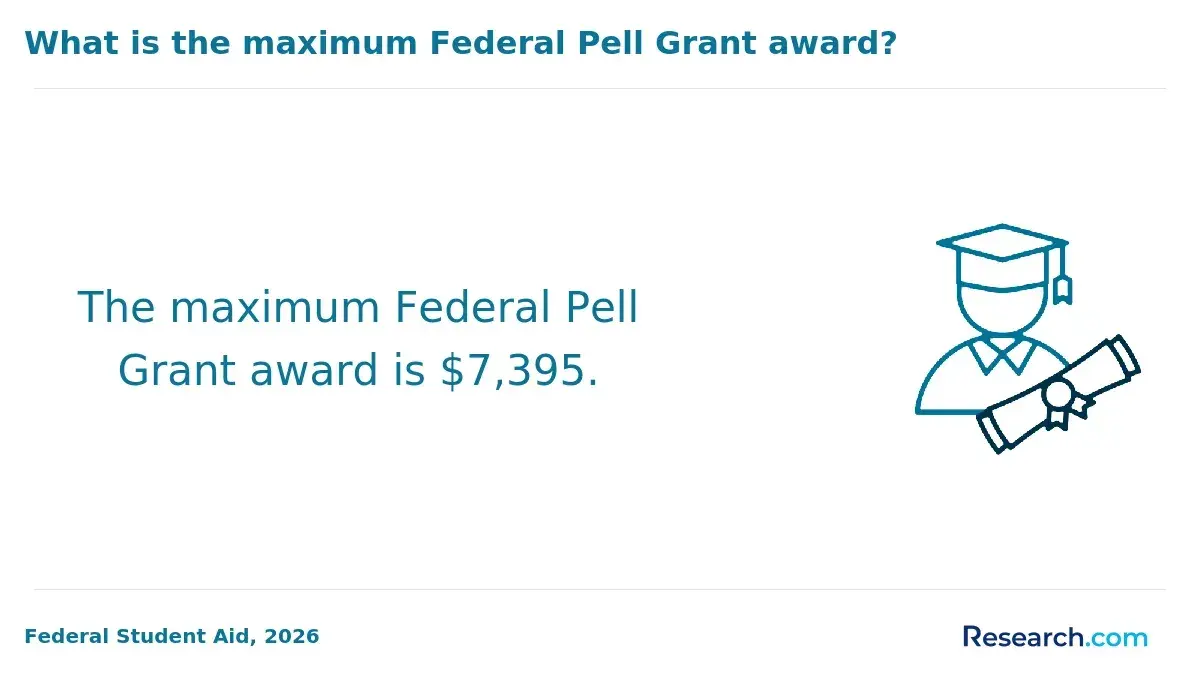
A payment schedule changes when tuition is due, not necessarily its total cost. If cash flow is the obstacle, investigate paralegal programs offering tuition payment arrangements, then check fees and refund terms directly. Also verify whether the specific program is eligible for federal financial aid; institutional accreditation alone does not establish eligibility for a particular credit-bearing or noncredit certificate.
Which Financial Legal Support Roles Can Paralegal Graduates Pursue?
Job titles overlap across banks, law firms, and service providers. The following distinctions can help you search for work that uses both your operations experience and your new training.
| Role to investigate | Work that may draw on banking experience | Skill to develop |
| In-house legal assistant or paralegal | Organizing records, contracts, and attorney requests | Legal research, writing, and supervised document preparation |
| Financial-services litigation paralegal | Tracing transactions and locating account or loan records | Discovery procedures, evidence organization, and confidentiality |
| Contracts or corporate legal-support specialist | Tracking agreements, approvals, and obligations | Contract review workflows and precise recordkeeping |
| Compliance analyst or officer | Reviewing processes against internal requirements | Regulatory analysis and control documentation; paralegal training may be optional |
Read postings carefully: "legal support" does not always mean a paralegal classification, and compliance is a distinct occupation. For a transition within your bank, ask whether the legal team values an internal applicant's systems knowledge and what evidence of legal writing it expects. Advancement may depend as much on supervised experience and demonstrated judgment as on another credential.
What Are Paralegal Salaries and Job Outlook in Financial Services?
The Bureau of Labor Statistics reports median annual pay of $62,890 in May 2025 for paralegals and legal assistants. It projects 0% growth for 2025-2035, with about 40,800 openings per year despite little or no net employment growth. These are national occupational figures, not pay or hiring forecasts specifically for bank legal departments.
For comparison, compliance officers had median annual pay of $80,730 in May 2025 and 4% projected growth for 2025-2035. That does not mean a paralegal credential leads to a compliance officer position or that switching roles will raise your pay. The two occupations have different responsibilities, and compensation depends on employer, location, experience, and duties.
Use those figures as context for the education decision, not as a return-on-investment promise. Compare local postings and internal pay ranges with the full training cost. If you are considering graduate study for a higher-level regulatory goal, weighing tuition against legal studies master's career potential can help frame the comparison - but confirm that target employers actually value the degree before taking on its cost.
Other Things You Should Know About Law & Paralegal
Do not assume removing names makes a record safe to share. Follow your employer's confidentiality and information-security policies, and use instructor-provided or otherwise authorized materials instead.
No. A notary commission authorizes specific notarial acts under state law; it does not establish paralegal training or authorize legal advice.
Possibly. Employer policies and applicable law vary. Read the reimbursement agreement before enrolling, especially its eligibility, grade, continued-employment, and repayment terms.
Describe the process and your contribution without identifying customers or disclosing protected details. For example, explain that you reconciled records for internal reviews or maintained documentation under retention procedures, if those statements accurately reflect your work.
References
- Anti-Money Laundering / Countering The Financing Of Terrorism (AML/CFT) | FDIC.gov https://www.fdic.gov/banker-resource-center/anti-money-laundering-countering-financing-terrorism-amlcft
- BSA/AML manual introduction | ffiec.gov https://bsaaml.ffiec.gov/manual/Introduction/01
- Online Certified Paralegal Training | Oklahoma City Community College https://careertraining.occc.edu/training-programs/certified-paralegal/
- Online Certified Paralegal Training | The University of Memphis https://careertraining.memphis.edu/training-programs/certified-paralegal/
- What Does a Paralegal Do? Key Roles & Responsibilities | American Public University https://www.apu.apus.edu/area-of-study/security-and-global-studies/resources/what-does-a-paralegal-do/
- Online Paralegal Certification Training | PACE | SFA https://www.sfasu.edu/pace/catalog/act/paralegal-certification
- Online Certified Paralegal from University of Houston https://careertraining.uh.edu/training-programs/certified-paralegal/
- Working for a Finance or Banking Regulator: Skills, Career Paths, and Beyond | University of Miami School of Law https://news.miami.edu/law/stories/2026/03/working-for-a-finance-or-banking-regulator-skills-career-paths-and-beyond.html
- Paralegal Course - Oklahoma State University https://osuokc.edu/community-outreach/training-development-center/career-training/paralegal-course
- Paralegal and Legal Assistant Job Description | bryantstratton.edu https://www.bryantstratton.edu/careers/paralegal-and-legal-assistant/