2027 MLS Programs for Data Protection and Privacy Operations Professionals

Co-Founder and Chief Data Scientist
If your work involves handling personal information, an MLS can help you understand the legal rules behind privacy policies and turn them into workable procedures. But a graduate degree may be more education than you need for your next role.
This guide is for compliance, security, legal operations, and data governance professionals weighing that investment. It explains what to look for in a privacy-focused program, how it compares with shorter credentials, and which questions to settle before you enroll.
Key Things You Should Know
- A privacy-focused Master of Legal Studies (MLS) is a non-JD degree for applying legal knowledge at work; it does not qualify you to practice law or replace privacy operations experience.
- Prioritize courses and projects in privacy law, governance, incident response, and vendor oversight over a program's concentration label alone.
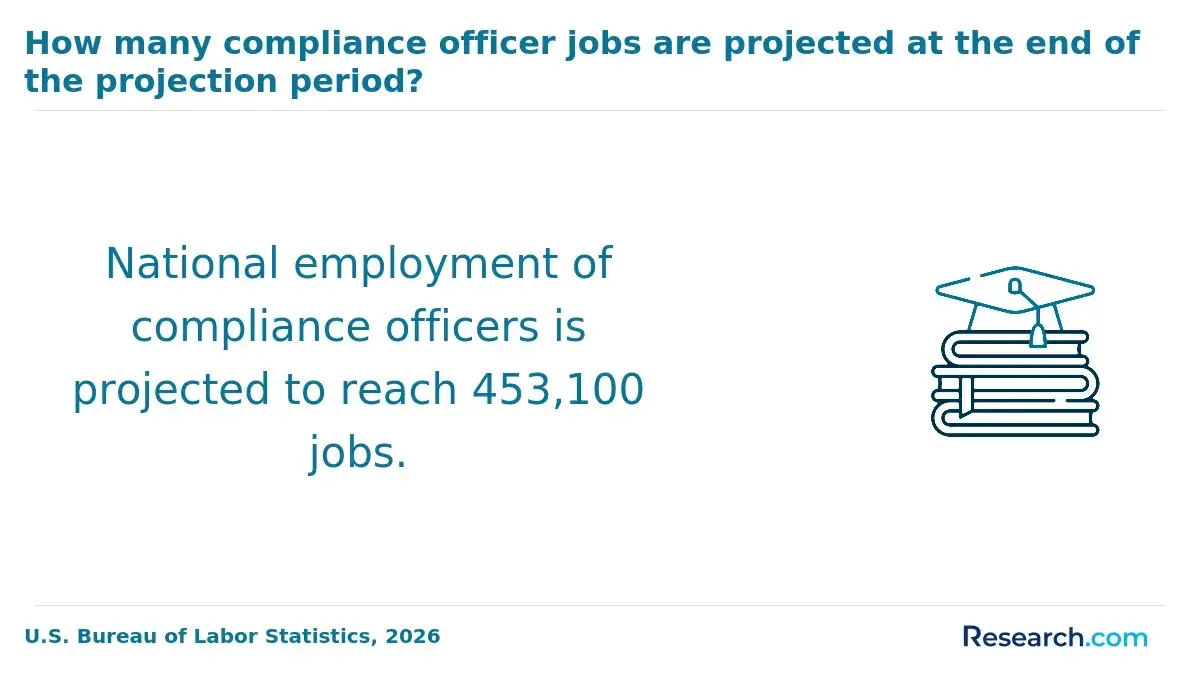
- The closest broad federal salary benchmark is compliance officers: $80,730 median annual pay in May 2025, with 4% projected growth for 2025-2035. Neither figure measures privacy-specific roles.
What is an MLS degree for data protection and privacy operations professionals?
A Master of Legal Studies is a graduate legal-knowledge degree generally intended for people who do not plan to become attorneys. Schools may use names such as Master of Studies in Law (MSL) or Master of Jurisprudence for related non-JD degrees. In privacy operations, the goal is to understand legal obligations well enough to help an organization maintain data-handling procedures, document decisions, and know when counsel must interpret a difficult question.
That work includes translating requirements into notices and internal policies, tracking requests concerning personal information, assessing vendors, maintaining records, and coordinating responses to potential incidents. An MLS can add depth to those tasks, but it is not a hiring requirement across privacy roles. A "privacy concentration" may mean a formally prescribed set of courses, an optional elective pathway, or simply access to relevant classes; check the catalog for the actual requirements.
An MLS does not confer a law license or authorize independent legal advice. It also differs from paralegal training, which more directly prepares students for supervised legal-support work. The distinction matters if you are deciding whether you want to run privacy processes or move into a paralegal position.
What careers can an MLS degree prepare you for in privacy operations?
An MLS may strengthen an application for privacy analyst, privacy program manager, data governance, third-party risk, or compliance roles. Employers determine the qualifications for each position, and titles can cover substantially different work. This comparison shows where legal study may help—and where operational experience remains essential.
| Role | Typical privacy work | What an MLS may add |
| Privacy analyst | Tracks requests, maintains records, and supports assessments | Context for interpreting requirements and documenting decisions |
| Privacy program manager | Coordinates policies, controls, training, and stakeholders | A framework for connecting legal obligations with program design |
| Third-party risk specialist | Reviews vendors' data practices and follows up on identified risks | Understanding of contractual and regulatory privacy issues |
| Data governance specialist | Maps data use, ownership, retention, and access | Legal context for information-handling rules |
For someone already managing projects, audits, security controls, or customer data, an MLS can build on transferable experience. Someone seeking a first privacy role may get more immediate value from a work assignment, employer training, or a targeted credential before paying for a master's degree. If the intended job is supervised legal support instead, our guide to paralegal certificate study describes a different education route; a paralegal certificate is not the same as professional certification.
Are MLS programs for privacy professionals accredited and legally recognized?
Check the institution's current accreditation through its published disclosures and a recognized accreditor. Institutional accreditation concerns the institution; it does not certify that a particular privacy concentration meets an industry standard. Also check whether the degree is awarded by the accredited institution and whether the courses you want are part of its current academic catalog.
The American Bar Association's approval of qualifying paralegal education programs is a separate matter, not a designation to expect of an MLS. An MLS is also distinct from a Juris Doctor (JD). Neither institutional accreditation nor an MLS degree grants authority to practice law; attorney admission is governed by the relevant jurisdiction's rules. If an employer or certification body specifies an educational requirement, confirm its wording directly rather than assuming any legal studies master's will satisfy it.
What do students learn in data protection and privacy MLS programs?
Useful programs connect legal analysis to decisions privacy teams actually make. Look beyond course titles for assignments that require students to assess a data flow, draft a policy, evaluate a vendor scenario, or explain when an issue needs legal review. A privacy curriculum may cover U.S. privacy and consumer protection law, cybersecurity and breach-response obligations, contracts, employment-related data, and information governance.
Courses should also address how requirements become repeatable operations: intake and tracking of requests, retention rules, risk assessments, escalation, and evidence of compliance. U.S. privacy obligations differ by jurisdiction and sector, so a course devoted to a single statute is not a substitute for a method of identifying which rules apply. If you need hands-on technology skills, ask whether students actually use relevant tools in graded work; a syllabus that mentions a platform does not establish proficiency.
Review the most recent course rotation before relying on an advertised elective. A strong-looking catalog will not help if essential privacy courses are rarely available during your expected enrollment.
Should you choose an online or campus-based MLS program?
Choose based on the schedule you can sustain and the learning activities you will complete—not the delivery label. An online course may have live meetings, fixed deadlines, or required visits; a campus course may offer access to local professional connections. In either format, confirm when privacy electives run and whether you can complete the degree without delaying a required course.
Ask whether classes are asynchronous or scheduled, whether exams require attendance at set times, and whether any capstone requires a workplace project or external placement. A working professional who needs predictable evenings may prefer a different program from someone who wants frequent in-person discussion. If completion speed is the deciding factor, choosing an online business law master's by duration offers a useful comparison approach, but verify the privacy coursework and course sequence of any MLS separately.
What are the admission requirements for privacy-focused MLS programs?
MLS programs generally target applicants who already hold a bachelor's degree, but each school sets its own admissions rules. Check its current requirements for transcripts, a statement of purpose, recommendations, work history, and any standardized test policy. Some programs welcome applicants new to privacy; others may favor professional experience without formally requiring it. Treat a stated preference differently from an admission prerequisite.
If you have prior graduate coursework, ask the receiving school whether it accepts transfer credit, how much may apply, and whether those credits can replace a required privacy course. Undergraduate transfer policies are not a reliable guide to graduate MLS rules. For applicants still completing an earlier degree, business law degree pathways with transfer credit options may be relevant, but only the future MLS institution can decide how any earlier study affects its graduate degree.
How long do MLS programs take and how much do they cost?
Completion time depends on required credits, course rotation, and whether you study full time or alongside work. Ask for a term-by-term plan built around the privacy courses you intend to take. A short advertised completion time may assume a workload or course availability that does not match your circumstances.
Compare a written estimate of total tuition and mandatory fees, not just a per-credit price. Include books, technology requirements, travel for any required visits, and the cost of reduced working hours. Ask which charges can change and whether an employer will reimburse credit-bearing graduate study. Federal aid depends on the student's eligibility and the institution and program; do not assume every credential or course qualifies.
Monthly payments can ease cash flow without reducing the underlying price. If you are comparing graduate study with a shorter legal-support route, monthly payment plans for paralegal degree tuition address financing a different credential, not the cost or aid eligibility of an MLS.
Which certifications complement an MLS in privacy operations?
Professional certifications can demonstrate more focused knowledge than an MLS alone, while the degree can provide broader legal context. The International Association of Privacy Professionals (IAPP) offers the Certified Information Privacy Professional/United States (CIPP/US) for U.S. privacy law, the Certified Information Privacy Manager (CIPM) for privacy program management, and the Certified Information Privacy Technologist (CIPT) for privacy-related technology concepts. ISACA's Certified Data Privacy Solutions Engineer (CDPSE) is another option for professionals working on technical privacy solutions.
Choose a credential for the work you want to perform, then check the issuing organization's current examination, experience, and maintenance rules. An MLS course may help you study, but degree completion does not automatically award certification or establish eligibility. Conversely, a targeted certification plus relevant work experience may be a more efficient first step if a job posting calls for a specific privacy skill rather than graduate legal study.
What salaries and job outlook can privacy professionals expect?
The U.S. Bureau of Labor Statistics does not publish a single occupational benchmark for "privacy operations professional." Its broader compliance officers category provides context: median annual pay was $80,730 in May 2025, and projected job growth is 4% for 2025-2035. That category includes work beyond privacy, so neither figure predicts compensation or openings for a particular privacy title.
Pay and hiring prospects depend on the role's scope, industry, location, technical demands, and prior experience. An MLS may help someone qualify for more legally complex responsibilities, but salary data cannot isolate the degree's effect. Before treating tuition as a career investment, compare actual postings for your target roles: note which ask for a graduate degree, which prefer certification, and which emphasize demonstrated program or systems experience.
How do you choose the best MLS program for privacy operations?
The best choice is the program that closes a specific skills gap at a cost and pace you can justify. Use recent job postings and your current responsibilities to decide whether that gap is legal interpretation, program management, technical implementation, or entry-level experience. Then compare programs against the same evidence rather than their marketing labels.
Before committing, get direct answers to these questions from each school:
- Which required and regularly offered courses address U.S. privacy law and day-to-day privacy operations?
- What graded projects, capstones, or supervised work let students apply those concepts?
- Can the course sequence be completed on your actual work schedule, including any live or campus requirements?
- What is the estimated total cost, what funding applies to this degree, and what happens if you take fewer courses than planned?
A warning sign is a privacy-themed program with few dependable privacy electives, no applied work, or an unclear total price. Compare that offer with a certification, employer training, or a shorter graduate credential before deciding. For a starting point on tuition comparisons, see our list of affordable online legal studies master's programs; confirm each school's current price and privacy curriculum independently. If the less extensive route meets the requirements in your target job postings, the time and tuition saved may outweigh the broader degree.
Other Things You Should Know About Law & Paralegal
No. Applicable rules can vary by state, industry, type of information, and the organization's activities. Privacy operations staff need a process for identifying relevant requirements and escalating legal interpretation to counsel.
No. An MLS does not authorize someone to practice law. A privacy professional can help implement approved policies and identify issues for review, but legal advice must come from an appropriately authorized attorney.
Not universally. Some roles emphasize policy, requests, and vendor processes; others require close work with security systems and incident response. Read the duties in the posting rather than relying on the title.
No. Privacy operations often sits within compliance, security, or data governance, while paralegals generally support lawyers with legal work under supervision. Responsibilities may overlap, but the reporting structure and required skills can differ.
References
- Law and Emerging Technologies | William & Mary Law School https://online.law.wm.edu/master-of-legal-studies/concentrations/law-emerging-technologies
- Privacy Analyst Salary and Job Description | North Carolina Central University https://online.nccu.edu/blog/privacy-analyst-salary-job-description/
- Online Master of Legal Studies (MLS) - Emory Law School https://law.emory.edu/admission/online-master-legal-studies-mls/index.html
- Data Privacy, MS | Dakota State University https://dsu.edu/programs/MSDP/
- How to Prepare for Cyberattacks and Data Breaches with an M.L.S. Degree | miami.edu https://news.miami.edu/law/stories/2024/06/how-to-prep-for-cyber-attacks-with-an-mls.html
- Experiential Learning Opportunities - NU CSSH | Public Affairs Master's Degree Programs at Northeastern https://publicaffairs.northeastern.edu/experiential-learning-opportunities/
- Two Approaches to Experiential Learning | AACSB https://www.aacsb.edu/insights/articles/2023/04/two-approaches-to-experiential-learning
- Master of Legal Studies (MLS) vs. JD: What's the Difference? | SMU Online Master of Legal Studies https://onlinemasterlegalstudies.smu.edu/articles/mls-vs-jd/
- MLS in Cybersecurity and Information Privacy | Goodwin College of Professional Studies https://drexel.edu/law/academics/masters-certificate-programs/mls/concentrations/cybersecurity-and-information-privacy-compliance/
- Master of Legal Studies (MLS) vs. JD: Which Is Right for You? | Wake Forest MLS https://mls.law.wfu.edu/articles/mls-vs-jd-which-is-right-for-you/