2027 Paralegal Certificates With Small Live Classes: Questions About Access to Instructors

Co-Founder and Chief Data Scientist
A small live class can make it easier to ask questions about legal research, writing, and assignments - but a program's promise of "instructor access" may mean anything from scheduled discussion to occasional email replies. If you are comparing paralegal certificates, the useful question is what help you can count on when your work gets difficult. This guide explains how to check class size, meeting requirements, feedback, program status, cost, and career relevance so you can choose a format you can attend and an instructor relationship you can actually use.
Key Things You Should Know
- Ask for the enrollment cap, live meeting schedule, office-hour policy, and typical feedback turnaround in writing; "small classes" and "direct access" have no standard definition.
- ABA approval applies to an individual paralegal education program, not its graduates; institutional accreditation and professional certification are separate matters.
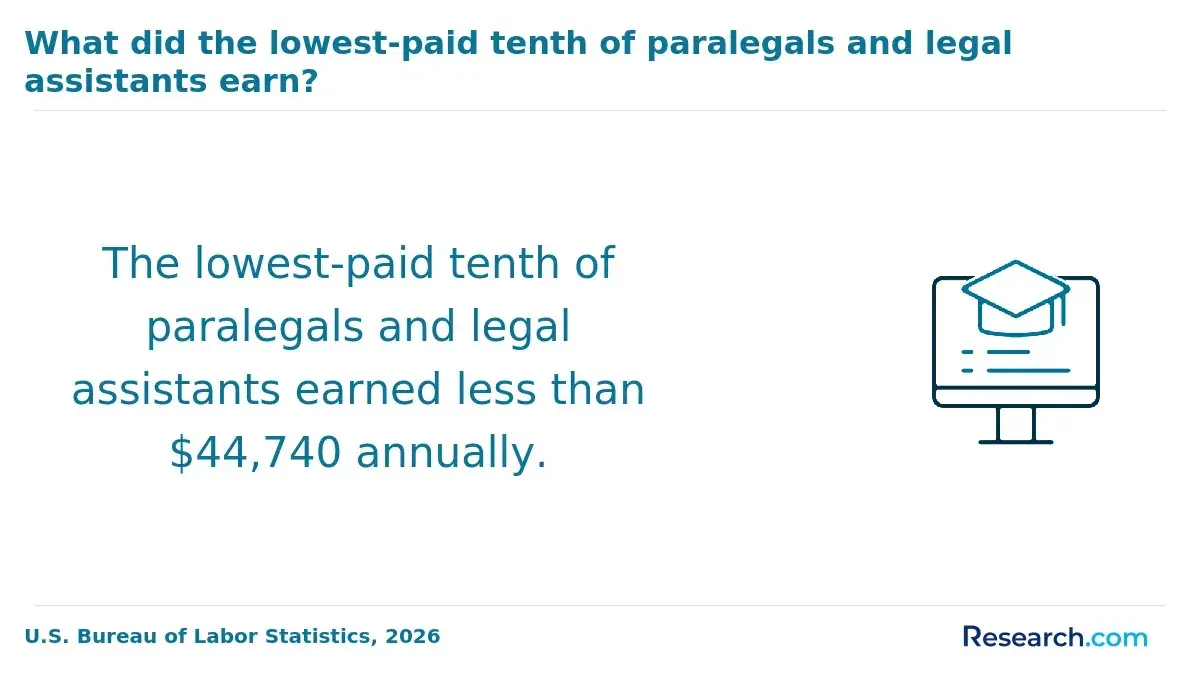
- The Bureau of Labor Statistics reports $62,890 in median annual pay for paralegals and legal assistants in May 2025, not an expected starting salary for certificate graduates.
What are paralegal certificates with small live classes and direct instructor access?
A paralegal certificate is an educational credential awarded after completing a defined course of study. In a live online class, students and an instructor meet at scheduled times by video; a campus class meets in person. Either format may use a small cohort, but neither "small" nor "direct instructor access" guarantees individual coaching.
For this decision, access means more than being able to send an email. Look for opportunities to ask questions during class, discuss a draft or research problem in office hours, and receive specific comments on graded work.
Find out whether the instructor who teaches the live session also grades assignments, or whether those duties are split among staff. Ask whether the stated class cap applies to the actual sections you will take, including advanced courses - not just the introductory course.
A certificate records education; professional certification is a separate credential awarded under a certifying organization's rules. Neither a certificate nor professional certification authorizes a paralegal to practice law independently.
How do live online paralegal certificate classes compare with campus programs?
Both formats can provide real-time instruction and feedback. The meaningful difference is which parts of the schedule and learning experience work for you. This comparison highlights commitments to confirm rather than assuming every online or campus program follows the same model.
| Decision factor | Live online classes | Campus classes |
| Attendance | Scheduled video sessions; time zone and participation rules matter. | Scheduled on-site sessions; commuting and parking matter. |
| Instructor contact | Questions may be handled in class, virtual office hours, or written feedback. | Questions may be handled in class, on-campus office hours, or written feedback. |
| Practical work | Research and drafting can be completed remotely, but software access and group-work arrangements vary. | Research and drafting may use campus facilities, but access outside class hours varies. |
| Disruptions | Reliable internet, a suitable device, and a private place to participate are important. | Travel time, weather, and on-site attendance can be constraints. |
Online does not mean self-paced. A live online program may offer less scheduling flexibility than an asynchronous course, even though it eliminates a commute.
Conversely, a campus program may offer more spontaneous conversation without guaranteeing smaller sections or faster feedback. Request a sample weekly schedule and ask whether recordings, makeup work, exams, or any campus visits change the apparent flexibility.
Are paralegal certificate programs accredited or approved by the ABA?
These are different checks. Institutional accreditation concerns the school or other educational institution. The American Bar Association (ABA) approves qualifying paralegal education programs; it does not institutionally accredit schools or certify individual paralegals.
A school's accreditation does not mean its certificate has ABA approval, and ABA approval should not be inferred from a program's name or marketing language. Check the specific program in the ABA's current directory of approved paralegal education programs, then confirm its present credential and delivery format with the school.
Program status alone will not tell you whether a particular section is small or how often its instructor meets with students. If ABA approval matters to a prospective employer or your own goals, verify it before paying a deposit; do not assume every online option holds it.
What do students learn in a paralegal certificate curriculum?
A useful curriculum teaches students to find and evaluate legal authority, cite sources, draft and revise documents, organize case information, and understand legal ethics and confidentiality.
Courses may also cover civil litigation, contracts, legal writing, and practice-specific subjects. Paralegals generally perform this work under attorney supervision; studying a legal subject does not authorize a graduate to give independent legal advice.
For a small live class, examine how skills are taught. A live lecture followed only by multiple-choice quizzes provides a different experience from drafting a memorandum, receiving comments, and revising it.
Ask to see a syllabus or representative assignment. If the program advertises training in a legal research platform or case-management tool, distinguish a demonstration from student access and hands-on assessed work.
If your goal is specifically workplace policy or employment regulation rather than paralegal practice, compare the certificate's courses with finding legal studies programs with an HR law focus. That is an educational alternative, not a substitute for checking the duties and qualifications of the job you want.
What are the admission requirements for live paralegal certificate classes?
Requirements depend on the specific certificate. Some programs admit applicants with a high school diploma or equivalent; others require prior college coursework or a bachelor's degree. A requirement to submit transcripts is not necessarily a requirement to hold a degree.
Check the current admissions page for minimum education, application deadlines, placement requirements, and any course prerequisites before comparing schedules.
Also establish whether the certificate is credit-bearing or noncredit. That distinction can affect the transcript you receive and whether coursework might be considered for later study.
Transfer is never automatic: the receiving institution decides whether and how prior credit applies. If you already have an associate degree and want a bachelor's degree as well, review options for continuing an associate degree in legal studies before assuming a standalone certificate is the best next step.
How long do small-class paralegal certificate programs take to complete?
There is no single completion time. The answer depends on required courses, prerequisites, course sequencing, term length, and whether you attend full time or part time. A program can advertise a short pathway while offering a required course only in a later term. Ask for a course-by-course schedule showing the earliest realistic finish date for a student who starts when you plan to start.
Count live meetings as fixed commitments, not flexible study hours. Confirm the time zone, attendance threshold, exam windows, and whether missed sessions can be made up. If an internship or practicum is required, ask who finds the placement, when it can begin, and whether your location or current employment limits your options. These details may matter more than the advertised number of months.
Readers who already hold a bachelor's degree and want broader legal knowledge rather than paralegal training can compare faster pathways through graduate legal studies. A non-JD legal studies degree serves a different purpose and, like a paralegal certificate, does not qualify someone to practice as an attorney.
How much do paralegal certificate programs with live instruction cost?
There is no dependable price for the format as a whole: schools may quote a total program charge, a per-credit rate, or a continuing-education fee. Compare a written total cost to complete, not two advertised tuition figures with different units. Request an itemization of mandatory fees, books, research-platform access, technology requirements, and any travel or placement expenses.
Live instruction may justify a higher price for a student who will use feedback and office hours, but the premium is hard to evaluate without knowing the section cap and support policy.
An inexpensive program may also differ in academic credit, curriculum, or ABA approval. For a comparison focused on that last distinction, see affordable tuition at ABA-approved paralegal programs, then verify each program's current charges and format directly.
Do not assume a certificate qualifies for federal financial aid. Eligibility depends on the institution, the particular program, and the student; noncredit and credit-bearing offerings may be treated differently. Ask the school's financial aid office about this specific certificate before counting on aid, and compare any borrowing with the time you may need to reduce paid work to attend live sessions.
Do paralegals need a license or professional certification to work?
There is no universal U.S. paralegal license or single professional certification required for every job. Employer expectations and state rules can differ, so check requirements where you intend to work.
Professional credentials offered by organizations such as NALA or NFPA have their own eligibility and examination rules; completing a school certificate does not automatically award one of those credentials.
If a program says its graduates are "certification-ready," ask which specific credential it means and compare the current certifying body's requirements with the program's coursework and your prior education.
Be especially cautious of wording that suggests ABA approval makes an individual an "ABA-certified paralegal." Paralegals work within applicable supervision and unauthorized-practice rules; a credential does not change those boundaries.
What jobs and salaries can paralegal certificate graduates expect?
Graduates may apply for paralegal or legal assistant roles involving research, document preparation, file organization, and attorney support. A certificate can help demonstrate relevant training, but hiring also depends on previous education, writing ability, experience, location, and the employer's requirements. It does not establish an expected starting salary.
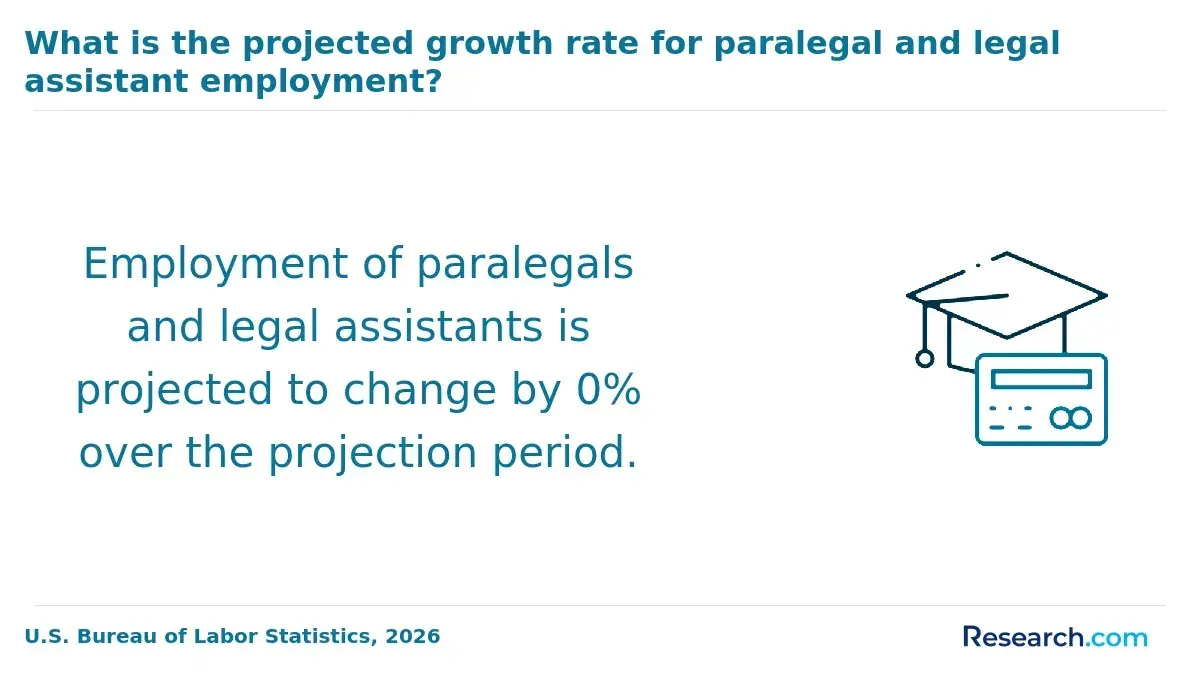
The Bureau of Labor Statistics reports median annual pay of $62,890 in May 2025 for paralegals and legal assistants, with 0% projected job growth, 2025-2035, and about 40,800 projected openings per year.
The median covers workers across experience levels, while openings can arise when workers leave an occupation even if total employment changes little. Neither figure predicts an individual graduate's prospects.
If your target is compliance or another role outside attorney support, compare job descriptions before paying for a paralegal curriculum. Legal studies graduate degree options explained can help frame that alternative, but a graduate degree is not automatically necessary or more cost-effective than focused training or relevant work experience.
How can students choose a reputable paralegal certificate program?
Shortlist programs only after confirming that their live classes fit your calendar and that the curriculum includes work you want an instructor to critique. Then request answers you can compare across schools. These questions test whether "access" is a dependable part of the program rather than a marketing description:
- What is the enrollment cap for each required live course, and how many students were in the most recently offered sections?
- Who teaches and grades the work, how are office hours scheduled, and when should students expect substantive feedback on a draft?
- Which meetings, exams, campus visits, and practical placements are mandatory for a student in my location?
- What credential and transcript will I receive, what is the total required cost, and is this specific program currently eligible for any aid I plan to use?
- What are the institution's accreditation status and this particular program's ABA approval status, if approval is claimed?
Compare written responses with the current catalog and sample syllabus. Vague answers about class caps, pressure to enroll before reviewing costs, or a claim that institutional accreditation is the same as ABA program approval are reasons to pause. If direct feedback is your priority, favor the program that documents regular opportunities to receive and use it - not simply the one with the smallest advertised cohort.
Other Things You Should Know About Law & Paralegal
Possibly. Ask the school whether it enrolls students in your state and whether any required placement can be completed there. Also check the meeting time zone before applying.
That depends on your employer's policy. Get approval for the specific program, credential type, and expenses before enrolling; reimbursement may require a passing grade or continued employment.
Do not share client or employer materials without authorization. Ask the instructor for a simulated assignment or an approved way to remove protected information while following your workplace's confidentiality rules.
Ask the school's accessibility office about the specific support you need for live sessions, course materials, and assessments. Contacting the office before enrollment gives you time to understand the request process and available arrangements.
References
- Online Certified Paralegal Training | Rutgers, The State University of New Jersey https://careertraining.rutgers.edu/training-programs/certified-paralegal/
- Paralegal Certificate Program at Hofstra Law: Academics https://law.hofstra.edu/admissions/paralegal-certificate-program/academics/
- Paralegal Professional Part Time Program | Villanova University https://www.villanova.edu/university/professional-studies/academics/professional-education/parttime_evening_online_program.html
- Online Certified Paralegal Training | Estrella Mountain Community College https://careertraining.estrellamountain.edu/training-programs/certified-paralegal/
- Paralegal Studies Certificate Program | Long Island University https://liu.edu/brooklyn/academics/school-of-professional-and-continuing-studies/Paralegal-Studies-Certificate-Program
- Paralegal Studies (ABA Approved) Certificate | UC San Diego Division of Extended Studies https://extendedstudies.ucsd.edu/certificates/paralegal-studies-(aba-approved)
- Regular and Substantive Interaction Guidelines | tamiu.edu https://www.tamiu.edu/distance/faculty/regular-and-substantive-interaction.shtml
- Paralegal Program Comparison https://paralegal.edu/compare/
- Georgia Paralegal Certificate Courses | KSU | Community and Professional Education https://cpe.kennesaw.edu/professional/paralegal-certificates/
- Frequently Asked Questions | Office of the Registrar https://registrar.arizona.edu/faqs