2027 Legal Studies Master's Programs for Long-Term Care Administrators

Co-Founder and Chief Data Scientist
Long-term care administrators make decisions shaped by resident-rights rules, staffing requirements, contracts, and state licensing laws. A legal studies master's degree can strengthen those skills, but it may not meet the requirements to run a licensed nursing home.
This guide is for current administrators, healthcare professionals, and career changers weighing graduate school. It explains which degrees serve different goals, what to check with a licensing board, and how to compare programs without paying for coursework that does not advance your intended role.
Key Things You Should Know
- A Master of Legal Studies or similar non-JD degree can build regulatory expertise, but it does not replace a state nursing home administrator license or qualify its holder to practice law.
- Choose a healthcare administration pathway first if your main goal is initial facility licensure, consider legal studies when compliance, contracts, or policy leadership is the stronger goal.
- For a related, but distinct, career benchmark, the Bureau of Labor Statistics reports $80,730 in May 2025 median pay for compliance officers and 4% projected growth for 2025-2035; those figures do not describe nursing home administrators specifically.
What are legal studies master's programs for long-term care administrators?
Long-term care administrators oversee operations in settings such as nursing homes and assisted living communities. Their decisions can involve resident safety, workforce practices, reimbursement, privacy, inspections, and responses to complaints. Graduate legal study is useful when an administrator needs to understand how rules affect those decisions - not when the goal is to become the facility's attorney.
A Master of Legal Studies (MLS), Master of Studies in Law (MSL), or similarly named non-JD degree teaches law to professionals who generally do not intend to practice it. A program might offer a formal healthcare-law concentration, relevant electives, or no healthcare-specific track at all. Those are materially different offerings: check the required courses rather than relying on the degree title.
An MLS or MSL does not confer a law license, authorize independent legal advice, or by itself satisfy nursing home administrator licensing requirements. It is also a different educational route from paralegal training. Someone whose actual goal is a legal-support position can compare our list of online paralegal certificate programs instead of assuming a graduate legal studies degree is necessary.
What education and licensing requirements apply to long-term care administrators?
Requirements depend on both the state and the type of facility. Federal nursing home rules require an administrator responsible for facility management who is licensed by the state when state licensing applies. State boards determine the applicable education, supervised training, examination, application, and renewal rules. Assisted living and other residential care settings may be regulated under different state systems.
A bachelor's degree, qualifying coursework, an administrator-in-training (AIT) experience, and examinations may figure into a state's nursing home administrator pathway, but their precise combination and acceptable substitutes vary. States may use examinations developed by the National Association of Long Term Care Administrator Boards (NAB) alongside state-specific requirements. A master's degree should never be treated as automatic eligibility to sit for an exam or obtain a license.
Before applying to graduate school, identify the license tied to the facilities you want to manage. Ask the relevant state board whether your existing degree and experience qualify, what supervised training remains, and whether proposed graduate courses satisfy any specific requirement. Get clarification before assuming that a healthcare-law course can substitute for administration, accounting, or clinical-operations coursework.
Which master's degree pathways prepare students for long-term care administration?
The strongest pathway depends on the gap between your current qualifications and your target job. The comparison below separates operational preparation from legal specialization; none of these degree labels alone establishes licensing eligibility.
| Pathway | Most relevant preparation | Main limitation to check |
| Master of Healthcare Administration (MHA) or health services administration | Facility operations, finance, quality, leadership, and healthcare systems | Whether courses and fieldwork meet the target state's licensing rules |
| MBA with healthcare coursework | Budgeting, staffing, strategy, and organizational management | Whether it includes enough long-term care and regulatory content |
| Master of Public Health (MPH) | Population health, policy, and quality improvement | Whether it develops the facility-level management skills the role requires |
| MLS, MSL, or Master of Jurisprudence | Regulatory analysis, contracts, employment law, and compliance | Whether its healthcare courses address long-term care and offer value beyond shorter training |
An aspiring facility administrator who lacks operations training will often have more to gain from an administration-focused curriculum. An experienced administrator moving into compliance or policy may get more targeted value from legal studies. If business and legal coursework both appeal to you, business law programs to compare when you work full time offer another comparison point; review their healthcare relevance rather than assuming a business-law label covers long-term care regulation.
How do online and campus-based programs compare for long-term care administration?
Online delivery can reduce travel, but it does not necessarily remove scheduled classes, group work, campus visits, or in-person fieldwork. Campus-based study may make local networking and supervised activities easier. Neither format changes a state board's licensing requirements.
Compare the commitments that affect whether you can keep working: live-session times, course sequencing, examination arrangements, required visits, and who secures an AIT or practicum placement. If a school permits fieldwork at your current employer, ask whether the placement and supervisor must meet additional conditions. A fully online academic program can still require substantial local, in-person training.
Do not choose a longer graduate degree solely because you need a faster entry into a legal-support job. Accelerated paralegal program comparisons can help clarify that separate route, though paralegal preparation does not substitute for administrator licensing or healthcare management experience.
What courses do long-term care administration master's programs include?
Course titles vary, so compare syllabi and required courses against the decisions you expect to make at work. An administration-focused curriculum commonly emphasizes finance, human resources, quality improvement, healthcare operations, and leadership. A legal studies curriculum may emphasize legal research, administrative law, healthcare regulation, contracts, employment law, privacy, and dispute resolution.
For long-term care, the most useful assignments connect rules to realistic situations: responding to survey findings, reviewing a vendor contract, handling a resident complaint, or escalating a privacy incident. Legal research coursework can help an administrator identify a rule and communicate with counsel; it does not prepare them to act as counsel. Ask whether the program covers nursing facilities specifically or discusses healthcare law mainly through hospitals and insurers.
Look closely at whether a healthcare-law concentration is formally listed on the transcript, whether relevant courses are merely optional electives, and whether those electives are offered often enough to complete them before graduation. Those distinctions matter more than a broad claim that the degree includes "healthcare compliance."
What are the admission requirements for these master's programs?
Master's applicants generally need a bachelor's degree, but each school sets its own rules for minimum grades, work experience, recommendations, statements, and prerequisite coursework. Some programs welcome applicants from any undergraduate major; others expect professional healthcare experience or specific preparation. A legal studies degree designed for nonlawyers should not be confused with an advanced law degree that requires a JD.
If you already hold graduate credits, request a written evaluation rather than assuming they will count. The receiving university decides whether prior courses satisfy its transfer limits, recency rules, and degree requirements. Readers considering a different route can review business law degree transfer options, then confirm the applicable policy directly with each prospective school.
Admission and professional eligibility are separate decisions. Before accepting an offer, compare the school's admission decision with the target licensing board's rules; being admitted to a master's program does not mean you have met the prerequisites for an administrator license.
How long do these programs take, and how much do they cost?
Completion time depends on required credits, course availability, enrollment pace, and any fieldwork. A student working full time may need a different schedule from a student pursuing an intensive course load. Request a term-by-term plan showing when required healthcare electives and capstones are actually offered.
Compare the total cost to completion, not just the advertised per-credit tuition. Ask each school for current tuition and mandatory fees, then account for books, technology, travel, campus visits, and any placement-related costs. If licensure requires separate supervised training or exams, budget for those separately rather than assuming the degree price includes them. Financial aid eligibility and amounts depend on the student and the specific program; confirm details with the school's financial aid office.
Opportunity cost matters as much as the bill. If a short course or employer-supported training would address your immediate compliance need, an entire master's may be more education than you need. For a different, legal-support career goal, a guide to low-cost accredited paralegal degrees provides a cost comparison, but its prices and career purpose should not be treated as interchangeable with graduate long-term care preparation.
What careers can graduates pursue in long-term care administration?
A licensed administrator may manage a nursing facility's staffing, budgets, resident-service processes, and regulatory response. Related roles can include assisted living leadership, quality improvement, compliance management, risk management, and policy work for a care organization. Exact titles and licensing expectations depend on the state, facility, and employer.
For someone already managing a facility, legal studies may support a move toward systemwide compliance, contracts, investigations, or regulatory affairs. For someone entering long-term care, relevant work experience and the correct licensing pathway usually deserve attention before an optional legal specialization. A degree can improve knowledge, but it does not guarantee a promotion or replace demonstrated operational judgment.
What salary and job outlook can long-term care administrators expect?
The Bureau of Labor Statistics groups many facility leaders within the broader medical and health services managers occupation. That category includes settings beyond long-term care, so its occupation-wide pay or growth figures should not be presented as a precise nursing home administrator forecast. Actual offers also vary by facility size, location, responsibilities, experience, and licensure.
For graduates considering compliance rather than facility management, the BLS reports median annual pay of $80,730 in May 2025 for compliance officers and 4% projected job growth, 2025-2035. This is a benchmark for a different occupation, not a salary prediction for an administrator or an MLS graduate. Compare local job postings for your intended role and note which ones actually request a master's, a license, or long-term care experience before estimating a degree's return.
How can students choose an accredited long-term care administration program?
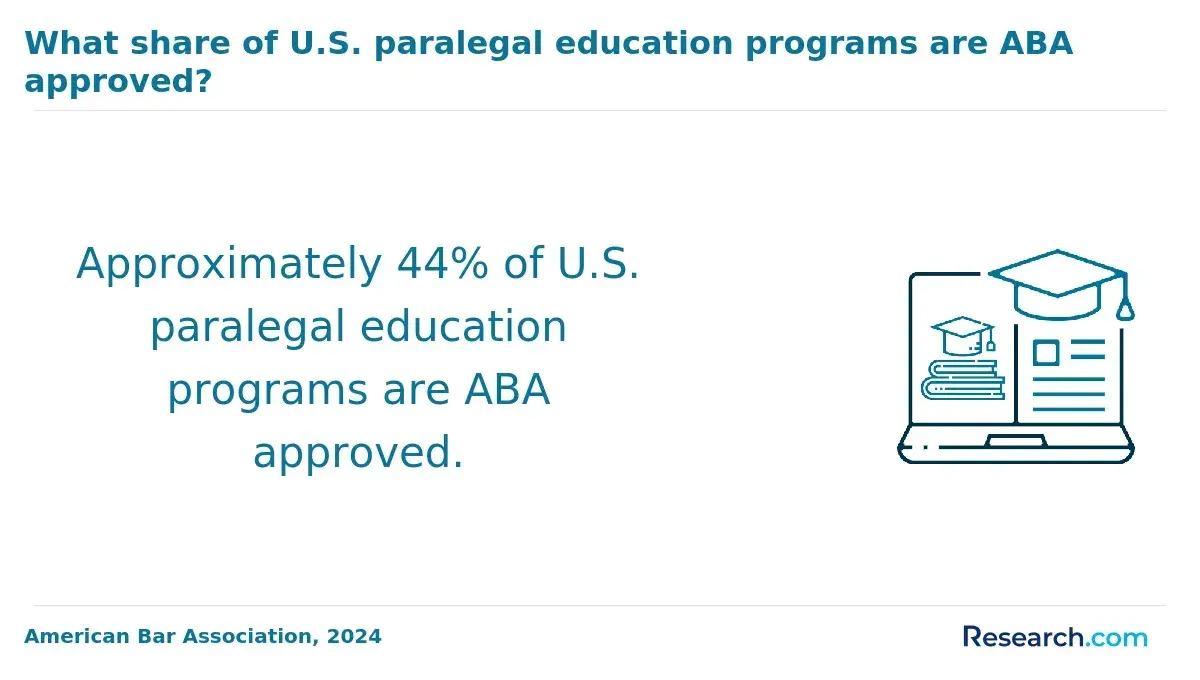
Start by confirming the institution's current accreditation through its recognized accreditor or the U.S. Department of Education's institutional records. Then check whether a healthcare management program holds any relevant programmatic accreditation, such as accreditation from the Commission on Accreditation of Healthcare Management Education (CAHME). Programmatic accreditation and institutional accreditation are different; neither automatically establishes state administrator licensing eligibility. ABA approval of paralegal programs is not a substitute for either.
Make the final choice in this order: confirm the license required for your target role; ask the board whether a proposed program's coursework or fieldwork counts; compare required courses and placement support; and obtain a written estimate of total cost and a realistic completion schedule. A school that cannot explain how its advertised long-term care content appears in required coursework - or implies that its degree alone guarantees licensure - is a reason to pause.
If you are already licensed and need legal depth, prioritize a program with substantive healthcare regulation courses and assignments relevant to your work. If you still need initial licensure, prioritize the board's requirements and facility-management preparation first. That distinction is the clearest way to avoid investing in a useful degree at the wrong stage of your career.
Other Things You Should Know About Law & Paralegal
Do not assume so. Clinical licensure and facility administrator licensure address different responsibilities. Ask the state administrator licensing board whether nursing education or experience satisfies any part of its requirements.
Possibly, but only if the receiving university permits it. Confirm credit limits, required grades, and course-expiration rules in writing before enrolling in the certificate.
Not automatically. The destination state decides whether it offers licensure by endorsement or reciprocity and what additional application, examination, or training requirements apply.
It may be enough for a specific workplace skill, such as learning an internal compliance process. Whether it satisfies a licensing or degree requirement is a separate question for the state board or university.
References
- Cost of Attendance (Budget) | 2025-2026 Federal Student Aid Handbook https://fsapartners.ed.gov/knowledge-center/fsa-handbook/2025-2026/vol3/ch2-cost-attendance-budget
- Administrator In Training | Florida Board of Nursing Home Administrators https://floridasnursinghomeadmin.gov/administrator-in-training/
- Apply for a Nursing Home Administrator License - Iowa DIAL https://dial.iowa.gov/licenses/health/nursing-homes/how-do-i-license
- Licensing | BELTSS - Ohio.gov https://beltss.ohio.gov/licensing
- Qualifications - Nursing Home Administrator Licensure Program https://www.health.ny.gov/professionals/nursing_home_administrator/licensure_program/qualifications.htm
- NURSING HOME ADMINISTRATOR EDUCATION REQUIREMENTS | ct.gov https://www.cga.ct.gov/2010/rpt/2010-R-0188.htm
- eCFR:: 42 CFR Part 483 -- Requirements for States and Long Term Care Facilities https://www.ecfr.gov/current/title-42/chapter-IV/subchapter-G/part-483
- GAC - Chapter 393-3 LICENSURE BY EXAMINATION https://rules.sos.ga.gov/gac/393-3
- Nursing Facilities | medicaid.gov https://www.medicaid.gov/medicaid/long-term-services-supports/institutional-long-term-care/nursing-facilities
- Online MS in Health Law and Healthcare Compliance | Albany Law School https://www.albanylaw.edu/graduate/online-ms-health-law-and-healthcare-compliance