2027 Choosing a Paralegal Program for Elder Law and Guardianship Support

Co-Founder and Chief Data Scientist
Preparing guardianship filings or organizing records for an older client calls for more than a general interest in law. The right paralegal program must teach legal fundamentals while giving you a way to build the writing, research, and client-service skills this work demands. This guide is for prospective students and career changers comparing certificates and degrees. It explains which courses matter, how to check a program's credentials and real costs, and when a broader legal studies route may be a better use of your time.
Key Things You Should Know
- Choose a program with strong legal research, writing, ethics, and supervised practice; an elder law elective is valuable, but it cannot replace those foundations.
- Check institutional accreditation separately from American Bar Association (ABA) approval of a paralegal program. Neither makes a graduate a certified paralegal or an attorney.
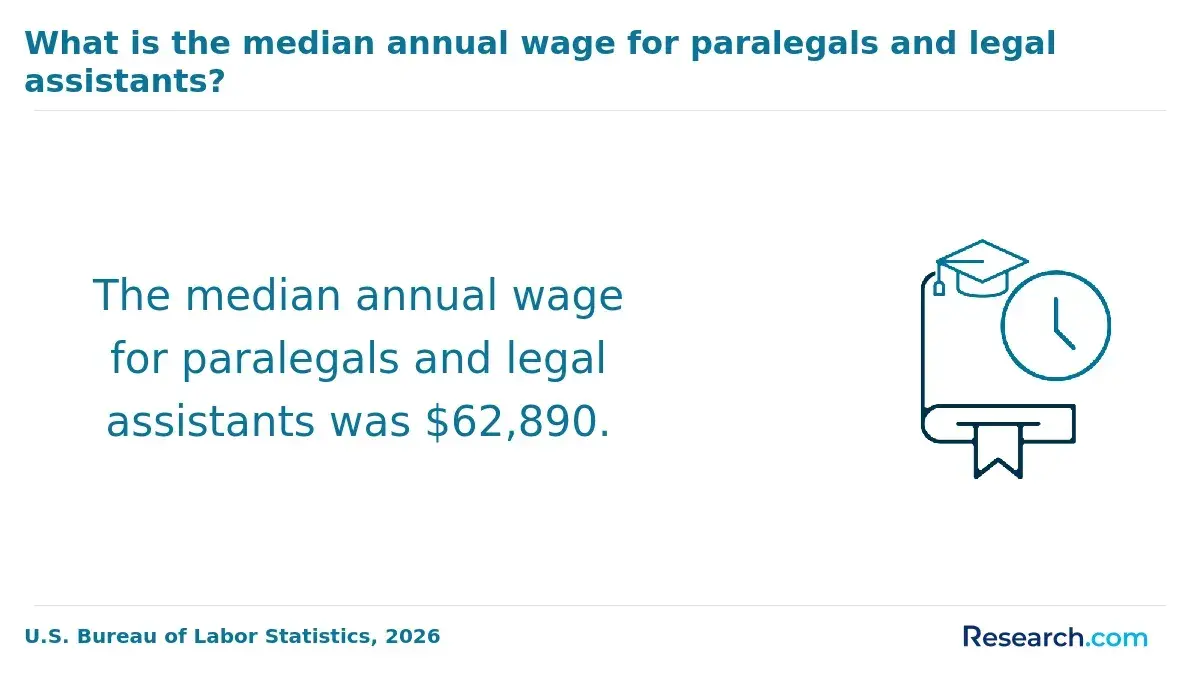
- The U.S. median for paralegals and legal assistants was $62,890 in May 2025, not a salary specific to elder law. Compare total program cost and local placement opportunities before enrolling.
What Is an Elder Law and Guardianship Paralegal Program?
Usually, it is a general paralegal certificate or degree with relevant electives, assignments, or field experience - not a separate credential required for elder law work. Elder law practices may handle estate planning, public benefits, long-term care matters, probate, and guardianship. A guardianship is a court-supervised arrangement concerning decisions for a person who needs legal assistance; terminology and procedures vary by state.
Under an attorney's supervision, a paralegal might organize medical and financial records, research state procedures, prepare draft petitions, track hearing dates, and communicate approved information to clients and families. The attorney remains responsible for legal advice and professional judgment. A program that calls itself "elder law focused" should show where students actually practice those supporting tasks, not simply mention the specialty in a course description.
What Education Do Elder Law Paralegals Need?
There is no single nationwide degree requirement for paralegals. Employers set hiring preferences, while state rules may affect particular titles, tasks, or credentials. An associate degree in paralegal studies can provide general education alongside legal training. A bachelor's program offers a longer academic route. For someone who already has a degree, a post-baccalaureate paralegal certificate may avoid repeating general education coursework.
Compare online paralegal certificate programs by entry prerequisites and required legal coursework, not the word "certificate" alone. A certificate documents completion of an educational program; professional certification is a separate credential awarded by a certifying organization after its requirements are met.
Choose the shortest route that supplies the legal skills you lack and meets the preferences of employers you hope to approach. A Master of Legal Studies or similar non-JD degree may suit someone seeking legal knowledge for another profession, but it is not a substitute for hands-on paralegal training or a degree that qualifies someone to practice law.
How Do You Choose an Accredited Paralegal Program?
Start with two distinct checks. Institutional accreditation concerns the school; verify its current status through its accreditor or the U.S. Department of Education's accreditation records. ABA approval concerns a qualifying paralegal education program; verify a claimed approval in the ABA's current paralegal program directory. Not every legitimate paralegal program is ABA-approved, and ABA approval is not institutional accreditation.
Once those statuses are clear, review the published curriculum and ask the program for specifics about its practical training:
- Request recent syllabi showing research, writing, ethics, and state-law assignments relevant to probate or guardianship.
- Ask whether students draft documents, analyze case files, or complete a supervised internship - and who arranges any placement.
- Check whether courses run often enough to finish on your intended schedule, including required prerequisites.
- Ask local elder law or probate employers which credentials and experiences they prefer for entry-level hiring.
A red flag is an unverified claim that graduates are "ABA-certified." The ABA approves certain programs; it does not certify individual paralegals.
Which Courses Prepare Students for Elder Law and Guardianship Work?
Look for courses that connect legal rules to documents and deadlines. This comparison shows what each subject can contribute; course titles and the depth of practical work vary by school.
| Course or training area | Relevant supervised paralegal work |
| Legal research, writing, and citation | Locating state statutes and court rules; preparing research summaries and draft correspondence |
| Probate, estates, and trusts | Organizing estate files and preparing drafts or forms for attorney review |
| Guardianship and civil procedure | Tracking notices, filings, hearings, and court-ordered reporting deadlines |
| Ethics and client communication | Protecting confidential information and recognizing questions that require an attorney's advice |
| Public benefits or long-term care law | Gathering records and researching rules without making independent eligibility determinations |
A named elder law course is a plus, but a substantial probate course and a relevant placement may be more useful than an elective with little document work. Ask to see sample assignments, especially if a catalog description does not explain what students produce.
Are Online or Campus-Based Paralegal Programs Better for Elder Law?
Neither format is automatically better. Online study may reduce commuting, but "online" does not necessarily mean asynchronous or self-paced. Campus study may make it easier to meet local attorneys and learn state court practices, but it can impose travel and fixed class times. In either format, the decisive questions are whether students receive feedback on legal work and can complete any required placement.
Ask about live meetings, exams, campus visits, course sequencing, and internship hours before treating a schedule as flexible. If a placement is required, confirm whether the school finds it, whether current employment can qualify, and whether remote work is permitted. Someone comparing shorter online master's programs in legal studies should also check the career goal: a faster non-JD legal studies degree does not necessarily teach paralegal drafting or satisfy an employer's paralegal education preference.
What Are the Admission Requirements for Paralegal Programs?
Requirements depend on the credential and the school. An associate program may admit applicants with a high school diploma or equivalent. A post-baccalaureate certificate generally requires a completed bachelor's degree, while other certificates may have different college-credit prerequisites. Degree programs may also require transcripts or general admissions materials.
Read the specific program's admissions page, not just the institution's general policy. If application effort is a constraint, comparisons of online legal studies programs with simplified essay requirements can provide another option to investigate, but legal studies admission rules do not establish the requirements for a paralegal certificate. Before applying, confirm prerequisite credits, transcript rules, application deadlines, and whether prior coursework would count. The receiving school decides how transfer credit applies.
How Long Do Elder Law Paralegal Programs Take and Cost?
Completion time depends on credential length, enrollment pace, prerequisites, course availability, and any internship. A certificate designed for degree holders may require less new coursework than an associate or bachelor's degree, but a required course offered infrequently can delay either route. Request a term-by-term plan for your intended enrollment pace.
What Careers Can Elder Law and Guardianship Paralegals Pursue?
Relevant settings include elder law and estate-planning firms, probate practices, legal aid organizations, and offices handling guardianship matters. Entry-level titles may include paralegal or legal assistant; actual duties depend on the employer and jurisdiction. Experience with sensitive records, court deadlines, and client communication can support a move into more complex case coordination, but advancement is not automatic.
Look at local job postings before choosing electives: a practice that handles probate may value filing experience more than a broadly titled elder law course. If your interest lies in organizational policy or contracts rather than attorney-supervised client matters, business law programs for career-focused adult learners may be a more relevant comparison. A business law degree does not itself qualify a graduate to practice law.
How Much Do Elder Law Paralegals Earn?
The Bureau of Labor Statistics reports median annual pay of $62,890 in May 2025 for paralegals and legal assistants. That is an occupation-wide U.S. figure, not an elder law salary or an entry-level offer. Pay for a particular role can vary with location, employer, experience, and duties.
BLS projects 0% growth, 2025-2035, for the occupation, while projecting about 40,800 openings per year. Openings despite little net growth make it especially important to test a program's local connections and your ability to gain relevant experience, rather than assuming that a specialty label will lead to a job.
What Certifications and Skills Strengthen Elder Law Paralegal Careers?
Professional certification is optional for many paralegal jobs, though employer preferences and state rules vary. Organizations such as NALA and the National Federation of Paralegal Associations award paralegal credentials under their own eligibility and examination rules. Check the current requirements directly with the credentialing organization before choosing courses to pursue certification.
For elder law work, prioritize accurate research, careful document control, deadline tracking, confidentiality, and clear communication with clients who may have complex family or health circumstances. Familiarity with legal research databases and case-management tools can help, but ask whether a program provides actual access and graded practice rather than merely listing software in its catalog. No course or certification authorizes a paralegal to give independent legal advice.
Other Things You Should Know About Law & Paralegal
Guardians are appointed under state law and court procedures; being a paralegal does not itself confer that authority. Serving as a guardian is a separate legal role with its own duties.
No. A power of attorney generally gives an agent authority through a document, while guardianship involves court appointment and oversight. Their scope and legal requirements depend on state law and the circumstances.
Not merely because they are relatives. A paralegal should follow the supervising attorney's directions and applicable confidentiality rules before sharing information or responding to requests.
Report the concern promptly to the supervising attorney and follow the placement's procedures. Reporting duties and confidentiality rules vary by state and role; a student should not investigate independently or assume the same rule applies everywhere.
References
- Guardianship: Key Concepts and Resources | justice.gov https://www.justice.gov/elderjustice/guardianship-key-concepts-and-resources
- Adult Guardianship | NJ Courts https://www.njcourts.gov/courts/civil/guardianship
- Adult Protective Services (APS) | ca.gov https://www.cdss.ca.gov/inforesources/adult-protective-services
- Elder Financial Abuse: How to Identify and Report | NCUA https://ncua.gov/regulation-supervision/letters-credit-unions-other-guidance/reporting-elder-abuse-or-financial-exploitation
- Legal Clinics - Legal Help - Guides at Texas State Law Library https://guides.sll.texas.gov/legal-help/clinics
- Elder Abuse Information and Training Guide | Attorney General's Office https://www.azag.gov/issues/elder-affairs/senior-abuse/training-guide
- Guardianship Basics Becoming a Guardian | nycourts.gov https://www.nycourts.gov/guardianship-basics/becoming-guardian
- Chapter 20. Guardianship and Conservatorship | virginia.gov https://law.lis.virginia.gov/vacodefull/title64.2/chapter20/
- Legal Services for Older Americans Program | acl.gov http://acl.gov/programs/legal-help/legal-services-elderly-program
- The Guardianship Process | illinois.gov https://gac.illinois.gov/osg/pg-proc.html