
2027 Legal Studies Master's Programs for Commercial Contract Negotiators

Co-Founder and Chief Data Scientist
Commercial contract negotiators need to understand the legal consequences of pricing, liability, confidentiality, and termination terms - but they usually do not need a law degree. A master's in legal studies may help experienced procurement, sales, or contracts professionals handle those issues more confidently, while costing more time and money than targeted training. This guide explains which curricula are useful, how to compare programs and costs, and when experience or a professional credential may be the better next step.
Key Things You Should Know
- A Master of Legal Studies (MLS) or similar non-JD degree can strengthen contract analysis, but it is generally neither required for commercial negotiation jobs nor a license to practice law.
- Prioritize applied contract drafting, negotiation exercises, business law, and risk allocation over a program whose contract coverage is limited to introductory legal theory.
- Compare the full cost with employer-funded training and certifications; for context, the U.S. median pay for compliance officers was $80,730 in May 2025, but that occupation is not a salary measure for contract negotiators.
What Are Legal Studies Master's Programs for Commercial Contract Negotiators?
Commercial contract negotiators help organizations agree on terms with customers, suppliers, and other business partners. Their work can include reviewing proposed language, coordinating changes with legal and business teams, documenting approvals, and resolving disagreements over price, performance, data use, indemnification, or liability.
A Master of Legal Studies (MLS), Master of Studies in Law (MSL), or similarly named degree teaches legal concepts to people who generally do not intend to become attorneys. For a negotiator, its value lies in recognizing legal issues, explaining trade-offs, and knowing when to involve counsel. It does not authorize a graduate to practice law or replace an attorney's role in giving legal advice.
"Commercial contracts" may be a formal concentration, a set of electives, or simply a topic within a broader degree. Those are materially different offerings. Check the required courses and available electives rather than relying on a concentration label alone.
What Degree Do Commercial Contract Negotiators Need?
There is no universal degree requirement for commercial contract negotiators. Employers set requirements according to the role: a procurement position may emphasize sourcing and supplier relationships, while a contracts-manager position may demand extensive experience with drafting, approvals, and risk review. An MLS or MSL is an optional way to deepen legal knowledge, not a standard entry ticket.
These routes address different gaps. The comparison is most useful when you match a credential to the work you want to perform, rather than choosing the highest degree level by default.
| Route | Most relevant starting point | Main limitation |
| Employer training and contract experience | Professionals who can learn on active deals with legal-team support | Depth and feedback depend on the employer |
| Focused course or graduate certificate | Professionals with a specific gap in drafting, negotiation, or commercial law | May not provide the breadth or degree credential of a master's |
| MLS, MSL, or related non-JD master's | Experienced professionals who need sustained legal study across multiple contract issues | Greater cost and time commitment; no authorization to practice law |
| Juris Doctor (JD) | People pursuing an attorney career | A substantially different educational and licensure path, not a routine requirement for business-side negotiation |
If you lack a bachelor's degree and are considering legal-support work as an entry route, shortest online paralegal bachelor's degree programs address a different starting point. A paralegal degree can develop legal-support skills, but it is not a substitute for commercial deal experience or attorney qualification.
Which Legal Studies Master's Curriculum Best Supports Contract Negotiation?
The strongest fit combines legal analysis with repeated practice applying it to deals. A general contracts survey can explain offer, acceptance, breach, and remedies; negotiators also need to work through actual clauses, competing business objectives, and approval constraints.
When comparing curricula, distinguish a course title from the work students actually do. A useful syllabus or sample assignment should show how instruction connects to responsibilities such as these:
- Drafting and redlining: revising indemnity, limitation-of-liability, warranty, termination, and dispute-resolution provisions.
- Negotiation practice: preparing fallback positions, trading concessions, and recording the agreed outcome.
- Commercial context: connecting contract terms to procurement, sales, intellectual property, privacy, or industry-specific obligations.
- Contract operations: using approval workflows, version control, and obligation tracking without assuming that access to a tool creates proficiency.
Ask whether these subjects are required, reliably offered as electives, or available only through a separate certificate. If you expect to bring prior coursework into a program, review business law credit transfer considerations; the receiving school decides whether earlier credit applies to its degree.
Artificial intelligence may assist with clause comparison or first-pass review, but a curriculum should still teach students to verify outputs, protect confidential information, and escalate legal judgments appropriately. Do not choose a program solely because it advertises AI without describing supervised, hands-on work.
Are Online or Campus-Based Programs Better for Contract Negotiators?
Neither format is inherently better. Online study can reduce travel and make continued employment easier; campus study may make live negotiation practice and relationship-building easier to arrange. In either format, the decisive question is whether students receive feedback on realistic drafting and negotiation work.
"Online" does not necessarily mean asynchronous or self-paced. Before enrolling, confirm scheduled class meetings, time-zone expectations, group exercises, exams, campus visits, and whether the courses you need are offered in a workable sequence. Ask who gives feedback on redlines and whether negotiation exercises involve live counterparties rather than recorded lectures alone.
If your goal is entry-level paralegal training rather than graduate-level contract work, our guide to paralegal associate programs covers a more direct educational route. Paralegal education and an MLS serve different roles; neither format makes a graduate an attorney.
What Are the Admission Requirements for Legal Studies Master's Programs?
Applicants generally need a bachelor's degree, but each school sets its own rules for academic records, essays, recommendations, work history, and any English-language requirements. Programs may welcome applicants from business, procurement, compliance, and other non-law fields. Do not assume that negotiation experience is required - or that it waives a published requirement.
For an occupation-focused application, explain the contracts you have worked with, the decisions you are authorized to make, and the legal knowledge you still need. If you have not negotiated contracts yet, ask whether the coursework assumes professional deal experience and whether career services support entry into contracts roles.
Verify any transfer-credit or prior-learning policy in writing before paying a deposit. Admission to a program does not mean previous graduate courses will satisfy its degree requirements.
How Long Do Legal Studies Master's Programs Take and Cost?
Completion time depends on required credits, enrollment pace, course availability, and any capstone or residency. Full-time study may be faster, but keeping a job while studying part time can preserve income and provide opportunities to apply coursework. Ask for a term-by-term plan based on your intended pace, not just the school's fastest advertised timeline.
There is no single reliable price for an MLS or MSL. Compare the total amount you would pay: tuition for all required credits, mandatory fees, books or research resources, technology, travel, and any required campus attendance. Then subtract confirmed employer assistance or scholarships. Online master's in legal studies tuition options can provide a starting shortlist, but confirm current charges directly with each institution.
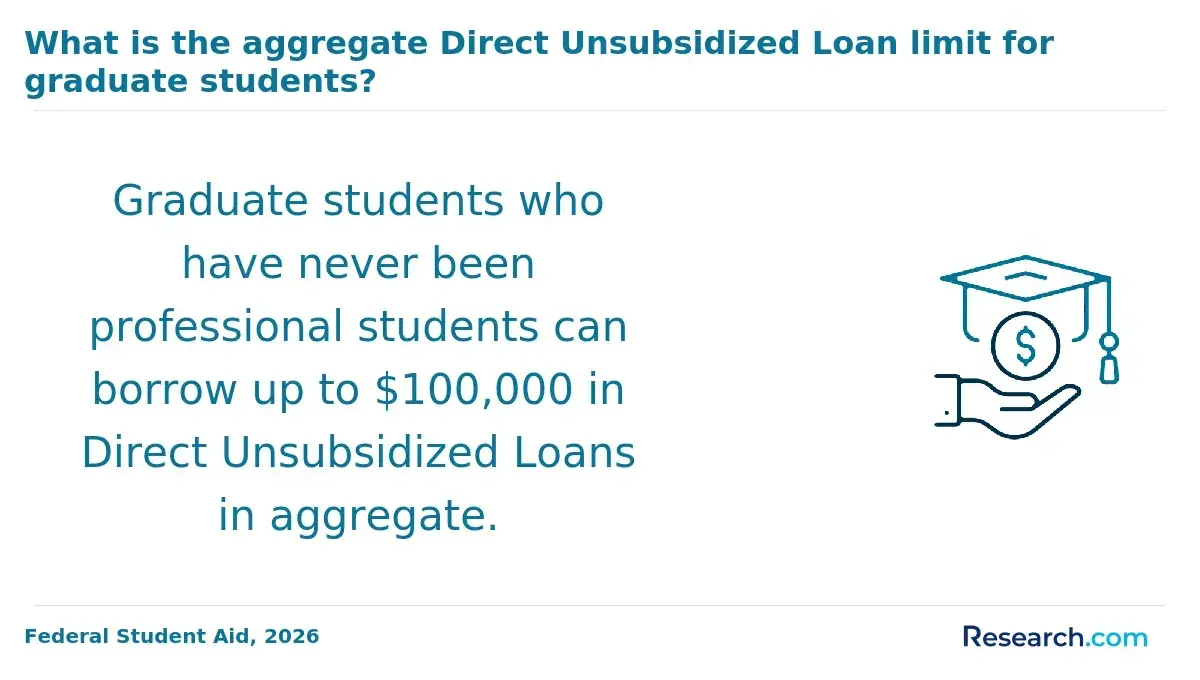
Students considering federal aid should confirm that both the institution and the specific degree are eligible, then review their own aid offer and borrowing terms. A lower advertised tuition figure is not automatically a better value if the program lacks relevant applied courses or requires a schedule you cannot sustain.
How Can Students Verify Legal Studies Program Accreditation?
First, check the university's institutional accreditation through its stated accreditor and the U.S. Department of Education's recognized-accreditor information. Confirm that the accreditation applies to the institution awarding the degree. This is different from judging whether its contract curriculum suits your goals.
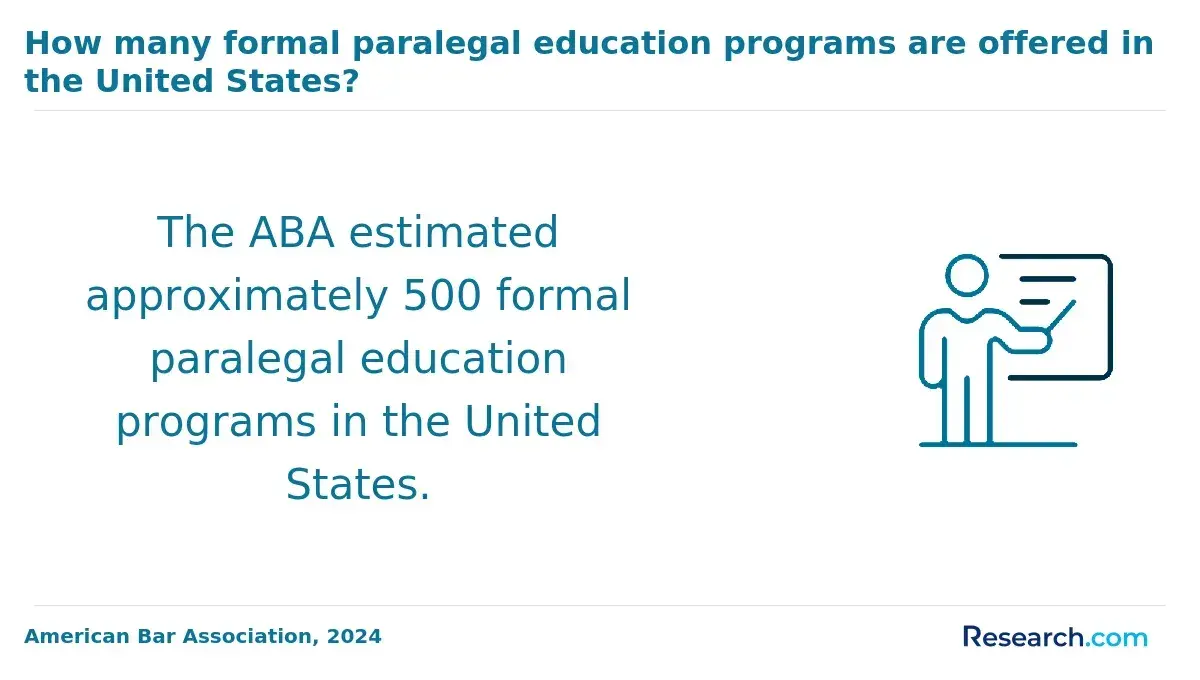
Do not confuse institutional accreditation with American Bar Association (ABA) approval. The ABA approves qualifying paralegal education programs; that designation is not accreditation of an MLS or MSL and does not make its graduates attorneys. A law school's ABA status likewise should not be presented as ABA approval of a separate non-JD master's degree.
If a school claims a special approval or recognition, ask exactly which program holds it and check the relevant organization's current listing. Treat vague phrases such as "ABA-certified degree" as a reason to request clarification.
What Careers Can Follow a Legal Studies Master's in Contract Negotiation?
Potential roles include commercial contracts specialist, contracts manager, procurement or sourcing professional, sales-operations contracts professional, and contract-focused compliance specialist. Titles overlap, so read job descriptions for the actual mix of negotiation, drafting, workflow management, and legal-team coordination.
Experience often matters as much as education. A procurement professional may bring supplier and pricing expertise but need stronger clause analysis; a legal-support professional may understand document review but need experience owning business negotiations. An MLS can help address either gap when its coursework matches the work, but it does not guarantee a move into a contracts-management role.
The Bureau of Labor Statistics projects 4% growth for compliance officers, 2025-2035, with about 32,700 openings per year. That provides context for adjacent risk and compliance work, not a forecast for the narrower commercial contract negotiator title. Evaluate local postings and internal promotion requirements before investing in a degree.
What Salary Can Commercial Contract Negotiators Earn?
There is no single Bureau of Labor Statistics median wage specifically for "commercial contract negotiator." Pay can vary with industry, responsibility, location, and whether a role sits in procurement, legal operations, or compliance. A nearby benchmark is the $80,730 median annual pay for compliance officers in May 2025; it is not a prediction of a negotiator's salary or the earnings effect of an MLS.
For another comparison, the median annual pay for paralegals and legal assistants was $62,890 in May 2025. Those workers perform a different mix of duties, so neither figure should be used to calculate a promised return on a graduate degree. A more useful personal comparison is the salary range on jobs you could realistically qualify for now versus those that specifically request the skills your proposed program teaches.
Do Contract Negotiators Need Licenses or Professional Certifications?
Business-side commercial contract negotiators generally do not need a separate professional license merely to negotiate for their employer. The boundary matters: a nonlawyer's job responsibilities do not authorize independent legal advice or other activities reserved for licensed attorneys. State rules and the nature of the work can affect that boundary, so employers should establish when counsel must review an issue.
Optional credentials include the National Contract Management Association's Certified Commercial Contract Manager (CCCM) and Certified Professional Contract Manager (CPCM). Check the organization's current eligibility, exam, and renewal rules before assuming you qualify. A professional certification is awarded by a credentialing body; a school certificate records completion of an educational program. Neither is an attorney license.
If a narrower educational route would meet your goal, compare its actual courses and total charges before committing to a master's. For paralegal education specifically, choosing an online paralegal program by its payment options addresses cash-flow considerations, but a payment plan alone does not establish program quality or make it the right preparation for commercial negotiation.
Other Things You Should Know About Law & Paralegal
Only if your employer permits it and the school's handling of confidential material is appropriate. Otherwise, use a public, fictional, or thoroughly approved sample; simply removing names may not protect sensitive terms.
The organization's delegation-of-authority and approval policies determine that. A negotiator may agree on proposed language, but legal, finance, security, or an authorized signatory may still need to approve it.
Do not assume so. Classroom discussion is not a substitute for confidential advice from your organization's lawyer, and sharing deal details may create confidentiality problems.
No. A commercial negotiator typically represents an organization's interests in reaching or changing a deal. A mediator is a neutral third party who helps others resolve a dispute.
References
- Cost of Attendance (Budget) | 2023-2024 Federal Student Aid Handbook https://fsapartners.ed.gov/knowledge-center/fsa-handbook/2023-2024/vol3/ch2-cost-attendance-budget
- Contract Specialist | careerpaths - DC.gov https://careerpaths.dc.gov/page/contract-specialist-0
- Types of Financial Aid: Grants, Work-Study, and Loans | studentaid.gov https://studentaid.gov/understand-aid/types
- Simulation courses at UCLA Law https://law.ucla.edu/academics/experiential-program/simulation-courses
- Admissions Requirements and Procedures - Pitt Catalog https://catalog.upp.pitt.edu/content.php
- International Contracts: Drafting and Interpreting - IE University https://www.ie.edu/lifelong-learning/programs/international-contracts-drafting-interpreting/
- Can You Practice Law Without Passing the Bar? | J.D. Jobs https://www.collegesoflaw.edu/blog/2022/04/12/jobs-for-j-d-s-bar-exam-not-required/
- Federal Contracting Law Master's - MLS Emphasis - ASU Online https://asuonline.asu.edu/online-degree-programs/graduate/federal-contracting-law-mls/
- Know the Difference Between In-Person, Online, Virtual & Hybrid Classes | Pima Community College, Tucson, Arizona https://www.pima.edu/news/announcements/general-announcements/types-of-classes.html
- How Should I Complete My Master's Degree? | Walden University https://www.waldenu.edu/online-masters-programs/resource/full-time-vs-part-time-how-should-i-complete-my-masters-degree


