
2027 MLS vs. a Healthcare Law Graduate Certificate for Hospital Professionals

Co-Founder and Chief Data Scientist
A hospital professional who needs stronger legal and regulatory judgment may not need a full master's degree. A Master of Legal Studies (MLS) offers broad legal education, while a healthcare law graduate certificate concentrates on a narrower set of issues. The difference matters if you are weighing tuition, time away from work, and the skills your next role actually requires.
This guide compares both routes for compliance, operations, privacy, and clinical leaders so you can identify the smaller credential that may be sufficient - or the broader degree that may be worth the commitment.
Key Things You Should Know
- Choose an MLS when you need legal knowledge across several functions; consider a healthcare law graduate certificate when your goal is a focused improvement in your current hospital role.
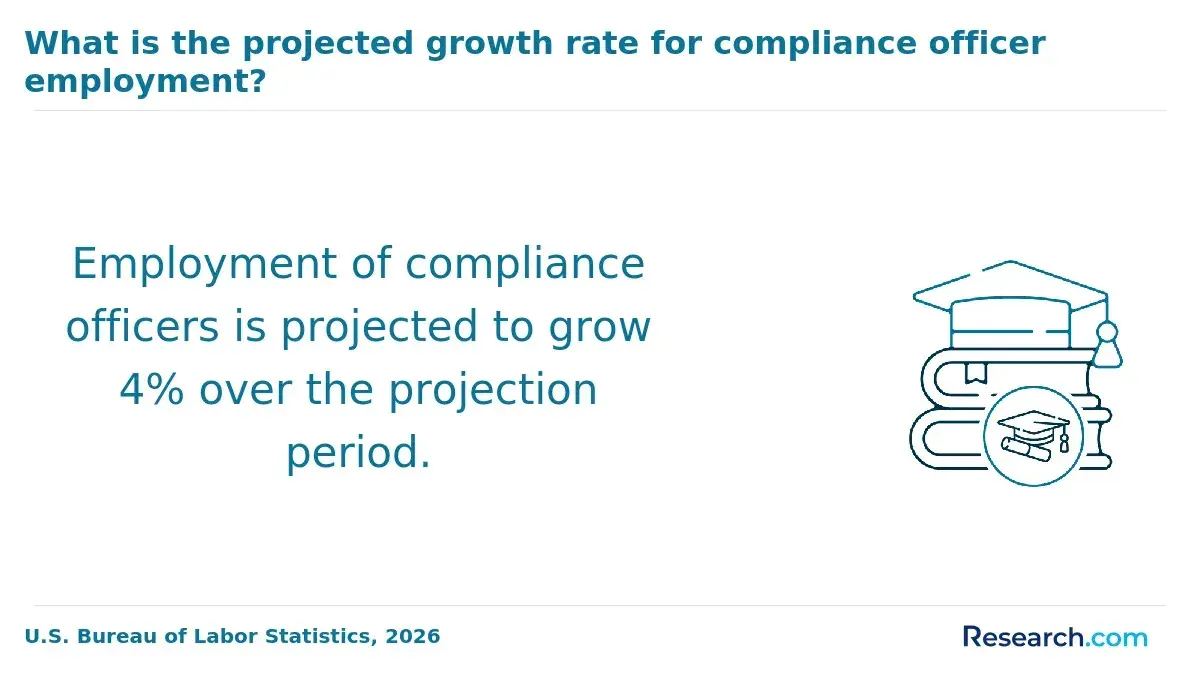
- Neither credential, by itself, qualifies you to practice law. For compliance officers, the U.S. Bureau of Labor Statistics reports median annual pay of $80,730 in May 2025 and 4% projected job growth for 2025-2035; those figures cover compliance officers across industries, not hospital graduates of either program.
- Before enrolling, compare required courses, total costs, employer tuition benefits, and whether certificate credits can later count toward an MLS. A school must confirm any credit-sharing arrangement in writing.
What is the difference between an MLS and a healthcare law graduate certificate?
An MLS is a graduate degree designed to teach legal concepts and reasoning to people who generally do not plan to become attorneys. A healthcare law graduate certificate is a shorter academic credential, usually focused on subjects such as healthcare regulation, privacy, and organizational compliance. Some schools call a comparable degree a Master of Science in Legal Studies or a Master of Jurisprudence; compare the actual curriculum rather than relying on the title.
The distinction is breadth versus focus, not "professional" versus "academic." This comparison shows what each route is likely to demand and where its limits lie; individual program requirements vary.
| Decision factor | MLS | Healthcare law graduate certificate |
| Credential | Master's degree | Graduate certificate, not a master's degree or professional certification |
| Typical scope | Legal foundations plus electives or a healthcare concentration | A smaller group of healthcare-focused courses |
| Best fit | Broader responsibilities spanning contracts, employment, risk, and regulation | A defined knowledge gap in an existing or targeted healthcare role |
| Main trade-off | Greater time and tuition commitment | Less room for legal foundations or subjects outside healthcare |
| Attorney qualification | Does not itself qualify a graduate to practice law | Does not qualify a graduate to practice law |
If you do not yet have the bachelor's degree generally expected for graduate admission, online associate degree options in legal studies can help you explore an earlier educational step. An associate degree alone ordinarily does not meet graduate-entry requirements.
Which program is better for hospital professionals seeking legal and compliance expertise?
Start with the decisions your job requires. If you review incident-response procedures, coordinate privacy investigations, or help interpret healthcare policies under counsel's supervision, a focused certificate may address the gap without paying for unrelated courses. If you expect to manage compliance across departments, work closely with attorneys on contracts and employment matters, or move into a broader leadership role, an MLS may provide a stronger foundation.
Neither route substitutes for learning your hospital's policies, obtaining supervised experience, or consulting licensed counsel when legal advice is needed. Ask your manager which tasks you would take on after completing the program. If the answer is limited to one regulatory area, test the certificate first; if it spans several legal domains, compare the MLS's required courses before assuming its degree title alone adds value.
What careers can an MLS or healthcare law certificate prepare you for?
Relevant roles include compliance specialist or officer, privacy analyst, risk-management staff member, healthcare operations manager, and contracts or policy coordinator. Clinical experience can be valuable in these jobs, but employers may also seek investigation skills, documentation practices, data analysis, or experience applying regulations. An MLS or certificate can strengthen an application; neither guarantees a role or promotion.
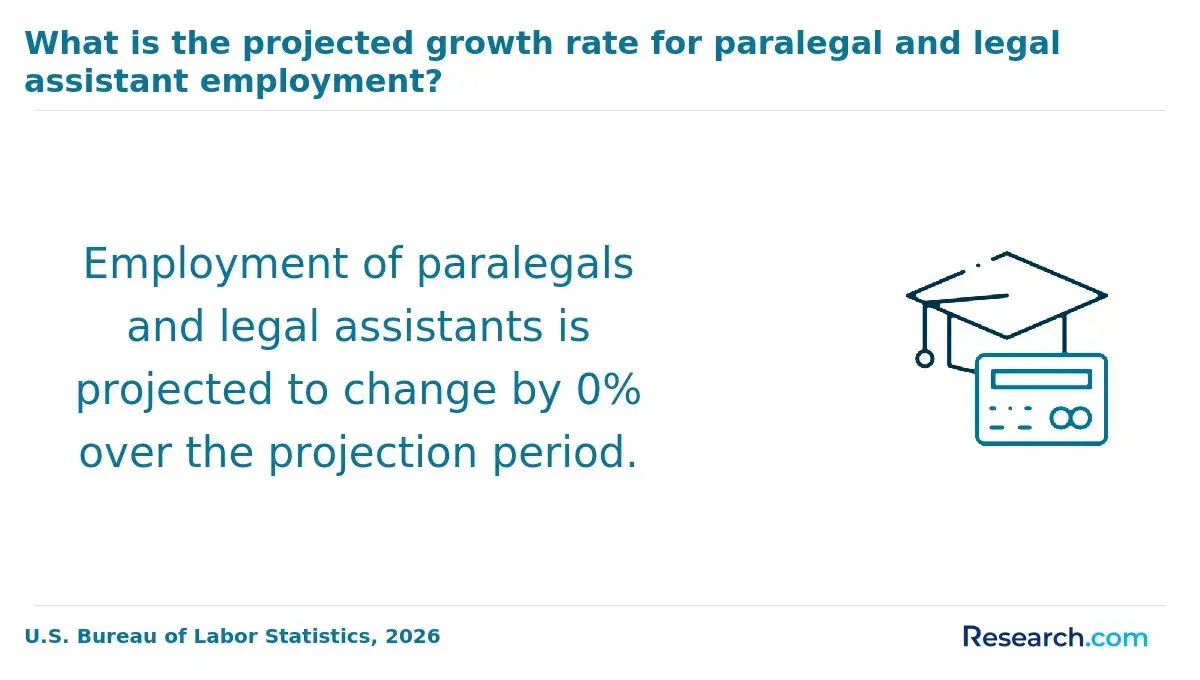
The Bureau of Labor Statistics projects about 32,700 compliance officer openings per year for 2025-2035. That is a broad, cross-industry occupation, so it cannot predict openings specifically in hospitals or outcomes for either credential. Read job postings for the titles you want: if they emphasize drafting legal pleadings or litigation support rather than hospital compliance, online certificate programs in paralegal studies may be a more relevant educational comparison. Paralegal education does not authorize independent legal practice.
How do MLS and healthcare law certificate curricula compare?
An MLS commonly combines introductory legal research and analysis with courses across legal fields. A healthcare-focused track may add health regulation, privacy, reimbursement, fraud and abuse, or bioethics. A graduate certificate may cover several of those topics but leave out foundational courses. Course titles alone are insufficient: a privacy class might teach regulatory interpretation, case analysis, workplace policy, or a mixture of all three.
For hospital work, look for assessed assignments that resemble your responsibilities - such as analyzing a policy, documenting a compliance response, or evaluating a contract issue. Check whether "healthcare law concentration" means a formally designated set of required courses or simply a choice of electives. If a certificate is advertised as stackable into an MLS, ask which specific courses count and whether admission to the degree is separate.
Are MLS and healthcare law graduate certificates accredited?
Accreditation normally applies to the institution, not automatically to every credential it offers. Check the school's current institutional accreditation with its recognized accreditor and confirm that the MLS or certificate appears in the current academic catalog. For a certificate, also verify whether it is graduate-credit coursework or noncredit continuing education; the distinction affects transcripts and possible future credit.
Do not use American Bar Association (ABA) approval as a test of an MLS or healthcare law graduate certificate. ABA approval applies to qualifying paralegal education programs and is distinct from institutional accreditation. It does not make a graduate an attorney or an "ABA-certified paralegal."
What are the admission requirements for each program?
Graduate MLS and graduate-certificate applicants generally need a bachelor's degree, but schools set their own rules for transcripts, statements, recommendations, work history, and minimum academic performance. A legal background is not necessarily required. Do not assume a certificate has easier admission simply because it involves fewer courses; confirm the published requirements for the exact credential.
If you have prior college coursework, distinguish admission credit from credit that actually satisfies program requirements. The receiving school decides whether previous courses apply. Readers considering a bachelor's pathway before graduate study can explore business law degree transfer options, then obtain a written evaluation from any school they plan to attend.
How long do these programs take, and what do they cost?
An MLS usually requires more coursework and terms than a graduate certificate, but the actual timeline depends on required credits, course sequencing, and how many classes you can take while working. Compare the school's published part-time course plan, not just its fastest advertised completion time. You can compare legal studies master's completion times as a starting point, then verify the current schedule with each program.
For a meaningful cost comparison, request a current estimate for the entire credential: tuition for all required credits, mandatory fees, books or research tools, technology, and any campus travel. A certificate's lower total price may be attractive, but it may be poor value if it omits the skills you need or its credits will not apply to later study. Conversely, a longer degree is not automatically a better investment if employer training or a focused certificate will meet your goal.
Ask the financial aid office whether the specific certificate is eligible for federal aid; institutional accreditation alone does not establish eligibility. Also check employer reimbursement rules, including grade requirements and any obligation to remain employed after receiving the benefit.
Are online or campus-based healthcare law programs better?
Neither format is inherently stronger. Online study can reduce commuting for shift-based hospital staff, while campus classes may make scheduled discussion and local networking easier. "Online" does not necessarily mean self-paced: courses may have live meetings, fixed deadlines, group projects, exams at set times, or required campus visits.
Match the actual schedule to your work pattern. Ask for a recent course schedule and confirm whether required courses rotate often enough to support your planned completion date. If a capstone, practicum, or workplace project is required, ask who arranges it and whether your employer must approve your use of workplace material.
Do these programs qualify graduates for legal licenses or certifications?
No MLS or healthcare law graduate certificate, by itself, licenses someone to practice law. Attorney admission follows jurisdiction-specific requirements, typically involving an attorney-qualifying legal education and bar admission. Hospital professionals with either non-JD credential must still distinguish compliance and operational work from legal advice reserved for licensed attorneys.
An academic certificate is also different from a professional certification awarded by a credentialing body. For example, the Compliance Certification Board administers healthcare compliance credentials under its own eligibility and examination rules. Check the current requirements directly with the credentialing body; completing a graduate program does not automatically confer certification or establish exam eligibility.
How should hospital professionals choose a reputable healthcare law program?
Make a shortlist based on your target tasks, then get answers that can be compared across schools. The following checks help uncover costly mismatches before you enroll:
- Verify institutional accreditation, the exact credential name, and whether the courses carry graduate credit.
- Map required courses and assessed assignments to the regulations, policies, and decisions you handle - or want to handle - at work.
- Request the full current cost and a part-time course sequence that accounts for live sessions, campus visits, and your shifts.
- Get written answers about certificate-to-MLS credit, program-specific aid, and any employer tuition benefit before budgeting around them.
A red flag is a promise that coursework alone will qualify you as an attorney, certified compliance professional, or guaranteed hire. If your actual objective is paralegal work rather than hospital compliance, finding affordable online paralegal programs with ABA approval is a separate search; confirm any program's current approval status and total cost before applying.
Other Things You Should Know About Law & Paralegal
No. Employer training addresses workplace duties and policies; graduate study examines legal concepts and their application more broadly. Ask what additional tasks you expect the coursework to help you perform before paying for it.
That depends on your employer's benefit policy. Confirm whether it covers graduate certificates as well as degrees, which fees qualify, and whether approval is required before enrollment.
Not automatically. Your licensing board or professional association determines acceptable continuing education. Check its rules and obtain course details before relying on graduate credit for renewal.
Only if your employer and instructor permit it and you can meet applicable privacy and confidentiality requirements. Ask about using a fictional or properly de-identified scenario instead of uploading workplace records to a course platform.
References
- Emergency Medical Treatment & Labor Act (EMTALA) | cms.gov https://www.cms.gov/medicare/regulations-guidance/legislation/emergency-medical-treatment-labor-act
- and Ask For - Employer Tuition Reimbursement Benefits | Harvard Extension School https://extension.harvard.edu/blog/how-to-use-and-ask-for-employer-tuition-reimbursement-benefits/
- Best Healthcare Compliance Jobs After Earning Your MLS | Seattle U School of Law https://onlinelaw.seattleu.edu/blog/best-healthcare-compliance-jobs/
- Master of Legal Studies in Healthcare Compliance | wsulaw.edu https://www.wsulaw.edu/academics/master-of-legal-studies/
- Master of Legal Studies (MLS) vs. JD: Which Is Right for You? | Wake Forest MLS https://mls.law.wfu.edu/articles/mls-vs-jd-which-is-right-for-you/
- Master of Legal Studies & Graduate Certificates | Winston College of Law https://winston.utk.edu/admissions/degree-programs/master-of-legal-studies/
- Health Care Compliance Specialization Curriculum | AU-LAW https://onlinelaw.wcl.american.edu/legal-studies/curriculum/health-care-compliance-specialization/
- Master of Legal Studies (MLS) vs. JD: What's the Difference? | SMU Online Master of Legal Studies https://onlinemasterlegalstudies.smu.edu/articles/mls-vs-jd/
- MLS in Health Law: Career Opportunities in a Growing Sector | William & Mary Law https://online.law.wm.edu/blog/mls-health-law-career-opportunities
- Differences Between an M.L.S. and an M.H.A. | miami.edu https://news.miami.edu/law/stories/2024/06/differences-between-an-mls-and-an-mha.html


